
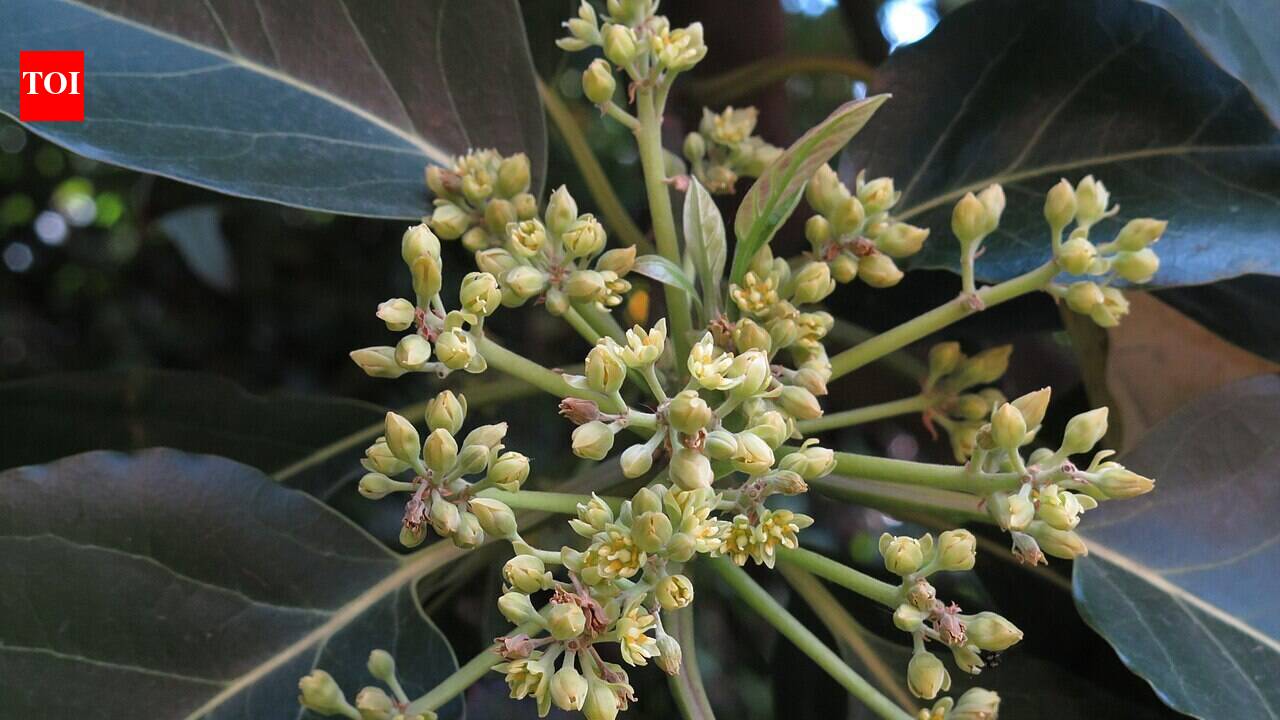
 Avocado flowers exhibit a complex opening cycle, transforming from male to female stages. This dichogamy promotes pollen transfer among different avocado flower types. Researchers found genetic variation in the SDMYB gene affects this daily separation of functions. Image Credits: Wikimedia Commons Avocado plant flowers do not show much external variation, but their behaviour is quite complicated when it comes to their opening cycle. Unlike many flowering plants, each avocado flower contains both male and female reproductive structures but functions in separate phases. It first opens in a female phase, closes, and later reopens in a male phase.The finding comes from a study published in the Proceedings of the National Academy of Sciences (PNAS). The researchers investigated the genetic basis of avocado flower phase transitions and found that variation in the floral transcription factor gene SDMYB is associated with differences in the daily timing of male and female flower phases.Both male and female reproductive structures are present in avocado flowers, but not simultaneously. The study explains that avocado flowers exhibit dichogamy, opening first in a functionally female phase before reopening later in a functionally male phase. The process helps to promote pollen transfer among avocado flowers of different types.Flower timing in avocados and its impact on pollinationTiming of flowers is one of the aspects that avocado farmers should consider in the course of their farming because the timing of the male and female stages of flowers affects pollination.The PNAS study examined how genetic differences are connected to this unusual flowering pattern. The researchers focused on SDMYB, a floral transcription factor involved in regulating flower development, and investigated how different forms of this gene are associated with the timing of avocado flower phases.The findings suggest that genetic variation in this regulatory system maintains the daily separation of male and female flower functions. Rather than a simple switch controlled by one factor alone, the process involves a complex interaction between genetic mechanisms and the plant’s flowering behaviour.This separation of flower phases helps avocado trees reduce the chances of self-pollination and encourages pollen movement between trees. The study suggests that the timing of male and female flower phases plays an important role in avocado reproduction, with genetic variation in the SDMYB floral transcription factor associated with this daily flowering pattern.Though the flower may not look different from other flowers on the outside, it has a very precise biological clock that dictates its ability to pollinate itself and be pollinated.Genetics and the reproductive process in avocadosIt was already well established that the timing of flower production affected fruit production, but the genetics of this process were not as clearly understood. This is where the study in PNAS has come up with some new information.The researchers found that variation in the SDMYB region is associated with differences in avocado flowering timing. This discovery helps explain why different avocado flowering types follow distinct timing patterns and how those patterns have persisted over generations.However, the study does not suggest that a single gene controls every part of avocado reproduction. Instead, it reveals that genetic variation in an important floral regulatory system contributes to the timing of male and female flower phases.Understanding these mechanisms could be useful for future avocado research and cultivation. Avocado production depends on successful flowering and pollination, and growers face challenges from changing climate conditions, shifting temperatures and other environmental stresses that can affect plant development.This discovery provides a scientific explanation for the reason why avocados have a biological clock for their flower development, showing that genetics has something to do with the male and female reproductive phases. It may give more information on how different types of avocados sustain their reproductive system and get pollinated.
This discovery explains distinct flowering patterns and aids future avocado cultivation efforts. Understanding these mechanisms is crucial for successful avocado production and crop management. Image Credits: Wikimedia Commons
Implications of the discovery for avocado farmingThere are many steps involved before the flowers turn into fruits. For farmers, this knowledge may eventually support a better understanding of avocado varieties and their flowering behaviour. Managing orchards already involves careful decisions about variety selection, planting patterns and growing conditions, and research into flowering biology can add to that knowledge.The research further illustrates the intricacies of a common plant. An avocado flower operates on a biological schedule influenced by genetics and evolutionary processes. The daily cycle between the two sexes allows the avocado plant to synchronise its reproduction process.