
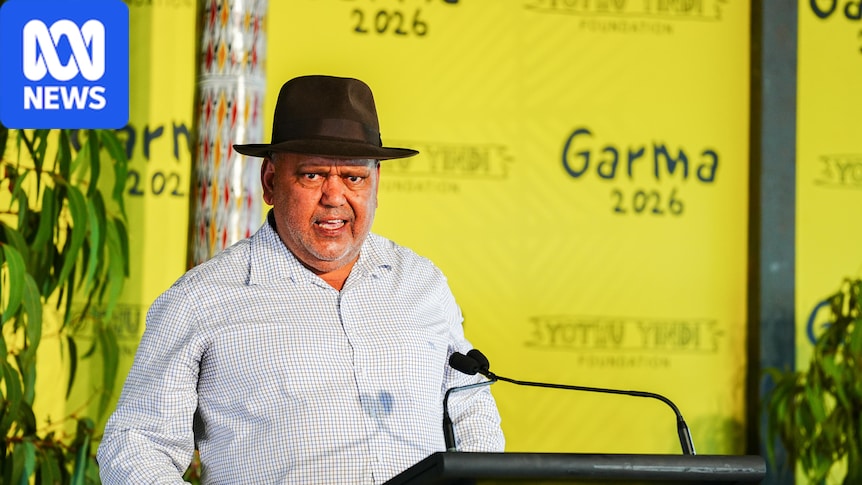
Cape York Institute leader Noel Pearson has accused all governments of profiting off poor people through gambling and alcohol, and called for an overhaul of how remote Aboriginal communities are managed.
At his first Garma Festival in north-east Arnhem Land after a three-year absence, following the failure of the Voice to Parliament referendum, Mr Pearson gave a blistering and wide-ranging speech about his vision for the future of Indigenous Australia.
He called for remote Aboriginal communities to be placed under Commonwealth oversight and for the dismantling of state and territory Aboriginal affairs departments.
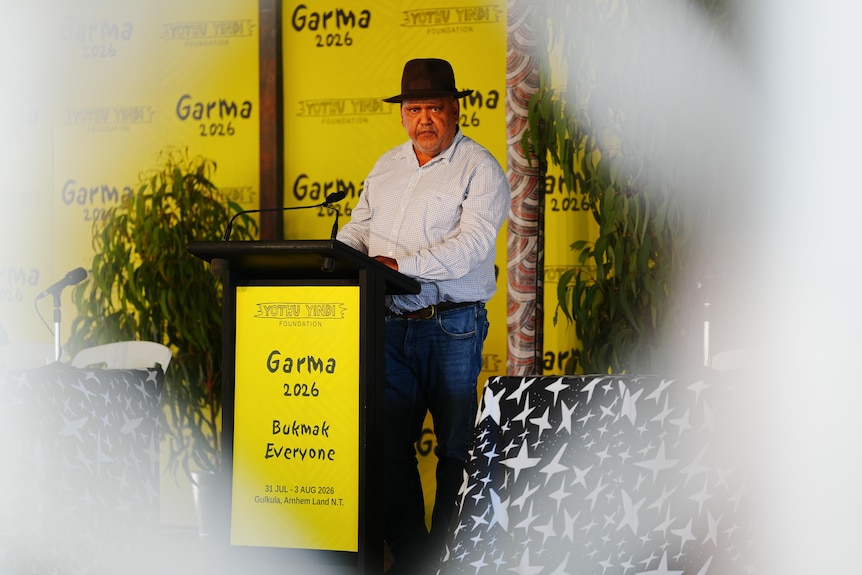
Cape York Institute leader Noel Pearson has called for major reform to remote community oversight. (ABC News: Billy Cooper )
“These communities and their lands would still come under the shared jurisdiction of the relevant states and territories for most functions governed by the state’s constitutional responsibilities, but the administrative relationship for Aboriginal affairs would lie with the Commonwealth,” he said.
“There should be no need for Aboriginal affairs departments in the states and territories.
“This would rationalise duplicated governmental systems and institutions.
“It would stop Indigenous affairs being the black hole for state and territory government budgets.”
Mr Pearson also blamed governments of all stripes for their inability to help raise the living standards of Aboriginal Australians, accusing them of profiting off the lives of poor people.
“Until political parties sever ties with vice industries — grog and gambling — little will change,” he said.
“The CLP [Country Liberal Party], LNP [Liberal National Party] and ALP [Australian Labor Party] when in power, believe it is the divine right of the vice industries to make a profit from the immiseration of our people.”
Long-term independent Arnhem Land politician, Yiŋiya Guyula, also called for greater federal support for Aboriginal communities to try to stem the impacts from state and territory government policies.
“Throughout this time of racist laws and policies that target Aboriginal people, the federal government has refused to intervene,” he said.
“But we desperately need federal government support, now more than ever. We need true partnerships, we need support so that we can protect our people.”
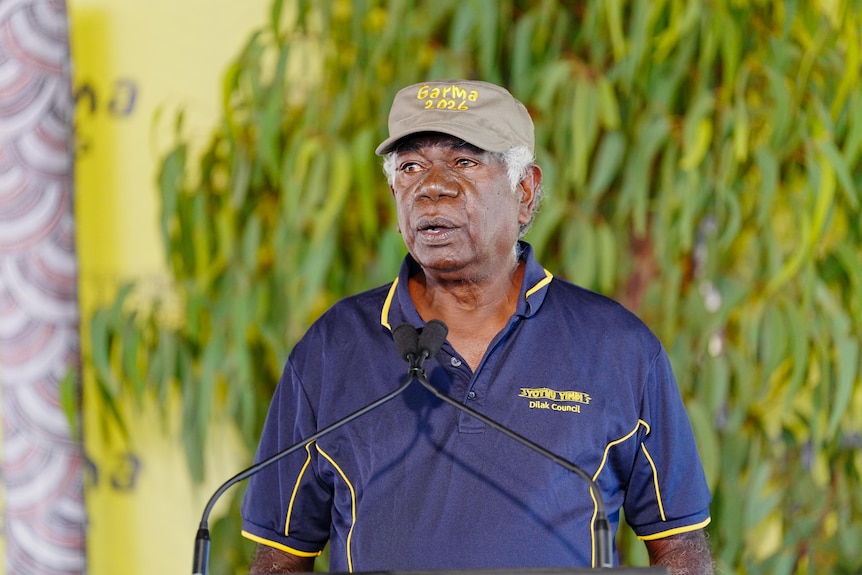
Yothu Yindi Foundation chair Djawa Yunupiŋu announced a land council to be led by the Dilak of northeast Arnhem land. (ABC News: Billy Cooper )
Announcement of new land council
Earlier on Saturday, a powerful Yolŋu leader announced the creation of a breakaway remote Northern Territory land council to help drive direct economic development for his people.
Gumatj Corporation leader Djawa Yunupiŋu used his keynote Garma Festival speech in north-east Arnhem Land to announce the shake-up to the NT’s current land rights system.
“We are going to the top of the mountain,” Mr Yunupiŋu said.
The creation of the Dilak Land Council would put the ability to make economic development decisions into the hands of his people, and away from the powerful Northern Land Council (NLC) which oversees communities across much of the Top End.
“It will be the power for our future,” he said.
“The Northern Land Council was a vision of our elders, who knew that one day, when the time was right, the power would be brought back fully into the hands of land owners, as it should be.”
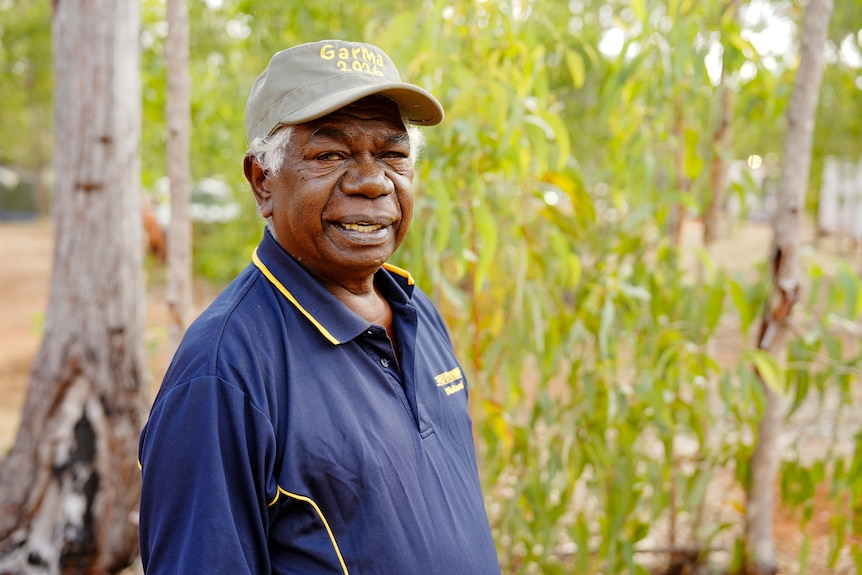
Gumatj Corporation leader Djawa Yunupiŋu has announced the formation of the new Dilak Land Council during a Garma Festival keynote address. (ABC News: Billy Cooper)
‘New life to the land and the people’
The announcement coincides with the 50th anniversary of the creation of the federal Aboriginal Land Rights Act, passed by Malcolm Fraser’s government in 1976.
Mr Yunupiŋu announced the new land council in front of high-profile delegates including Australian Foreign Minister Penny Wong and Timor Leste Prime Minister Xanana Gusmão.
The NLC has been criticised in recent years for its perceived delays in granting land tenure permits for those wanting to set up businesses on Aboriginal land in the Top End.
It also controls the distribution of mining royalties across territory communities.
Mr Yunupiŋu said it was his hope that the Dilak Land Council, which would represent the 13 clan groups of the Gove Peninsula, would give his people the ability to liaise directly with those wanting to do business on Yolŋu land.
“The Dilak council will give new life to the land and the people,” he said.
“It will work with the government, and mining companies, and any company who wants to do business with us.
“We will work in partnership with the Northern Land Council, for the people.
“We will be a part of the economic life of this nation, while never losing who we are, and what we stand for.”
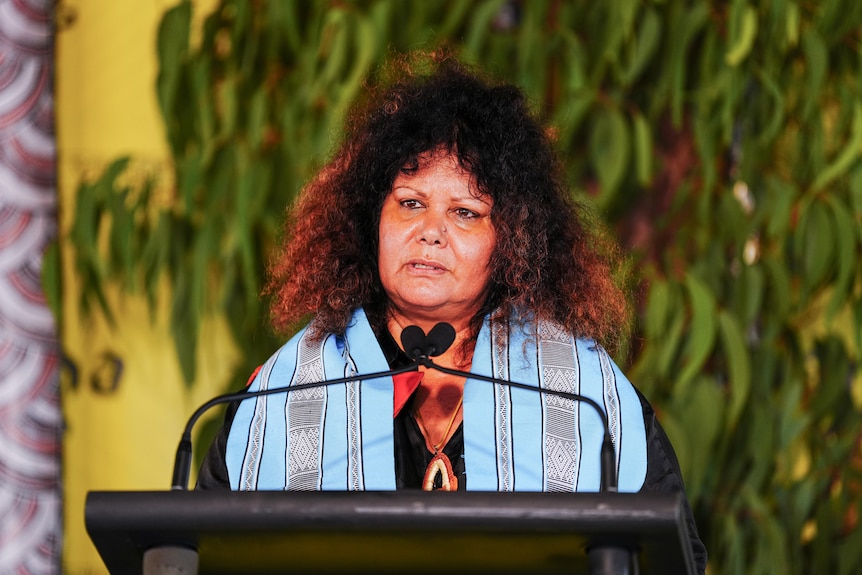
Malarndirri McCarthy says the looming closure of a Rio Tinto mine will bring big changes to north-east Arnhem Land. (ABC News: Billy Cooper )
The announcement comes as the north-east Arnhem region faces an uncertain future, with the impending closure of its main employer, a Rio Tinto bauxite mine, in 2029.
Indigenous Australians Minister Malarndirri McCarthy said there would need to be a formal process gone through before any new land council comes to fruition.
“I think it’s really important that the Dilak have come forward publicly now to say what they’d like to do,” she said.
“We’re seeing massive change here in north-east Arnhem Land with the closure of Rio Tinto, a resetting if you like of what the future might look like here, and I think it’s an exciting time.
“[But] there’s still many steps to go before anything is official.”
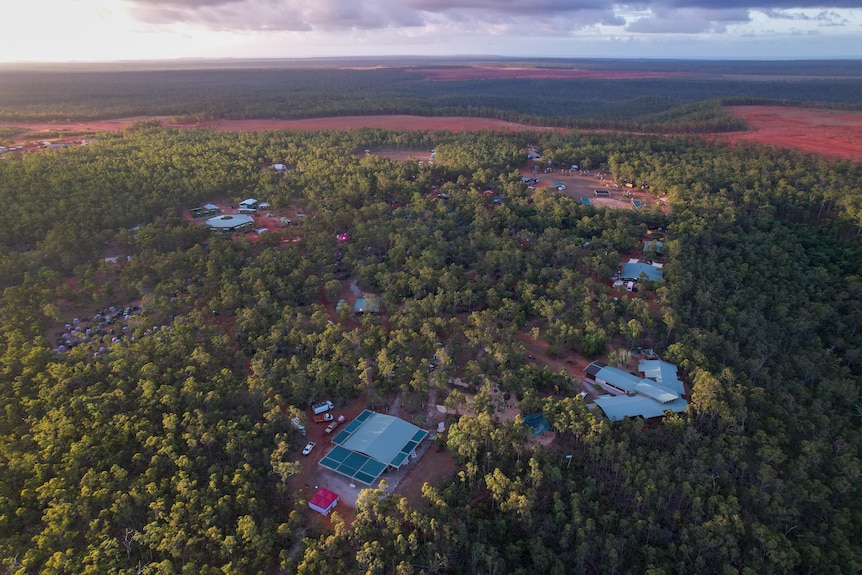
The Dilak Land Council would put the ability to make economic development decisions into the hands of his people, and away from the powerful Northern Land Council, says Mr Yunupiŋu. (ABC News: Billy Cooper)
Arnhem region’s uncertain future
In recent years, Mr Yunupiŋu’s Gumatj Corporation has been at the forefront of business development in north-east Arnhem Land.
Garma promise on land rights anniversary
The company built and runs its own timber mill and furniture business, facilitates rocket launches on a remote launch site, and recently took over a shopping centre complex.
Mr Yunupiŋu has long been an executive member sitting on the NLC board and it is understood he still holds that role.
NLC chairman Matthew Ryan acknowledged past criticism of the council’s timely handling of land tenure claims, and said the agency “wants to improve”.
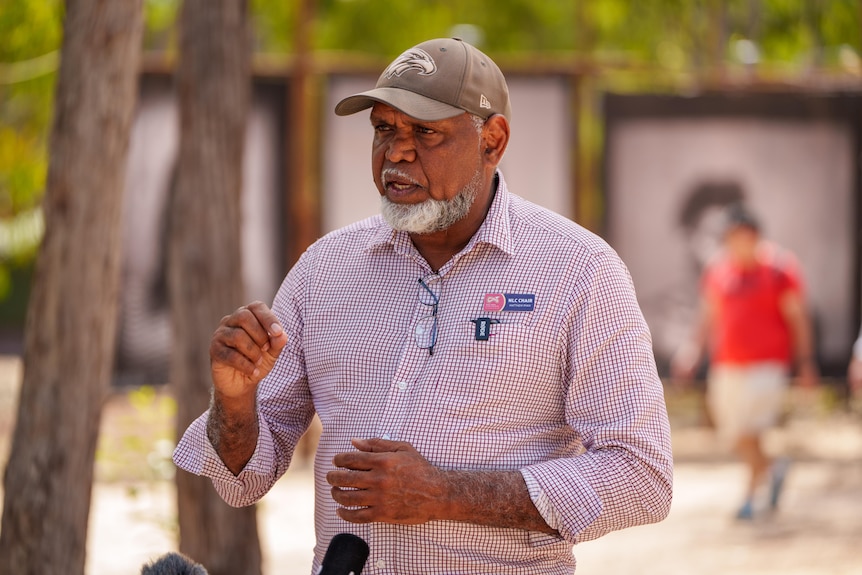
Matthew Ryan acknowledges past criticisms of the Northern Land Council and says he wants to meet with Dilak council members. (ABC News: Billy Cooper )
He said he wanted to sit down with the Dilak council members to discuss their ambitions.
“I think unity is the best way moving forward,” he said.
“Look, I think it’s a long way yet, and we want to invite the Dilak Council to meet with us and have a serious conversation.”
Mr Pearson voiced his support for the Gumatj Corporation leader’s announcement.
“I am so pleased today to hear Djawa’s announcement to take forward [late Gumatj leader] Galarrwuy [Yunupiŋu’s] vision to found a land council to be led by the Dilak of north-east Arnhem Land,” he said.