
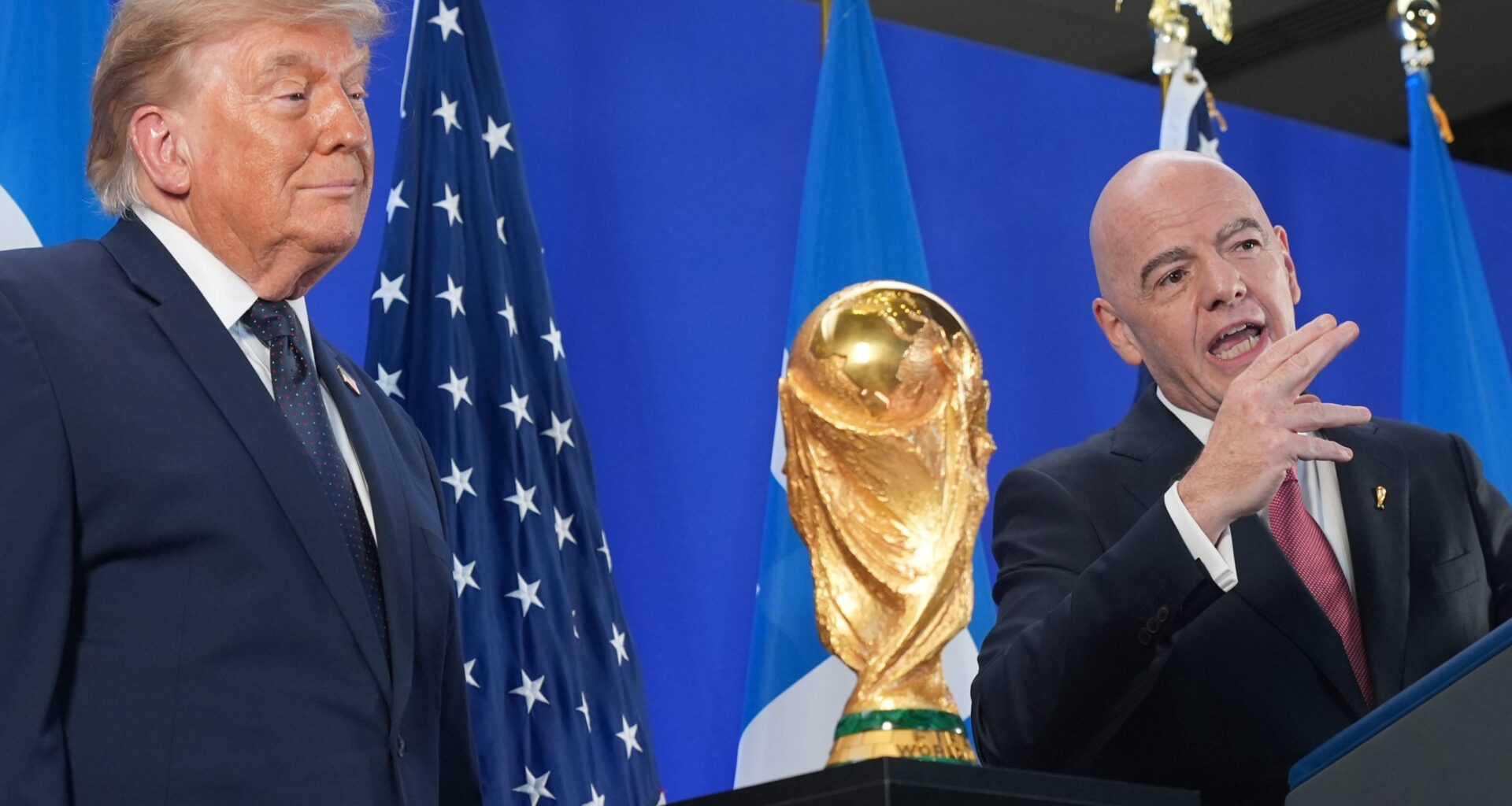
Sorry to be a party pooper, but I didn’t watch a second of the World Cup, just as I didn’t watch any of the Olympics (except for complying with a houseguest’s request to put on the opening ceremony). I don’t have anything against either event, but I save the limited time I have to watch sports for American football, basketball, and boxing, the latter less frequently than I used to.
I find something unsettling about the entire world competing, it seems too big to me. If I’m going to watch soccer – which I rarely do – my mind is better at absorbing a smaller universe, say, the English Premier League.
My views are probably in the minority, as I watched fans from all over in a frenzy of excitement as their respective countries competed. Patriotism is honorable, and I certainly love the good ol’ USA, but for some reason that doesn’t translate to whether we win a gold medal against another country. The same holds true for my Greek heritage. I’m proud of it, but I don’t get a lump in my throat when a Greek Olympian prevails. Give me a Boston Celtics win anytime (and I’m neither Irish nor from Boston).
Speaking of the Celtics, though, they play in the National Basketball Association (NBA), which in recent years has sold out integrity for profit. Though I didn’t watch the World Cup final, I understand that Argentina and Spain didn’t score a single goal in regulation time; Spain prevailed, 1-0, in overtime. Not exactly a 124-112 score of an NBA game. Nonetheless, soccer is more of a real sport, because it hasn’t dumbed down the game to attract more fans while diluting what made it great.
To be more specific and without getting into too much detail that might confuse non-sports fans, the NBA rules have been relaxed to enable scoring to be more frequent and with more dramatic flair. Imagine if they doubled the size of the basket so that more shots could be scored from halfcourt: that would exemplify how the NBA has transformed the game, for the worse.
Applying that approach to soccer, think of it as doubling the size of the goal, thus making 14-10 games routine rather than extremely rare. Thankfully, soccer hasn’t been contaminated yet, and the final match to determine the best team in the world ended 1-0.
Even the Super Bowl, which remains the single most-watched sporting event in America, becomes less and less about football ever year, and more and more about the commercials and the halftime show.
Nonetheless, this type of bells-and-whistles sensationalism doesn’t only apply to sports. Consider the phenomenon of presidential debates, which began in 1960. At the time, there was no pomp, no bright lights, and no carefully choreographed performances either from the moderators or from the candidates. Moreover, the debaters were actually given a chance to articulate their points of view in substantive detail. Nowadays, they’re asked: “in 30 seconds or less, tell us the top five problems facing the United States and how you’d solve them…oh, I’m sorry, your time is up.” It’s less a debate than a dog-and-pony show.
Newt Gingrich, who ran for president in 2012, had a great idea: while vying, ultimately unsuccessfully, for the Republican nomination, he challenged then-incumbent President Barack Obama (a Democrat) to a series of debates with no moderators and just a timekeeper. These contests, Gingrich envisioned, would be multihour debates. In fact, the founder of presidential debates, Newton Minow, first conceptualized them to be a demonstration of knowledge and intelligence – his goal was to elevate the status of Adlai Stevenson in 1956, who was running for the second time against the affable but less cerebral Dwight Eisenhower. Instead, debates have become breeding grounds for one-line zingers. Most viewers probably think the person who won the debate is the candidate with whom they most agree. That’s not the way Minow imagined it; he had intended for debates to change people’s minds, not galvanize their preconceived notions.
An even greater travesty than flashy debates and circus-like basketball is how the media has deteriorated. There was a time when the press followed the canons of journalism and knew what needed to be reported. They understood their duty to present the news, not become comfort food feeding troughs, tailoring stories to cater to their audiences’ whims.
Regrettably, the media moguls realize that boring doesn’t sell nearly as well as exciting, and don’t care much about foregoing journalistic duty in order to make a buck. In fact, in many instances, they direct their employees to stick to the company line. Like trained seals, these so-called newspersons recite information spun in the most favorable manner to advance a particular agenda.
That’s why the World Cup was so important. No one handed either team a script. They weren’t told to make sure to play to, say, a 3-3 tie in the first half of the game, and then play a real game in the second half, and may the better team prevail. That would’ve given viewers the excitement of six additional goals than what they actually saw.
Instead, the world was dealt a match that all but the sport’s avid enthusiasts found boring – especially if they weren’t ardent fans of either team. But the World Cup gives us hope that boring actually does sell. Over 1.5 billion people around the world watched Spain v. Argentina; no one had to lengthen the goal, shorten the field, or shrink the size of the soccer ball to create more action.
Even though I don’t watch much soccer, I’m happy it remains a true sport.