
The start of a new financial year is one of the more useful moments for property investors to lift their eyes from the immediate noise and ask a more fundamental question: where are the conditions for genuine residential outperformance actually building right now?
The answer in FY27 is not found in a single city or a single asset type. It is found in a common thread running through a handful of markets that most investors are either underweighting or overlooking entirely. That thread is population-driven demand meeting inadequate supply, with affordability pressure concentrating competition at accessible price points.
Assets that more people can actually afford to buy tend to outperform when borrowing capacity is constrained. That is the residential story for FY27.
RELATED
Brisbane: the standout medium-term growth story has not run out of runway
Brisbane continues to present one of the more compelling residential investment cases of any capital city, and the conditions underpinning it are not showing any signs of resolution.
Interstate migration is still running above historical averages. Olympics infrastructure investment is accelerating and beginning to translate into tangible delivery timelines rather than just announced projects. Relative affordability, compared to Sydney in particular, continues to attract both owner-occupiers and investors who have been priced out of southern markets and are looking for comparable lifestyle with meaningfully lower entry points.
The supply-demand imbalance in Brisbane is not a short-term phenomenon. The undersupply of housing relative to population growth in South East Queensland has been building for years, and nothing currently in the pipeline suggests it resolves quickly. For investors with a medium-term view, that structural tension tends to translate into sustained price and rental pressure in a way that short-term demand spikes typically do not.
Melbourne: the contrarian case is becoming harder to ignore
Melbourne has spent the past two years as one of the more discussed residential markets for the wrong reasons. Stamp duty, land tax, slower population recovery and softer confidence have all featured. But contrarian opportunities tend to emerge in exactly the kind of environment Melbourne is now presenting, and there are two specific pockets worth watching closely.
Story continues
Post-war redbrick apartments in inner suburbs such as Prahran, Fitzroy and Richmond are trading at a discount that is increasingly difficult to justify on fundamentals. These are not the legacy problems of recent high-rise supply. They are solid, established buildings with larger floor plates, superior build quality and genuine scarcity. The stock simply does not come up often, and when it does it tends to find buyers quickly. Investors who understand the difference between legacy apartment quality and the structural advantages of this specific stock are finding opportunities that the broader Melbourne narrative tends to obscure.
Separately, freestanding houses under one million dollars in established middle-ring suburbs are attracting more competition than at any point in recent years. As affordability constraints push buyers progressively down the price ladder, the demand pool for these assets widens, and that dynamic tends to produce consistent outperformance in soft markets. When more buyers can compete for an asset than could a year ago, the floor under that asset tends to strengthen.
Regional Australia: the normalisation story that investors are missing
The mainstream narrative on regional residential markets has been cautious since the post-COVID correction began in 2022, and in many cases that caution has persisted well past the point where the data supports it.
The correction in lifestyle and regional markets has largely played out. What the mainstream narrative misses is that the fundamental drivers which attracted population to regional Australia in the first place, lifestyle, affordability relative to capital cities, and genuine flexibility around where and how people work, have not reversed. They have normalised. The buyers are still there. The tenants are still there. The economics of regional living still make sense for a very large cohort of Australians.
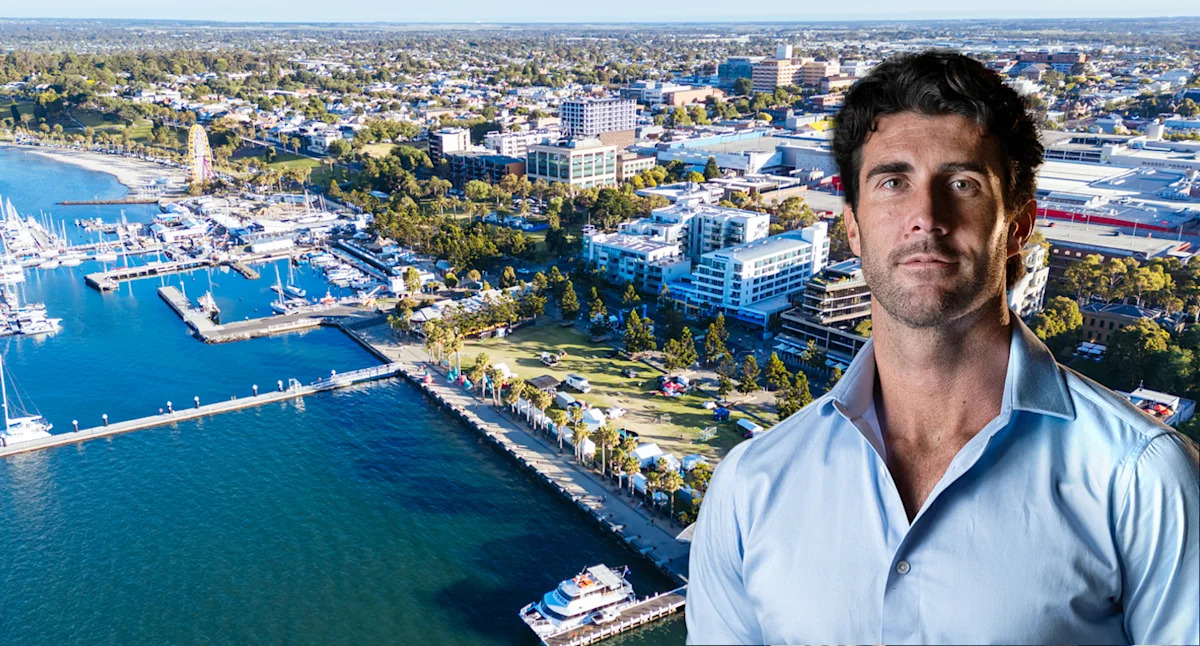
The opportunity for FY27 is in regional centres with genuine economic diversification beyond tourism. Markets like Geelong, Ballarat, Toowoomba, Albury Wodonga and the Hunter Valley are now offering some of the strongest gross yields in the residential market at price points that remain accessible to a wide pool of buyers and renters. These are not lifestyle markets propped up by holiday letting. They are regional economies with real employment bases, growing infrastructure investment and population growth that did not simply evaporate once the pandemic tailwinds eased.
 The City of Albury is a major regional city in New South Wales, Australia. · Bundit Minramun
Infrastructure investment in regional Australia is also running at levels not seen in decades. For investors willing to move beyond the capital city postcode bias that dominates most residential commentary, regional Australia in FY27 is offering a combination of yield, affordability and long-term population tailwinds that many metropolitan markets are simply unable to match right now.
The common thread
Brisbane, Melbourne’s contrarian pockets and the better-positioned regional centres are all different expressions of the same underlying dynamic. Population-driven demand is running into inadequate supply. Affordability pressure is concentrating competition in the price brackets that the widest pool of buyers and renters can actually access. And in that environment, assets at accessible price points in locations with genuine structural demand tend to outperform.
That is not a complicated thesis. But acting on it requires investors to look past the markets generating the most media attention and toward the markets where the conditions for outperformance are quietly assembling.
FY27 that research now rather than after the market has already made the move.
Scott O’Neill is a prominent Australian property investor featured in AFR’s Young Rich List four years in a row. He is an entrepreneur and Founder & CEO of Rethink Group a premium property investment group, host of the top commercial property podcast “Rethink Investing’s Inside Commercial Property”, co-author of “Rethink Property Investing” Australia’s number one commercial property investing book.