
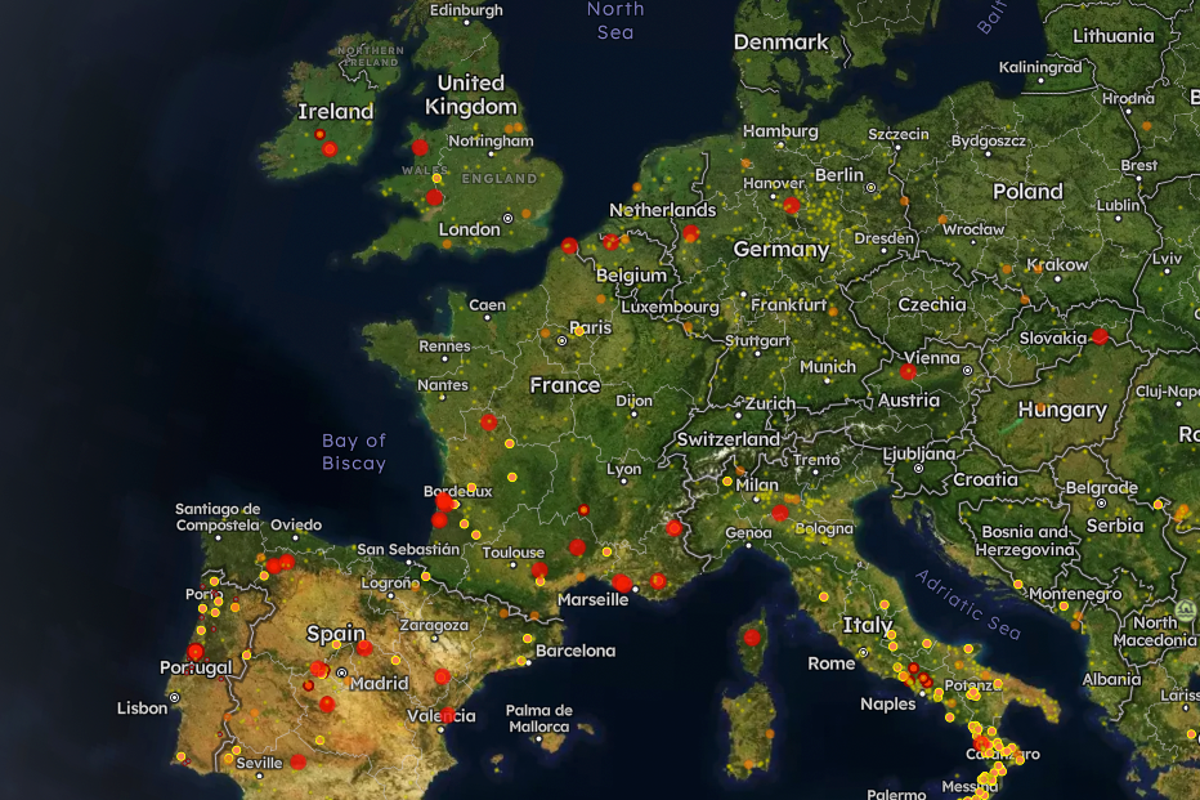
In the latest apocalyptic weather turn, an EU agency has warned that we could see “all [of] Europe on fire” at the beginning of August.
Maria Zuber, head of the EU’s Emergency Response Coordination Centre (ECCR), raised the alarm amid ongoing wildfires in Spain, France and Portugal and increasing concerns that blazes might also break out across the rest of the continent in the coming days.
“The next risk, it’s already moving to Greece and also Central Europe,” she told reporters. “Greece for the moment was spared, and now we see that it will go to Greece.” She added: “Italy will face risk at the beginning of August, and we will need to see what will happen with the Iberian peninsula, because if (it is) there as well, we will have all Europe on fire.”
Even the UK is not immune: a huge blaze broke out in Suffolk on Thursday 30 July, with 90 firefighters deployed to tackle the “large-scale, wind-driven forestry fire” on Dunwich Heath.
Summer 2026 is on track to become the biggest fire season in European history, according to Zuber, surpassing 2025’s record-breaking stint last year. A combination of a wet winter and spring leading to an abundance of vegetation and a dry, scorching summer has provided the perfect conditions for wildfires to break out and spread quickly; the plants have essentially acted as kindling.
 In France, a fire has burned through an area four times the size of Paris (AFP/Getty)
It’s part and parcel of a year in which extreme weather records keep being broken. Last month saw western Europe and England experience the hottest June since records began, and the second warmest globally. The month prior, Portugal recorded its highest temperature for May – 40.3C – as did the UK and more than 350 French towns.
This scorching trend is set to continue and worsen in the summers ahead due to climate change, the UN warned this spring, with global average temperatures likely to continue at or near record levels for the next four years. The hottest 11 years on record have all occurred since 2015; the UN’s weather and climate agency has predicted it is “likely” there will be a new hottest-ever year before 2031.
This year, wildfires started early and spread far more rapidly than the norm. By 1 July, flames had already engulfed 28,000 hectares in France and 50,000 hectares in Spain – more than double the average for that time of year. Since then, the countries have been ravaged by further ferocious blazes. More than 160,000 hectares in France have been affected – the worst it’s been in recent years – and we are yet to hit the August peak of wildfire season. The annual average number of large fires in France between 2008 and 2015 was 15; in 2026, there have already been more than 300.
“The situation we face today is the hardest we’ve ever recorded, the hardest since the Second World War,” said French President Emmanuel Macron, calling the fires “totally unprecedented.”
Data has shown that it is the worst ever year for wildfires in the EU, totalling more than 1,400 since the start of the year, with 434 976 hectares burned in total in 2026.
Here are the places most at risk in the coming days and weeks.
France
Since last week, a huge fire in the regions around Bordeaux has burned through an area four times the size of Paris, with the departments of Gironde and Landes most affected. There have also been fires in the departments of Lot et Garonne, Haute Loire, Var, Oise and Gard.
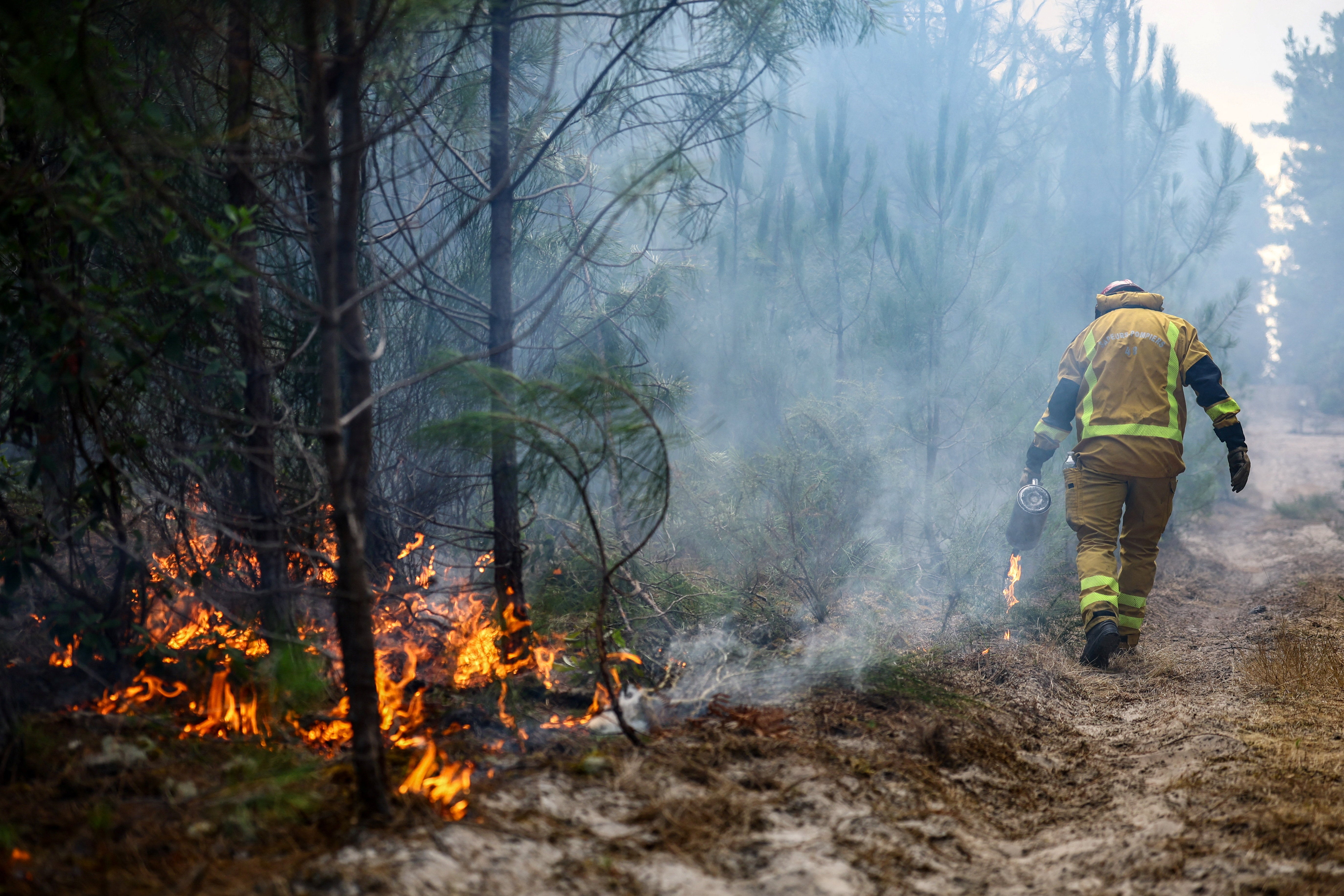 The fire in Gironde has ‘stabilised’ as of Thursday 30 July (Reuters)
However, Wednesday night was “relatively calm”, according to local authorities in Gironde; “This morning the fire remains stabilised,” they added on Thursday. In further good news, a slightly cooler few days are expected in southwest France, with temperatures hitting 34C, rather than the 40C previously seen in the area. A little rain even fell near Bordeaux on Thursday, while the regional firefighting service said they were “reasonably optimistic”.
Firefighters will continue dousing the area with water, but evacuated citizens are gradually being allowed to return home.
However, in the European Commission’s fire danger forecast for 29 July to 5 August, based on the European Forest Fires Information System, it has identified that “very extreme conditions dominate a large area of western and central Europe, with the heaviest concentration across France and the Alpine arc extending into northern Italy.”
The next areas at risk are expected to be in the southeast and Mediterranean regions if hot, dry and windy conditions persist.
Spain
Progress has also been made in Spain. A “monster” wildfire, the country’s largest ever, in the Sierra Oeste region west of Madrid, did not spread further overnight on Wednesday. Emergency services say the fire has been largely contained; there are “almost no flames left”, according to the prefect’s office.
Consequently, the Spanish prime minister Pedro Sanchez has announced the end of a national emergency for fires in the Avila and Madrid regions as the situation has “stabilised”.
However, a new fire broke out on Wednesday in Fermoselle, in western Spain’s Zamora region, not far from the Portuguese border, while authorities are also monitoring a smaller fire in eastern Spain, near Valencia. Large areas of Spain remain at risk, said the country’s interior ministry, with much of northern Spain designated “red” for extreme – the highest risk category.
 Another fire has broken out in Fermoselle near the Portuguese border (Reuters)
Portugal
On Monday (27 July), every northern and central district in Portugal, plus the southern district of Faro in the Algarve, was placed under the highest fire risk alert.
A “severe” fire in Valpaços in the north broke out on 28 July and spread to the municipality of Mirandela, burning through around 23,937 acres. An estimated 90 per cent of the perimeter is now under control, with two small active fronts currently being tackled.
Around 50 municipalities in the interior of the districts of Vila Real, Viseu, Bragança, Guarda, Santarém, Portalegre, Castelo Branco and Faro are at maximum risk of wildfires in the coming days, as reported by the Portuguese Institute of the Sea and the Atmosphere. The Institute highlights that the fire risk will remain high at least until the end of the weekend and are being calculated by the air temperature, relative humidity, wind speed, and the amount of precipitation in the previous 24 hours.
The Lisbon, Porto and Algarve coastal areas most frequented by tourists generally face lower direct wildfire exposure than the inland forest regions. However, smoke, transport disruption and air-quality problems can still affect these areas when major fires burn nearby
Greece
A wildfire is raging across the Greek island of Crete; fires in the Rethymno region in the south of the island are currently burning “out of control on all fronts”, reports Greek public broadcaster ERT, with strong winds preventing firefighting aircraft from flying in to tackle the blaze, according to George Tsambakos, Crete’s deputy regional governor.
Three firefighters have so far been killed in the line of duty while 8,000 holidaymakers have been evacuated from a resort village.
 Three firefighters have died tackling a blaze on Crete (AFP/Getty)
Villages have been evacuated on the Greek island of Paros as firefighters raced to extinguish a large wildfire on Wednesday.
There are also a number of active fire fronts in Plomari on the island of Lesvos. Although 52 firefighters and teams of volunteer hikers are working together to extinguish the flames, a spokesperson for the Hellenic Fire Service warned that strong winds increased the risk of further flare-ups.
Turkey
Wildfires are burning in parts of Antalya and Mugla province (home to the seaside resort of Bodrum) in southern Turkey, both major tourist hotspots in summer. Strong winds have caused the blaze to spread quickly.
Italy
Italy “will face risk at the beginning of August”, according to Zuber. So far, at least seven areas (Sicily, Calabria, Molise, Sardinia, Puglia, Umbria, and Tuscany) have all been badly affected by fires.
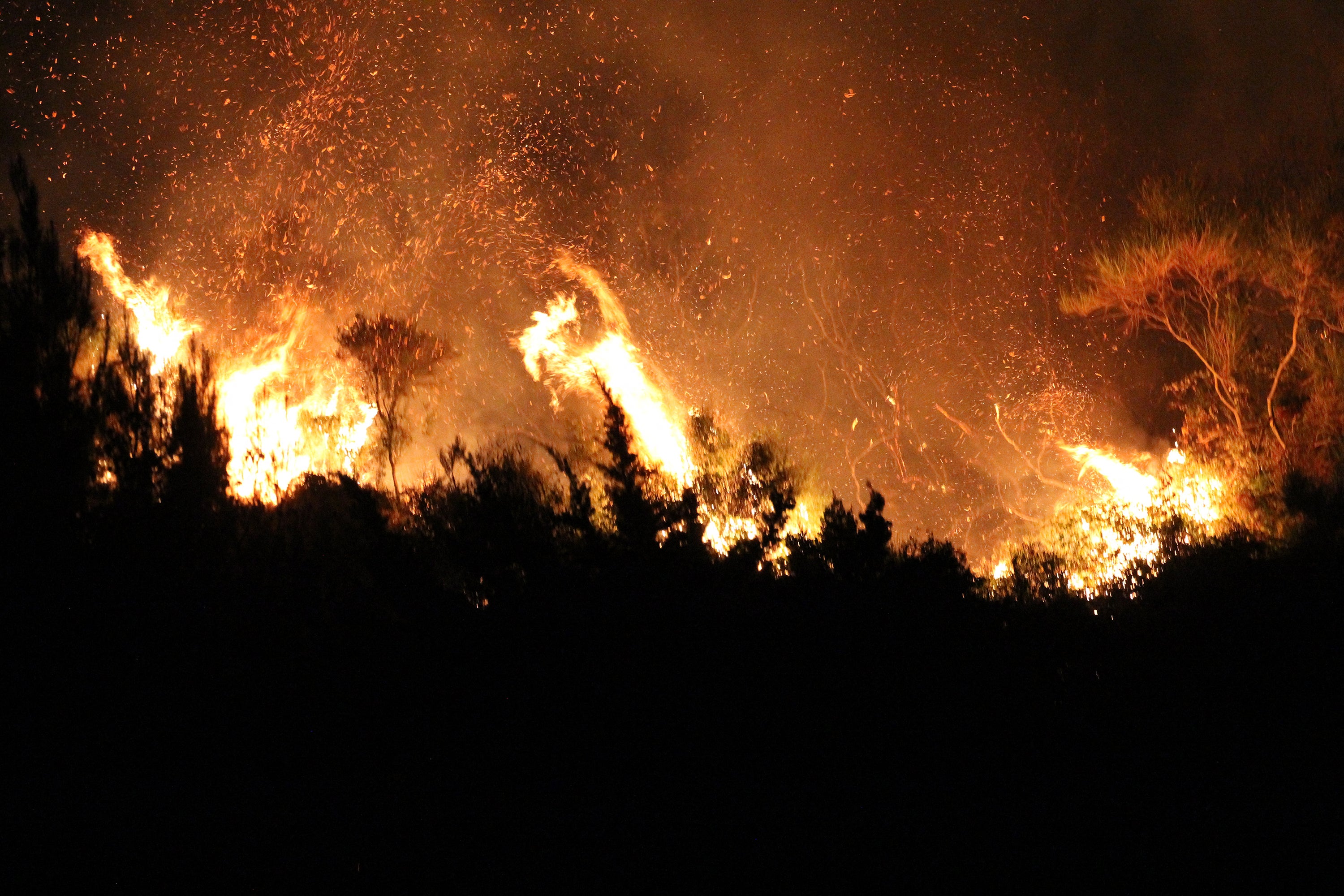 Wildfire burning trees and grass in Sagana in the territory of Monreale, in Sicily on Wednesday (AFP/Getty)
Last weekend, the Italian coastguard had to be deployed to evacuate more than 700 people, including tourists, from the area around the town of Peschici in the southern Puglia region; “The situation is currently under control,” Peschici mayor Luigi d’Arenzo told local daily the Gazzetta del Mezzogiorno. A few days prior, the coastal town of Gallipoli further south lost six hectares of pine forest and a beach resort to fire.
Sicily has also been battling dozens of wildfires after temperatures reached 43C this week.
Northern Italy is at risk of “extreme conditions”, according to the European Commission’s fire danger forecast for 29 July to 5 August, based on the European Forest Fires Information System.
UK
Closer to home, at least 90 firefighters have been taking on a “large-scale, wind-driven forestry fire” in Suffolk after it broke out on Dunwich Heath at 5.30pm on Wednesday.
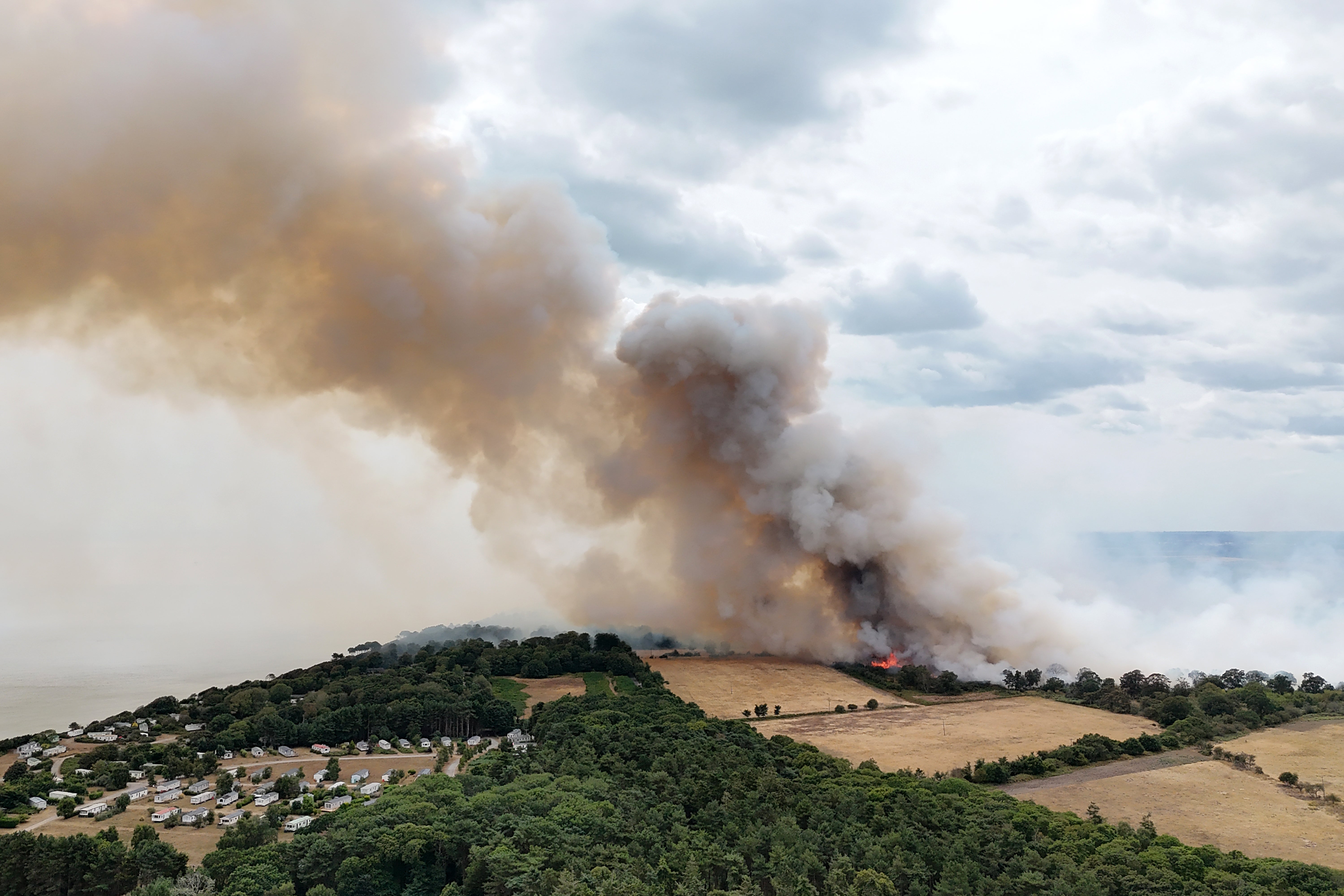 Drought conditions have made Suffolk and much of England susceptible to wildfire (PA)
They expect to spend “24 to 48 hours” extinguishing the flames, fire chiefs said in an update on Thursday morning.
Experts have warned that any fires that break out in the south of England are in danger of becoming “exceptionally severe” because of the long spell of dry weather conditions.
Almost half of England’s population are currently experiencing drought conditions after very little rainfall and back-to-back heatwaves. The areas affected are: East Anglia, Hertfordshire and the whole of London, Thames Valley, Hampshire and the Isle of Wight, Devon and Cornwall, the West Midlands, and Wessex – covering Dorset, Somerset, Wiltshire and Gloucestershire. Drought has also been declared across all of Wales.
July looks set to be England’s driest month on record. In the European Commission’s fire danger forecast for 29 July to 5 August, based on the European Forest Fires Information System, it has warned that the British Isles and Ireland come under its highest risk category of “extreme conditions”.