
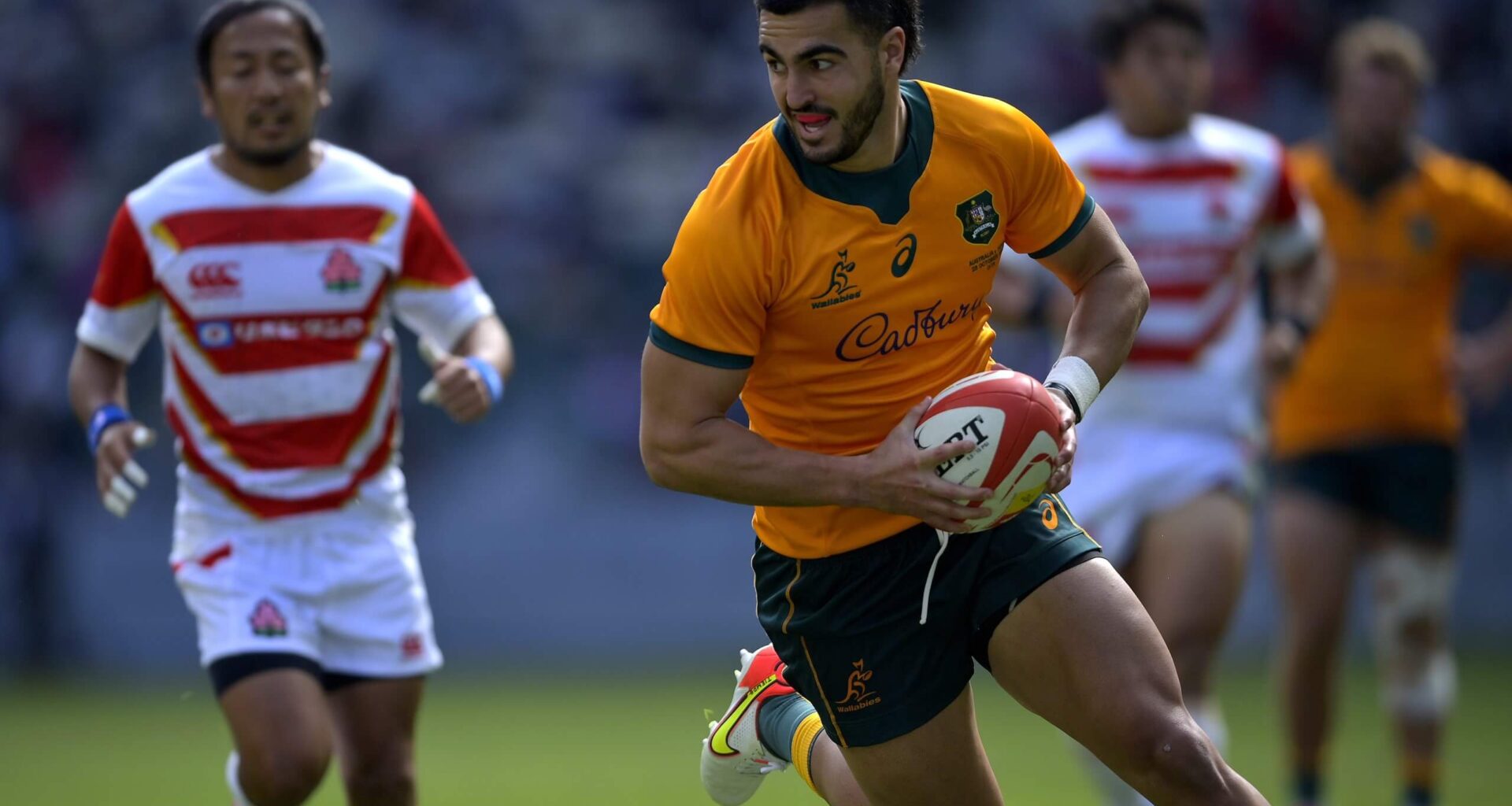
Happy Monday, G&GRs. Well, well, well! Rugby is coming back; only a week to go until the next round of tests. Thank god, because I am having to watch the Commonwealth Games. And there’s only so much I can watch baby seals getting clubbed. So let’s dive into the rugby news in anticipation of the upcoming games. So pour a cup of liquid gold☕ and get that into you while we wander into the mad world of Brisney.

Auckland Blues Women 24 defeated NSW Waratahs Women 17
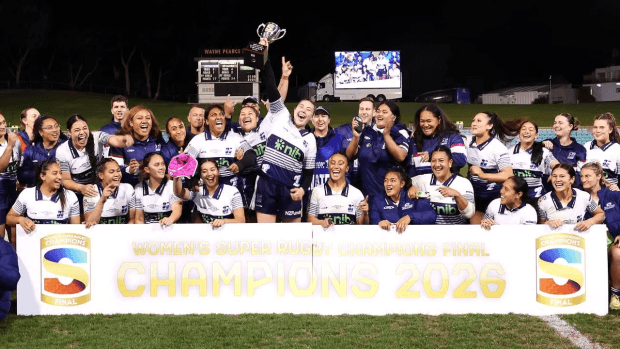
Waratahs Fight But Fall – Waratahs throw everything at Blues but come up one score short in Champions Final. If you were wondering whether the Women’s Super Rugby Champions Final would be a coronation for the Blues, the NSW Waratahs had other ideas. Despite arriving with what looked more like a casualty ward than a matchday squad, the Waratahs pushed the Super Rugby Aupiki champions all the way before falling 24-17 in a cracking contest. They never stopped swinging, they never stopped believing, and they made the Blues earn every centimetre of the trophy.
Coach Mike Ruthven could hardly have asked for more from his patched-up side. Missing a host of Wallaroos including Amelia Whitaker, Rosie Ferguson, Desiree Miller, Georgina Friedrichs and Adiana Talakai, the Tahs somehow found another gear. Ruthven was understandably proud afterwards, praising the momentum his side had built over the past month and the way they took the fight to one of the best provincial teams in world rugby. He wasn’t wrong either — the Blues were made to work far harder than many expected.
The home side struck first through the ever-dangerous Maya Stewart after a beautiful cut-out pass from Caitlyn Halse created just enough space for the winger to do what she does best. Unfortunately for the Tahs, the Blues quickly reminded everyone why they’re champions. Prop Chryss Viliko barged over before Katelyn Vahaakolo produced one of the moments of the match, collecting possession near halfway, chipping ahead, and eventually regathering after Braxton Sorensen-McGee won the race to the bouncing ball. Sometimes you’ve just got to applaud good rugby.
The Waratahs refused to blink. Flyhalf Waiaria Ellis continued her excellent season with a smart try after spotting tired defenders around the ruck before producing two outstanding breakdown turnovers that kept the Blues honest. But just as the hosts looked ready to head into the sheds level, Vahaakolo popped up again for her second try to give the visitors a 17-12 halftime advantage.
When Blues captain Maiakawanakaulani Roos crashed over early in the second half, it looked like the game might finally be slipping away. The Waratahs, however, had discovered a significant advantage up front. Their scrum steadily dismantled the Blues pack, earning repeated penalties, while the rolling maul became an unstoppable weapon. Eventually Brittany Merlo crashed over from close range to cut the deficit back to seven, and suddenly the crowd could sense something special brewing.
The pressure kept building. Danny-Elle Fesolai was shown a yellow card for repeated infringements, giving the Waratahs both momentum and a numerical advantage. They spent long periods camped inside the Blues’ 22 and looked destined to find the equaliser. But championship-winning teams know how to survive, and the Blues produced one final defensive stand, forcing the crucial turnover that extinguished the Waratahs’ hopes.
It wasn’t the fairytale finish for the Tahs, but it was a performance that should leave Wallaroos coach Les Kiss with plenty to smile about. Against the best side New Zealand had to offer, a battered Waratahs outfit proved Australian women’s rugby is closing the gap. On another day, one bounce or one penalty goes differently, and we’re probably talking about extra time.
Three Things We Learned
The Waratahs pack is becoming a genuine weapon – The scrum and rolling maul completely shifted the momentum in the second half. Against one of the strongest forward packs in the competition, the Tahs consistently earned penalties and field position. That’s a foundation the Wallaroos will be happy to build around.
Waiaria Ellis keeps knocking on the Wallaroos’ No.10 door – A try, two critical breakdown steals and excellent game management under pressure made Ellis one of the standout performers on the park. Every big game seems to strengthen her case for higher honours.
The Blues remain champions because they know how to win ugly – The visitors weren’t at their clinical best, but when the game tightened they found a way. Whether it was Vahaakolo’s moments of brilliance or that match-saving turnover inside the final ten minutes, championship teams consistently produce the decisive play when it matters most. The Blues did exactly that.
Kiss says there is still a chance for Lomax

Les shrugs as Lomax packs for PNG, while Gordon remembers he’s actually a flyhalf – If you were expecting Les Kiss to throw himself dramatically onto the floor after Zac Lomax signed his future away to the PNG Chiefs, you’ll be disappointed. The Wallabies coach reacted much the same way most Queenslanders react when someone tells them they’re moving to Sydney.
“Good luck, mate. Shut the gate on your way out.” Lomax’s deal to head back to rugby league in 2028 has predictably sent parts of Australian rugby into another existential crisis. Every departing player apparently signals the death of the code, civilisation and possibly western democracy. Kiss, however, seems to have adopted a radical new coaching strategy known as remaining calm.
Instead of lamenting another cross-code departure, he simply pointed out that if Lomax gets himself fit, tears up Super Rugby AUS and forces his way into the Wallabies squad before he leaves, then everyone wins. That’s how selection is supposed to work. You play well. You get picked. Revolutionary stuff.
The Force winger is still recovering from osteitis pubis, but Simon Cron is busy getting him ready for Super Rugby AUS, where he’ll have every opportunity to remind everyone why Rugby Australia went chasing him in the first place. If Lomax starts scoring tries for fun, great. If someone keeps him out of the Wallabies because they’re playing even better, even greater. That’s called depth—a concept Australian rugby has occasionally treated like Bigfoot: often discussed but rarely sighted.
Meanwhile, the Wallabies’ other returning league experiment, Carter Gordon, appears to have rediscovered that he’s actually quite handy at rugby union. After missing the France and Italy Tests with a calf injury, the Reds playmaker has completed almost a full week of training and is expected to be available for Japan. Kiss said Gordon handled about 90 per cent of training, including enough defensive drills and high-speed decision-making to make most club first fives suddenly remember they left the oven on. In other words, unless he trips over a tackle bag between now and kickoff, he’ll be back wearing gold.
Perhaps the biggest story isn’t Lomax leaving or Gordon returning. It’s that Australian rugby suddenly has competition for places—and the coach actually seems to like it. Imagine that. Wingers competing with wingers. Flyhalves competing with flyhalves. Nobody being handed a jersey because they once played well against Italy in 2023. It’s all terribly un-Australian rugby.
Then again, Les Kiss isn’t Eddie Jones. He’s not threatening to pick six opensides, four league converts and a bloke he spotted running touch at Brothers last Saturday. He’s quietly building depth, letting form decide selection and somehow managing to keep the circus outside the tent. Frankly, it’s unsettling.
Maybe calm competence was the rebuild all along.
Les Kiss rolls up his Sleeves and gets down to it
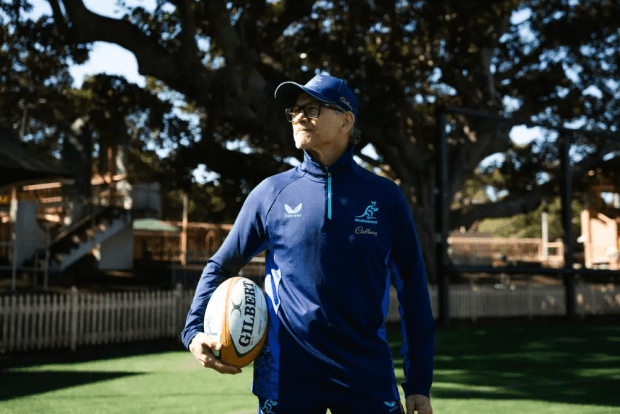
Les Kiss might just be the anti-chaos Wallabies needed – If Australian rugby was a Netflix series, the last decade would’ve been cancelled halfway through season three. We’ve had coaches yelling at referees, coaches yelling at journalists, coaches picking fights with former players, and coaches changing game plans more often than the Wallabies changed flyhalves.
So perhaps it’s fitting that the next chapter begins…under a tree. Not metaphorically. An actual, enormous Moreton Bay fig tree at North Sydney Oval. That’s where new Wallabies coach Les Kiss spent part of this week, back where his top-flight career began with the North Sydney Bears some 30 years ago. The old fig has seen plenty of football over the decades, but even it probably couldn’t have predicted the bloke running around in red and black would one day be Australia’s great coaching hope.
“The mungo is there,” Kiss laughed. “But I’m a rugby man now.” Thankfully.
Less noise, more rugby. One week into the Kiss era and there’s already one glaring difference. Nobody’s talking about the coach. They’re talking about defence. Imagine that. Kiss says the Wallabies have spent the week laying defensive foundations with a new voice running that side of the ball, while quietly tinkering with a few other areas.
“We’ve worked bloody hard, but smart,” he said. It all sounds terribly…normal. Which, after the coaching rollercoaster Australian rugby has endured over the past decade, might actually be revolutionary. No declarations of changing the game forever.
No promises of “DNA”. No mysterious selection philosophies involving players who haven’t played rugby for six months. Just a coach trying to build a Test team. It’s strangely comforting.
Test rugby doesn’t care about excuses – Kiss knows exactly what he’s walking into. After successful stints with Ireland, South Africa and the Queensland Reds, he’s back in Test rugby where every mistake is magnified, and every decision gets replayed 4,000 times on social media. “The bandwidth you have to work with is nothing like Super Rugby,” Kiss explained.
“There’s not much room for error.” He’s right. At Super Rugby level you might survive a lazy defensive read or a poor exit kick. Against New Zealand, South Africa, France or Ireland? Congratulations. You’ve just conceded seven points and spent the next week reading about it online.
Wilson sees the difference – Harry Wilson has probably had the easiest adjustment of anyone. Having already played under Kiss at the Reds, Australia’s captain knows exactly what the new coach brings. Energy. Clarity. And perhaps most importantly, calm.
“He’s had such good energy coming in,” Wilson said. “He just wants everyone to be themselves.” It sounds simple because it is. Great coaches often remove clutter rather than adding it. For years the Wallabies have looked like a team trying to remember twelve different instructions while someone keeps changing the whiteboard. Kiss seems intent on replacing complexity with confidence. That alone might be worth a couple of wins.
It’s only week one… Let’s not get carried away. The Wallabies haven’t beaten anybody yet. Japan away is rarely straightforward, the Rugby Championship looms, and this is still a side that finished last season with more questions than answers. But first impressions matter. The mood around the squad feels different.
The messaging is consistent. The players appear relaxed without looking complacent. And perhaps the biggest compliment anyone can pay Les Kiss after his first week in charge is this: The conversation has shifted away from Les Kiss and back onto rugby. Australian rugby has desperately needed that.
Anyway, that is enough of this old man gibbering crap. Over to you GAGRs! Have at it!
Stay in the loop with G&GR