
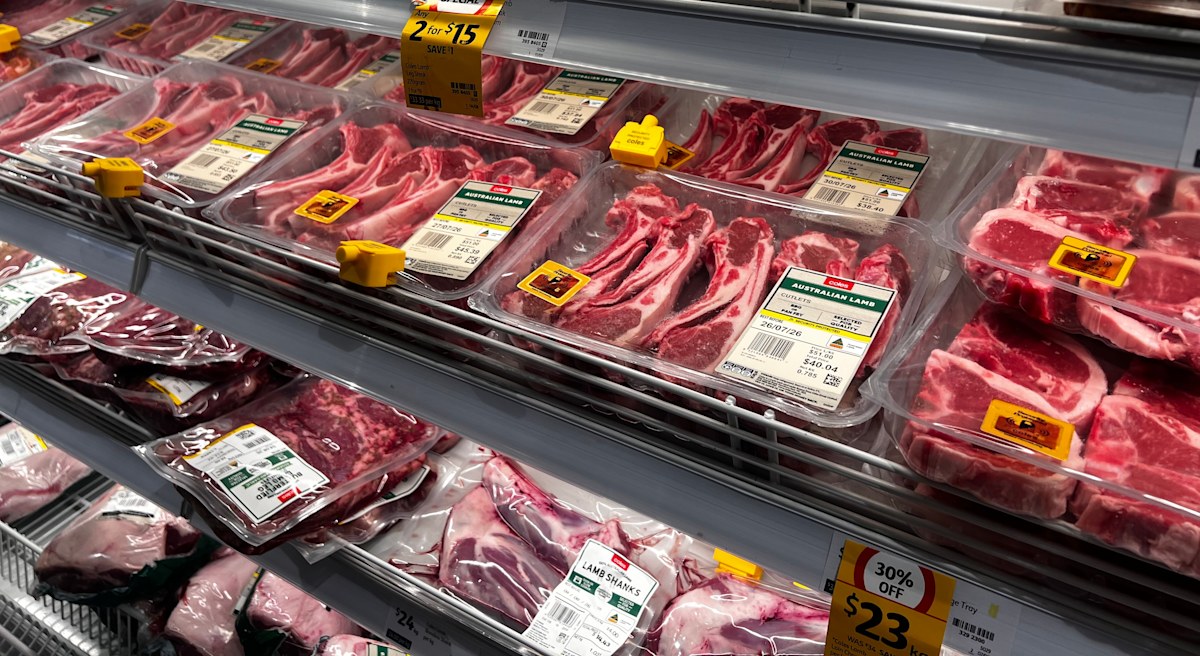
An increasing number of everyday grocery items now feature security tags in what has become a stark reality amid Australia’s cost-of-living pressures and an escalating retail theft crisis.
Once reserved primarily for high-value retail goods like electronics and clothing, anti-theft tags are appearing on basic pantry staples and fresh food. Beyond the psychological shift for shoppers, the move adds friction to self-checkouts, where staff must manually remove or deactivate some tags.
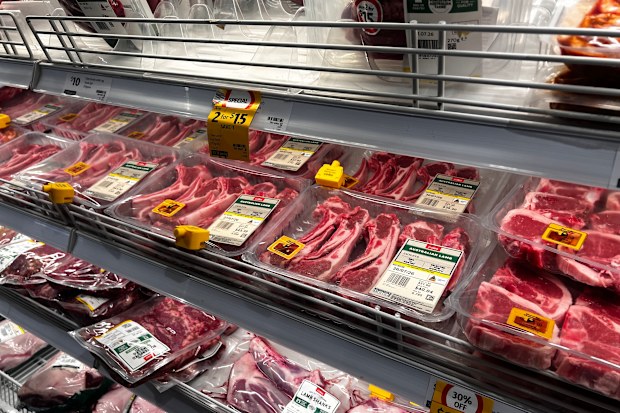
One preserved for electronics and clothing items, security tags are now commonplace at the supermarket. Jo Abi
Why are supermarket security tags multiplying?
While some anti-theft devices are bright and overt, others are subtle. Data from the Australian Retailers Association (ARA) indicates nearly 70 per cent of retail theft is committed by repeat offenders operating within organised crime networks and more obvious measures can act as a deterrent.
Australian Bureau of Statistics (ABS) crime data shows property theft reaching new highs, with 45 per cent of national theft incidents occurring in retail environments. Peak bodies, including the ARA and the National Retail Association (NRA), continue lobbying state and federal governments for tougher penalties for offences against retail workers.
Seventy per cent of retail theft is committed by repeat offenders. Julia Gomina
The most tagged everyday grocery items1. Meat and seafood
Coles has upgraded its bright yellow meat security tags, moving from giant yellow pegs to sleek, highly-visible security clips. These tags are regularly spotted on premium cuts like scotch fillet, lamb cutlets, and lamb shanks.
Woolworths generally favours subtle silver Electronic Article Surveillance (EAS) stickers attached directly to meat packaging.
A Coles spokesperson told nine.com.au, “While most of our customers do the right thing, unfortunately a small number don’t. Measures like this ultimately help us deliver better availability for our customers looking for these products.
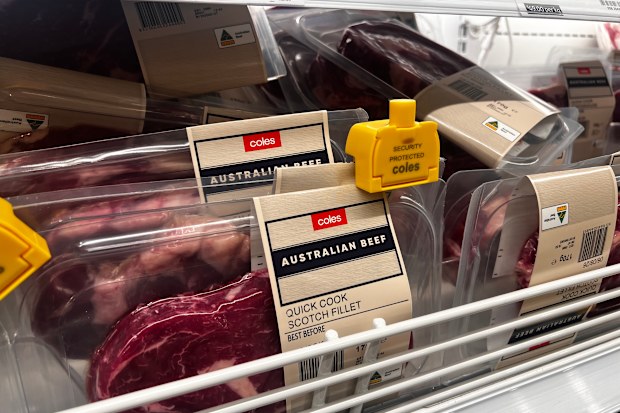
Some security tags are deliberately obvious to act as a deterrent to would-be thieves. Jo Abi
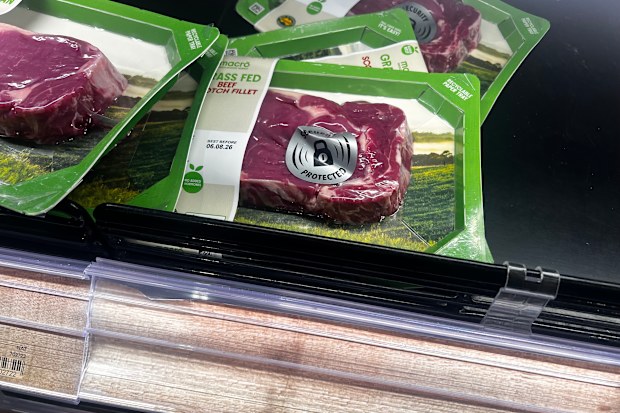
Others are more subtle and deactivate at the point of sale. Jo Abi
“We have been working hard to address retail crime and create a safe environment for our team and customers. Along with working closely with police on this issue, we also have a range of safety and security measures in place including CCTV, electronic article surveillance (EAS), security guards, and de-escalation training for our team.”
2. Baby formula
Tins of infant formula remain top targets for organised theft syndicates. Supermarkets frequently protect formula using top-locking plastic caps, concealed EAS stickers, or clear plastic “keep boxes” that require staff assistance to open at checkout.
3. Cosmetics and personal care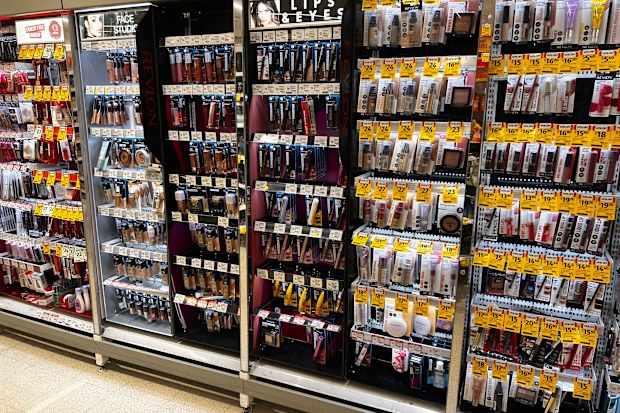
Cosmetics, razors, and electric toothbrush heads are increasingly fitted with security features Jo Abi
High-end skincare, razors, and electric toothbrush heads are increasingly fitted with security features including tags on individual products, attaching locking peg hooks, or fitting them with heavy-duty anti-theft casings.
4. Electronics and chargers
Small, high-value tech accessories such as phone chargers, charging cables, portable power banks and specialty batteries are routinely fitted with hard security tags or stored inside clear protective cases.
5. Premium vitamins and supplements
Rising retail prices for dietary supplements and premium vitamins have turned wellness aisles into high-shrink zones, prompting stores to add hidden EAS tags or lock cases around popular brands.
6. Coffee beans and instant jars
There have even been reports of security features being added to some coffee products, including beans, specialty pods and large jars of instant coffee.
The hidden cost to honest shoppers
The psychological toll on everyday consumers facing increasing anti-theft measures cannot be discounted, consumer psychologist Gavin Northey from Griffith University told nine.com.au.
“Basically, these types of tags can be a little confronting and make people feel they are being surveilled or distrusted, which erodes the ‘warmth’ dimension of the shopping experience,” he said.
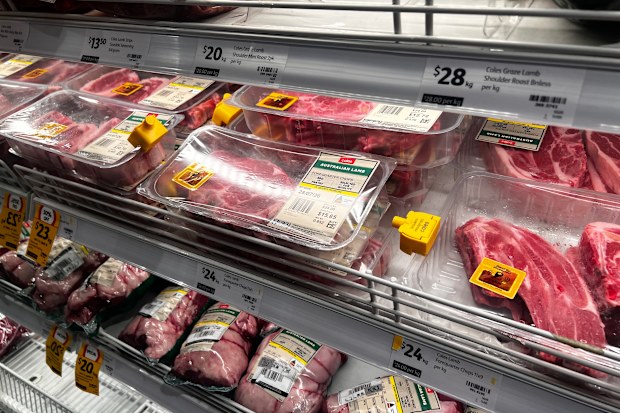
The psychological toll on everyday consumers cannot be discounted. Jo Abi
However, retailers have been left with no choice, with retail theft increasing across Australia by approximately 27 per cent since 2019, according to the National Retail Association (NRA).
Not all of these new security features require manual removal at the checkout, such as Coles’ meat tags. Others operate without staff intervention and deactivate at the point of sale.