
There was a telling moment buried in director Naoki Yoshida’s two-hour keynote kicking off Berlin’s Final Fantasy XIV Fan Festival last weekend.
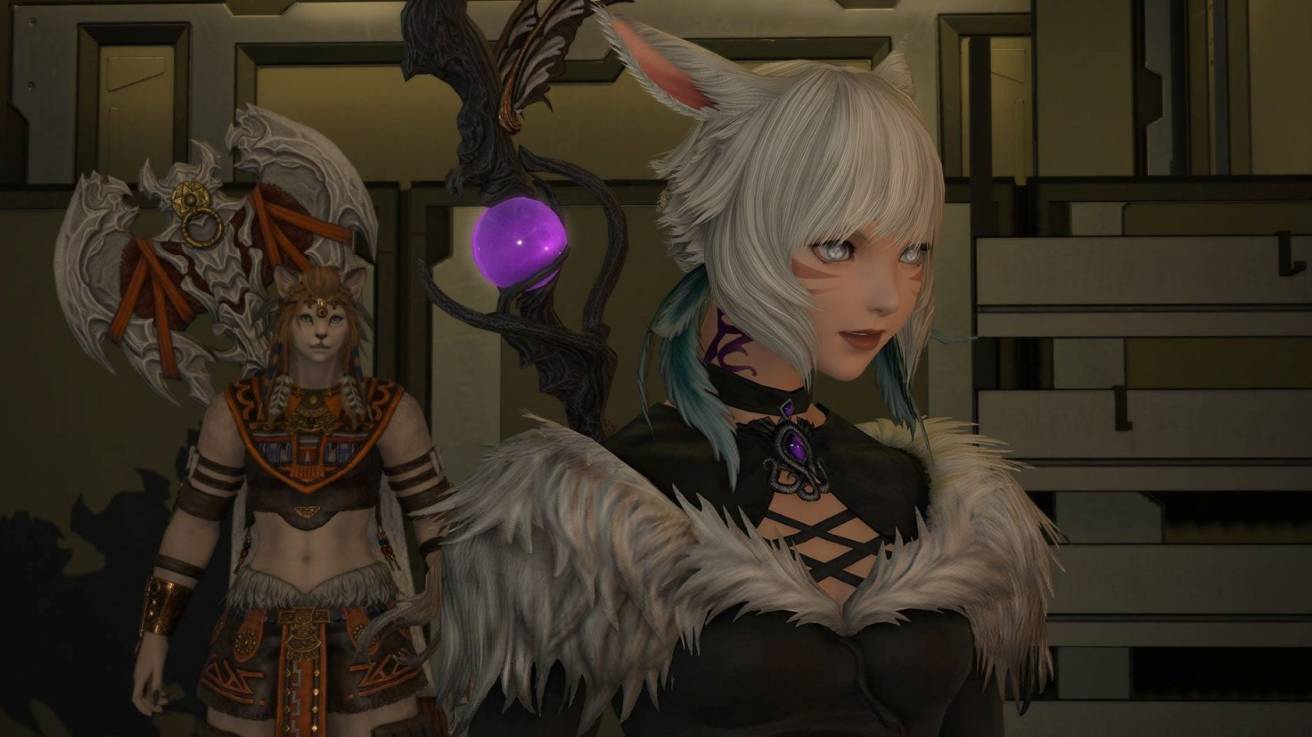
For years, and despite player requests, Final Fantasy XIV forced players who chose the popular cat-people race, the Miqo’te, to wear tribal tattoos on their face as a matter of lore. In the coming expansion, Evercold, and its patches to follow, that will become an option.
Sandwiched between calls from the audience and jostling from his translator Koji Fox to introduce a “butt slider” — a tool to adjust the size of your avatar’s derriere — Yoshida conceded he had initially been opposed to the tattoo change. But it’s happening anyway. It was a small but important admission, and one that speaks to the broader state of Final Fantasy XIV and its parent company Square Enix.
Since reaching its peak around the Endwalker expansion in late 2021 — when Square Enix suspended digital sales of the game outright because its servers couldn’t absorb the demand — Final Fantasy XIV has been Square Enix’s golden goose.
Its Massively Multiplayer Online (MMO) division, which includes both Final Fantasy XIV and Dragon Quest X, is one of the company’s most profitable. Square refuses to separate the two in its reporting, but Final Fantasy XIV is much larger. Put plainly: last year it out-earned Square Enix’s entire blockbuster console and PC games business.
There’s concern from Square Enix’s investors and industry analysts that this is actually a problem. The games research firm Naavik put it bluntly earlier this year: the company risks leaning on declining free-to-play and MMO revenues to subsidise increasingly ambitious AAA launches.
Get the best of Startup Daily straight to your inbox
Want to know the latest in startup news? Subscribe to our daily news and analysis coverage on what’s happening to ANZ startups, investors and the broader ecosystem. And best of all, it’s FREE!
By continuing, you agree to our Terms & Conditions and Privacy Policy.
The most pertinent example is Final Fantasy VII Rebirth. It was, by any critical measure, a triumph. It also missed Square Enix’s internal expectations — and when chief executive Takashi Kiryu conceded to analysts that recent big-budget releases had underperformed, Square Enix shares fell 16%, their steepest single-day drop in 13 years.
Meanwhile Final Fantasy XIV, while still going strong, has moved backwards.
Square Enix doesn’t publish subscriber figures, so the best available proxy is the long-running Lodestone census maintained by the Japanese site Lucky Bancho, which tracks active characters. It recorded around 1.22 million in June 2024, immediately before Dawntrail. It’s latest July 2026 census recorded 950,000 active players.
The financials say the same thing in a different dialect. In the quarter ending June 2025, MMO sales fell 23% year on year and operating profit fell 45%.
The cost of chasing growth
The party line, repeated at almost every event, is that fan feedback is paramount to the game’s longevity and that the team follows it to the letter. But from a veteran player’s perspective, it felt as if development resources were spent courting new players rather than catering to existing ones.
Significant effort went into retrofitting old content so it could be undertaken solo: an on-ramp for players who might enjoy Final Fantasy’s universe but bounce off the MMO aspects of it. The same goes for the graphical overhaul. Nobody will dispute the results — the game has never looked better — but enfranchised players were used to the aesthetics they had, and the dated look was, arguably, only ever a problem for incoming players.
The challenge is that even with updates and tweaks and a generous extended free trial, it is incredibly difficult to convince new players to pick up Final Fantasy XIV. Believe me, I’ve tried.
Its newest and most exciting content — the stuff that makes it into articles and streams — sits behind more than a hundred hours of crucial story. Beyond that, the protracted main scenario also functions as an extended tutorial in how to actually play.
Prospective players can pay for a fast-forward pass to skip it, but risk emerging into much harder content with no idea what to do.
Other items on the fan laundry list, meanwhile, went unaddressed in Dawntrail.
Despite the game now offering 21 combat jobs, many felt similar to play. Outfits and customisations were recycled from patch to patch. Progression from expansion to expansion became predictable. And despite a design that quietly demands daily engagement, the game’s ageing player base simply has less time to give it.
There were improvements too. The game released arguably one of its best raiding series to date in Arcadion, and continued to pump out interesting experimental content for end-game players. But the fundamentals remain unchanged.
The good news is that between the announcements at Anaheim and now Berlin, the game is changing course. Again, from the outside looking in, the Final Fantasy XIV team is refocusing on retention rather than outright growth.
The changes include a revised job system with fewer required inputs and a seemingly sharper focus on job identity. They address the linear aspect of the game by allowing Evercold’s zones to be tackled in any order, with difficulty and level scaling adjusting to compensate. (There’s quiet hope among the fanbase that this could also be applied to older content, letting players tackle early-game dungeons with their endgame kit.) And there’s a colour picker for eyes, hair and skin, face paint layering, and the ability to toggle individual pieces of gear on and off.
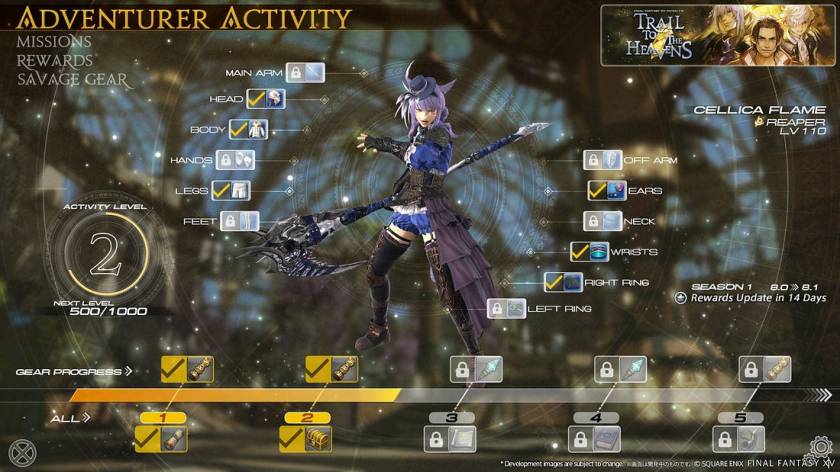 A new screen teasing the updates, revealed during the Anaheim Fan Fest. Source: Square Enix.
Keeping players
Perhaps the most crucial tweak: a shift from daily to weekly reward structures, accommodating less regular play. A direct concession to fans who can’t spend the hours they used to.
These changes feel preemptive rather than reactive: stemming attrition rather than a kneejerk response to it.
It is overblown to suggest Final Fantasy XIV — a game with tens of millions of registered accounts and a fanbase that fills convention halls on three continents in a single year — is anywhere near the fate Bungie handed Destiny 2 earlier this year, when it shipped a final live-service update and walked away.
Even with Square Enix’s investor predicament, this remains an enormously successful game. Dipping back into business jargon: Square has told the market to expect a weaker year ahead, with operating income forecast to fall more than 10% across the 12 months to March 2027. That window contains Evercold’s launch in January. It also contains Final Fantasy XIV’s arrival on Switch 2 next week. Two events that should push MMO sales up, but its still tempering expectations.
Final Fantasy XIV’s director Naoki Yoshida built his reputation on rescuing the game’s failed 2010 launch. After years of riding that success and backing it with strong stewardship, the same muscles are now at work realigning a game that, left on its current trajectory, will further veer off course. Even if that means defying his own better judgement for the sake of fan service.
At this rate, a butt slider isn’t off the table.
Do you play Final Fantasy XIV? What do you make of the changes ahead? Let me know in the comments. You can also check out my extended account of Final Fantasy XIV Fan Festival in Berlin below.