
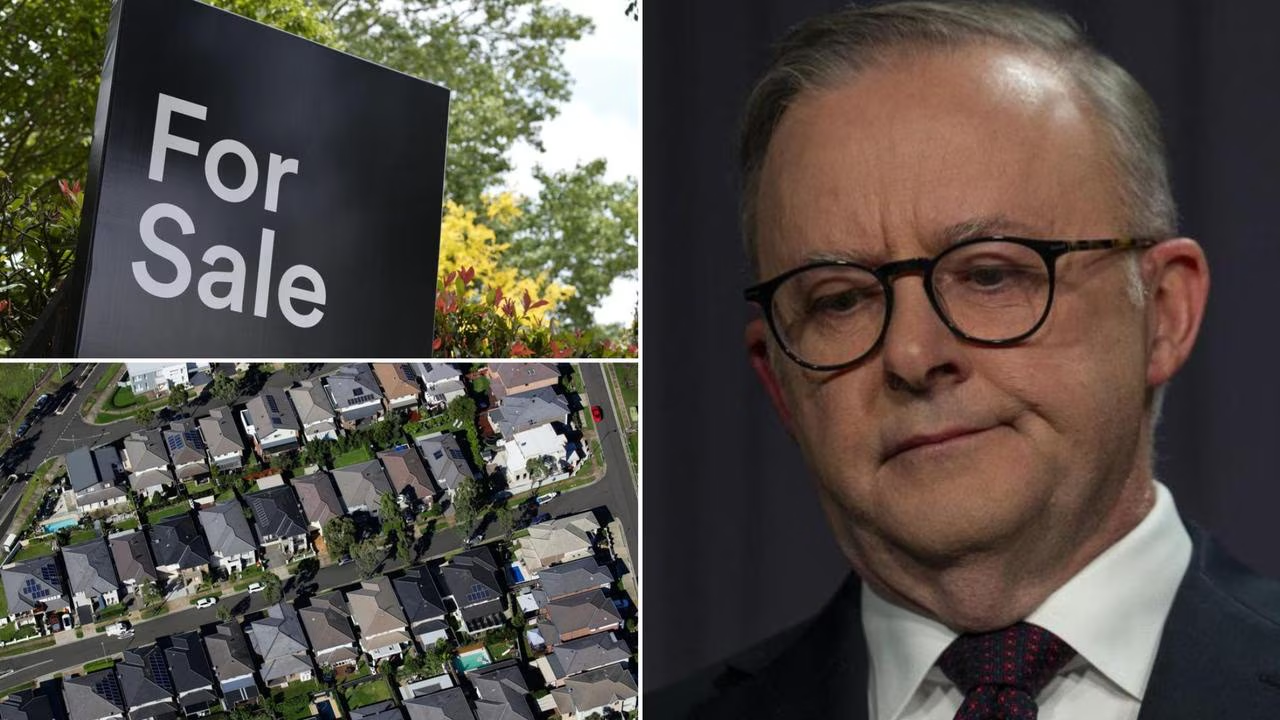
The Albanese government’s property tax changes are creating a boom at one end of the housing market – and it’s not good.
Nathan Birch, the head of property management firm Blink, which manages close to 7,000 rentals across the country, said seasoned investors are now snapping up cheap homes because they can no longer afford pricier ones.

Mr Birch said following the changes to negative gearing rules, investors now want “cash-positive” investments that are only available at the lower end of the property market.
He also said banks are lending less now the negative gearing add back has disappeared. This is shutting out first-time homebuyers from the market, he said.
“Where [investors] could buy a $1m property, now they can only buy $750k, so there are more people being pushed into the cheaper end of town,” he told news.com.au
“The market hasn’t fallen, per se – there are some areas that have softened like top end prices [which] are volatile. The cheaper stock, where you expect the first homebuyers to be, is quite hot and it’s causing a boom in the bottom end”.
He also said rents have been increasing by up to 15 per cent in certain markets and partly blamed the government’s changes to negative gearing rules and the capital gains tax.
“It’s sad for tenants out there. Everyone’s being pushed from every angle, today. Everything’s going up in value, and it’s not just the owner being an a******* and pushing it up, council rates have gone up 10 per cent, in some instances, and inflation is very high across all corners of the market. People are hurting on all fronts,” he said.
“But for tenants, that’s an extra $50 a week. If you’re spending $400 a week on rent and you’re getting paid $800 or $1,000 a week, $50 is a lot for those guys.”
He said mass migration, coupled with fewer homeowners wanting to sell, was creating a national shortage of affordable housing.
“Let’s say we’ve got 100 landlords and 100 tenants, there’s a seat for every bum to sit on. But the problem we have today is that we’re putting more tenants in the market because of massive immigration. There are more bums but the same amount of seats,” he said.
‘Heading for the exits’
It comes as rent increases have already surpassed the $2 weekly increase forecast by Treasury and are expected to rise at speed in the coming months as landlords try to plug losses caused by the removal of negative gearing on established homes.
The latest data from property insights group PropTrack shows national rents are at a high of $670 a week after climbing $10 over the June quarter, according to reporting by The Australian.
Meanwhile, national real estate firm The Agency found a 15 per cent rise in homeowners requesting a sales appraisal of their properties in the past four weeks.
Two in five landlords of properties being run by the real estate agency said they expected a minor to moderate hit to their existing assets and were reconsidering their investment strategies. A further 10 per cent said the impact would be “significant” and were rethinking residential property altogether.
National head of property management, Maria Carlino, said rents have risen between 9 and 10 per cent since the budget across homes the firm manages in Melbourne, Sydney, Queensland and Perth.
One Townsville house will see its weekly rent jump from $500 to $570 in November while a Brisbane apartment will rise from $590 a week this month to $680 in February.
PSK Financial Services planner James Gerrard said this was a sign investors were “heading for the exits.”
“Although negative gearing rules are grandfathered, they are seeing an increase in interest rates and repayments,” Mr Gerrard told The Australian.
“They’re finding it a little bit hard from a cashflow perspective, and they’re now wanting to increase rents as much as possible … given a preference for cashflow positive properties.”