
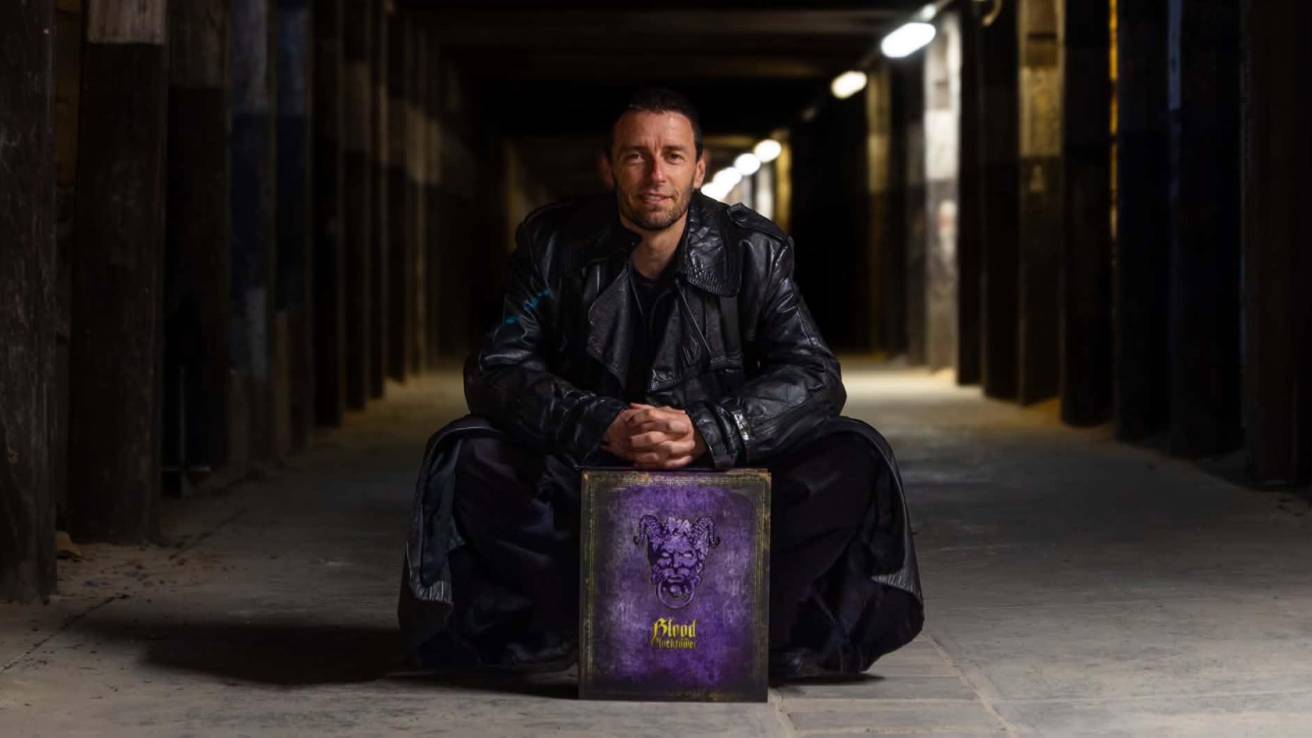
Steven Medway had always felt like an outsider. The Sydney-based gaming entrepreneur lost his dad at 10 and spent years drifting between jobs, houses, courses and hobbies, looking for connection.
He turned to board games. The inspiration to create his own was born out of a desire to fulfill that need for connection he and many others feel in modern life.
A decade on, Blood on the Clocktower is one of Australia’s most successful modern game exports.
The social deduction game has sold more than 100,000 sets across every continent, been translated into nine languages and drawn an estimated two million players in China alone.
The business has sustained roughly 50% year-on-year growth – without a single dollar spent on advertising, or a cent of outside investment.
Smarter business news. Straight to your inbox.
For startup founders, small businesses and leaders. Build sharper instincts and better strategy by learning from Australia’s smartest business minds. Sign up for free.
By continuing, you agree to our Terms & Conditions and Privacy Policy.
Designing for inclusion first
It began as a passion project tested at a festival Medway lovingly refers to as ‘Burning Man for Aussie families’.
“All ages, all demographics, some gamers, some non-gamers,” he tells SmartCompany. “And they just absolutely loved Clocktower. This was a collection of otherwise outsiders coming together to play a game that I made. That’s when I knew I had something special.”
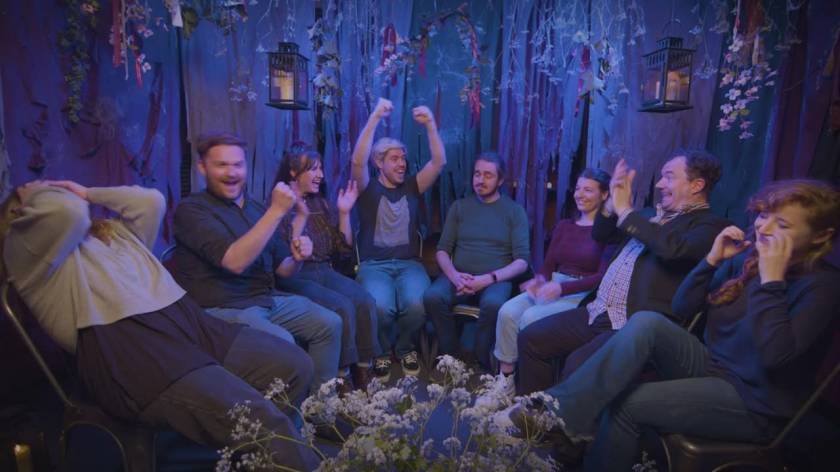 Image supplied.
Unlike most social deduction games, dying in Clocktower doesn’t remove you. Dead players keep talking, keep arguing, keep voting. They remain just as much a part of the game as everyone else.
“Exclusion sucks,” Medway says. “I like inclusion. I like people being involved right up until the end.”
Medway recalls one game where a player with a severe intellectual disability and cerebral palsy, who was also deaf, wanted to join in – but not tokenistically. So Medway built a character called the Revolutionary that let him pair with his carer and play immersively.
“There’s a lot of design decisions I’ve made where I’m thinking about inclusion and participation first, and then the theme and the mechanics come later,” he says.
Players have credited the game with helping them through anxiety, isolation and illness. A friend with severe social anxiety said it was the only place she felt among friends.
A woman with terminal cancer said it was the only place she could comfortably engage with others in spite of her diagnosis.
It’s also ignited bonds with people from around the world. Medway recalls speaking to a fan who organised a group of 20 people on a Clocktower-themed holiday – they came home with matching Clocktower tattoos.
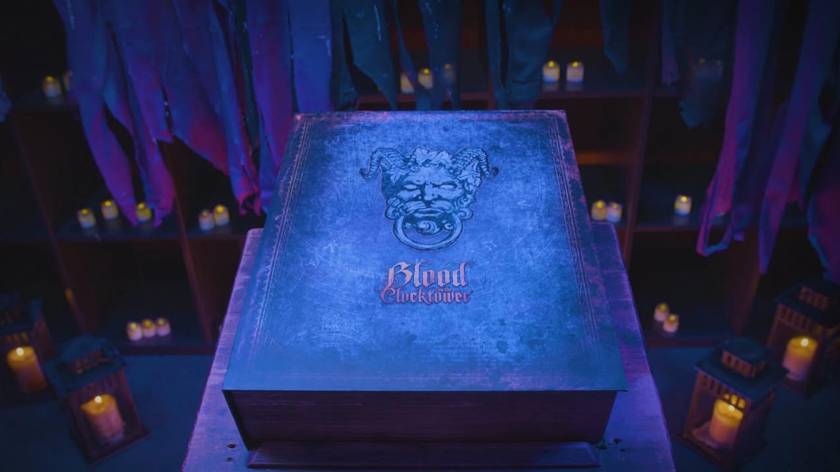 Blood on the Clocktower game. Image supplied.
Medway started designing in 2014, but didn’t launch on Kickstarter until 2019. In between, he toured conventions handing out handmade copies, including MIT’s gaming club.
“I would go from city to city, globally, making handmade copies, giving them to community leaders, helping them learn the game so they could run games,” he says. “When the Kickstarter came around, all our marketing was already done.”
Did he consider ads? “It was never a thought, because I never had any money. My goal was never to sell the game – it was to get it played.”
The campaign became Kickstarter’s most popular project across all categories for two days running, ultimately turning $10,000 into $1.42 million. But Medway is also candid about what they didn’t do well.
“What we got wrong was art presentation and manufacturing readiness. We went to Kickstarter with a game that was three-quarters ready. Every manufacturing company has a big red button that says ‘print now’, and we were not ready to press that button.”
COVID compounded those issues and the game shipped late. But what carried them through was the product and the community.
“We had a great game, we had an engaged and thriving community, and it served us well in the long run,” he says.
“A blessing in disguise”
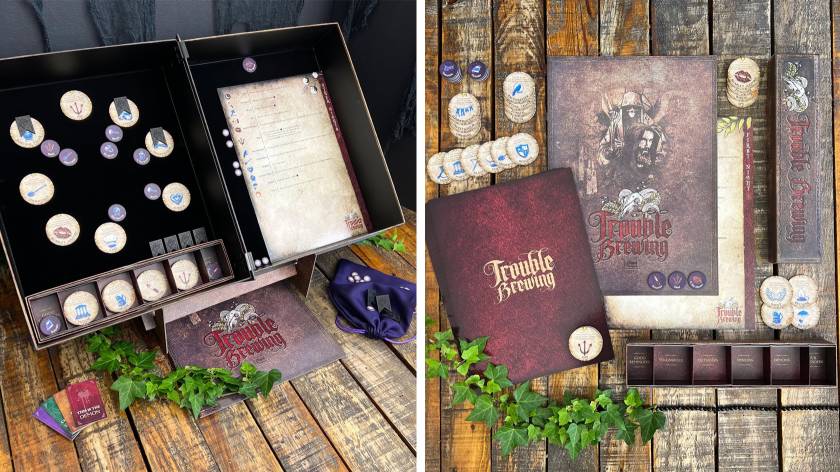
Blood on the Clocktower is, in Medway’s own words, big, heavy and expensive to produce – and nobody wanted to publish it. Yet here it stands in all its glory, with pre-orders still strong for each new production run.
 Blood on the Clocktower game. Image supplied.
“I would have gone the traditional route if I could, but it was a blessing in disguise that we couldn’t,” he says. “We made the decision to self-publish, start up a company and figure out everything from scratch. If you think making a game is hard, try running a company.”
The payoff was owning the fan relationship, something he says a third-party publisher would have cost him. It’s since enabled a digital version, sold-out comedy shows at the Edinburgh Fringe, conventions, novels and interest from major US film and TV production houses.
But China was arguably the biggest surprise, with the digital game spreading like wildfire during lockdowns into a culture that prizes the ‘third place’.
“It’s not work, it’s not home. It’s board game cafes or murder mystery cafes,” he says, adding that there are 10s of 1000s of such ‘third places’ in the country.
“Clocktower ticked all of those boxes – social connection, a venue to get together, and fun cooperative-competitive events – and it came at a time when that was exactly what they needed.”
His approach to fan content is unusually permissive too. He draws the line “with a very wide, very faint permanent marker”, blocking only commercialisation and impersonation. Several fan-made characters have even become official.
The most affecting moment came in a Shenzhen store he hadn’t known existed, staffed by a dozen full-time storytellers. One, Gary, showed him a photo of his baby son.
“He said, ‘This is my son, and when he grows up he’s going to be a Blood on the Clocktower storyteller, just like his father. I wanted to thank you for making this game, because it allows me to have a job that I love that makes me enough money to support my family.’”