
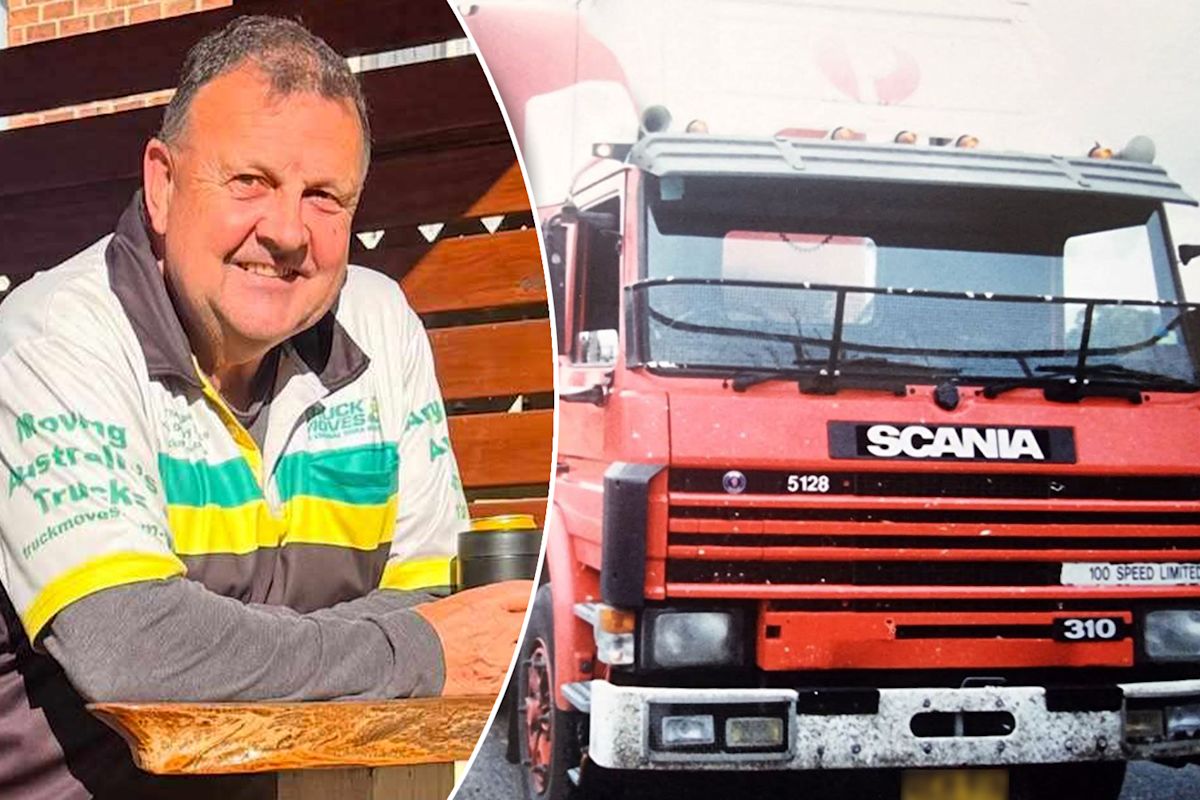
After spending 44 years behind the wheel, veteran truck driver Peter Miles thought he still had a few more years left in the industry.
That was before reading about Australia’s tougher heavy vehicle penalties in a Yahoo News Australia Facebook post. The 65-year-old said the new rules and hefty penalties played a part in walking away from truck driving.
Commenting on the story, Peter wrote: “44 years in transport, and finished up last week, these rules were a deciding factor for doing so, be vigilant brothers and sisters, they are targeting the wrong areas”.
The former Australia Post driver, who mainly drove on the east coast of the country, told Yahoo News that while the new penalties weren’t the sole reason for his retirement, they left him questioning whether it was worth continuing.
“We’re in the middle of selling a house, so that was a factor as well,” he said.
“But with these new laws, I just thought, ‘What’s the use?’ I thought I was going to be there a little bit longer.”
New fines spark mixed reaction among truck drivers
From August 1, hundreds of thousands of Australian truck drivers became subject to tougher penalties under changes to the Heavy Vehicle National Law (HVNL), with fines for 50 offences increasing and the most serious reaching $26,610.

The veteran truck driver says tougher penalties of up to $26,610 are “targeting the wrong areas”. Source: Supplied
The harshest penalties target fatigue-related breaches and falsifying work diary records, measures designed to improve safety across the freight industry.
While Peter said dangerous drivers should absolutely be held accountable, he believes regulators are focusing on experienced operators instead of addressing the issues that contribute to unsafe behaviour.
“I think they’re targeting the wrong area,” he said.
“It’s an ageing workforce out there, and the blokes that have been on the road a long time know their job.
“They know fatigue management.”
Veteran driver says focus should be on training and licensing
Instead, Peter believes better driver training and licensing standards should be the priority as the industry struggles to attract new drivers.
“When I got my truck licence back in 1982, you couldn’t just jump straight into a semi,” he said.
“It was all incremental. You had to gain experience before moving up to the next level. That’s what’s changed.”
Peter also questioned whether increasing penalties alone would improve safety, arguing drivers continue to face pressures that aren’t always understood by those outside the industry.
“Timelines are always there,” he said.
“You’ve got to be somewhere at a certain time, you’ve got to drop freight off at a certain time.”
He also claimed enforcement officers sometimes focused on minor administrative errors rather than dangerous behaviour.
“They’re getting too picky,” he said.
“If you spelt a suburb wrong or wrote the wrong thing in your work diary, they’d go right through it.”
Do you have a story? Contact newsroomau@yahoonews.com

Peter questioned whether the increase in some fines will make Aussie roads safer. Source: Supplied
Despite his concerns, Peter said he understood the importance of strict safety standards, having spent much of his career with Australia Post, where heavy vehicle operations were already closely regulated.
He said drivers still needed to meet requirements around fatigue management and load restraint, but believed enforcement should focus on serious safety issues rather than minor paperwork mistakes.
“Some blokes are their own worst enemy too,” he said, adding that drivers needed to show respect when dealing with authorities.
RELATED

Peter worked mainly for Australia for 44 years. Source: Supplied
The future of trucking
Despite his frustrations, Peter said he still believes Australia’s truck drivers play a vital role in keeping the country moving and wants to see the industry become more attractive to the next generation.
“The biggest thing, to me, is the training and licensing,” he said.
“And the facilities on the road have got to change too. Some of the rest areas are absolutely putrid.
“They’re screaming for truck drivers, and they’re just driving people away from the industry.”
You can also follow us on Facebook, Instagram, TikTok, X and YouTube.