
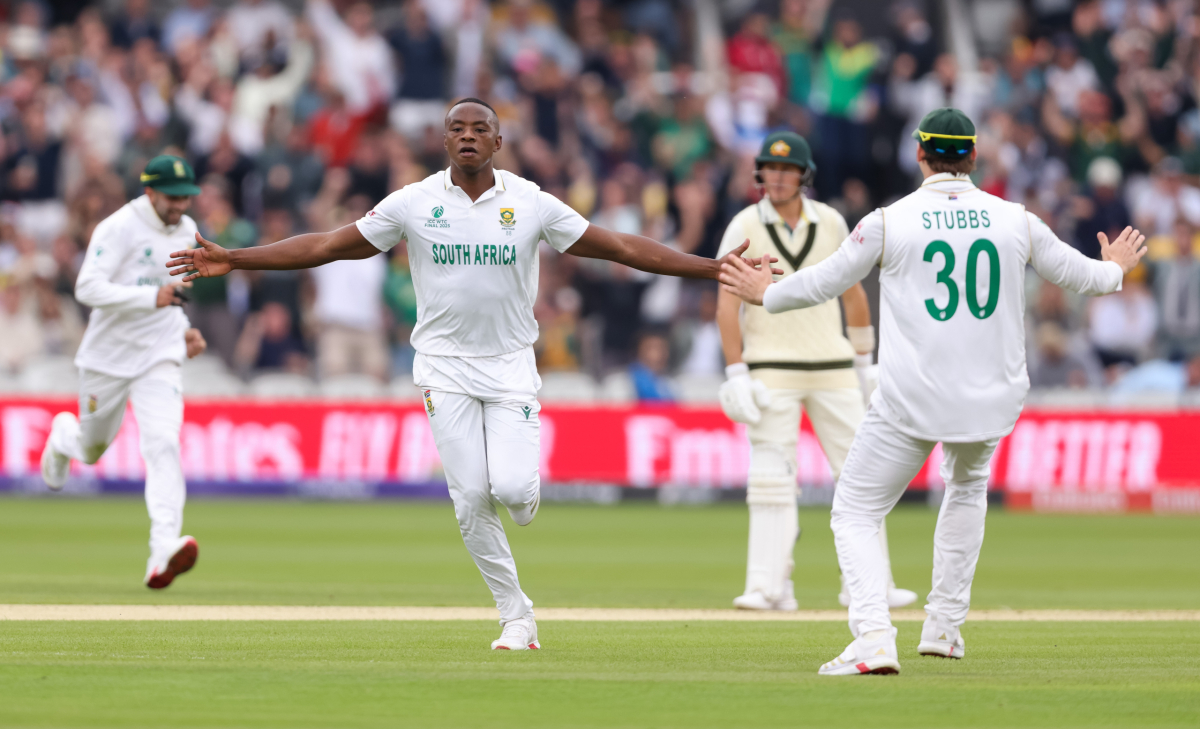
Australia, Bangladesh and England offer South African cricket a rare chance to restore the longest format to the centre of summer, writes Lukhanyo Gqokoma.
South African cricket is heading towards the kind of home summer that once felt normal but now looks like a luxury.
Australia will return for their first Test tour of the country since the 2018 ball-tampering scandal. Bangladesh follow for two Tests before England arrive for three, led once again by Joe Root. From October to January, the Proteas will play eight Tests at home.
It may be the best summer of cricket South Africa has staged in years. The quality of the opposition matters, but so does the fact that Test cricket will once again occupy a meaningful part of the calendar.
Franchise cricket has done enormous good for the game. It has created wealth, provided players with careers beyond international cricket and brought a younger audience into the sport. T20 has also produced its own tactical depth and some outstanding matches.
READ: Singh seals opening CPL win against Hendricks’ Kingsmen
Franchise cricket arrived and the old borders fell away. Graeme Smith wore the same colours as Shane Warne, while Ricky Ponting walked to the crease beside Sachin Tendulkar. Rivals who had defined a generation became allies, and cricket seemed to redraw its own map.
Those combinations now happen so often that much of the shine has worn off. A player finishes one competition, changes shirts and appears in another league days later. At its worst, the cycle begins to feel like an algorithm: bowl, hit, celebrate, move on.
The cricket can still be absorbing, and the pressure on the players remains real. Yet a franchise result rarely carries the national consequence or shared memory of an international match.
Franchise cricket is still important. The game may simply have overcorrected.
T20 cricket grew in part because the longer formats needed new energy and new money. Cricket found both, but its administrators have since pushed so far towards the shorter game that Test cricket now has to fight for space in its own sport.
The formats can speak to different audiences. T20 and Test cricket can feel as distinct as rugby sevens and the 15-a-side game. Both require elite skill, but their rhythms, tactics and physical demands create two different experiences.
T20 delivers speed and impact within a few hours. Test cricket builds tension from session to session, giving a contest time to turn and demanding constant adjustment from the players.
Both belong. They simply offer different rewards.
The players continue to tell us which version carries the most weight. Lhuan-dre Pretorius has already found success in T20 leagues, yet has described Test cricket as his ultimate ambition. Dewald Brevis, a player introduced to much of the world through his power hitting, has also called the format the pinnacle.
That should matter. The generation supposedly raised for franchise cricket still wants the Test cap, the long spell and the hundred that takes an entire day to build.
South Africa’s own history explains why. Supporters remember Graeme Smith walking out to bat in Sydney with a broken hand. They remember Makhaya Ntini taking 10 wickets at Lord’s, Hashim Amla making 311 at The Oval and Faf du Plessis surviving for nearly eight hours on Test debut in Adelaide.
They remember AB de Villiers shelving almost every attacking instinct to save a Test, and Jacques Kallis producing defining moments over nearly two decades. More recently, they watched Aiden Markram’s century at Lord’s carry South Africa towards the World Test Championship title.
ALSO: Rickelton fireworks eliminate Ferreira’s Phoenix
Allan Donald’s furious battle with Michael Atherton at Trent Bridge remains part of the same history. That period gave South African supporters countless other moments that still carry meaning years later.
Now ask yourself how many franchise matches you remember in the same detail. A few stand out, but the list is much shorter. That difference has little to do with the quality of the cricket and everything to do with its context.
No two current Proteas players represent the cost of a shrinking calendar better than Keshav Maharaj and Kagiso Rabada. Maharaj is South Africa’s most successful Test spinner and one of the country’s finest, yet he reached his mid-thirties with only around 60 Tests behind him.
Rabada has spent much of his career among the world’s leading fast bowlers. He reached 300 Test wickets in fewer deliveries than any bowler before him, yet the calendar has provided too few appearances during his prime.
Their records deserve celebration, but they should also make us wonder what might have been possible with fuller series and a more substantial schedule. South Africa have produced two world-class bowlers during an era that has given them too few stages.
Financial realities matter. Test matches cost more to stage, demand more time and often bring smaller returns than a packed T20 competition. Nostalgia alone will never settle those accounts.
But cricket becomes diminished when administrators judge every format by its quickest source of income. If Test cricket disappears, the sport will lose the form that provides its deepest examination of skill, courage and endurance. Cricket may survive, but it will become smaller.
The 2026-27 summer should therefore be more than a rare feast. Australia, Bangladesh and England will give South Africans the chance to reconnect with the rhythm of a full Test season.
It should also remind the people running the game that Test cricket remains wanted and relevant. It is the ambition of the players, the source of the sport’s strongest memories and the format that makes an international summer feel significant.
Photo: Paul Harding/Gallo Images