
The 2026-27 Fantasy Guide is now available! Projections, writeups on each team, and much more! Get yours at the Dobber Sports store.
–
“If He Gets PP1” All‑Stars is exactly what it sounds like to seasoned fantasy managers: players who already drive offense for their teams but, for one reason or another, are stuck on the second power‑play unit instead of the top one.
The gulf between PP1 and PP2 can be enormous. Look at Edmonton in 2025–26 — their first‑unit regulars piled up 54, 42, 33, and 29 power‑play points. (You can probably guess at least some of the players.) Zach Hyman, the fifth member of that group, missed more than a quarter of the season and still produced 15 PPP. Every one of those players handled at least 80% of the team’s power‑play minutes when healthy. No other Oiler cracked 7 PPP, and no skater who played at least 25 games reached even 30% of the available minutes.
League‑wide, every one of the top 30 scorers logged more than 50% of their team’s power‑play time last season. For the players highlighted here, a single deployment shift could unlock a massive jump in production.
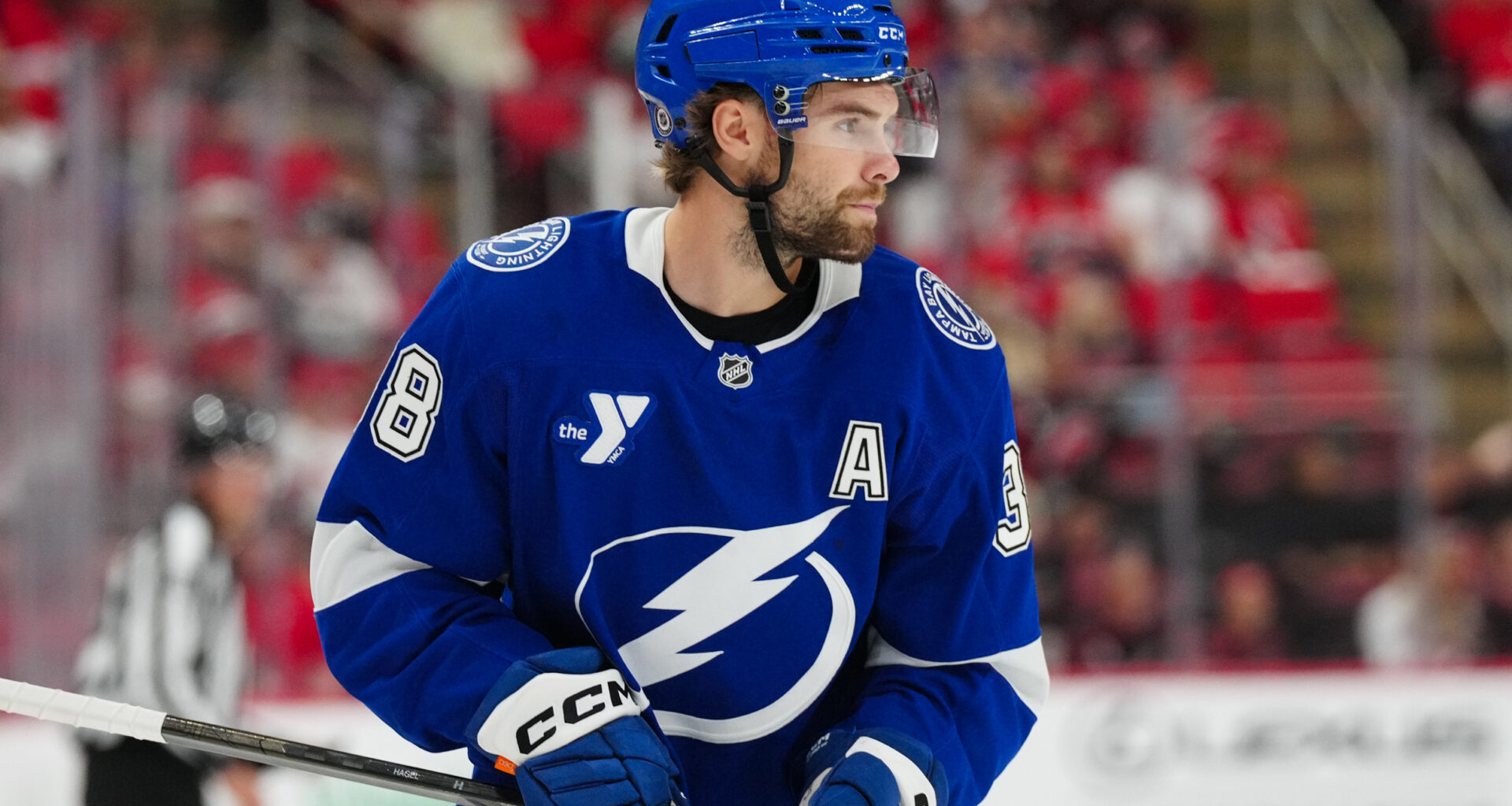
Brandon Hagel (45% PP)
Hagel was the only top‑60 scorer in 2025‑26 who didn’t receive at least 50% of his team’s available power‑play minutes while in the lineup — a rare feat in today’s NHL. He’s becoming the new Nikolaj Ehlers in that sense: a highly productive even‑strength winger who continually gets shortchanged on PP1 opportunities.
Despite the limited usage, Hagel still tied for 10th in the league with 61 even‑strength points, adding just 12 more on the power play. Simply put, Hagel made the most of the minutes he did get. For context, Oliver Bjorkstrand logged 62.4% of his team’s power-play time — more than Hagel. However, Bjorkstrand has since signed with the Rangers, potentially opening the door for Hagel to climb.
There’s also a meaningful playoff data point. Hagel spent much of the Lightning’s seven-game first-round series with Montreal on the top power play, scoring two power‑play goals, showing he can produce when given the role.
If Tampa finally commits to him as a full‑time PP1 fixture, Hagel’s ceiling rises meaningfully. Even if he remains stuck around 45% power-play usage, his elite even‑strength production keeps him fantasy‑relevant. A deployment bump could turn him into a borderline elite player.
Alex Tuch (33.1% PP)
Tuch has never been a major power‑play producer, and that didn’t change in 2025‑26. Even while receiving essentially PP2‑level deployment in Buffalo, he still showed encouraging signs, posting a career‑high 7 power‑play goals and a strong 75% PPIPP, proving he can contribute when he’s actually involved.
Now he’s heading to a new team (Washington) on a fresh contract, and his power‑play outlook becomes one of the biggest fantasy questions. Pushing someone like Alex Ovechkin off PP1 is a tall order, but the real battle may be between Tuch and fellow newcomer Jordan Kyrou for that final PP1 spot. A rising young talent like Ryan Leonard could also factor into the mix.
Tuch’s even‑strength production is already reliable. If he lands meaningful PP1 minutes, even intermittently, his ceiling jumps noticeably. His fantasy value in 2026‑27 may hinge entirely on how that competition shakes out.
Ivan Barbashev (19.1% PP)
Across his first five seasons in St. Louis, Barbashev recorded just one power‑play point. The Blues simply didn’t view him as a scoring threat, and he never earned meaningful power-play usage. Even now, despite settling in as a reliable 45–60 point forward, Barbashev has still never cracked double‑digit power‑play points in a season because he’s never been a true PP1 fixture.
That doesn’t look likely to change. Although Pavel Dorofeyev was moved in the offseason, the most realistic candidate to fill Vegas’s open PP1 spot is Shea Theodore, not Barbashev. Unless a regular PP1 forward gets injured, Barbashev is almost certain to remain an even‑strength producer.
The good news: Barbashev still carries fantasy value in multicategory formats thanks to his hit totals and steady 5‑on‑5 scoring. But without a path to PP1, Barbashev’s ceiling remains capped, and managers should continue to view him as an even‑strength specialist rather than a power‑play breakout candidate.
Brock Faber (20.9% PP)
No player was expected to feel the impact of the Quinn Hughes trade more than Faber. He had been rotating on and off Minnesota’s top power‑play unit before Hughes arrived, and the assumption was that Hughes would push him off PP1 entirely and suppress his fantasy value in the process.
That didn’t happen. While Faber won’t reclaim PP1 as long as Hughes is in town, his production held up far better than most anticipated. Before the trade, he posted 15 points in 31 games, including four power‑play points. After Hughes joined the Wild, Faber actually increased his scoring pace, recording 36 points in 48 games — a 61‑point pace over a full season. He added seven power‑play points during that stretch, not a huge total but certainly respectable for a secondary‑unit defender.
Faber’s defensive reliability and two‑way ability remain his calling card, but Minnesota’s depth and the likelihood he continues to skate alongside Hughes should keep his production fantasy‑relevant. Even without PP1 access, he’s shown he can generate enough offense to remain rosterable in most formats.
Noah Dobson (31.2% PP)
For the first time in five seasons, Dobson finished with single‑digit power‑play points, a clear sign of how much his role changed in Montreal. Just as Hughes pushed Faber off PP1 in Minnesota, Lane Hutson has a firm hold on the Canadiens’ top unit, and he isn’t giving it up to Dobson or anyone else.
Dobson’s late‑season production also raised concerns. He posted just two points in his final 14 regular‑season games, then followed that with one point in 13 playoff games. It’s not a guarantee he hits another wall in 2026‑27, but his upside is undeniably capped on PP2, even if Montreal ices a competent second unit.
The most realistic expectation is that Dobson’s fantasy output ends up looking similar to Faber’s: solid even‑strength production, respectable totals, but limited ceiling without PP1 access. He’ll remain useful, but the days of top‑tier power‑play upside appear to be over, at least in Montreal’s current setup.
Honorable mentions
Beckett Sennecke (60 PTS, 13 PPP, 44.4% PP) – gap in icetime between PP1 and PP2 in Anaheim not that wide, has spent time on PP1 and could be on PP1 this season
Anthony Mantha (64 PTS, 13 PPP, 49.1% PP) – possible PP1 with New Jersey
Rasmus Andersson (47 PTS, 13 PPP, 41.1% PP) – was often on PP1 in Calgary before being traded to Vegas, in similar boat as Barbashev
–
Follow me on X @Ian_Gooding and Bluesky @goodsfantasyhockey.bsky.social