
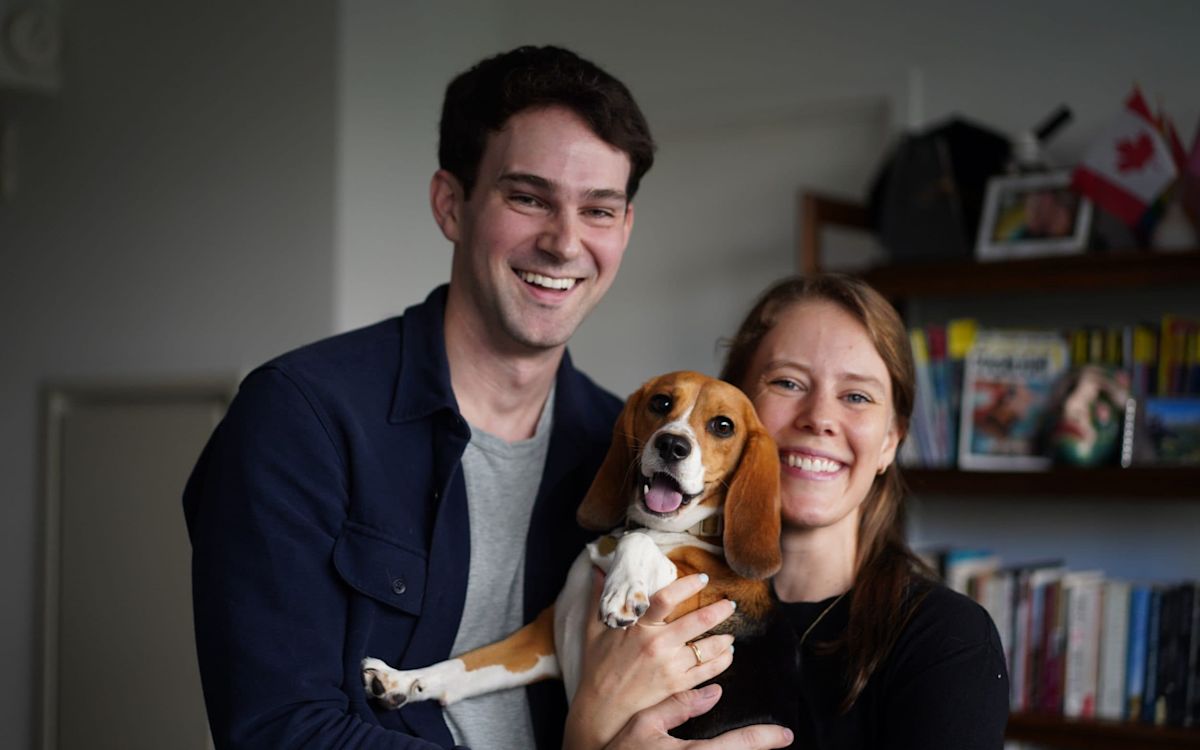
A scientist with a dog allergy has bred a puppy that will not make him sneeze, in a breakthrough that could help prospective pet owners.
Matt Walker used a gene-editing technique to produce a hypoallergenic beagle named Bailey whose saliva and hair no longer contain a key allergy-causing protein.
“The feeling right now is sort of a mix of relief, awe and gratitude that it worked,” the geneticist said.
He created Bailey and twin Alfie using a Nobel Prize-winning technique called Crispr, which acts like genetic scissors to alter genetic code.
Despite being a lifelong dog lover, Mr Walker’s allergies kept him away from puppies growing up. Even breeds that were supposed to be more hypoallergenic, such as his family’s goldendoodle, gave him itchy eyes and painful rashes.
Mr Walker and a team of scientists edited the genetic code inside dog skin cells, switching off the main gene responsible for producing allergy-causing proteins.

‘I’m grateful it worked,’ sad Mr Walker of his triumph with Bailey – Mary Conlon/AP
Then they transferred the edited genetic code into eggs that went into a beagle surrogate that gave birth to two healthy female pups in September 2024. Scientists tested their saliva and fur and did not find signs of the allergy-causing protein.
They also performed an allergy test, pricking Mr Walker’s skin with extracts from Alfie and Bailey’s saliva and dander. His skin reacted to samples from a poodle and goldendoodle, but not from the beagles.
However, it may take years before the people who suffer from dog-related allergies can buy a pet like Bailey.
Scientists have to monitor the long-term health effects of the genetic tweak and find ways to commercialise the approach to make it affordable.
“It opens the door to a lot more people being able to own pets,” said bioethicist Arthur Caplan at New York University’s Grossman School of Medicine.
Researchers have tried to create hypoallergenic pets before, mostly using cloning. But this led to sicker pups that were too genetically similar.
Two years ago, researchers used Crispr to reduce levels of an allergy-causing protein in a cat named Alsik. But it is not yet clear whether this technique is safe to be tested on other cats.
Bailey lives with Mr Walker in New York and Alfie lives in Florida with another scientist.
The results of the gene editing were published in the Crispr Journal.