
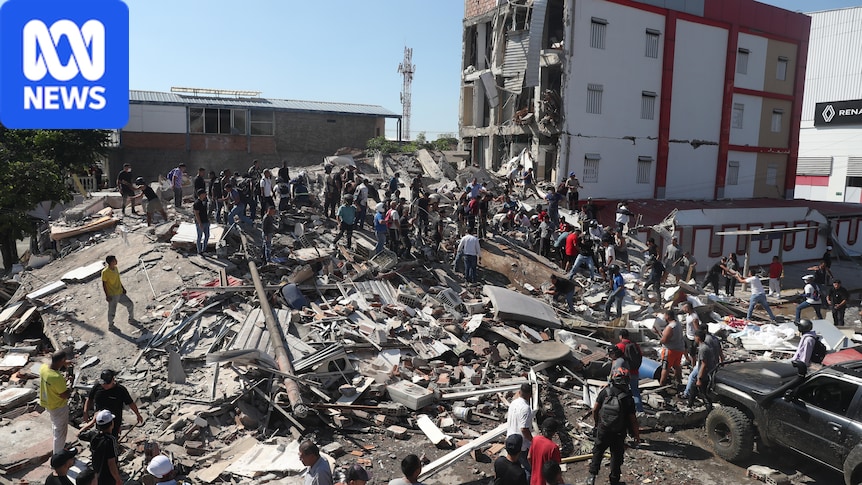
Colombia has declared a national emergency after a powerful earthquake struck in the country’s west, killing at least 111 people and collapsing buildings.
The Colombian geological service and its American counterpart the US Geological Survey (USGS) put the magnitude at 7.4, with an epicentre 100km underground in the west of the country. Tremors were also felt in Panama, Ecuador and Venezuela.
The National Unit for Disaster Risk Management (UNGRD) said it had received reports from nine departments and all 32 departmental capitals where the quake was felt, triggering evacuations and initial reports of damage.
The USGS said “significant casualties and damage are likely and the disaster is potentially widespread” as a result of the quake.
Colombian President Abelardo de la Espriella said that in addition to 111 deaths, a further 87 people were injured and that 61 buildings had collapsed.
The highest reported death toll was in the western province of Risaralda in Colombia’s coffee-growing region, where Governor Juan Diego Patino, speaking by phone to Caracol Television, reported 42 fatalities.
In the province’s capital of Pereira, social media images showed a building with a cracked facade crash to the ground, sending up a dark cloud of dust and debris as onlookers on the street darted away.
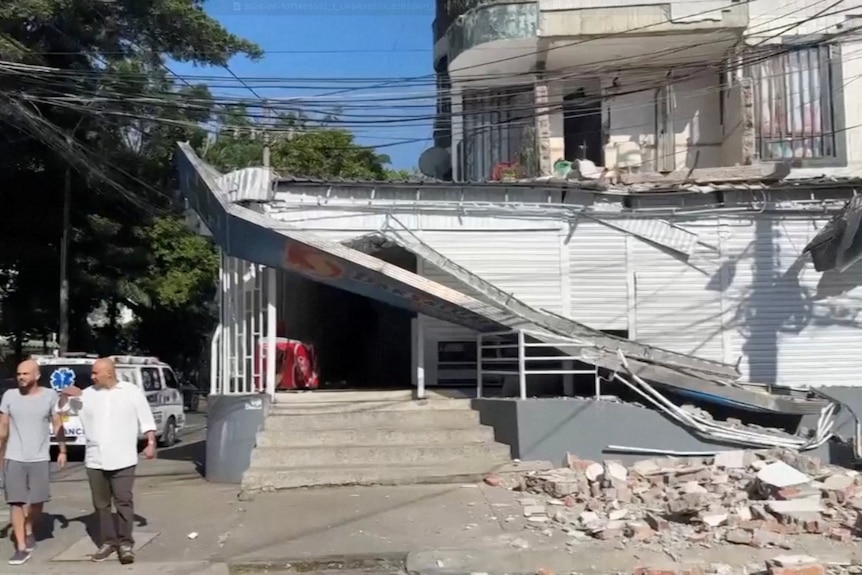
Vision showed a number of collapsed buildings in the city of Cali. (Reuters)
At least six Colombian airports suspended operations.
Residents in San Jose del Palmar, near the quake’s epicentre, were also being warned to be on alert for aftershocks.
‘My entire house shook’
Injuries and significant damage were reported in the Pacific Colombian province of Choco, while the mayor of the nearby city of Cali, Alejandro Eder, reported that at least 20 buildings had collapsed from the quake, trapping people inside.
“At this point, two people have already been rescued alive, one elderly woman and one young girl. There are more people trapped,” Mr Eder told Blu Radio.
“We have at least 12 critical points and 25 collapsed structures that we are responding to.”
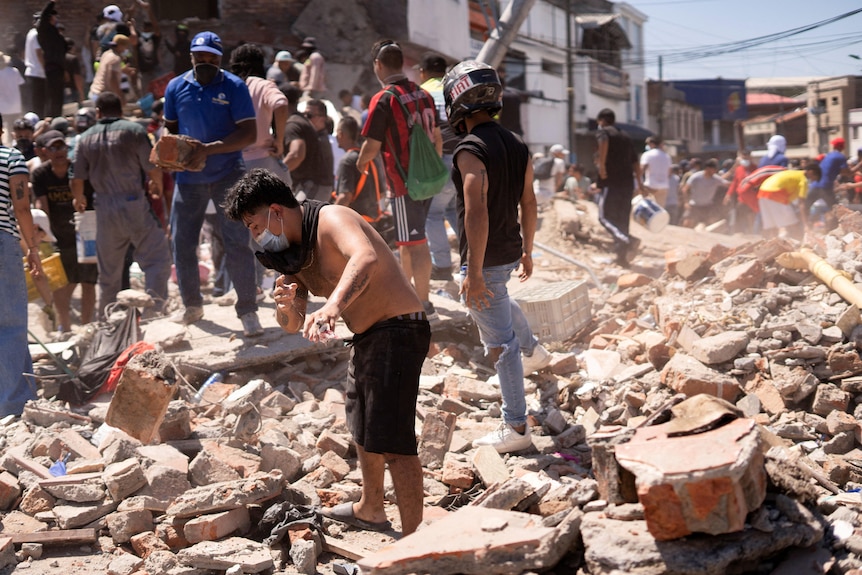
The earthquake has caused “potentially widespread” damage across parts of Colombia, the USGS says. (Reuters: Camilo Rodriguez)
Jorge Moncayo, a 64-year-old taxi driver in Cali, said he saw plumes of dust shoot up across the city from his home in hills of the city as buildings collapsed. Residents in the city and rescue workers were searching the rubble for survivors.
“My entire house shook,” he told AP.
“I’ve never lived through such a powerful earthquake.”
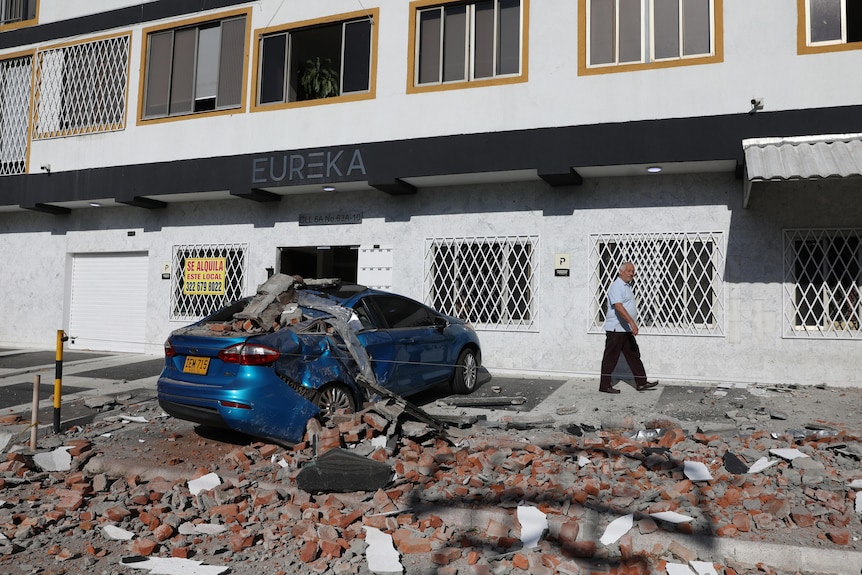
The worst reports of damage were in the Colombian city of Cali. (AP: Santiago Saldarriaga)
Following the quake, Colombian President Abelardo De La Espriella said he had “directly assumed leadership of the emergency response in José del Palma”.
“I have requested from the director of the UNGRD a detailed report on the situation and the most urgent needs. I will also be personally in Pereira to accompany the affected people and verify the Government’s response,” he wrote on X.
“You are not alone. The State is present and acting.”
Having been sworn in as president just days ago, the disaster represents the first major test for Mr De La Espriella’s administration.
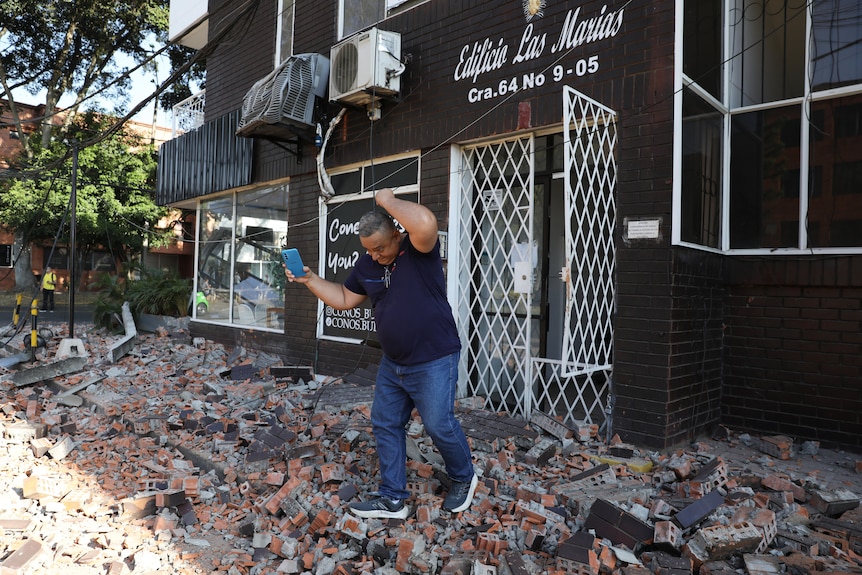
Local officials from multiple provinces were reporting damage and collapsed buildings following the quake. (AP: Santiago Saldarriaga)
‘The images are truly shocking’
The US’s Tsunami Warning System said there was no risk of a tsunami following the earthquake.
The provincial governor Nubia Carolina Cordoba-Curi took to X to provide an update on what she described as “a major earthquake”, warning local residents about aftershocks.
“Although the epicentre was near San Jose del Palmar, there are injuries and significant damage to buildings in the capital, Quibdo,” she said.
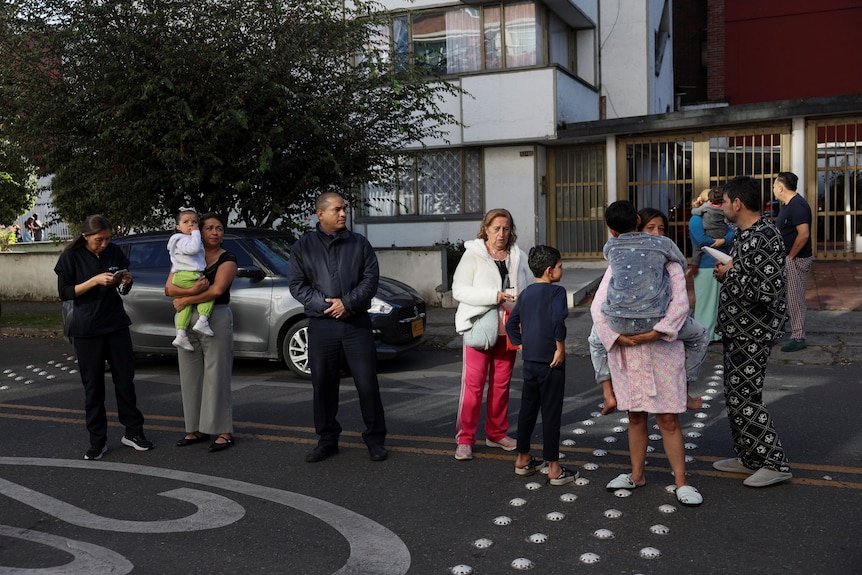
People gather outside a building following an earthquake in Bogota, Colombia, August 10, 2026. (Reuters: Luisa Gonzalez)
The governor of neighbouring Risaralda province, Juan Diego Patino, told local Blu Radio there was “serious damage to some buildings” in Pereira, the provincial capital.
“What has just occurred is very severe. The images are truly shocking, with people injured and building facades collapsed,” he said.
The temblor follows two back-to-back 7.2 and 7.5 magnitude earthquakes in Venezuela in late June. Those earthquakes destroyed hundreds of buildings and killed more than 5,000 people.
Wires/ABC