
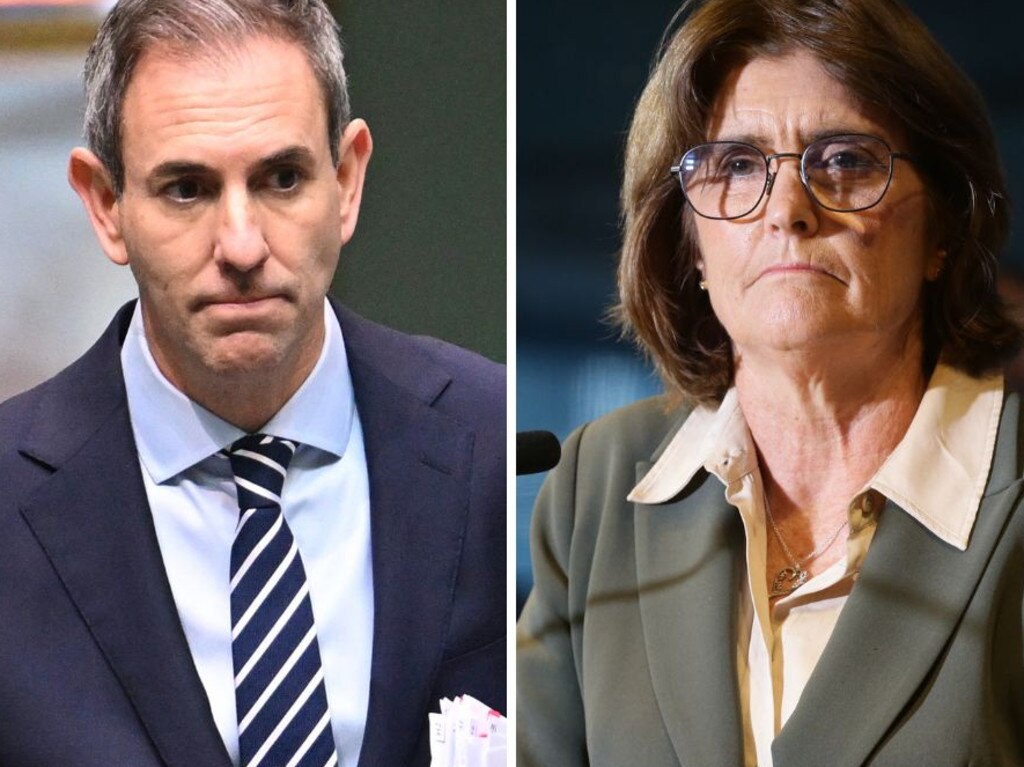

RBA Governor Michele Bullock will make a rates announcement today. Picture: Christian Gilles
ANALYSIS
There’s one key measure of inflation that the RBA is powerless to move against.
Even when the central bank hikes rates, prices in this category seem to just carry on rising.
And Labor’s newest tax policies are actually making this measure worse.
The inflation category I refer to is housing.
Even as headline inflation fell for the third straight month to sit at 3.8 per cent, according to the latest consumer price index (CPI) released by the ABS, housing kicked ahead, rising for the third straight month to hit 6.8 per cent.
MORE: RBA to make Aussies lose $100k today
But how is this possible? Everyone knows house prices have been coming down. The downturn has been well publicised with abysmal auction results and the threat of negative equity dominating the news cycle.
It’s possible because house prices aren’t measured in the inflation basket. Rather, the housing category is made up of construction costs, utilities and rents.
Ray White Group chief economist Nerida Conisbee pointed out that a large contributor to the housing inflation number was electricity, with costs rising more than 22 per cent over the year as government rebates ended.
MORE: Thousands of Aussies on brink of losing homes
Ray White Chief Economist Nerida Conisbee.
“However, the pressure extends beyond energy,” Ms Conisbee wrote in a report on inflation and policy. “New dwelling costs rose 5.8 per cent as builders continued to pass on higher labour and materials costs, while rents increased by 3.6 per cent.”
Ms Conisbee points out that rate hikes are useless against this type of inflation.
“They do not reduce construction costs or create more homes,” she observed. “Instead, they increase financing costs for developers and make some new projects less viable.”
While this is happening, Labor’s budget night policies around negative gearing and capital gains tax have already begun to work, in the sense they’ve dissuaded investors from entering the market.
MORE:RBA ‘kidding themselves’ over rate hike threats
The result? Fewer rental homes made available for tenants and, inevitably, higher asking rents. But hold onto your horses, because even though rents continue to steadily rise, Ms Conisbee believes the worst is yet to come.
“Fewer investors also means less potential rental supply,” she said. “The impact is not yet substantially visible in the CPI because it takes time for changes in investor activity to flow through to the rental market, but we expect this to become more apparent over coming months.
Housing inflation tracks well above the CPI. Picture: Ray White Group.
“The result is an unusual divergence. House prices are already falling, but that does not necessarily mean housing is becoming cheaper. Construction costs remain elevated, rents continue to rise and the cost of adding new housing remains high … Housing policy and monetary policy are working against each other.”
40PC CRASH: Worst Aus home price hotspots
Meanwhile, a separate study from Compare the Market revealed that two in three Aussies are concerned that another rate rise could break their budgets and leave some not just cutting down on discretionary spending, but dipping into savings to pay their weekly essential bills.
Compare the Market’s economic director David Koch said further rate increases would compound existing financial pressures on families.
“Many Australians feel like they’ve already absorbed as much as they can,” Mr Koch said.
“People aren’t just worried about higher mortgage repayments; they’re also concerned about what it could mean for their grocery bill, savings, financial goals and overall wellbeing.”