
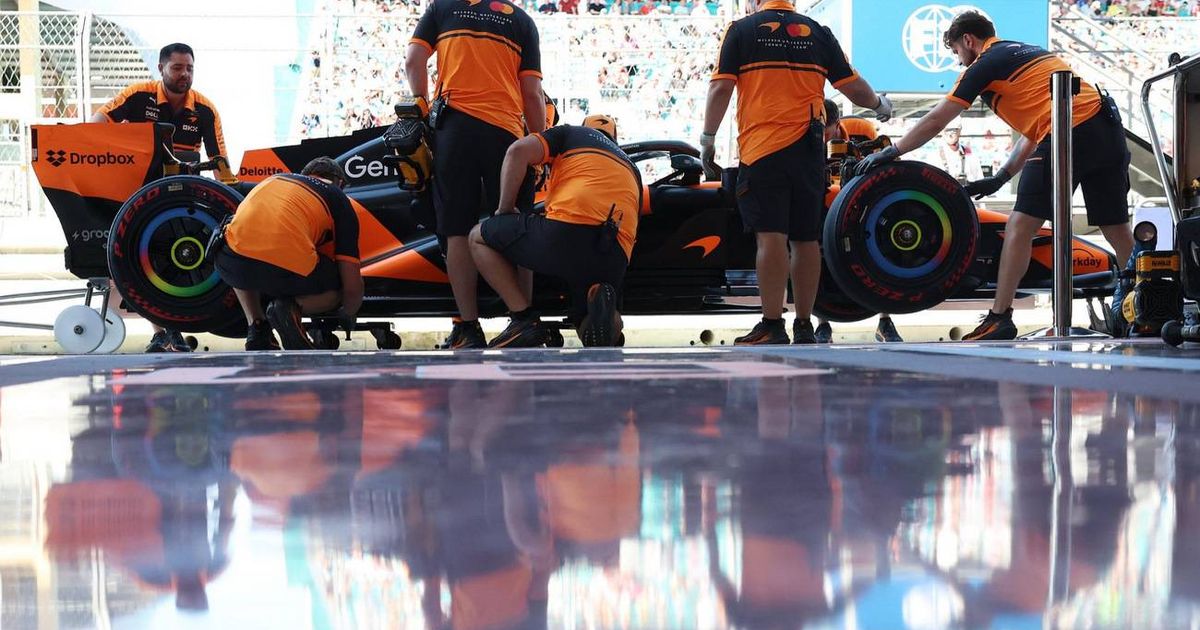
McLaren may have a Mercedes Formula 1 power unit bolted to the back of their MCL40, but they are not enjoying the same advantages as the works team.
While the rules say and manufacturers insist that power units in works and customer cars are the same, that is not usually the case.
Works teams usually have more perks, most importantly the ability to coordinate with the chassis department on the integration of the power unit and its installation, while customer teams have to adjust to what they are offered.
And with the case of the current power units, Mercedes at some point had updated management algorithms that McLaren did not have which meant the reigning Formula 1 Champions were at a disadvantage earlier until their turn in receiving the upgraded power units came up especially as Mercedes powers other teams, Williams and Alpine.
In a McLaren interview over the course of the summer break, Mark Temple explained the challenges of being a customer team.
“I think some of it comes from how much influence you have over the design and the installation,” he said when asked about maximizing the performance of the Mercedes power unit. “We do have considerable input, but ultimately MGP have the final say with HPP on what happens.
“That shouldn’t be taken to mean we’re ignored—we’re ultimately just not the ones in complete control,” he pointed out. “The way HPP work on a race weekend is with a main team and customer support teams.
“We work very closely with our customer support team and have good relationships with people in the main program. From that, we have influence on what’s happening within the main program—but we don’t have guarantees they’ll accept things we request.
“We’re a little out of the main loop in that respect, working in a side loop that feeds into the programme, but it means we don’t always get the configurations we want and that would suit us.
“It’s the same with the timeline,” Temple went on. “In the run-up to a race, we receive information from HPP, but there’s decision-making and evolution we’re not part of.
“When we find out what we’ve got, there’s often not a huge amount of time to react and respond – so part of what we’re trying to do this year is build and improve our process to make this less of a limitation,” he explained.
What happens before each race?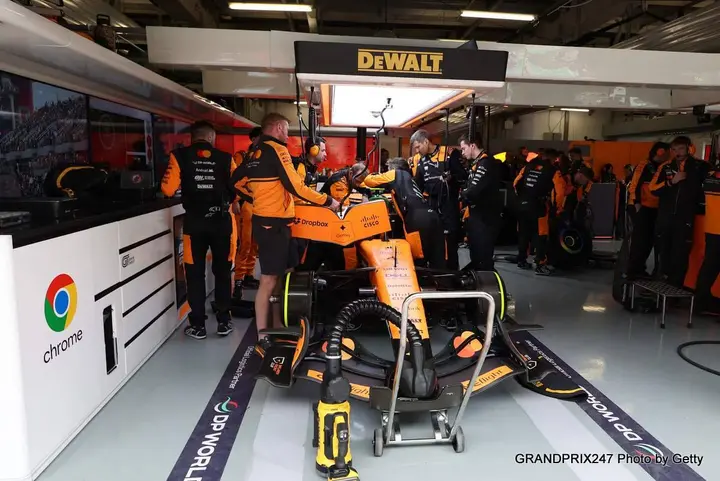
Asked how McLaren prepare for each race with Mercedes, Temple said: “It’s a group of people at McLaren who work very closely with HPP.
“As a normal activity, HPP will do simulations and come up with a configuration for a particular event and a given session and present a multitude of different options of how best to use energy around the lap.
“We want to then check that against our tools and the specific requirements of the MCL40, plus variables like the wind direction, the grip level, the amount of fuel in the tank, and so on.
“So, we explore all of those things and compare them against what we think is optimal and then make recommendations to our race engineers alongside the HPP engineers.
“It’s a very collaborative process – but we use some of our tools differently – and indeed have slightly different tools – to HPP, so it’s a combination of the two approaches,” he said.
Temple also revealed that McLaren created new roles to maximize the performance of the new hybrid power units, he said: “We have a power unit performance team now, which we didn’t have before.
“They’re focused on understanding how we get the most out of the power unit. They’ll study track data and work with race engineering but also use our simulator and offline tools to maximize our performance.
“It’s definitely a new set of skills and a new way of working—because these are things we didn’t really need to worry about before,” Temple concluded. (Reporting by Agnes Carlier)