
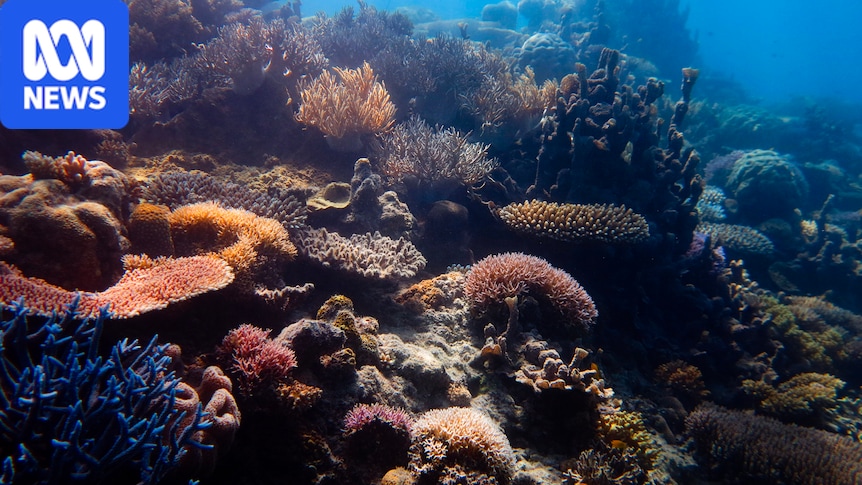
Monsoons spared the Great Barrier Reef from the worst heat during the 2025-26 summer allowing some coral to recover, according to a new report from the Australian Institute of Marine Science (AIMS).
“We have to place this in the context that these are small, [but] it’s promising signs of recovery from the really large declines we saw from the 2024 bleaching event,” said lead researcher on the long-term monitoring program, Mike Emslie.
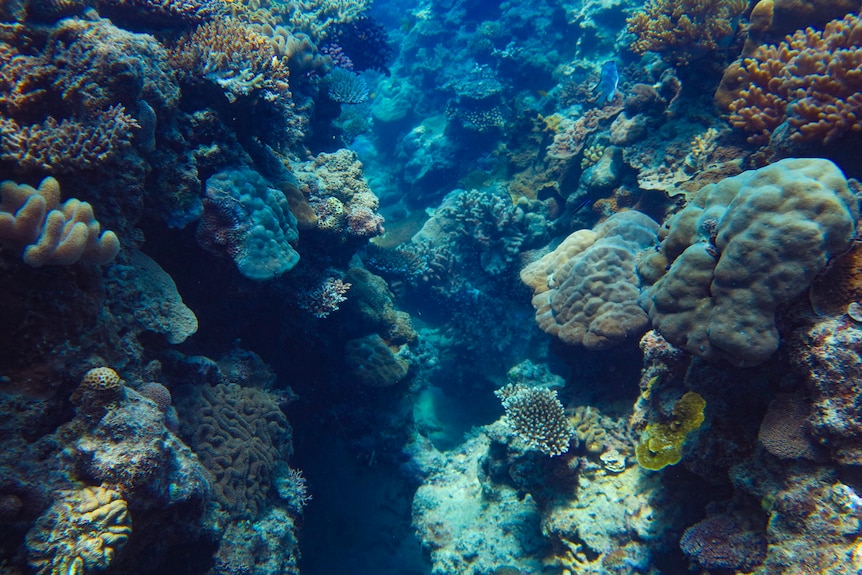
Surveys also looked for evidence of crown-of-thorns starfish infestation as well as bleaching prevalence. (ABC News: Holly Richardson)
Dr Emslie said there was a smaller bleaching event in 2025 when temperatures increased in the early part of the summer, but the onset of a monsoon brought some relief to the corals.
Hard coral coverOn the Northern Great Barrier Reef, hard coral cover increased from 30 per cent to 35.1 per centIn the Central Great Barrier Reef, hard coral cover increased from 28.6 per cent to 31.6 per centOn the Southern Great Barrier Reef, hard coral cover decreased from 26.9 per cent to 26.4 per cent
Source: AIMS
“It managed to produce a lot of cloud cover and rain and brought the sea surface temperatures down,” he said.
He said this provided some relief for the corals and gave an opportunity for the organisms to start growing again.
Great Barrier Reef Marine Park Authority chief scientist Roger Beeden said it was an encouraging sign and showed the reef was close to the long-term average coral cover.
“We see [the reef’s] inherent resilience, its ability to be able to recover when the time periods allow when there aren’t so many pressures,” he said.
“But the counterpoint to that is that it’s under increasing pressure.”
The forecast El El Niño
Dr Emslie said while it was positive showing that the reef had capacity to recover, more frequent and severe heat stress events were a growing concern.
And the forecast El El Niño could mean further stress to the reef, he said.
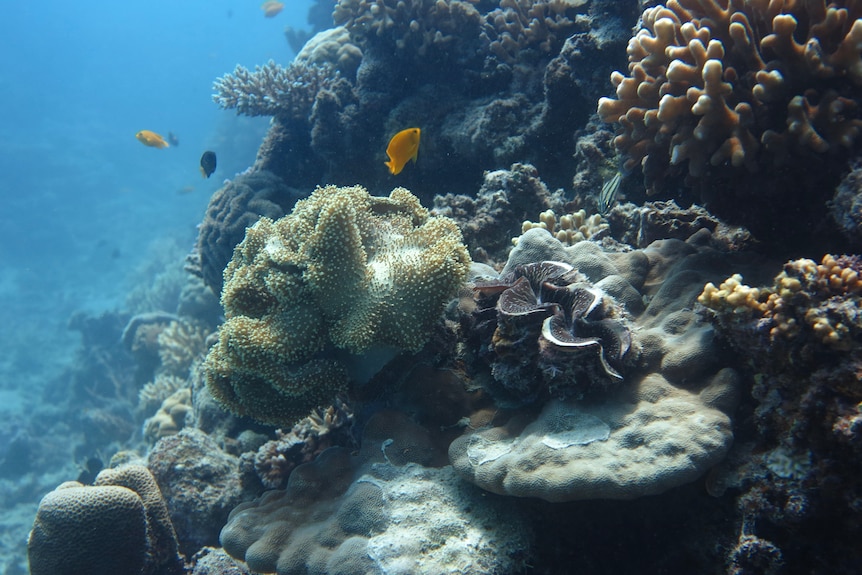
Scientists say the results are positive, showing the reef still has the capacity for resilience. (ABC News: Holly Richardson)
“We know from the past that El Niño events have led to widespread severe bleaching, so I guess it’s a case of wait, watch and see what happens over the upcoming summer.
“We’ve really got to be taking very strong measures to reduce global greenhouse emissions to continue the prospects of the reef into the future.”
Dr Beeden agreed it was too early to speculate on the potential impact of the El Niño event on the reef.
“It’s important to note where that warmer water is concentrated at the moment is actually over the other side of the Pacific right now,” he said.
“Whilst temperatures are still above the very long-term average, they’re not at a point where we’d see any particular temperature driven stress on the Great Barrier Reef right now.”
He said multiple climate drivers determined outcomes in Australia’s waters.
“The reality of climate change is that these kinds of events are becoming more likely: the risk of marine heat waves that can lead to coral bleaching events, coral bleaching events are a modern phenomenon,” said Dr Beeden.