
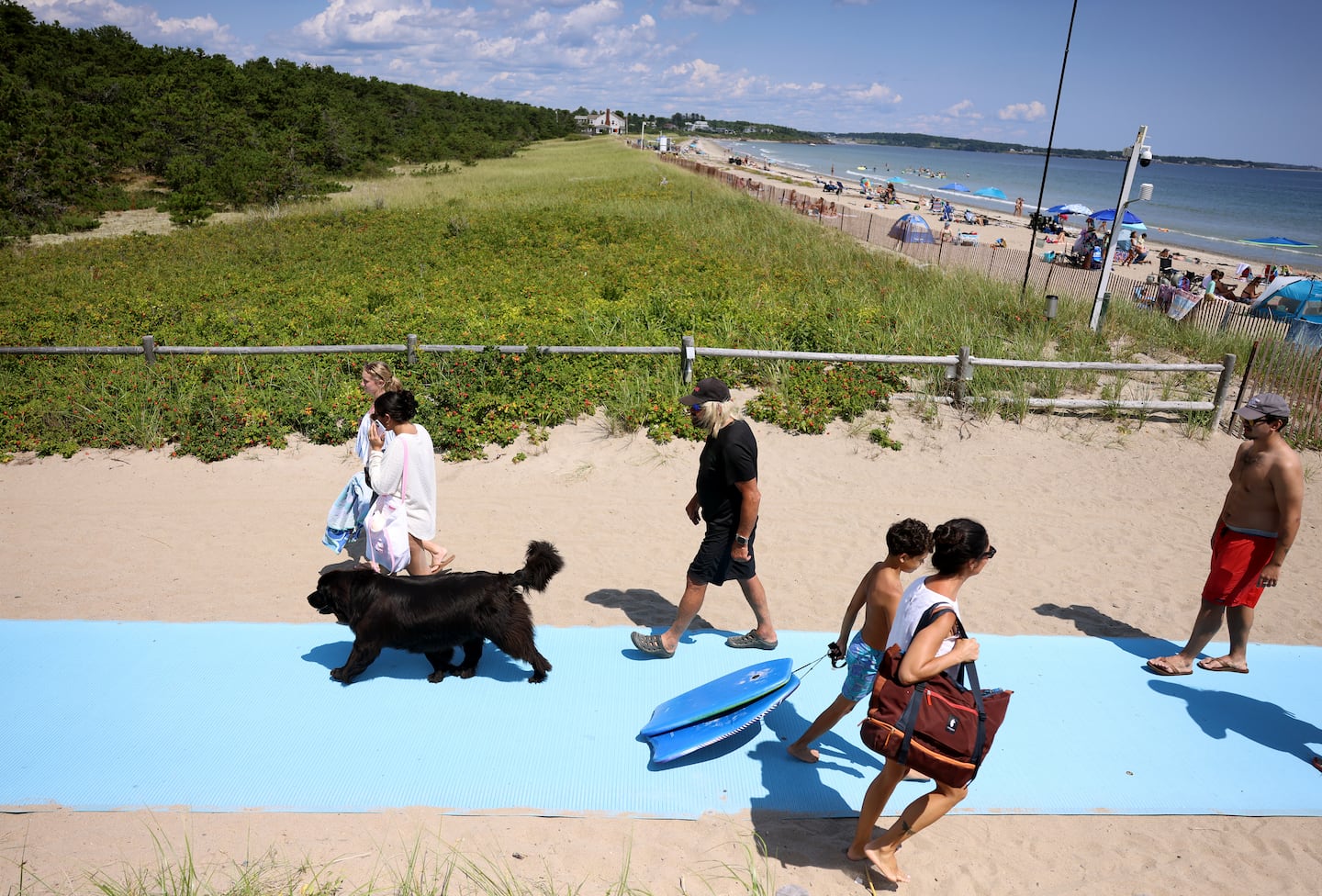
“There were sightings in nearby beaches, so we started using our drone protocol more,” said Greg Wilfert, a 71-year-old lifeguard who is also head of operations for the beach.
Scarborough Beach, which is owned by the state but managed by a private company of which Wilfert is a partner, is the first beach in New England to employ regular drone patrols for sharks, according to John Chisholm, a researcher with the New England Aquarium.
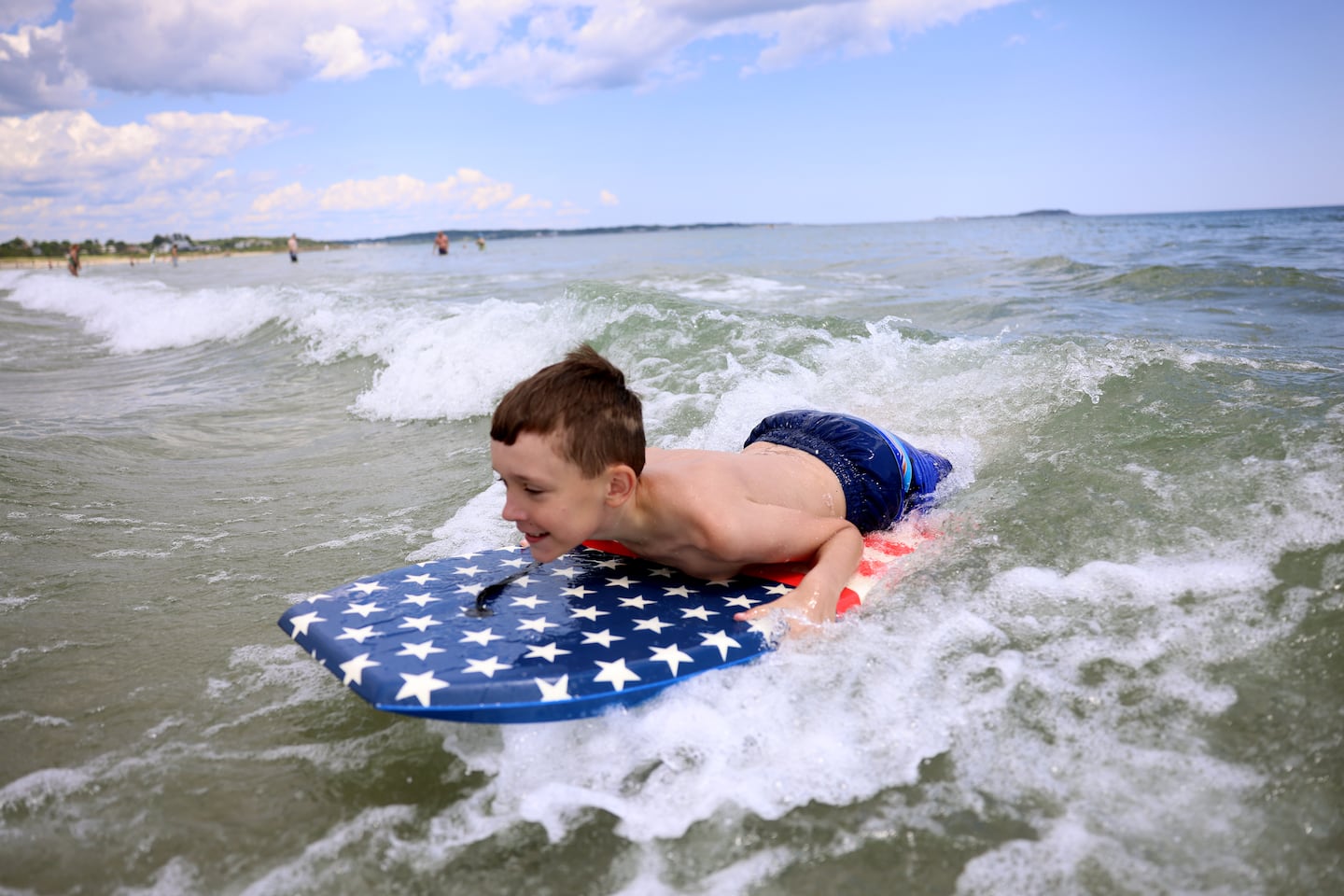 Oliver Uhsmann, 10, boogie boards at Scarborough Beach.Jessica Rinaldi/Globe Staff
The drones aren’t the first time the beach has experimented with rescue techniques: officials trained three Newfoundland dogs and one Labrador to carry out water rescues based on a method Wilfert saw in Italy where dogs equipped with life vests and assisted by lifeguards pull swimmers to shore during high distress situations.
Like the dog lifeguards, Scarborough Beach’s drone surveillance system also has its roots in another country.
Australia, a world leader in shark drone tech, announced in June that it had invested $34 million in drones to scale up shark surveillance across its beaches, following a history of success with drone tracking.
“If sharks are in the area, you don’t want people in the water, and that’s what drones let you do,” said Gavin Naylor, director of shark research at the Florida Museum of Natural History. “This is something that America is still really late to the party on.”
Scarborough Beach has owned its two consumer model drones for around a decade, according to Wilfert. Originally, he said, much of the technology was purchased to help with choppy wave conditions that have made Scarborough a popular destination for surfers.
Recently, shark sightings in the region have begun to pick up and over the winter, the drones became integral to the beach’s safety protocol after a shark-tracking buoy that state officials had placed offshore was removed.
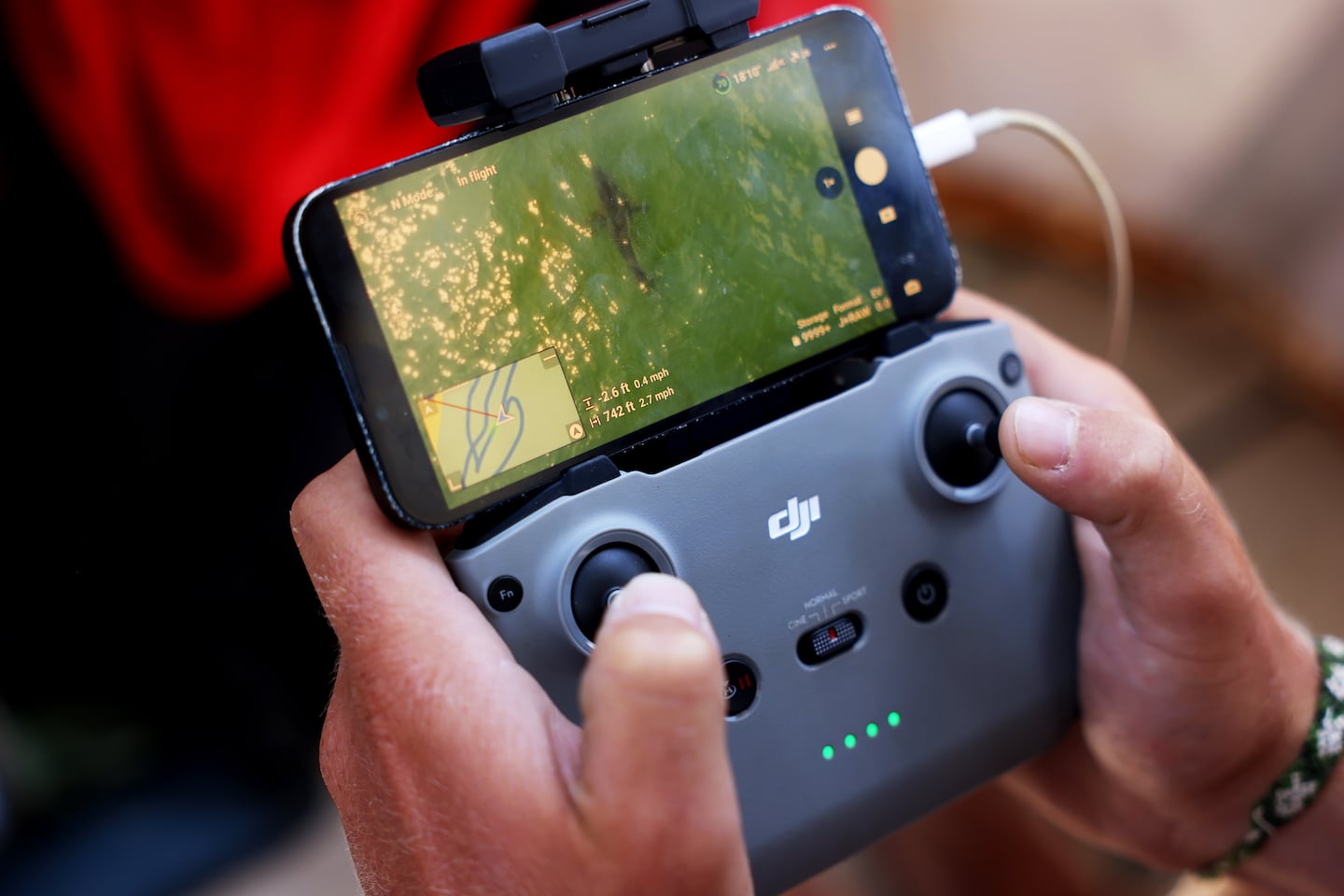 Lifeguard Cam Boone flys a drone over a shark at Scarborough Beach.Jessica Rinaldi/Globe Staff
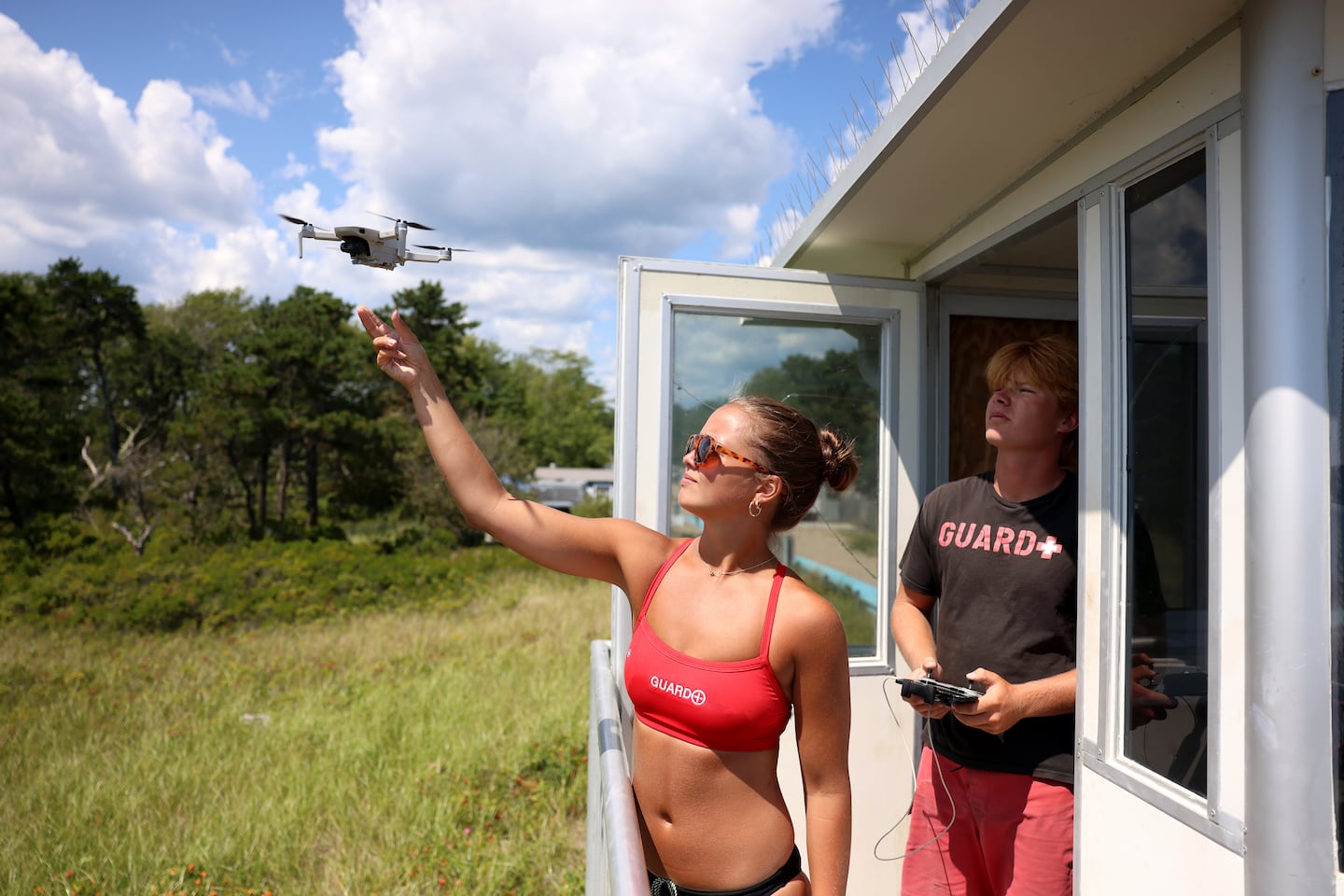 Lifeguard Emerson Gammon, left, launches a drone flown by her fellow lifeguard Cam Boone to scan for sharks.Jessica Rinaldi/Globe Staff
Without the drones, Wilfert said, “there’s no indication when the sharks are here and when they’re not.”
In the last few days alone, Wilfert said, the drones have spotted more than 30 white sharks in nearby waters. On Saturday, Wilfert himself was pulled underwater by a white shark during a swimming drill a few hundred yards off the beach, in an encounter he said was a wakeup call to redouble safety efforts with the tools at their disposal.
“I’m taking this extremely seriously,” said Wilfert.
On Wednesday, crowds at Scarborough Beach were thin, but beach life continued as drones whirred overhead and lifeguards raced around on ATVs.
At the lifeguard tower, under a red flag marking hazardous conditions, two guards monitored drone footage, while children splashed in the shallows, careful not to cross an invisible boundary where jet skis cut back and forth in the waves.
Every so often, the buzzing sound of a drone could be heard over the waves and gull calls.
As a shark appeared on a video feed, 16-year-old Emerson Gammon reported the sighting by radio to a colleague on a jet ski who would then give chase.
“They’re pretty afraid of the jet ski,” Gammon said.
Jack Lufkin, president of the Sprague Corporation, which has a stake in the beach operations, said that the unique business arrangement at Scarborough, which charges $10 admission, is what allows the beach to fund its high-tech solutions.
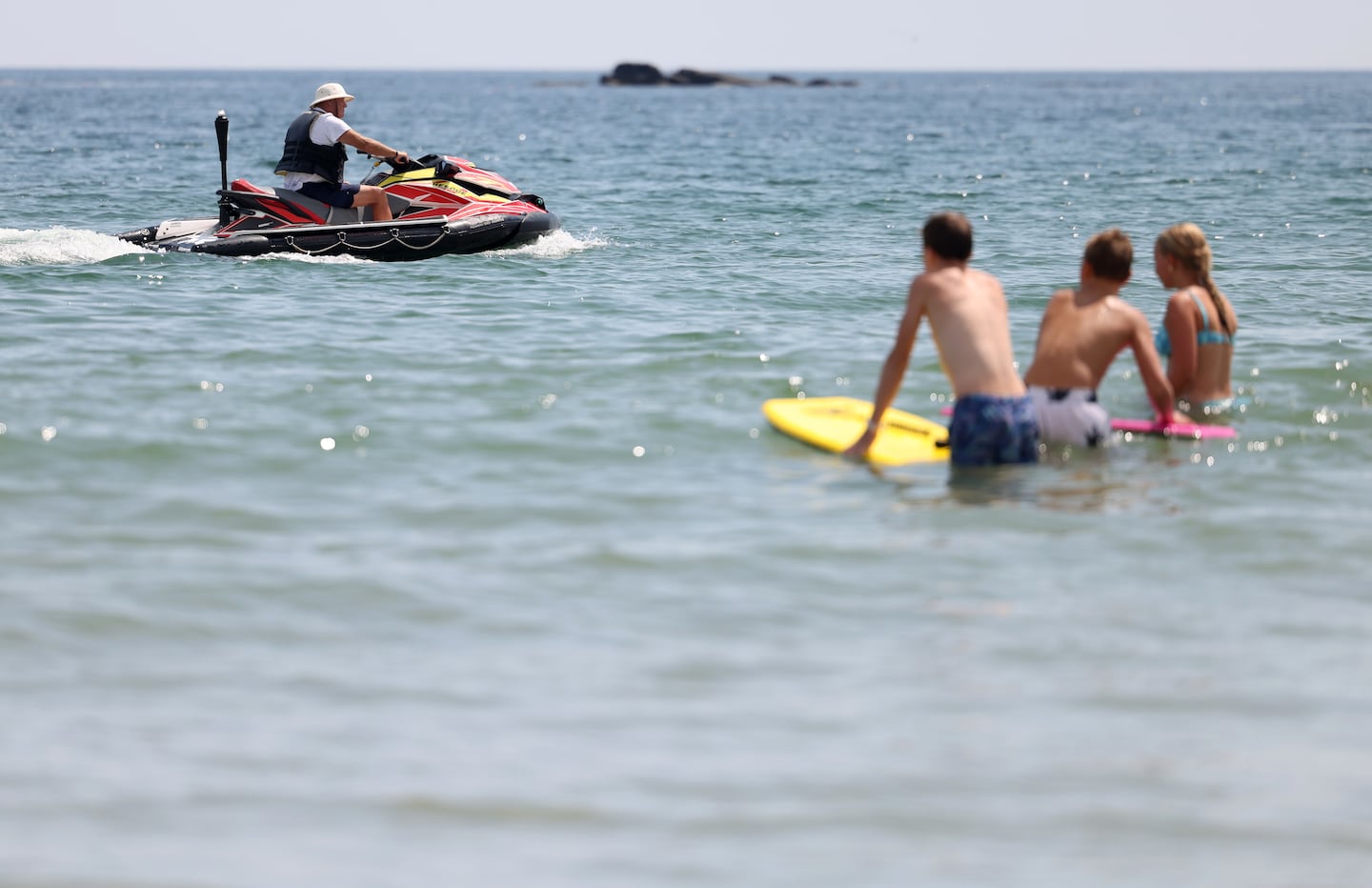 A jet ski used to scare away sharks passes by a group of kids boogie boarding.Jessica Rinaldi/Globe Staff
“We have the resources that many public places don’t,” Lufkin said, adding the setup is the only of its kind in Maine.
Wilfert said the 14 lifeguards at Scarborough are “more than the state has at their beaches combined.”
In addition to flying a drone in the air every few minutes to monitor the waves for possible sightings, Wilfert said beachgoers are limited to waist-deep wading for the foreseeable future.
At night, officials keep a red caution flag up on the lifeguard stand to warn off late swimmers, he added.
Organizers at a local surf camp, which launches from the beach, also use a drone to survey for sharks before sending campers out into the waves, said Dustin Turin, who runs the program.
“They allow everybody to feel safe,” he said.
Still, Chisholm, of New England Aquarium, said that while drones can be useful tools, they can also create a false impression of what’s out in the water since sharks are constantly on the move.
“Just because the drone does one flight and doesn’t see a shark doesn’t mean there’s not one” nearby, he said.
On Saturday, Wilfert said, he had the drone up to check for sharks and, seeing none, had embarked on a buoy swim with two other lifeguards.
Minutes later, Wilfert said, he had drifted farther out among the choppy waves and was yanked 6 feet underwater by what researchers later concluded must have been a white shark that had bit down on the rope attached to his swimming buoy.
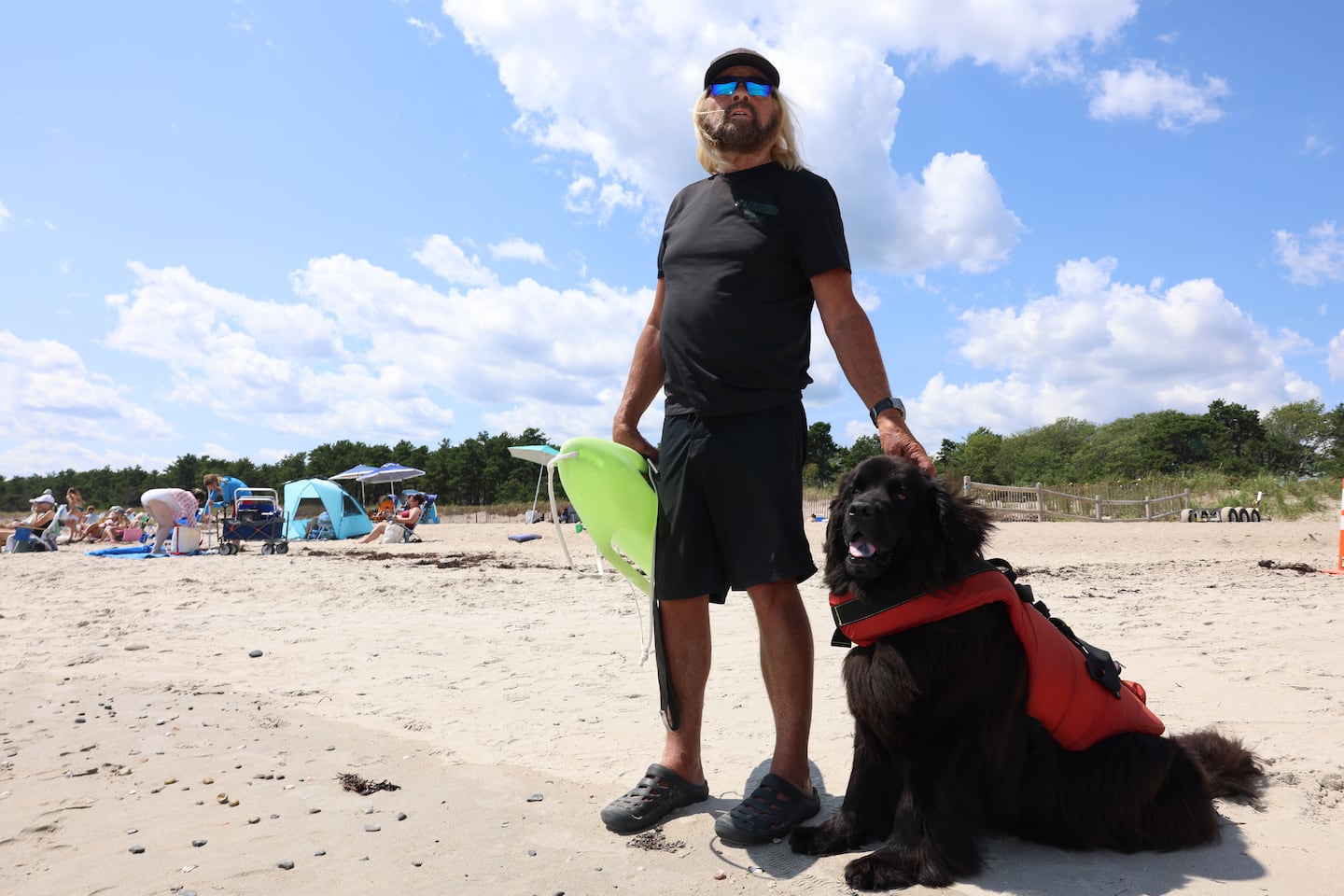 Lifeguard Greg Wilfert scans Scarborough Beach for sharks with his dog Beacon by his side.Jessica Rinaldi/Globe Staff
“I won’t swim the buoys again this year and maybe never,” Wilfert said. “[The shark had to be] within a foot of my feet.”
Chisholm said educating swimmers on remaining “shark smart,” by avoiding swimming alone or near schools of fish and seals, remains the best way to protect against attacks.
Matt Davis, who leads shark research for Maine’s Department of Marine Resources, said it’s unclear what’s causing the recent surge in white shark sightings in Maine.
Last year Scarborough Beach logged over 30 days with recorded shark activity across species, more than any other site monitored by scientists in Maine, according to state data.
Davis added the state has limited data as it began monitoring sharks in earnest just six years ago, following the death of a 63-year-old woman who was bitten by a white shark off Bailey Island in Maine’s first-ever such fatal attack.
That means it’s unclear, he said, if this is just an anomaly or part of a rising trend.
Either way, Wilfert isn’t taking any chances.
“If this is going to be the new normal . . . we’re going to be on top of this,” he said.
Bryan Hecht can be reached at bryan.hecht@globe.com. Follow him on Instagram @bhechtjournalism. Thai Theodoro can be reached at thai.theorodo@globe.com. Ariela Lopez can be reached at ariela.lopez@globe.com. Follow her on X @ariela__lopez.