
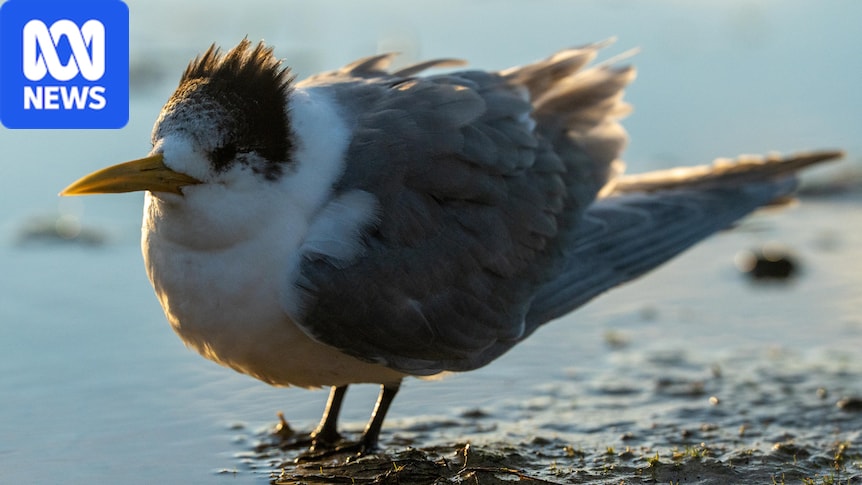
The H5 strain of bird flu has been detected in a crested tern on King Island, marking the second confirmed case of the virus in Tasmania.
Department of Natural Resources and Environment (NRE) Tasmania staff collected the bird from the coast near Currie on Thursday, with testing overnight confirming the H5 strain.
The bird had been reported through the Emergency Animal Disease hotline.
Late yesterday afternoon, another two crested terns from the same location were also reported. Test results are expected on Saturday.
Crested terns are common around coastal areas in Australia, including Tasmania.
If a member of the public spots a sick or dead bird, they should avoid contact with the animal, record what they see and report it to the Emergency Animal Disease Hotline on 1800 675 888.
To report sick or dead birds or other animalsCall the Emergency Animal Disease Hotline 1800 675 888 (24 hours)Use the online bird flu reporting formDo not touch sick or dead birds or other animals.
To report sick or dead wildlife (other than birds), please visit the wildlife health in Tasmania webpage.
At a press conference on Friday afternoon in Hobart, Premier Jeremy Rockliff said he wanted to “reassure Tasmanians we are prepared and are being proactive in our response”.
“The first bird flu case was found by a Parks and Wildlife staffer undertaking proactive checks.”
Gavin Pearce, Minister for Primary Industries and Water, urged owners of “backyard chickens” to take measures to keep the disease at bay.
“Keep them in an enclosed areas, ensure their water and food sources are undercover and in a secure place and cannot be contaminated by wild birds or animals.”
NRE’s Jason Jacobi said further testing of the first bird found infected in Tasmania had confirmed it was the same “highly pathogenic strain” of avian influenza as that on the mainland.
What species are most at risk now that H5 bird flu is in Tasmania?
“We have been very lucky to date … but I can’t stand here and tell you that we won’t receive a mass mortality [event], that is entirely possible, but we just need to address and deal with each case as it is presented to us.”
There have been no detections of H5 bird flu in commercial poultry operations in Tasmania.
The state’s first case of the virus was confirmed on Thursday in a migratory brown skua found at Burgess Cove at Rocky Cape, on the north-west coast of Tasmania.