
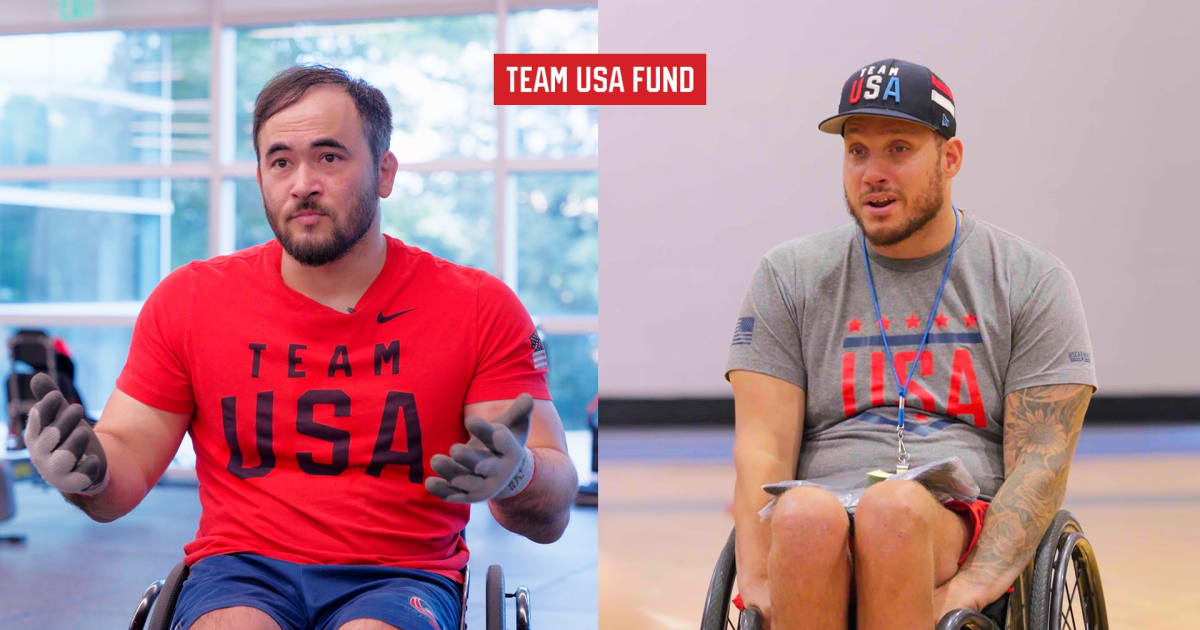
“He was one of those first people who said to me, ‘You could really do something,'” Aoki noted. “He brought that truly elite athlete mindset to the sport.”
That mindset became contagious.
Both athletes left Minnesota for Arizona in pursuit of bigger dreams, betting on themselves to become elite competitors. Along the way, they learned that success wasn’t measured solely in medals, but in creating opportunities for those who would come after them.
“We owe an immense amount to foster the next generation of Paralympic athletes,” Aoki said. “Teaching them where to go, inspiring them, telling our stories, and ensuring that the gains we’ve made stay and grow.”
That investment is already paying dividends.
Delagrave points to athletes like 16-year-old Zayne Hammoudeh and 21-year-old Hank Allen as examples of where the sport is headed.
Just two years ago, Hank relied heavily on his mother while traveling to training camps. Today, he flies across the country independently.
“I want to win the gold medal,” Delagrave said. “But seeing Hank go from where he was two years ago to saying, ‘I can go anywhere in the world by myself’ — those are gold medals in and of themselves.”
Those moments capture the unique impact of adaptive sport. While medals remain the ultimate competitive goal, wheelchair rugby has always been about something bigger: building confidence, independence and community that extends far beyond the court.
That same philosophy now extends to the equipment athletes compete in.
As the rest of the world continues to raise the standard, Team USA is doing the same — not just through training, but through innovation.
In 2025, the Lakeshore Foundation, the National Governing Body for wheelchair rugby, received a Performance Innovation Fund grant to advance wheelchair fitting and optimization. Made possible by the generosity of Team USA fans who support the U.S. Olympic & Paralympic Foundation, the multi-year initiative focuses on improving chair design, materials and customization to help create a competitive advantage heading into LA28.
For a sport where fractions of a second can determine the outcome, even small gains matter.
“Our equipment is really important for getting to that next level,” Delagrave said. “Sometimes, it can even be a five percent gain. The athletes still have to show up and do the work, but that’s the one percent we’re looking for.”
The project allows Team USA to explore innovations ranging from bucket-seat technology to lighter, more durable components and new chair configurations tailored to individual athletes.