

Ageing Australia chief executive officer Tom Symondson has opened the peak body’s New South Wales and Australian Capital Territory state conference with a warning that the Support at Home program “is not doing what we all hoped that it would.”
For many older Australians, Support at Home is “not yet delivering the promise” it was intended to, he said, and there are a lot of people still waiting to access it.
“You would be forgiven with now 250,000 – I proudly announced yesterday when I was asked by someone that there are 200,000 people waiting for Support at Home, 100,000 who have been approved for a package and haven’t got one yet, and 100,000 who are on a waiting list to get a package – and I was corrected. We love that, don’t we? I was corrected by one of my colleagues who said, ‘oh, actually, it’s gone up by 50,000’,” Mr Symondson said.
“Now, apparently, there’s a secret list of 50,000 people who are not yet even on the list to be assessed,” he said. “But there are a lot of people waiting for home care. There are a lot of people who cannot get into CHSP, and increasingly, there are a lot of people who cannot get into beds.”
But Mr Symondson also encouraged delegates to not get stuck in a pessimistic outlook and instead look to what can be changed and improved.
“My challenge to all of us is to stop focusing so heavily and so consistently on those headline numbers, because negativity and pessimism in itself grows and becomes completely inescapable like a black hole,” he said.
“What instead I want us to do is to focus on the things that we can change, that we have changed, that we are changing, and also on the importance of what we all do.”
Mr Symondson flagged as a great opportunity to reflect on all the great work being done by dedicated employees – giving a shout-out to Whiddon for being the creators of the celebratory day – and reminded delegates to reflect on some of the wins the sector achieved this year.
“We can challenge the things that are wrong while celebrating the things that are good,” he said. “As they say in America, you can walk and chew gum at the same time. Not everybody can, but people in this room absolutely can do that.”
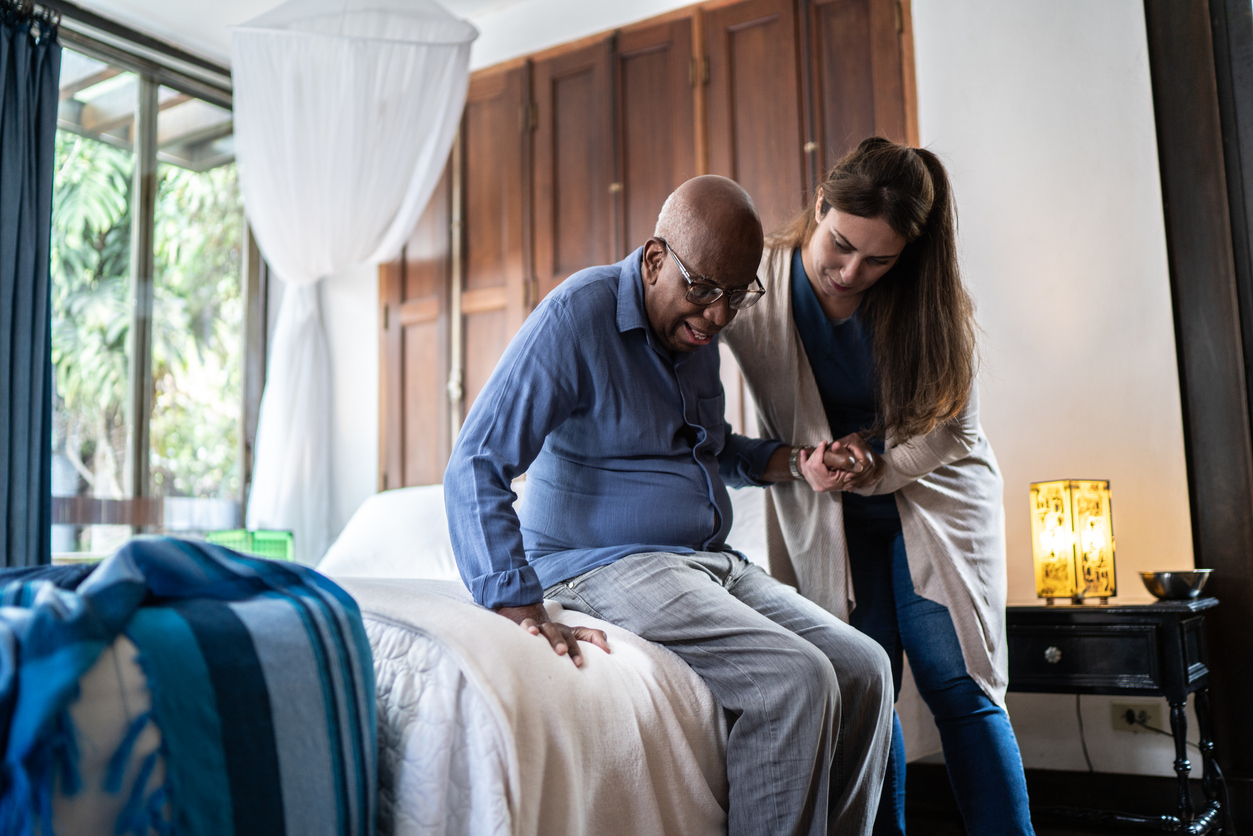 (iStock.com/FG Trade)
Mr Symondson said he noticed previously that the language at Ageing Australia had “become increasingly pessimistic or negatively framed.”
“When I came into this sector, I promised we would never do that,” he said. “We’ve got to be about staying optimistic – because if you’re not optimistic, nothing’s possible, everything’s impossible, it’s so much harder if you can’t look to the horizon.”
Keeping a sense of optimism is important because it works, Mr Symondson said, pointing to how the government did end up recategorising showering into clinical care so that older people wouldn’t have to contribute to that service after sustained sector advocacy.
“Remember when we were going to have price caps on the 1st of July? We managed to get them to defer those,” he said.
“We managed to get them to review the IAT, the algorithm. They haven’t done it yet, but they are starting that review of the algorithm and they’ve already made changes to allow some intervention when the stupidest of decisions come out of the algorithm that are clearly nonsensical.”
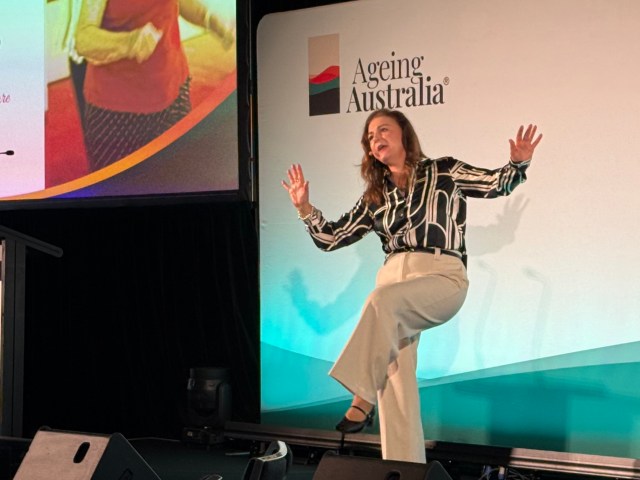 Gwen Korebrits gets delegates dancing in their chairs at Ageing Australia’s 2026 state conference in Sydney (CCR)
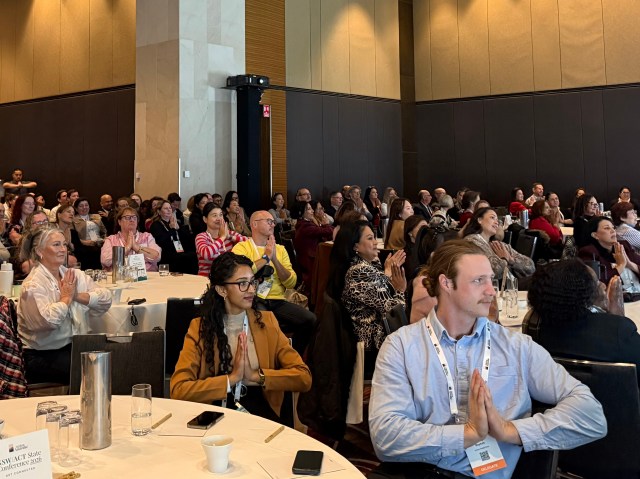
In the spirit of this optimism, the conference opened with a dance and cognitive activity led by Dance Health Alliance CEO and co-founder Gwen Korebrits, while Ageing Australia head of quality and research, policy and advocacy Nick Elmitt led an interactive poll.
The poll asked the more than 130 delegates what movie genre they think aged care is right now.
Options included drama, action, thriller, feel-good story and documentary.
It was neck and neck between thriller (38 per cent) and drama (35 per cent) but ultimately the New South Wales delegates joined Victoria and Tasmania in voting for the thriller genre, while Adelaide, Perth and Queensland voted for drama.
Interested in aged care policy? Read more articles here
Sign up to our free newsletter and subscribe to AAA magazine for the complete aged care picture
Post Navigation