
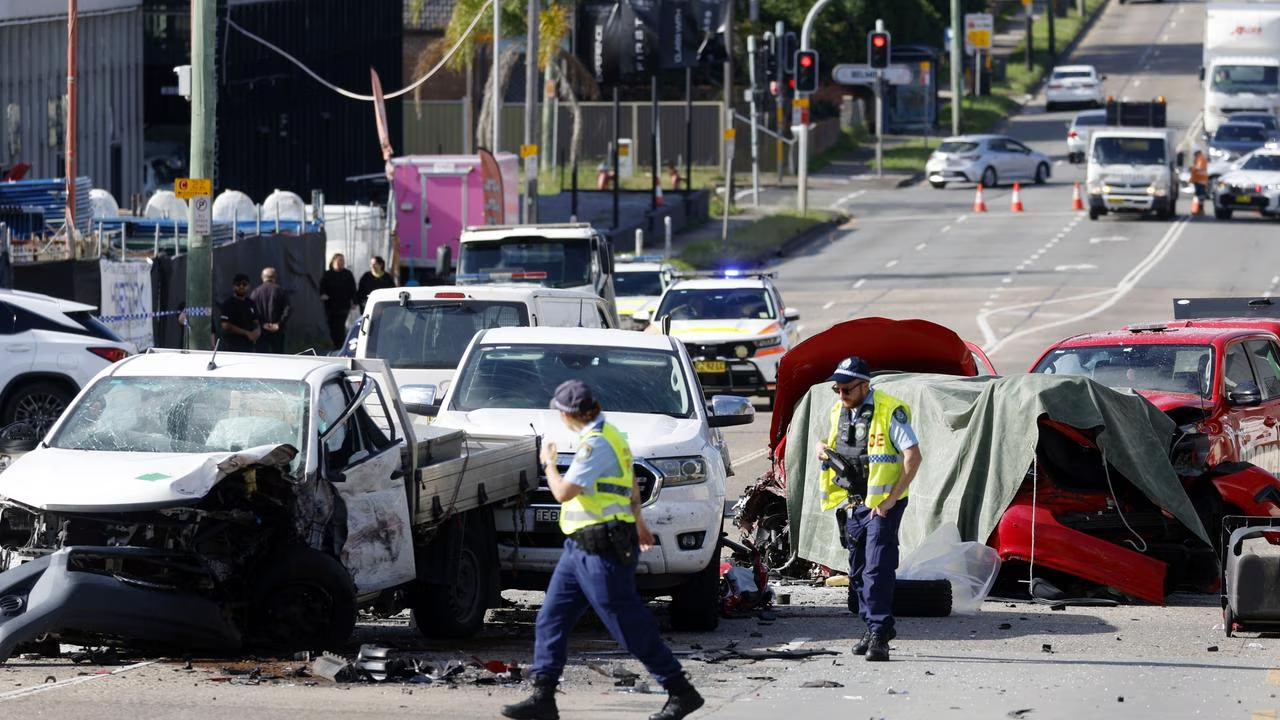
Switching off your car’s driver assist technology could cost you your life.
A landmark Australian-first study by insurance company IAG has found over 7000 serious injuries or deaths could be prevented on our roads each year if all cars featured advanced driver assist technology.
And if drivers stopped turning it off.
MORE: Auto giant boss steps down in shock shake-up
Accident-preventing tech like lane keep assist (LKA) and autonomous emergency braking (AEB) is fitted to nearly every new car sold in Australia. Shockingly, IAG’s report showed 60 per cent of drivers opt to disable some or all such features.
Anyone owning a late-model car will understand why.
Advanced Driver Assistance Systems (ADAS) can bong, beep and vibrate to annoying and distracting levels, with steering-wheel-tugging LKA generating the most negative feedback from field study participants.
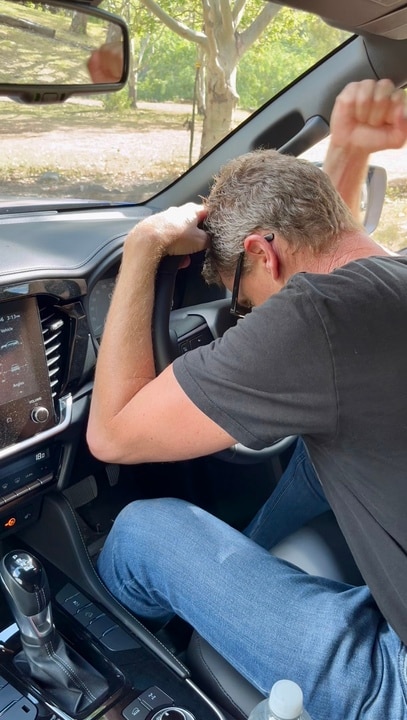
Some blame must be worn by car manufacturers not calibrating their ADAS to a level where drivers fully trust it: being over-nannied for minor indiscretions or false alarms are proven turn-offs.
A speed limit warning constantly bonging because the car’s misread a road sign is infuriating and unsafe.
But Aussie drivers must also accept that ADAS correctly picks up our bad habits and mistakes.
“Sometimes the driver might admit they didn’t put on their indicator before making a lane change,” said Shawn Ticehurst, head of the IAG Research Centre.
“If the indicator had been on, the car would have known that was your intention and not flashed a warning.”
IAG, the parent company of insurers like NRMA and RACV, plus partners QUT and iMOVE, analysed 100,000 collisions over an 11-year period from Queensland and Victory police-reported crash datasets.
“The research team at QUT went through the crash, circumstances, road environment and if vehicles involved were fitted with ADAS or not,” Ticehurst said.
According to the report, every single driver assist system studied would have “significantly reduced the crash type it was designed to prevent.”
MORE: ‘Ugliest ever’ Ferrari stuns with insane price
The largest projected crash type reductions were for sideswipes (up to 40 per cent), head-on collisions (up to 21 per cent) and lane change accidents (up to 15 per cent).
Ticehurst said that nationally, a potential reduction in road casualties (fatalities and hospitalisations) of 19.6 per cent was possible if every car had ADAS and it was left on.
In stark numbers, Australia’s 40,000 annual road casualties could drop by 7850 with full ADAS coverage. The current estimated cost of road trauma to Australia each year is $31.8bn, so that could mean a saving of $6.2bn.
Importantly, is an “I know best” attitude from drivers who disable ADAS needlessly costing lives? Australia’s road toll has stubbornly risen in each of the past six years (it was 1314 deaths in 2025), despite millions of cars on our roads now being ADAS-equipped.
“Our study asks why these technologies are so far falling short of their promise to reduce road accidents in Australia,” said Ticehurst.
As well as crash data, the evidence base included a national survey of 2000 drivers, and an extensive on-road driving study with 50 drivers testing six ADAS systems in three different vehicle types.
This showed drivers value ADAS that is informative – such as blind spot warning and forward collision warning – and resist ones that actively intervene like LKA and AEB.
Key – and here’s where car manufacturers must up their game – is distraction from alerts is seen as the primary barrier to ADAS adoption.
“Persistent warning, false alerts and loss of control are barriers to ADAS use,” the report said.
One participant said an issue was “constant beeping or flashing lights. I like to focus on my driving, not on sensors telling me what to do.”
Drivers trusting ADAS, learning about it and gaining experience is shown to reduce instances of disabling it. Worryingly, the IAG study reported only 19 per cent of new drivers said they were taught anything about ADAS.
IAG said collaboration between governments, manufacturers, driver-educators and we the drivers is needed if ADAS is to realise its potential and cut casualties.
MORE: ‘More dangerous’: New expert warning on EVs
It recommends putting drivers in ADAS-equipped cars at point of sale and in learner training; for governments to back measures getting ADAS-equipped cars on our roads sooner; and for car companies to calibrate ADAS so it “feels like help rather than fight.”
“Is there a way to personalise the ADAS system?” Ticehurst asks. “I’m already hearing discussions about them being linked with a high-quality driver monitor system.
“But drivers also need to be educated in ADAS. Smarter cars need smarter drivers; your car can help you, but you must understand its limitations as well as its benefits.”
During the driver field study, a single guided test drive more than doubled the share of drivers who said they’d now be comfortable using ADAS.
“There are lives being lost on our roads, and there’s technology in cars now that can help prevent them,” Ticehurst said.
“Let’s look at where these gaps are and do something about it for the benefit of everyone.”