
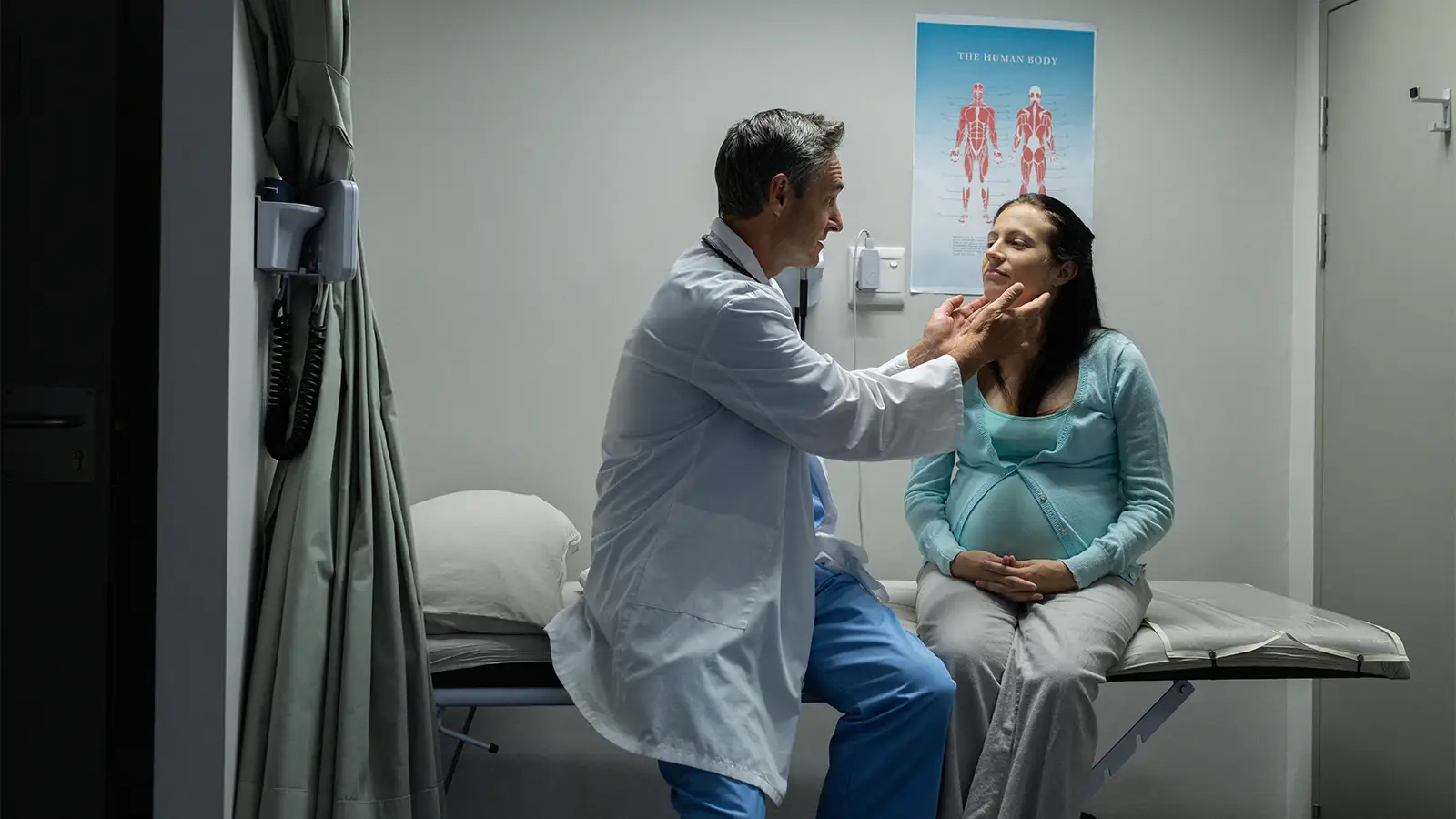
The resident was apologetic over the phone, embarrassed for reasons outside his control. He was transferring, from his hospital to ours, a pregnant patient who required consultation for a non-obstetric illness. This alone was hardly unusual; we routinely accept transfers from smaller facilities lacking specialists. But he was not calling from a small hospital. He was standing in a respectable tertiary center with appropriate specialists. But their specialists refused to consult because the patient was pregnant.
She had arrived the day before, her condition quickly identified and a consultation ordered. The specialists then categorically stated that they didn’t see pregnant patients. The obstetricians cajoled and appealed, hoping to avoid transfer for services available where she was. The patient sat overnight in medical purgatory, hoping for doctors who remained hidebound against entering her room. Ultimately, she came to our facility, where consultants happily saw her and treatment proceeded.
Pregnancy Is Not Siloed
Outside of obvious exceptions (gerontology, male urology), obstetrics overlaps the broad topography of medicine. Pregnant people have cancers, heart disease, epilepsy, and suffer vehicular traumas. Most physicians are thus requested periodically to see them. Patients in rural areas particularly benefit from local co-management; a new physician refusing to see them yields geographic barriers to care. Or perhaps the patient already has a doctor, but that doctor drops them at the first sight of human chorionic gonadotropin.
Declining physicians often assert an insufficient knowledge of pregnancy. However, obstetricians are never requesting that cardiologists, neurologists, or psychiatrists perform ultrasounds or deliver babies. We consult for care that is cardiac, neurologic, or psychiatric.
The question really is, does a specialist understand their specialty in relation to pregnancy? How does pregnancy interact with the kidney, and the kidney with the pregnancy? When a specialist pleads insufficient knowledge, the gap is not really in obstetrics but rather their own field. They understand their organ system in males and older women, and how it intersects with countless other diseases and physiologies, but not pregnancy. Often, someone will claim expertise in disease “X.” They advertise, publish reviews, have waiting rooms full of X; but when X and pregnancy collide, they suddenly abduct their palms in feigned befuddlement.
And even for patients not currently pregnant, that doctor’s long-term relationship risks becoming unequal on the basis of biological sex. Say the physician has, in their office, two patients, of whom one is capable of pregnancy and the other not. Regardless of what may happen to the pregnancy-incapable person — they age, they develop new diseases, they worsen — the doctor will still be their doctor. But for the other patient, their relationship may one day plausibly end.
Abortion Is Also Not Siloed
As obstetrics is sown broadly into medicine, so is abortion, a fact increasingly clear since the Dobbs decision. In 2022, in the weeks and months after criminal abortion bans first fell upon us, I fielded nervous questions about high-risk pregnant patients from physicians in anesthesiology, emergency medicine, radiology, and other fields — doctors who perhaps once believed that abortion bans did not impact them, that perhaps they were separated from obstetrics by magical shields. Then one day after the bans, a radiologist worries about fetal x-ray exposure, and an oncologist their chemotherapeutics; a cardiologist agonizes over a pregnant patient with heart disease descending into failure, their lungs flooding with fluid.
Knowledge Is a Choice
Pregnancy’s physiologic changes are, admittedly, myriad and entangled. In many states, abortion bans are also ambiguous and confusing. Additionally, training programs outside obstetrics often insufficiently cover obstetric physiology, let alone how their field interacts with abortion. How many future cardiologists in fellowship, for example, learn about which cardiac conditions may or may not warrant consideration of abortion for maternal risk?
Despite educational gaps, we could still learn if we so choose. Obstetric physiology is complicated, but we are all appropriately intelligent to have completed medical training. A residency may have neglected to cover pregnancy, but we can later acquire new skills. Acquiring skills is, in fact, a perpetual and inescapable aspect of our long careers.
Ultimately, as physicians, we choose our knowledge, our comfort levels, the conditions we do or do not treat. We are not Trinity in the Matrix needing someone to download the file on helicopter flight. Rather, when we look upon the array of our skills, each represents a past choice. None of us can obtain mastery in everything, so we select what we do and what we do not learn.
These decisions have many drivers, including personal interests and backgrounds, but they can also reflect our values. America has the highest rate of maternal mortality in the industrialized world, driven in part by the intersection of pregnancy and chronic illness. These are the patients we see in maternal-fetal medicine, but we also must often work in close collaboration with other fields. The imperative to improve the maternal mortality rate, both clinically and morally, should never be shouldered entirely by obstetrics. In this regard, I would urge a broader cohort of physicians to acclimate to abortion and pregnancy within their fields.