
Fri 21 Aug 2026 at 12:52pmFri 21 Aug 2026 at 12:52pm
Why is the underground orchid so weird?

Why does the underground orchid still look flowery if it doesn’t need any sun?
– Peter
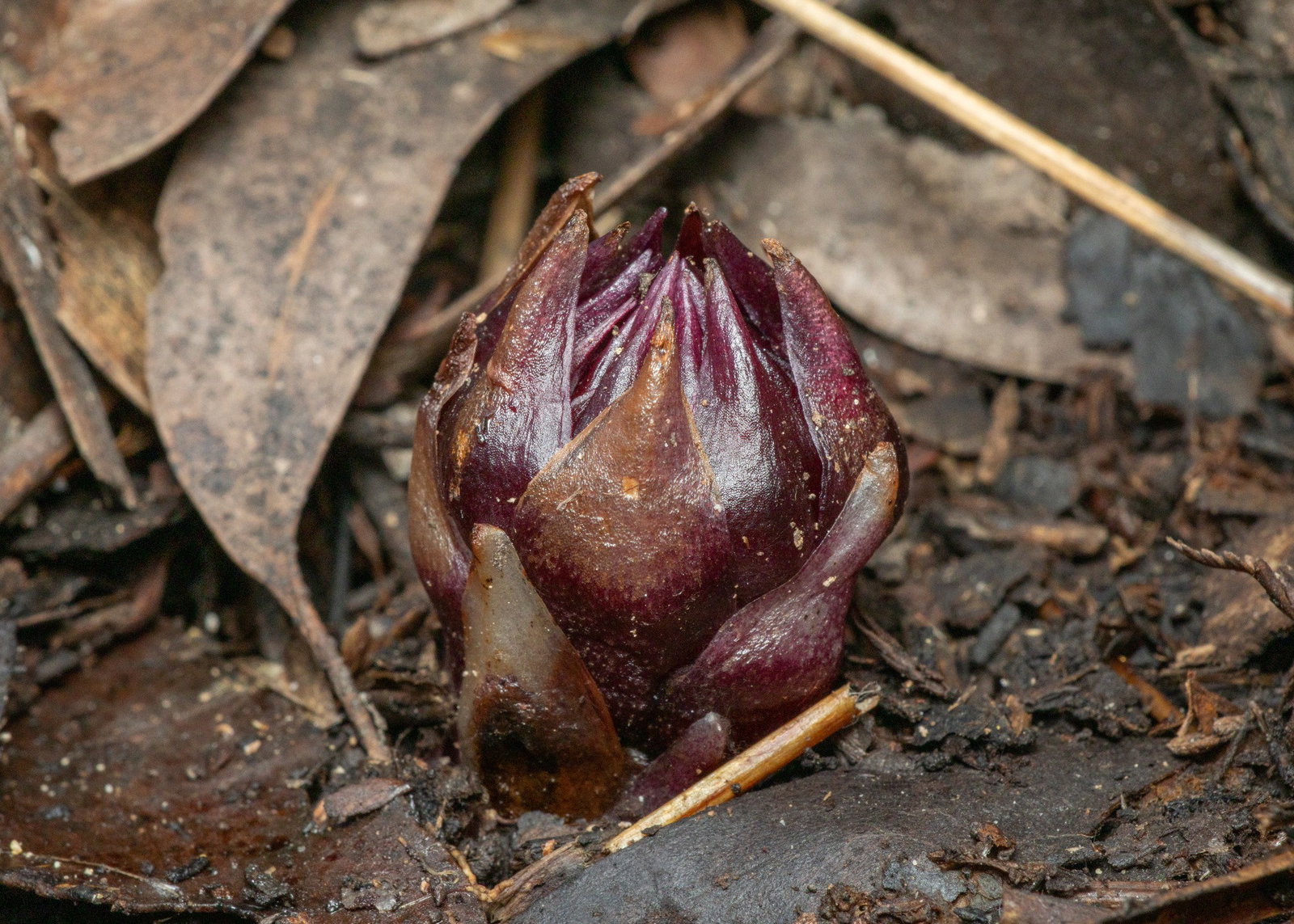 (iNaturalist: eamonn_c)
Thanks, Peter! We need to know more about our favourite pink plant.
Our orchid expert, Belinda Davis, had this to say:
“The underground orchid still looks like a flower but even here it is being deceptive!
The flower is actually a group of between 12 and 50 flowers enclosed in bracts. These bracts look like petals but are actually evolutionary relics of leaves. It gives it the superficial shape of a typical open flower with petals when unearthed.
In an evolutionary sense, the underground orchid branched off from above-ground flowers approx 30 million years ago, and because life is pretty stable underground, there have been no great drivers for change, and it has retained its ‘flower shape’.”
Fri 21 Aug 2026 at 12:47pmFri 21 Aug 2026 at 12:47pm
How important is private land to the conservation of wildflowers?

How important is private land to the conservation of wildflowers?
– Lynne
Thanks for the question, Lynne!
Here is Digby Growns, plant breeder at Kings Park and Botanic Garden:
“Private land is really important for the conservation of wildflowers — no matter what the size.
Organisations like Australian Wildlife Conservancy, Birds Australia etc manage large areas and do an amazing job, but small landowners play a major part in conservation. Some have populations of critically endangered plants that may not occur anywhere else.
However, even if they have no threatened species these areas are crucial for maintaining biodiversity no matter how small. The interaction of pollinators and plants is amazing to see in these areas, which underscores their importance.”
Fri 21 Aug 2026 at 12:14pmFri 21 Aug 2026 at 12:14pm
Plus… the Hour of Flower has begun!
Fri 21 Aug 2026 at 12:06pmFri 21 Aug 2026 at 12:06pm
The countdown begins…
It’s the all-important moment you’ve been waiting for — time for us to start to unveil how our plucky wildflowers did.
Drum roll, please…
Loading
Fri 21 Aug 2026 at 12:00pmFri 21 Aug 2026 at 12:00pm
Who doesn’t love a duck?
The Duck Orchid has my vote! What a cool wildflower! Was torn between this and the Murnong. My nan used to talk about the Yam Daisy a lot 😍
– Natty
Fun fact about the duck orchid: The first time it was formally described by Europeans was in 1810!
Loading
Fri 21 Aug 2026 at 11:58amFri 21 Aug 2026 at 11:58am
Send in your wildflower questions!
Got a wildflower-related question? Ask our experts:
Chantelle Doyle, threatened plant conservation scientist at UNSWDigby Growns, plant breeder at Kings Park and Botanic GardenBelinda Davis, research scientist specialising in orchids at Kings ParkRose Kerr, science journalist and plant expert
Send your question in by clicking the “Comment” button at the top of the page, underneath “submit comment or question”.
Loading
Fri 21 Aug 2026 at 11:50amFri 21 Aug 2026 at 11:50am
A touching story about the duck orchid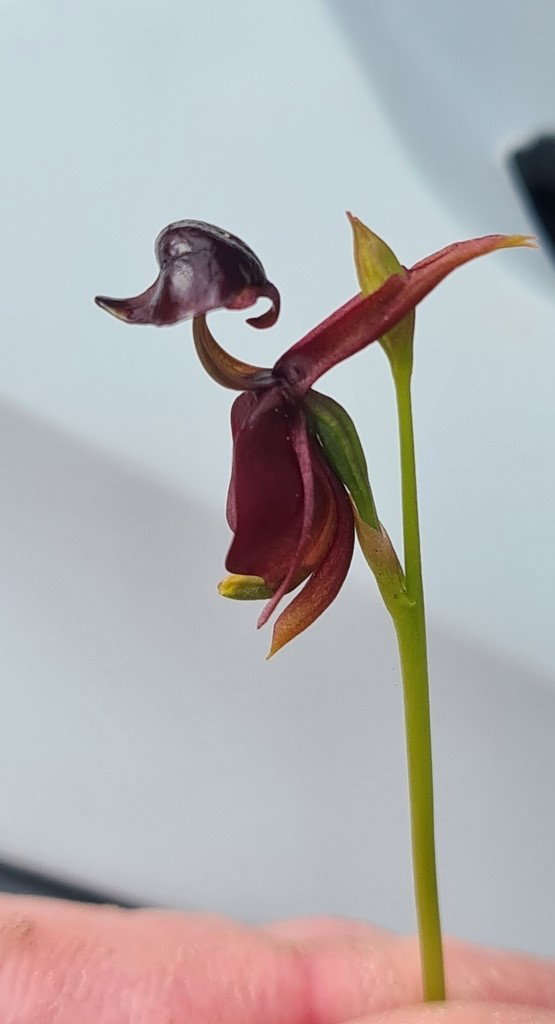 One of Jenny’s Flying Duck Orchid observations (Inaturalist: Jenny Conolly/Public Domain)
One of our readers, Steve Taylor, let us know this touching story about why he voted for the flying duck orchid.
“I chose it in memory of a former parks ranger, colleague, and friend, Jenny Conolly.
Jenny, died all too soon after retirement to the NSW south coast. In retirement, she located new significant populations of plant species, both rare natives, and invasive weeds.
One of the new native plant populations she found was of the large flying duck orchid, at a location near Moruya.”
Using Jenny’s observation and work, the council was able to put in place management to better protect the site.
Fri 21 Aug 2026 at 11:43amFri 21 Aug 2026 at 11:43am
Matt Preston is voting for the murnong
Loading Instagram content
Fri 21 Aug 2026 at 11:42amFri 21 Aug 2026 at 11:42am
Want to see more natives in your local area?
While you can plant them yourself, there are more and more diverse, colourful native plant gardens appearing around Australia.
These have been organised by local councils, and the particular garden is called “woody meadows”.
Check out the article below to hear how it got started, and how to get your local council involved in planting their own version.