
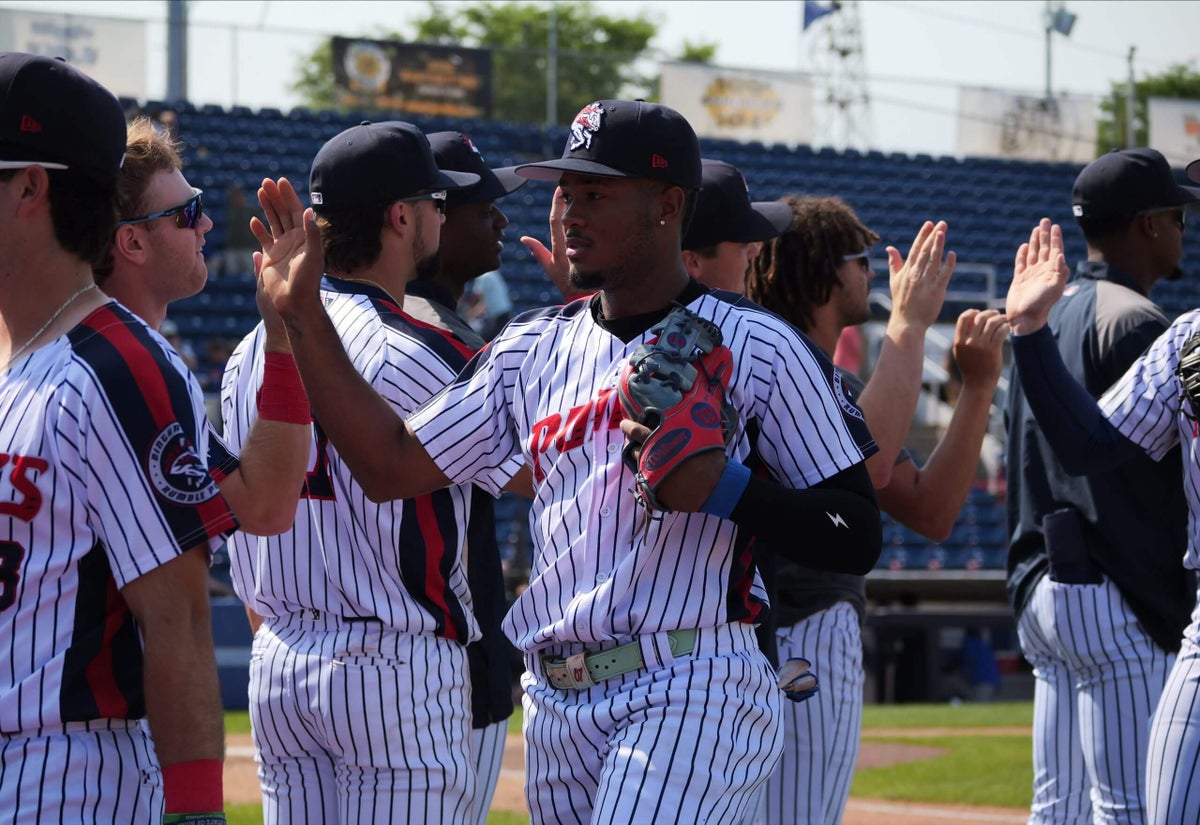
For all the grades and rankings handed out in the wake of the trade deadline earlier this month, we overlooked the team that benefited most from those moves. It wasn’t the Padres adding two rental starters or even the Dodgers snagging Tarik Skubal.
The top tier? That’s in the Southern Tier of New York — the team that has run off 14 wins in its last 16 games to trim a 10-game deficit in the standings to 2 1/2, the team that has used an infusion of talent to its lineup to score more than eight runs per game in that time, the team outscoring its opponents by more than four runs per game this month.
The biggest winner of the trade deadline is the Binghamton Rumble Ponies.
Yes, major-league sell-offs create minor-league additions, and nobody’s added talent lately quite like the Mets’ Double-A affiliate. In those deals made by the parent club, Binghamton added Jefferson Rojas, Emilien Pitre, Billy Amick, Gary Gill Hill, Gabe Davis and Luke Gabrysh. (Pitre and Amick mashed for two weeks, then were promoted to Triple A.)
The Rumble Ponies also brought up the Mets’ 2025 first-round pick Mitch Voit and welcomed back top prospect Jacob Reimer from injury in late July. The result has turned a team with a 10-22 record in the second half of the season into a legitimate contender to steal the second-half crown in the Eastern League.
“Guys have come together really quick,” manager Michael Collins said. “In a funny way, it’s nice so many people are new. Although they’re new, they’re in it together, experiencing that same thing.”
Like the Norfolk Southern freight train that lurches to life beyond Mirabito Stadium’s left-field fence, the Rumble Ponies took some time to get going. Now that they’re moving, it’s hard to stop them.
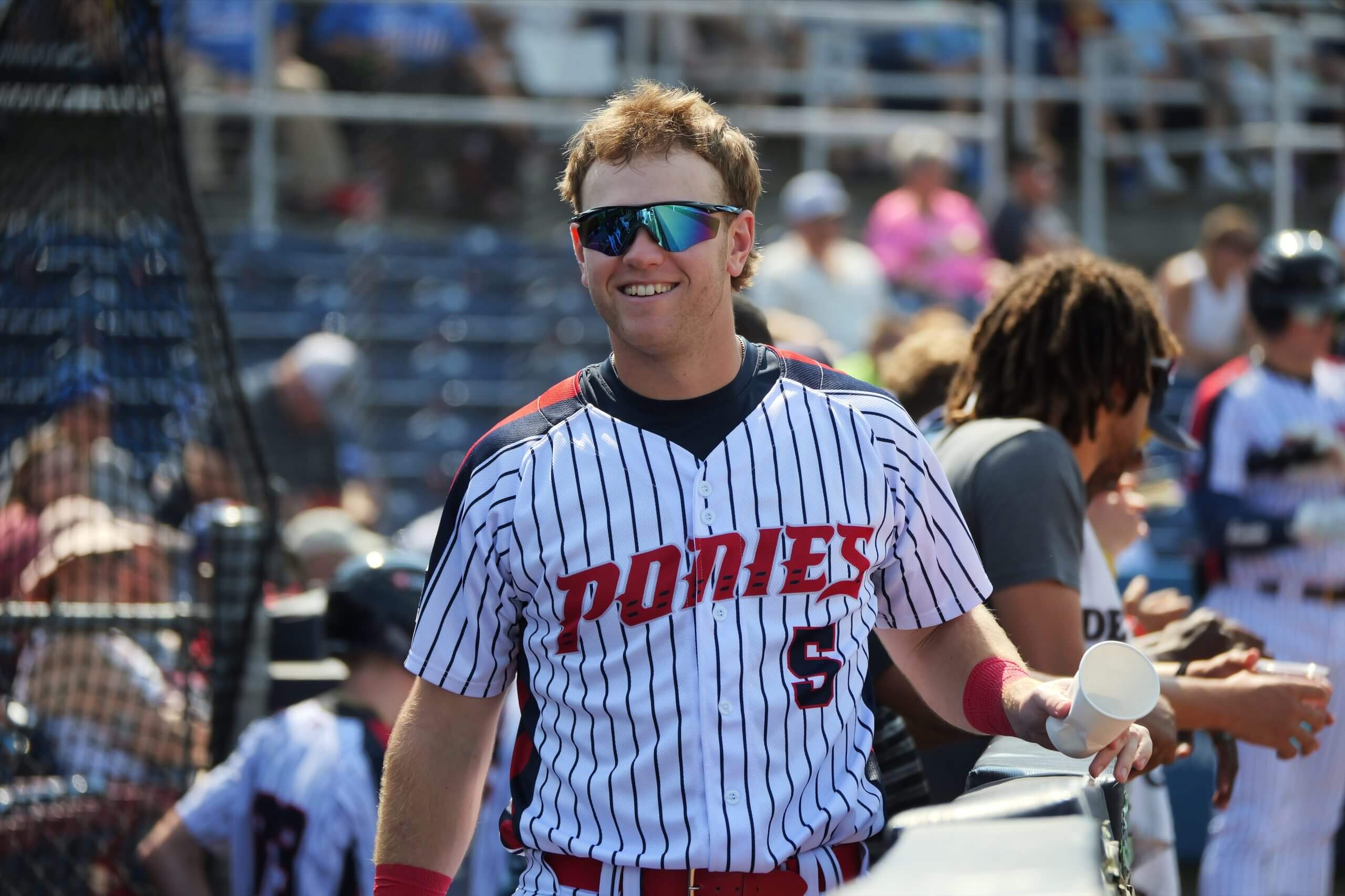
Emilien Pitre played so well for the Rumble Ponies that he earned a quick promotion to Triple A. (Nate Stickney / Rumble Ponies)
Rojas’ necklace, derived from a joke with his little brother, is small and less ostentatious than its message. “Una cabra,” he says. It means goat, the nickname his brother gave him.
As in, the Greatest of All Time?
Rojas smiles and nods.
Rojas is the biggest new name in town, the jewel of the Mets’ trade deadline sell-off. Acquired from the Cubs for Clay Holmes and Tyrone Taylor, Rojas is a top-100 prospect and now atop almost every ranking of New York’s best minor-league talent.
If you want to know why, roll the tape from Tuesday night’s game. That’s when Rojas homered to center in the first and, in the bottom of the ninth, ripped the score-tying double to cap off a seven-pitch at-bat in which he’d fouled off a trio of two-strike offerings.
“That at-bat sums it up,” Collins said. “He’s competing and staying in the at-bat until he gets the pitch he can handle. A lot of those at-bats, he’s just really competitive from start to finish.”
Trades typically catch prospects by surprise, but Rojas was prepared for his: The Cubs let him know he was in conversations ahead of the deadline, though he had no idea where he’d end up. Going to the Mets carried with it one familiar face and some irony. Binghamton’s hitting coach is Rachel Folden, who joined the organization last winter after five years with the Cubs. She’s seen Rojas since 2023 and worked with him in multiple offseasons.
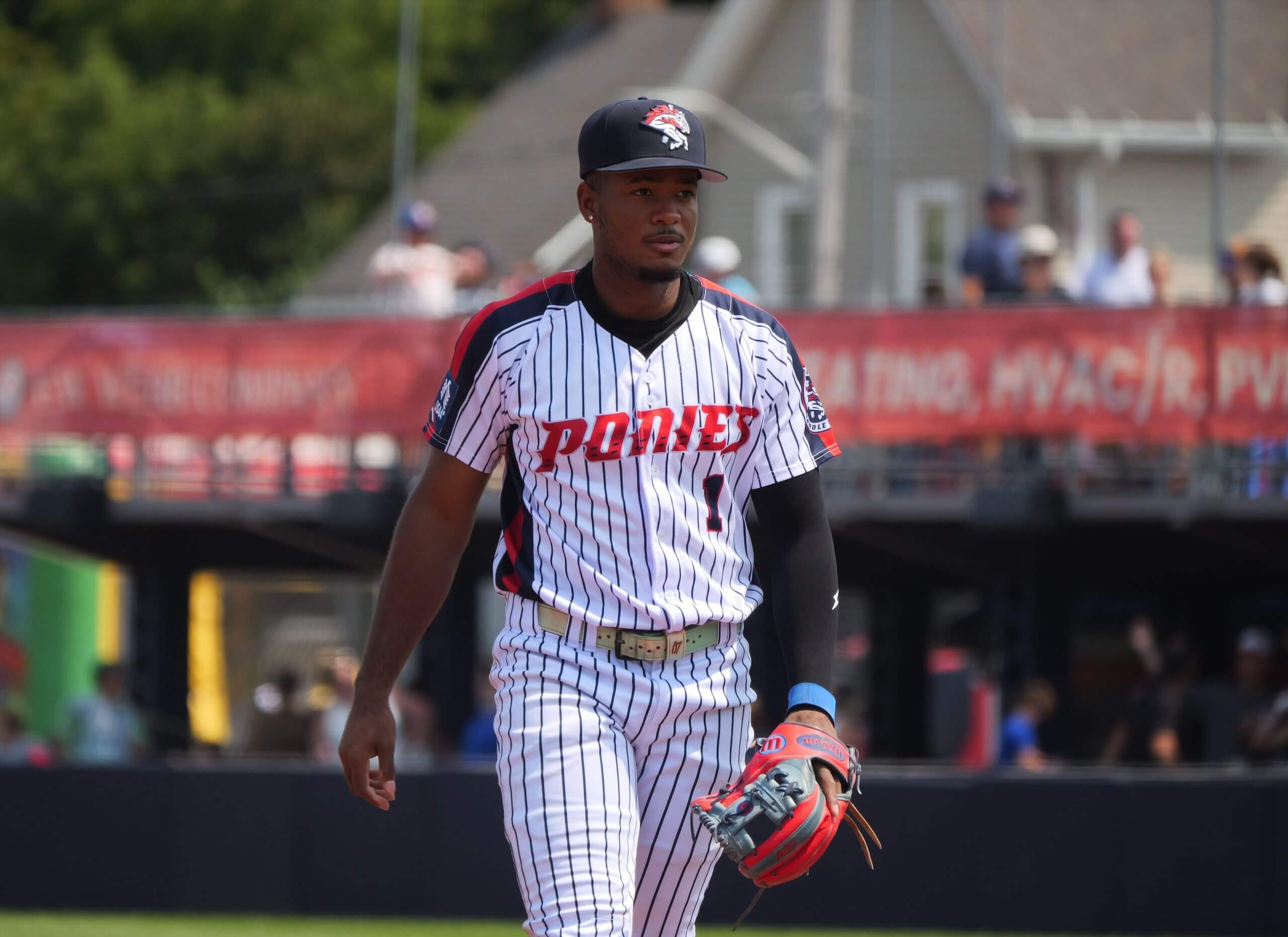
A coach said of Jefferson Rojas: ‘Every pitch, he’s gathering information and learning from it.’ (Nate Stickney / Rumble Ponies)
“It’s fun to see that the player we all hoped he would develop into, he’s on track to being that player,” Folden said. “He’s the same kid with the same quiet focus and determination that acts and carries himself like a big leaguer. We all saw that from a really young age.”
What does it mean for a 21-year-old in Double A to act like a big leaguer?
“It’s the attention to detail,” Folden said. “It’s a special thing to watch guys in the big leagues go about their work, because they do it as if it’s the first time every single day. Every single rep, there’s a high level of care. He has that.”
The consistency of Rojas’ production belies how aggressively he’s been promoted throughout his career. With Chicago, he skipped rookie ball and went straight to Single A as an 18-year-old. With steady promotions since, Rojas has always been among the youngest players in his league.
“He’s just been the same guy,” said Folden. “Every pitch, he’s gathering information and learning from it and trying to figure out how to beat it. It’s almost like a puzzle to him. He has a good understanding of who he is as a hitter.”
“I knew what type of player I was,” Rojas said through teammate and interpreter Yohairo Cuevas. “I just took advantage of every chance they gave me.”
Some top-100 prospects achieve that ranking because of what they can be if everything comes together. Others are there because they do everything well and are likely to carve out a productive if not spectacular major-league career. (Mets fans can think of this as a spectrum from Amed Rosario to Andrés Giménez.) Rojas sits in that latter group — a player who does most everything pretty well, with the chance to make further gains. This year, that’s come with his power. The home run Rojas hit Tuesday was his 17th of the season, six more than he hit last year.
That’s the result of Rojas’ work in the winter to clean up his posture at the plate. He also used heavier training bats to improve his bat speed.
With the Rumble Ponies, Rojas has already started games at second, third and short — though as with the Cubs, most of those defensive starts have been at third base. That’s a shift from last year, when he was primarily a shortstop, and an acknowledgement that his future, especially in his new organization, probably isn’t at short.
Oh, and getting back to the irony: Rojas’ favorite player is Javier Báez. Báez, too, was traded from Chicago to the Mets, though he was the rental and not the prospect going back. The Cubs owe the Mets one, right?
The start of a player’s professional career can be a delicate time for a coach. You want the player to be what got them to professional baseball, but you also want them to make the changes commensurate with the rise in competition. One day last summer in St. Lucie, minor-league hitting coordinator Daniel Nicolaisen and Mitch Voit shared a look in the dugout.
It was time.
It wasn’t that Voit was drowning so much as treading water during his pro debut. The two talked through some tweaks to Voit’s mechanics, including a different starting point for his hands and a leg kick, the latter less for timing and more to allow Voit to access his power in games. By working on it late last year and through the winter, Voit has made his new mechanics second nature.
“You get kicked in the butt a little bit when you start off, and it’s a learning curve you’ve got to adjust to right away,” Voit said. “This is about playing baseball for 15 years, not playing baseball for July and August. I was able to have that perspective to use these couple months to start something new that will help me long term.
“Why delay it? The more experience you have with it, the more comfortable you get. Starting early definitely helped me get to where I am now.”
Voit’s emphasis this season has been on refining his eye at the plate, on understanding the difference between looking for a pitch and looking for his pitch.
“It was Mitch really buying into the idea of being a leadoff hitter, which is an identity shift for him,” said Nicolaisen. “Some guys do that with more focus than others, and Mitch is laser-focused.”
Voit agrees.
“Focus on that process in the batter’s box, and you start there and eventually get a little more advanced and a little more advanced,” he said. “It’s something you work on every day.”
After an uneven start to this year, Voit has been one of the minor leagues’ most dangerous hitters since Memorial Day. In those nearly three months, he’s a half-dozen slugging points from running a .300/.400/.500 slash line with 29 steals as a middle infielder. He has been the Eastern League’s Player of the Week twice. He has only played in the Eastern League for two weeks.
All that in August of his first full professional season — a time when most pro-ball rookies have hit the wall. Voit credits a keen focus on his nutrition and sleep habits with keeping him in proper condition this late into the season. The organization has also been proactive in giving him rest days; he’s gotten one game off just about every week this season, in addition to the Monday off-day on the minor-league schedule. (Voit has missed more time this week, as he’s nursing a bruised forearm stemming from a hit-by-pitch Tuesday night.)
Nicolaisen goes back to Voit’s prep and points to his batting practice routine. The last round each day?
“He uses it as if he’s about to step on Citi Field tonight,” he said. “Mitch is one where you don’t have to worry if he’s prepared or not.”
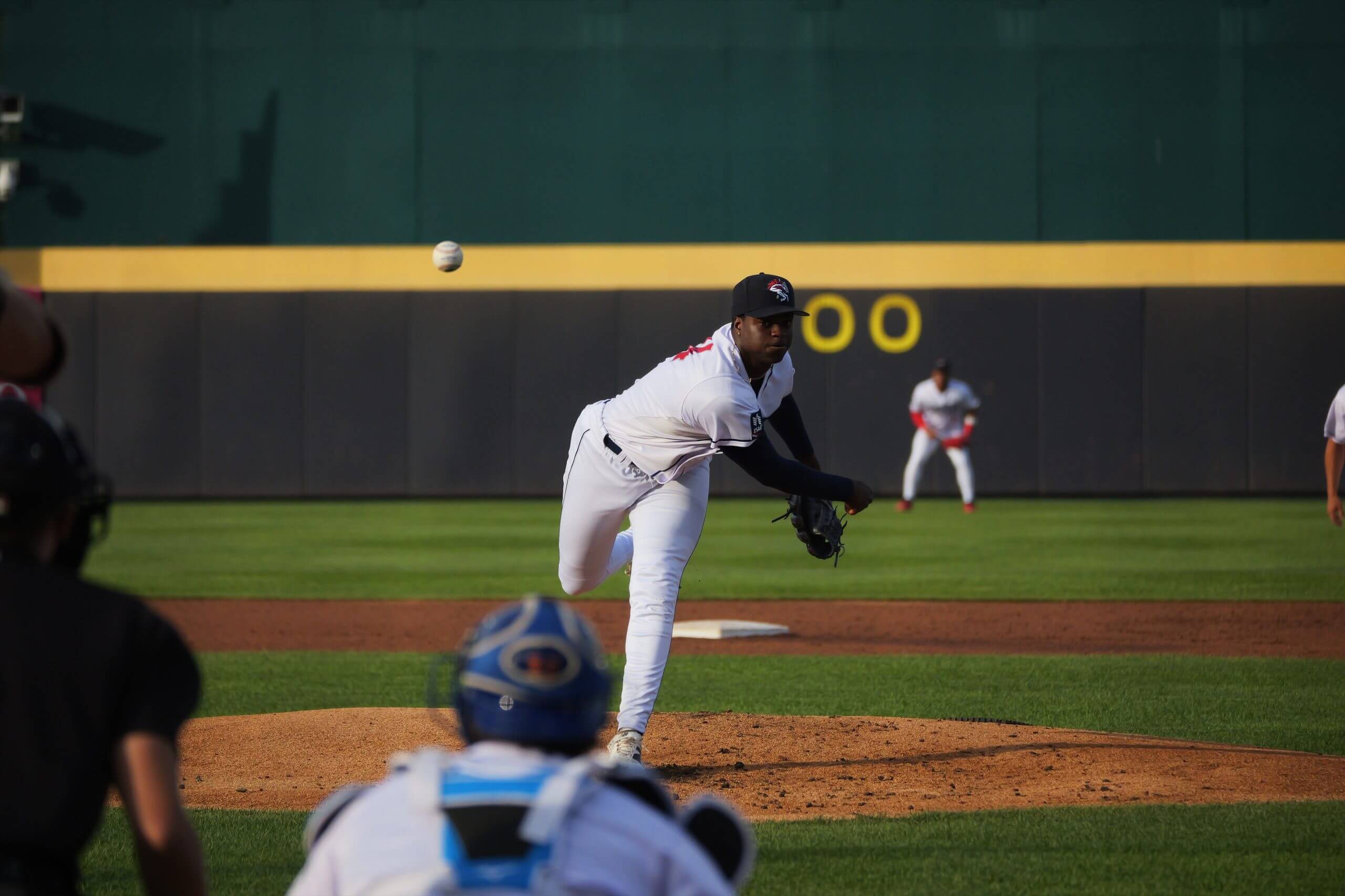
Gary Gill Hill, who grew up in New York, has made an early impression thanks to his excellent control. (Nate Stickney / Rumble Ponies)
Years ago, as they developed arm after arm with mind-boggling movement and stuff, the Tampa Bay Rays simplified things for their battery. With pitches that moved this much, the catcher could set up right down the heart of the plate, and pitchers were instructed to aim down the middle.
Gill Hill was different.
Even in Tampa Bay’s system, his excellent control led to a problem seldom seen in today’s baseball: He was throwing too many strikes. Even the Rays told Gill Hill’s catchers to set up on one side of the plate or the other to narrow the target. The goal was to turn that good control into pinpoint command.
Gill Hill, acquired from Tampa Bay in the Freddy Peralta trade, is continuing that work with the Mets.
“It’s just changing my focal points,” Gill Hill said. “I’m able to move the ball around the zone so I can hit a particular part of the zone rather than the fatter part.”
“A lot of teams’ approach will be to swing because you throw so many pitches in the zone,” Binghamton pitching coach Matt Carasiti said. “We’ve just shifted the focus to being fine. Aim small, miss small.”
The pitch that best encapsulates this is the glove-side sinker Gill Hill is trying to throw. (Think of Bartolo Colón freezing lefty after lefty with that sinker coming back over the plate.) When executed properly, it’s a perfect complement to Gill Hill’s larger mix, playing off his cutter and sweeper that can start in the same place and move to varying degrees the other way. Miss with that front-door sinker to a lefty, however, and you’re often getting a new baseball.
“You take your lumps here trying to do those things,” Carasiti said, “so when you get to the big leagues, you can throw that pitch with confidence and not worry about the consequences.”
“Once I start throwing it outside to righties or in on the front hip to lefties, I can create an X with everything — a cutter or sweeper off it,” Gill Hill said. “Hitters have to pick one to swing at.”
(For fans of a certain age, creating Xs on the plate immediately brings to mind Greg Maddux’s philosophy on the mound.)
This talk about command and execution shouldn’t detract from the fact that Gill Hill also has good stuff. His velocity hit 97 mph on Tuesday night, and the sweeper he’s tinkered with since entering pro ball has become more comfortable this season. Now Gill Hill is working on creating more lift in that sweeper — basically, limiting the vertical downward break caused by gravity when he throws it. The Mets want to see it remain on the same plane as much as possible.
“It’s just trusting your hand placement on it,” said Gill Hill.
Gill Hill grew up in New York. He’s a New Rochelle kid who went to Kennedy Catholic in Westchester. He’s the type of person who looks at the thick clouds clearing for sun on a 75-degree day in Binghamton and earnestly talks about “playing in good weather.” He and his teammates in Bowling Green, Ky., (where the average summer high is about 10 degrees warmer than in the Southern Tier) had been plotting out the trade deadline in the weeks leading up to it. They knew the Rays were buyers. Someone was going to go somewhere else.
Gill Hill can’t believe it’s him, and it’s New York.
“The Mets? Coming home and playing for a New York team?” he said. “I’m really happy.”
Confluence Park, where the Chenango River meets the larger Susquehanna in downtown Binghamton, sits less than a mile from Mirabito Stadium’s home plate. This is the point where something smaller feeds into and becomes a part of something larger — where impact can ripple.
This has not been the season the Mets planned for, but their tributary in Binghamton is as exciting as it’s been in years.
Let’s see where it flows.