
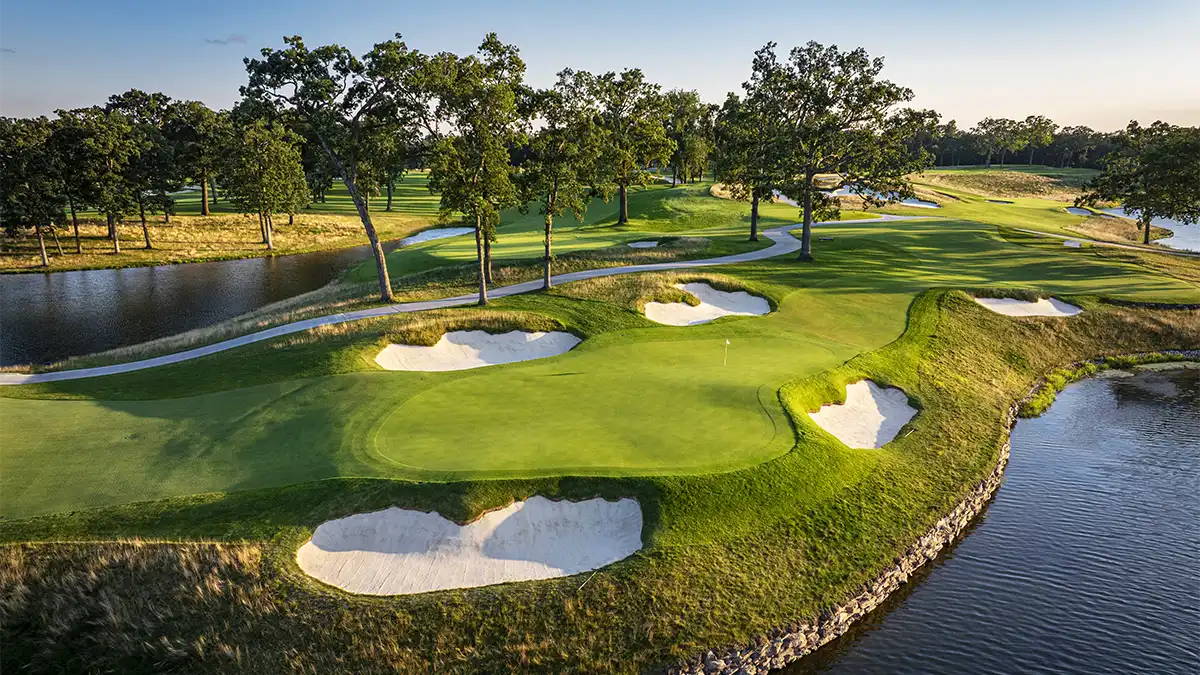
Our renovation of the No.3 course at Medinah Country Club was carried out with matchplay – and this month’s Presidents Cup – squarely in mind.
It was during COVID that we were first contacted. Would we (that’s me and my design partners Michael Cocking and Ashley Mead at Ogilvy, Cocking and Mead, a.k.a. “OCM Golf”) like to bid for the task of revamping the famous No.3 course at Medinah Country Club?
Not the toughest question, really. Any opportunity to work on such a storied venue immediately had all three of us excited, especially when it was announced that the Presidents Cup was headed there in 2026.
Our enthusiasm grew even more when we won the commission, a process that will hopefully remain unique given the travel restrictions in place at the time. All of the initial discussions took place via Zoom calls. Michael and Ashley had never been to Medinah and I had played only one event there, the 2006 PGA Championship. So I was at least able to describe the course as it was at that time, with my partners adding to my knowledge by delving into the architectural history of the place.
As it turned out, the course, which had previously played host to the US Open, the PGA, the US Amateur and the Ryder Cup, had seen a few ‘re-dos’ over the previous 75 years. So we didn’t really have a version that cried out to be restored. Having said that, Medinah was rated in the top 20 courses in the United States back in the 1980s. And, while the club was far from obsessed with rankings, it was true that the No.3 course had fallen from that high point.
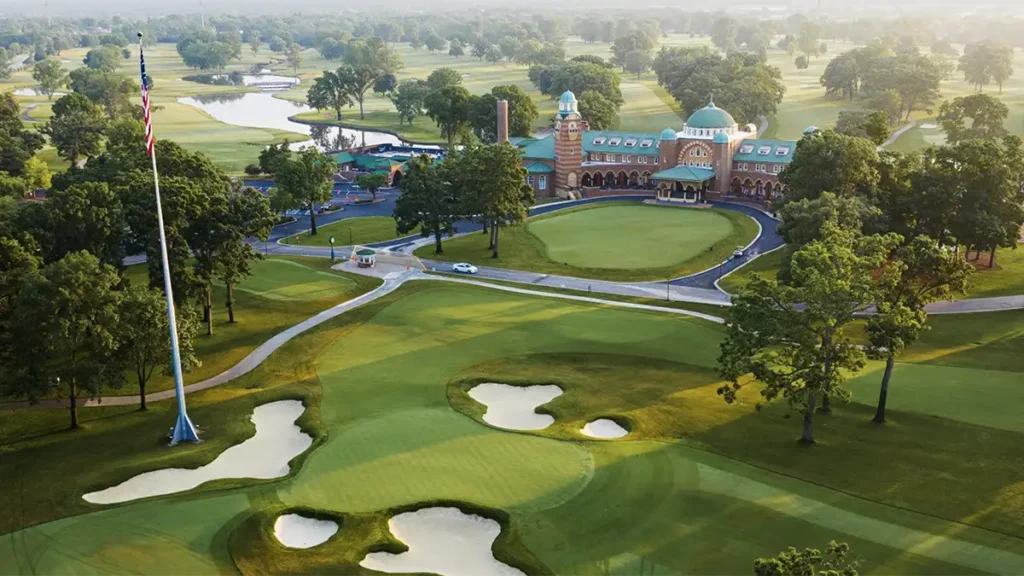
Another motivation for the members was what went on when the PGA Tour’s BMW Championship visited Medinah in 2019. The course that week was long, it was narrow and the rough was thick. Going in, the feeling was that it would present the best players in the world with a tough test. But it did not. En route to reaching 25-under-par for the week, Justin Thomas shot a third-round 61. And as many as 27 players shot 10-under or better for the 72 holes.
All of which came as a shock to a membership who thought their best course was really difficult. It was for them, but clearly it wasn’t for leading professionals. Change was required. And our brief? Make No.3 as good as it can be, enjoyable for the members and challenging for professionals.
That last bit was important. Medinah is rightly proud of its tournament history and wanted to continue to be seen as a place where the best could come and play. The Presidents Cup, in which I will captain the International team against the Americans, will be the first test of how successful we have been.
One of the first things we did was remove some trees. The course had become overly narrow, with too many trees growing over greens to the point where it was difficult for the superintendent to grow grass. The trees were grabbing too much of the water and sunlight. Which is not to say there aren’t still a lot of trees on the property. But the fairways are no longer narrow corridors and the ‘good’ trees are highlighted.
Width was added to many of those fairways, too. And the bunkers are now where they look like they should be, rather than simply placed in what you might call a prescriptive manner. In other words, they are not necessarily between 280 and 320 yards from the tee. Just about every green has been re-done, with the intention of making them play as firm as possible.
As for the Presidents Cup, I like the fact that the Medinah the players will encounter is well-suited to matchplay. As I said, during our work on the course, we knew that the Presidents Cup was coming. So we were thinking “matchplay” when we included tees where a bit of risk-taking could possibly be part of the players’ thinking.
So it is that there are quite a few times when playing for a half will not necessarily be straightforward. On those holes, the potential scores are spread between eagle and double-bogey. That’s what great holes do. Think of the 13th at Augusta National, the Road Hole at St Andrews, or the 10th at Riviera.
At least in my mind, three holes stick out in that respect. (Note that the first hole at the Presidents Cup is normally the fifth for the members. And what is normally the fourth will be the 18th for the matches. So what follows are
“PC” numbers.)
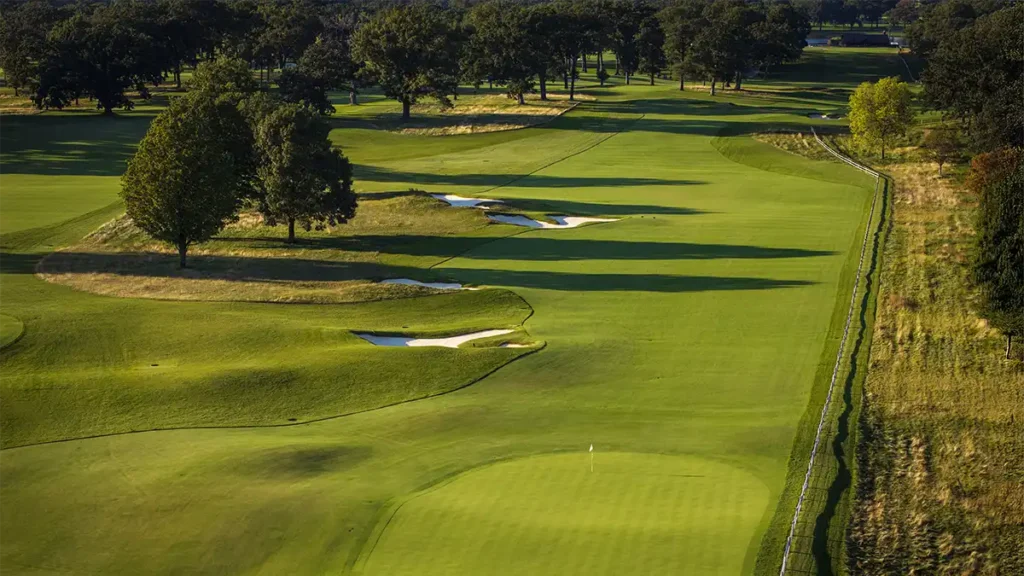
1st HOLE: 489 yards
(447 metres), par 4
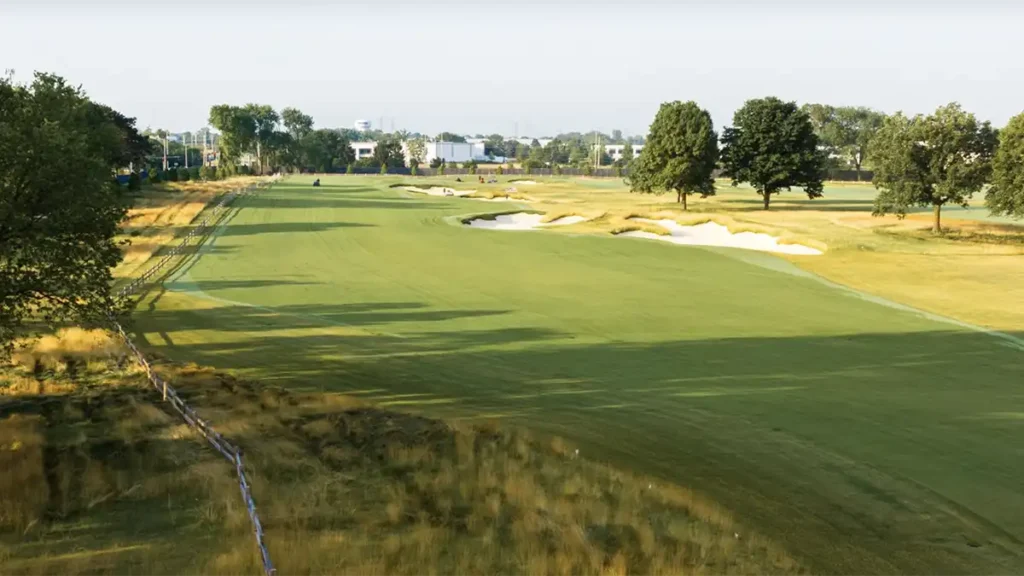
The tee-shot here will be fascinating. All the way up the hole there is a post and rail fence, beyond which is out-of-bounds. So there is some risk involved, one that only increases on the second hole, where the boundary is literally on the edge of the putting surface. It might not be possible to putt out-of-bounds, but those chipping from the other side of the green will at least have to think about that possibility.
Anyway, the drive at the first is going to be challenging, the ultimate “I’m glad I’m not hitting that one” shot in foursomes. The fairway is wide until you reach the bunkers at something like the 280-yard mark. Then the fairway narrows after that.
So the player hitting first has a decision to make. If he takes on the tee shot and finds the fairway at its narrowest point, he has an immediate advantage. All the pressure goes straight onto his opponent. Now he has to follow suit and hit a shot he doesn’t necessarily want to hit. Then again, if the player with the honour drives OB, he has pretty much given the hole away. That’s classic matchplay. And will be so much fun to watch. If I was asked to bet, I think we will see most players going for it off the tee, which means we are going to see drives flying out-of-bounds.
4th HOLE: 373 yards
(341 metres), par 4
This is a driveable par 4. Yes, many of the players on both sides will be able to find the green in one shot, but most times that will probably be the wrong decision.
What we are likely to see is a variety of interesting plays and strategies off the tee. We’ll see everything from 6-iron to driver, leading to scenarios similar to those that will play out on the opening hole.
The guy who hits driver here and finds the green will pretty much force his opponent to do likewise. That isn’t really the correct shot in any other situation. But if the opponent has been successful, there is really no other option. The second player’s hand will be forced. Again, that will in turn create doubt in his mind, which is what makes matchplay so special. And so different from the pre-round plans players stick to rigidly week-to-week in 72-hole strokeplay events. In matchplay, strategies have to be so much more fluid.
Whatever happens though, this hole will be fun and fascinating to watch.
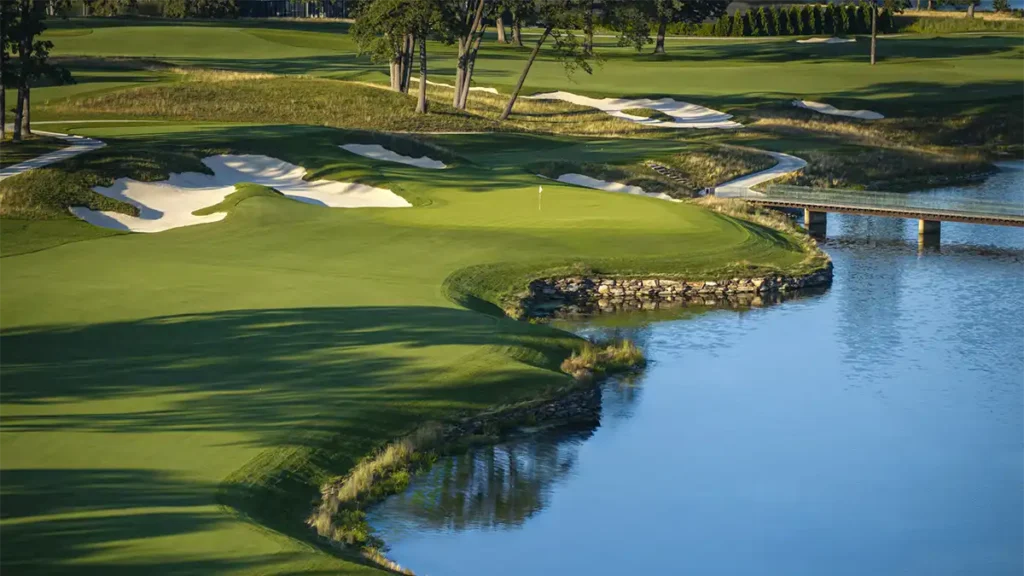
12th HOLE: 402 yards
(368 metres), par 4
This hole is in the same place as its previous incarnation. Only the last six holes on the ‘new’ course have changed location.
Anyway, the fairway now runs at an angle to the tee, which means the player has to choose how much he takes on the water that runs along the right side. Tantalisingly, the carry is always a little more than it looks. So the players are going to have a hard time not attempting to leave their second shots closer to the green than they should.
It’s a dramatic spot, too – eye candy, if you like. The green is on the water’s edge and there is a vast fairway to the left. It will tempt the players, goading their egos. It asks them to hit a bit further right than they should. Which will make for great spectator sport. Take it from me, there will be drama on this hole.
Again, the player hitting second from the tee will often be asked to make a last-minute change to his strategy, depending on what the first guy has done. So if the player with the honour finds the water, we’ll probably see players hitting 3-irons from the tee and favouring the left side. That leaves just a wedge to the green. Or we’ll see bolder approaches if the first player has hit the ideal tee shot. All in all, it’s matchplay golf at its most interesting.
Photographs Courtesy of Medinah country club