
By Everest Hala
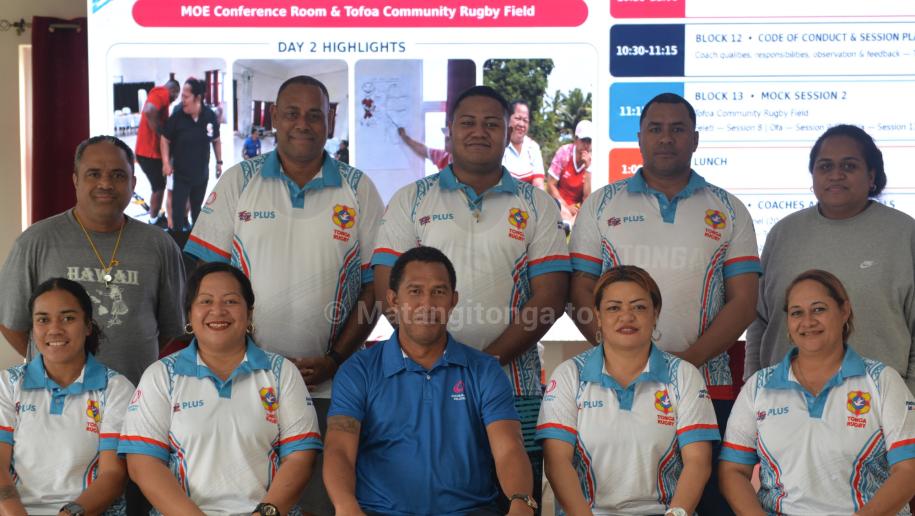
Six local teachers are taking part in Tonga’s first “Get Into Rugby PLUS (GIR PLUS)” training programme, aimed at equipping educators with rugby coaching and life skills for a safer and more inclusive environment for young players.
Day three of the five-day pilot programme was held in Nuku’alofa today, developing Tonga’s first six GIR PLUS coaches ahead of a planned pilot phase that will run for several months before February 2027.
The participation pathways manager for Oceania Rugby, Tihrani Uluinakauvadra, said the training was aimed at building a group of pioneer coaches who could take the programme into local communities.
“This is the first time we are bringing the Get Into Rugby PLUS programme to Tonga, so it is a pilot programme here,” Uluinakauvadra said.
“Hopefully, by the end of the week, we will complete the training and development of the six pioneer coaches so they can begin the pilot for the next couple of months ahead of February 2027.”
A key focus of GIR PLUS is using rugby as a platform to develop life skills, safety measures and the ability to respond appropriately to violence and other challenging situations.
Uluinakauvadra said safety must remain the priority when working with young players. He said coaches should first create an environment where children feel safe to talk about their emotions and problems, helping them understand that violence is not the only way to resolve conflict.
The teachers participated in training scenarios, with situations involving conflict between children and coaches learning when to intervene and when situations should be referred to authorities.
The six participants of three women and three men, were presented with different scenarios and assessed on how they responded. Uluinakauvadra and fellow trainer Lionel Danfort provided feedback on their performances.
One participant, coach Feleti, said he believed using the Tongan language would make it easier for him to communicate with young players.
“I think that conducting my sessions in Tongan with the kids will be easier for them and me. English is a bit hard on me,” he said.
Uluinakauvadra and Danfort agreed that coaches should communicate with children in a language they understand best.
GIR PLUS overview
The programme is being delivered through 16 sessions combining classroom learning, practical activities and real-life scenarios.
Eleven sessions had been completed at the Ministry of Education conference room at Tofoa, after wet weather forced practical activities indoors, that were originally planned for the Tofoa community rugby field.
Coaching package
The five-day training is only the first component of the wider coaching package.
Following the life-skills training, the six coaches will be expected to complete World Rugby courses covering Level One coaching, strength and conditioning, match officiating and first aid in rugby.
Uluinakauvadra said the programme would also include ongoing refresher training and professional development.
The final day of the programme will be held on Saturday, Aug. 29, when the participants will work with children in a live rugby session to demonstrate the skills and knowledge they have gained during the training.
“It has been amazing to see how quickly the coaches have adapted to the curriculum and the learning,” he said.
Uluinakauvadra acknowledged the Australian Government for supporting the pilot programme, as well as UN Women, Oceania Rugby, Tonga’s Ministry of Education and Tonga Rugby Union.
He also thanked Tonga Rugby Union chief executive Aisea Aholelei and his team for supporting Oceania Rugby with the programme.