
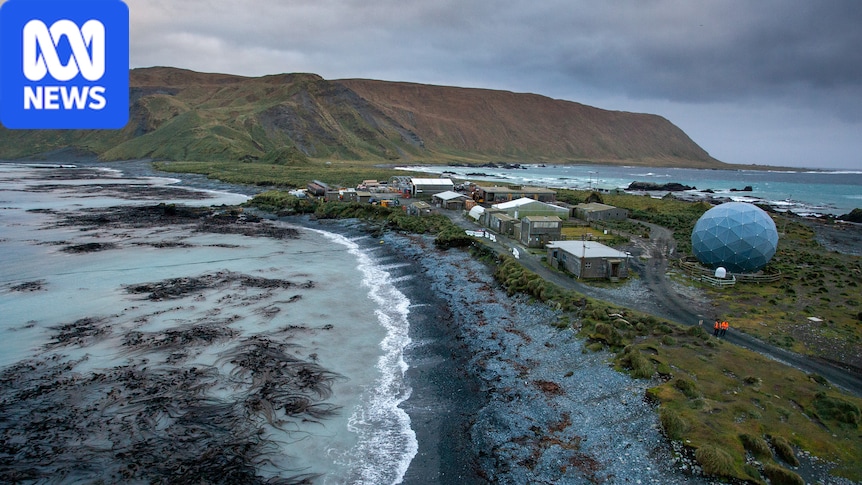
The Australian Antarctic Division will launch a mission to extract personnel from Macquarie Island in the Southern Ocean due to the psychological risk posed by a potential outbreak of bird flu.
The sub-Antarctic island, 1,500 kilometres south-east of Hobart, is a World Heritage-listed wildlife sanctuary with up to 4 million seabirds and 100,000 seals.
The island is currently free of the deadly H5 strain of bird flu.
But once it arrives, up to 90 per cent of baby elephant seals could perish, as happened on Heard Island over summer, when 13,000 pups died from bird flu.
The Australian government says exposing expeditioners to such harrowing scenes is untenable.
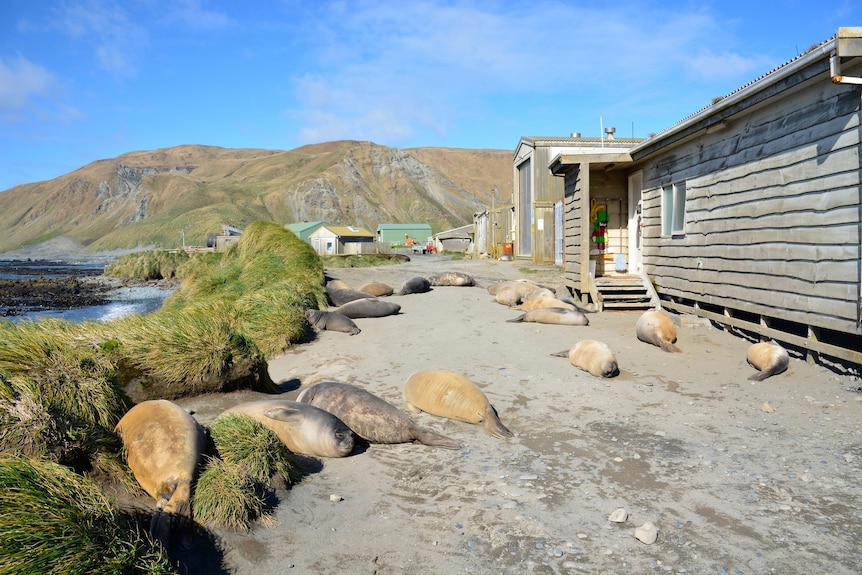
The station is right in the middle of a population of southern elephant seals. (Supplied: AAD)
“We’ve come to this really difficult decision of withdrawing staff,” federal environment department deputy secretary Sean Sullivan told the ABC.
“And that’s being done primarily for the psychological risks that will be facing staff if they are there for extended periods of time inside a mass mortality event.”
Australia’s research station on Macquarie Island is located within metres of a 2,500-strong colony of elephant seals.
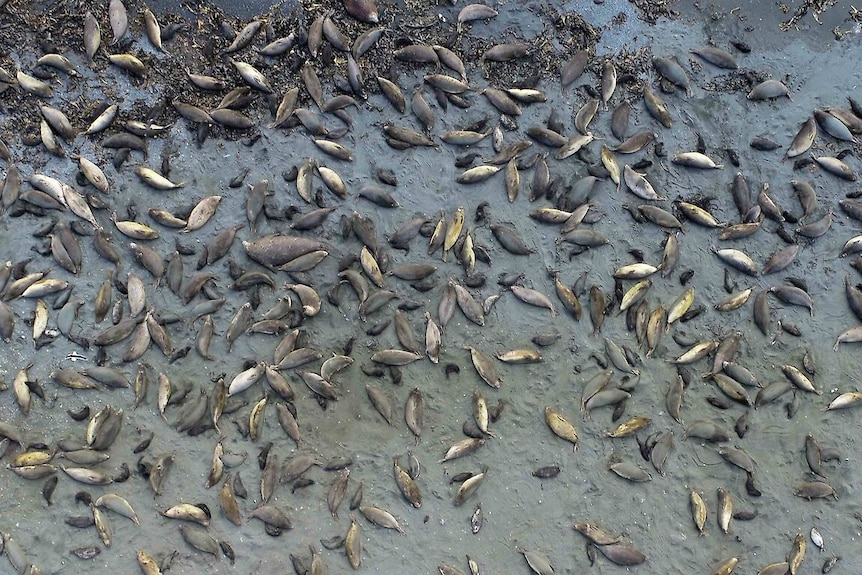
A colony of about 2,500 seals lives on the island, which has yet to be hit by the virus. (Supplied: AAD/Jarrod Hodgson)
Mr Sullivan said it would be highly distressing for expeditioners to endure a prolonged wildlife mass mortality event on their doorstep in the event of an outbreak.
“There would be thousands of deaths,” he said.
“You can imagine the impacts that would have in terms of being restricted to base.
“Obviously the distress of being around a mass mortality event, as well as impacts with respect to air quality, as you can imagine, that would have long-term impacts on staff.”
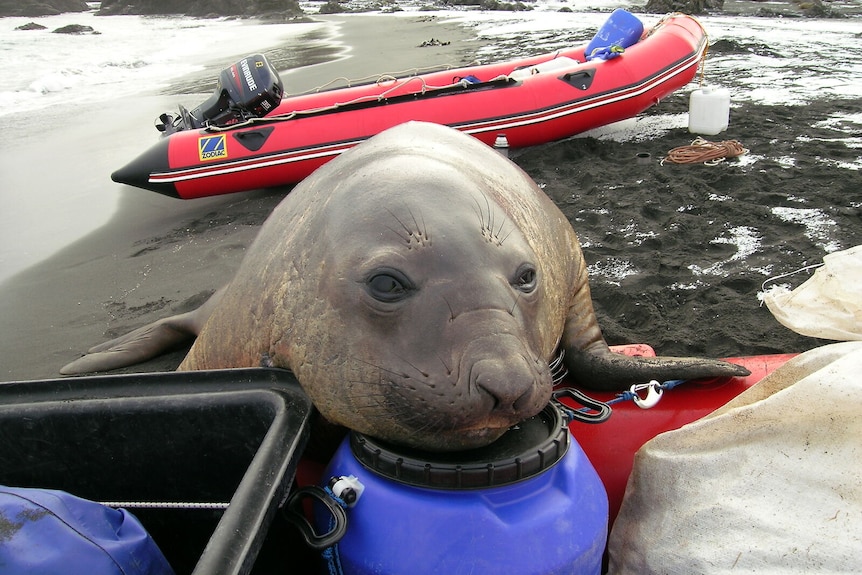
Expeditioners work and live next to seals and other wildlife on the island. (Supplied: AAD/Kerry Steinberner)
Icebreaker to be deployed for retrieval mission
The station is currently home to 24 expeditioners, who began what was expected to be a year-long deployment in May.
Instead, they will now be extracted in just over a month, shortly before the peak of the seal breeding season, when experts warn a major mortality event is most likely to occur.
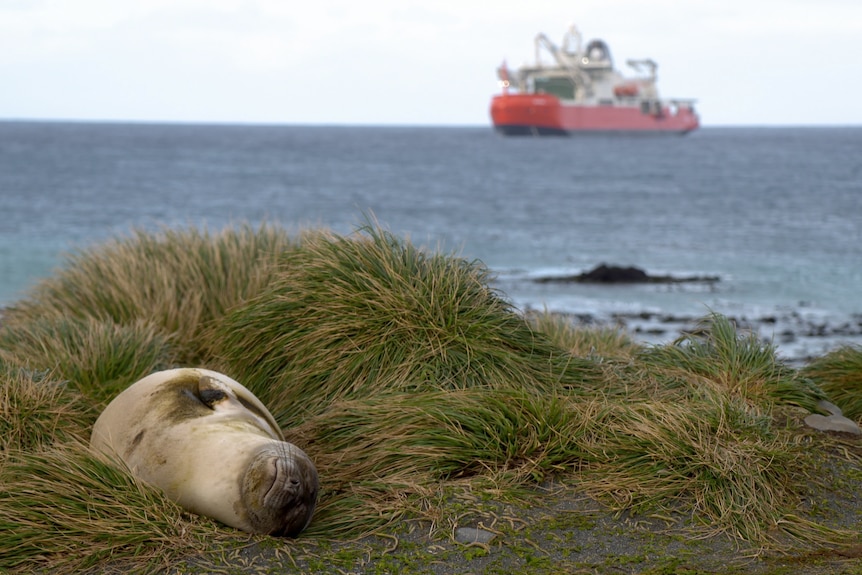
The Nuyina will visit Macquarie Island in October to extract the expeditioners. (Supplied: AAD Simon Payne)
“I’m sure [staff] will be disappointed,” Mr Sullivan said.
“It’s a special place and … people are coming into summer where a lot more work can be done and so there will be great disappointment from staff.”
Australia’s icebreaker RSV Nuyina, which is currently in Singapore for routine maintenance, is expected to arrive at the island in early October to retrieve the team.
“It is unprecedented and we are in unprecedented times,” Mr Sullivan said.
“We’re making this decision primarily because staff are our number one priority.”
Extracting staff from the island in October will also remove the risk of having to mount an evacuation during the busy summer season, when the Nuyina is scheduled to resupply bases in Antarctica.
“We have a window of opportunity where we’ll minimise the impacts on our broader season plan,” Mr Sullivan said.
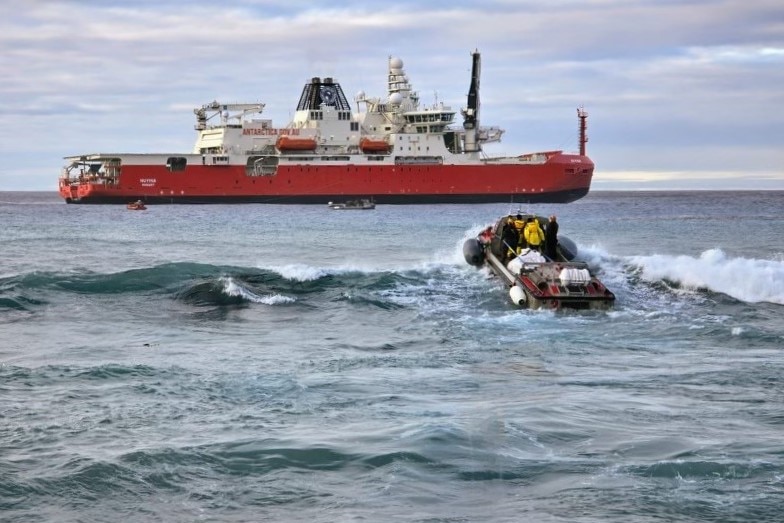
There is a limited window for the Nuyina to conduct the mission without impacting other Antarctic work. (AAD)
Australia’s Antarctic stations not affected
It remains unclear when expeditioners will be able to return to Macquarie Island.
But over the next month, plans will be developed to set up live camera feeds and drones to allow staff in Australia to monitor for any signs of bird flu once personnel leave.
“The Australian Antarctic Division is exploring options for monitoring the situation on Macquarie Island, with a view to returning expeditioners to the station in coming seasons,” Mr Sullivan said.
“We remain committed to maintaining a long-term presence on Macquarie Island.”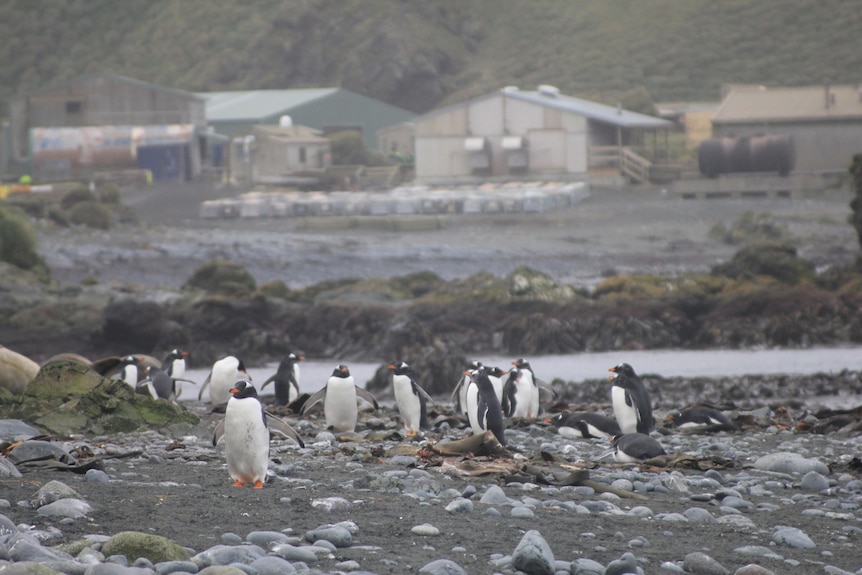
The island is also home to gentoo penguins. (Supplied: Jason Munday/AAD)
Mr Sullivan said Australia’s three stations on the Antarctic continent did not pose the same level of risk, and there were no plans to extract personnel from those bases.
“Macquarie Island is unique,” Mr Sullivan said.
“The station is inside a seal colony, and so the implications are direct — they’re on the front door.
“That’s not the case with the other Antarctic stations.”
Withdrawal to delay $370m station rebuild
Australia has had a permanent, year-round presence on Macquarie Island since 1948.
Multiple agencies utilise facilities at the research station, including the Bureau of Meteorology, Geoscience Australia and the Tasmania Parks and Wildlife Service.
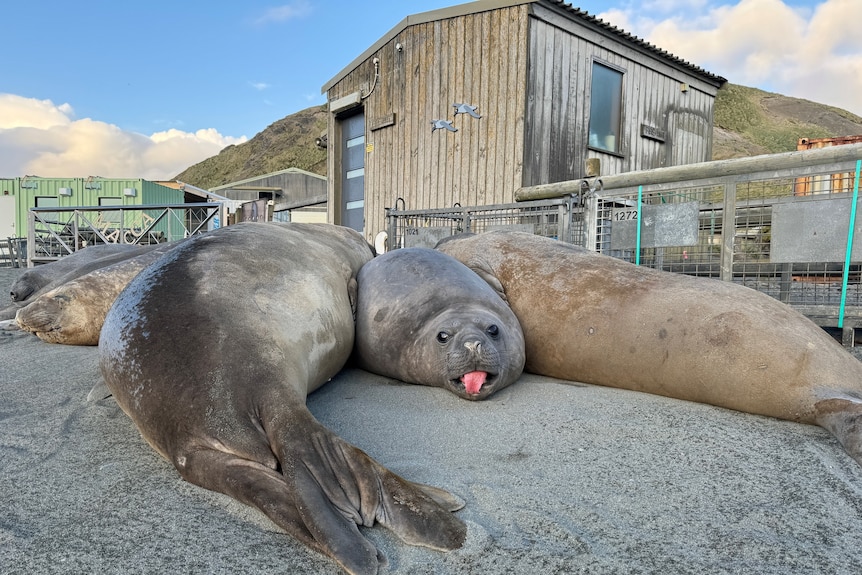
The deaths of seals and other wildlife on the doorsteps of expeditioners would be harrowing and cause hazards, Mr Sullivan said. (Supplied: AAD)
The Australian Radiation Protection and Nuclear Safety Agency (ARPANSA) also conducts monitoring in support of the Comprehensive Nuclear-Test-Ban Treaty.
“The Australian Antarctic Division is currently working through steps to mitigate impacts for our international monitoring obligations, wildlife monitoring and infrastructure, and to best prepare the station for temporary closure,” the AAD said in a statement.
The Australian government is currently in the process of modernising the outdated facilities on the island.
About $370 million has been allocated over nine years for a new station that won’t be subject to the risks of ocean inundation or landslips caused by earthquakes.
“The government’s made a significant decision to rebuild Macquarie Island,” Mr Sullivan said.
“This will have implications for that in terms of slowing that down, but this hasn’t changed the government’s decision to rebuild Macquarie Island.”