

An Australian travel giant arranging trips for governments and big business is in hot water after pocketing tens of millions of dollars in margins on air tickets and rebates from suppliers.
Corporate Travel Management is now refunding the amounts to customers because contracts obliged the company to hand on some of this money to clients. For other customers, the problem is that contracts did not spell out what to do with the margins and so the cash is being handed back.
The method of overcharging was revealed in an announcement from Brisbane-based Corporate Travel to the share market and brings the total of remediation to almost $246 million.

Corporate Travel Management provides travel services to big businesses and governments. (Supplied)
It is the latest installation of an imbroglio involving the sector repaying clients, with the ABC earlier revealing a secret government audit that warned of methods of overbilling.
This latest overcharging at Corporate Travel is also separate to a massive overcharging scandal that had engulfed the company’s dealings with the UK government for a refugee accommodation program.
As the ABC revealed earlier this month, Corporate Travel’s problems in the refugee contract included it invoicing the UK government more rooms than a hotel actually had, double-billing on some hotels, or charging for exclusive use of hotels when no exclusivity existed.
Do you know more? Contact Liam Walsh on encrypted email or Signal.
Please note end-to-end encryption is only possible with your own encrypted email system like Protonmail or Signal account.
Rebates not passed on
Corporate Travel’s new chief executive, Ana Pedersen, said almost 80 per cent of refunds had been agreed to or were near finalisation.
“We recognise this has been a challenging period for investors, clients, partners and our people, and we are grateful for their ongoing support and confidence,” she said.
The company operated globally and clients have ranged from councils to big business, even the Australian and Queensland governments.
The Queensland government said it was not one of the customers awaiting a refund.
The Australian government said a review had not turned up evidence of systemic overcharging or retention of customer funds and the $13 million “relates to rebates payable to the New Zealand government”.
The New Zealand government declined to comment on specifics but said Corporate Travel had been cooperating about potential non-payment issues.

New Corporate Travel Management CEO Ana Pedersen says it is a “challenging time” for the company and its clients. (Supplied)
The latest overbilling included almost $29 million charged on European air fares, where Corporate Travel was buying some airline tickets and then selling them to clients with an additional margin.
The company’s accounts list “contractual ambiguity” here — management believed how customers were billed matched long-standing practices but now noted there was “uncertainty” about the company’s contractual entitlement to keeping such margins.
Another $13 million is from Australia and New Zealand, and associated with Corporate Travel keeping rebates from suppliers.
Suppliers to travel management companies can be hotels, airlines or rental car firms, and they can provide commissions for bulk bookings.
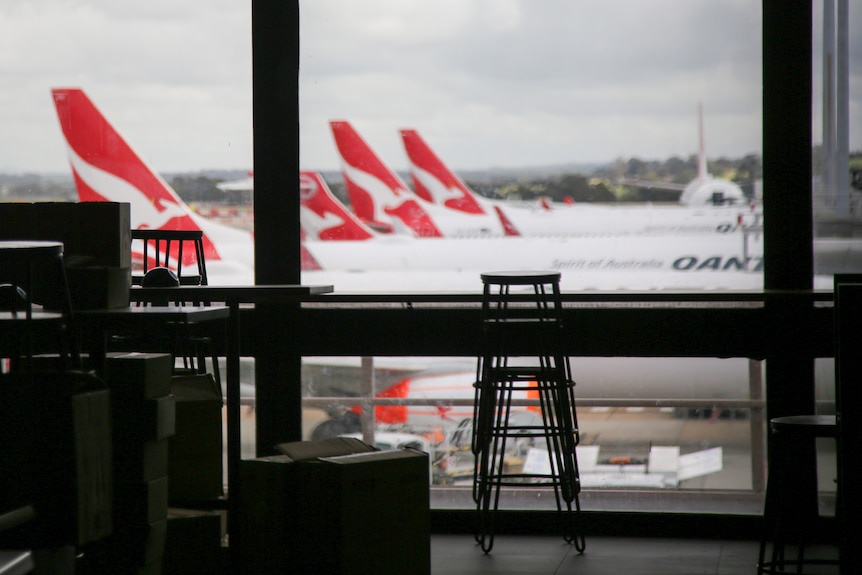
Corporate Travel has pocketed rebates from suppliers including hotels, airlines and rental car firms. (ABC News: Danielle Bonica)
The problem for Corporate Travel is some contracts required it to pass on rebates, and this was not done. Corporate Travel’s accounts insisted that errors here were not from incorrectly billing customers.
An Australian travel CEO crash-landed this week
Corporate Travel, which had long been subject to governance concerns, also posted the results of a review that listed a series of flaws including the company having lacked a rigorous internal audit and its strategy being “overly financially focused”.
Out of a scale of five, almost every area in its governance framework rated two or lower.
The long-delayed accounts just released showed Corporate Travel posted a loss of $347 million for 2025, largely from accounting hits to the value of its businesses following the overcharging scandal.
It has now moved from traditional banks to establishing a finance line from private equity’s Pacific Equity Partners for $175 million.
Shares in the company, once a darling of the investment market valued at almost $2 billion, remain frozen. It is still to file accounts for the past financial year but is aiming to do so soon.