
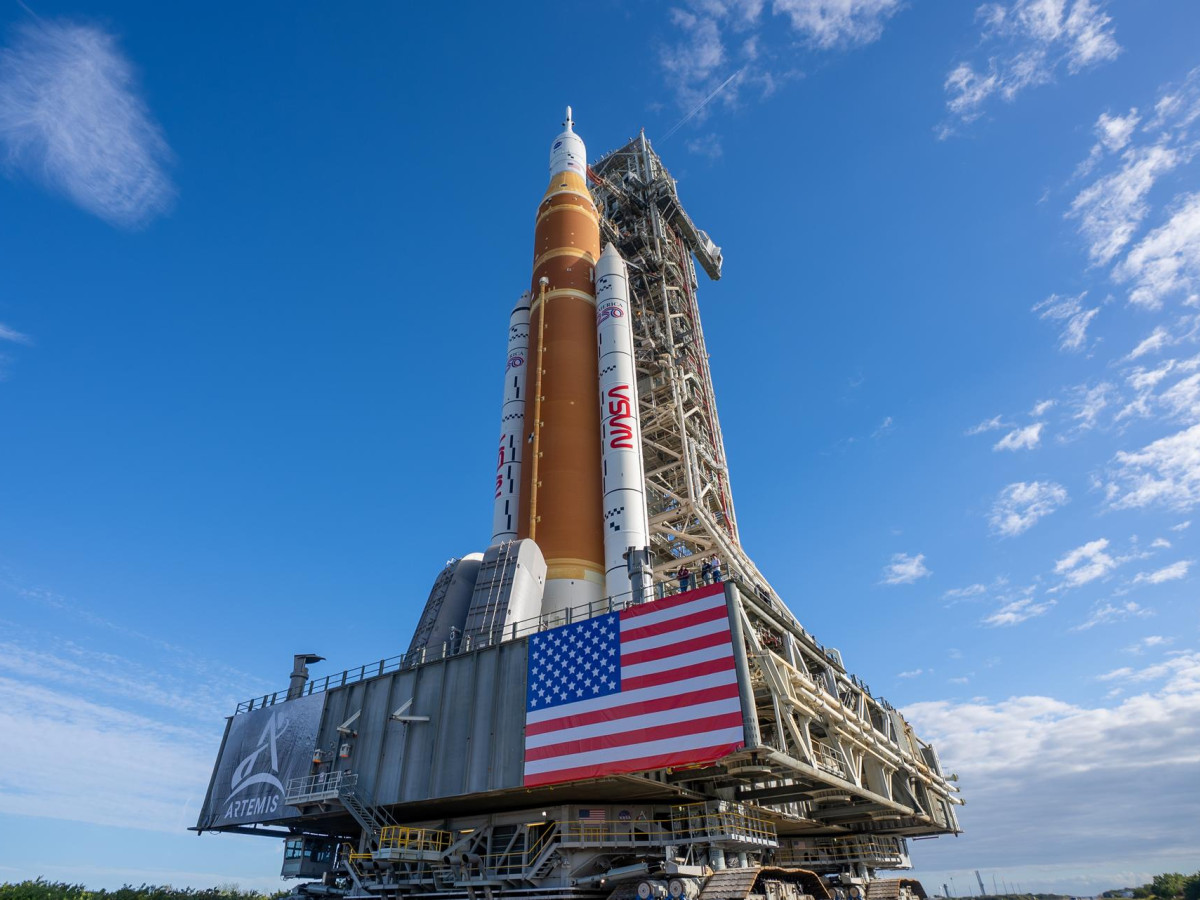
Many of us had assumed that the race back to the Moon was a formality, and that China’s much-vaunted Chang’e 7 space program would blow away the United States, and the perceived prudence of NASA’s Artemis missions. Beijing’s leadership had pinned their hopes on landing closer to the Moon’s exact south pole than any other spacecraft had done before. But the mission has now, suddenly and without explanation, been delayed. Rana Mitter is the Chair in US-Asia Relations at the Harvard Kennedy School…
Rana – There’s a bit of a glitch, a bit of delay in the Chinese space programme, because their Chang’e 7 probe mechanism, which was supposed to be sent to the moon surface to look for water at the south polar cap, has had to be delayed. We’re not quite sure the reason, to be honest, the Chinese don’t tend to give us very transparent reasons for delays in any of their programmes. But we think it may be to do with the weather, perhaps here on Earth, not on the moon. The idea, though, is to try and find water. And the reason for that is that as part of the wider competition in space, it’s no longer just about visiting the moon, it’s about staying there. And water is, of course, the absolute necessity for whatever nation, whatever country sends travellers to the moon. So the US is definitely in that race as well. The Artemis programme has become quite well known, and they want to send people back to the moon by 2028. The idea of sending probes looking for water that can be exploited, used, maintained to keep a permanent human presence on the moon, that’s really at the heart of the current US-China competition. Russia’s still involved, it’s got a big satellite presence as well. And of course, it’s more orientated towards China these days. But the real key players are the United States and China.
Harvard Kennedy School’s Rana Mitter explaining the context of the space race between Washington and Beijing. Chris Smith is going to unpack this further now with Richard Hollingham from the Space Boffins…
Richard – Well, China has been making slow and purposeful, steady progress towards landing on the moon and ultimately getting humans on the moon. That is the ultimate goal, to have a lunar base. There have been six missions so far. There’s been an orbiter, there’ve been landers, there’ve been sample return. And so they can see a time, maybe 2030 or the 2030s, where they get humans on the moon and then ultimately establish a base. This has been going on since the early 2000s. It is very purposeful. There is a plan here. Whereas the US has had plans, they’ve abandoned plans, they’ve got back into plans, they have a new plan. China, with the way their government is set up, has just been absolutely going for it.
Chris – So laser focus. We were all expecting them to really give America a run for its money or even get there first. Now the word is it’s all off.
Richard – It’s off at the moment. So Chang’e 7, I mean this is a remarkable spacecraft. So this lander, it actually consists of an orbiter, a lander, a rover and a hopper. So it’s got 18 scientific instruments on board, including cameras, infrared, mineral analysing instruments, and then this hopper, so it’s a little sort of bouncy rover. It contains an instrument and a drill to look for water molecules. That’s what they’re after. So they’re most likely, we don’t know exactly where they’re planning to go, they’re most likely going to the Shackleton crater near the lunar south pole, looking for water, for water ice. And I mean that would be amazing that it’s on the moon, but it would also be incredibly useful if you want to live on the moon to have a source of water.
Chris – What has changed then? What have they actually said officially has changed?
Richard – Yeah, it’s so difficult to get any proper insight into the Chinese space programme other than what we can see and also what they tell us. They tell us very little. So this launch was abruptly called off. We don’t know exactly why. It could be to do with the rocket. They say it failed to meet launch criteria. Well, that could be any number of things. So that could be the lander, that could be the rocket, that could be something as simple as the weather not being right. So we don’t know. I mean, this is a problem with the whole Chinese space programme, is the way they control information. And I think sometimes it comes back to bite them because they’ll talk up these missions and then suddenly it’s cancelled. And then you end up with the whole rumour mill of, well, why was it cancelled? What’s going on? Is there some secret behind it? It could just be that the rocket wasn’t ready or there was some little glitch. We see that all the time with NASA missions. But, of course, NASA is open, honest, and you see and there’s an enquiry or they say, well, this bit doesn’t work and we’ll do it again in a few months’ time. So you just don’t know with the Chinese space programme.
Chris – Has NASA said anything?
Richard – Not really. They tend not to comment on these things. They tend to not have a relationship with China in space. And this is such a pity, really, because, I mean, right now, there are actually three Chinese astronauts in orbit, but there are also astronauts in orbit on the International Space Station. They do not communicate with each other. There’s no contact, official contact, between the programmes. I mean, this is quite tied up in US sort of technology law. So, you know, none of this high-tech technology that NASA develops, the idea is none of that ends up in China. So as a result, there’s a real suppression of kind of information or any sharing with the Chinese. And that works both ways, of course. But you could end up, we could potentially end up, as we are at the moment with these two space stations in orbit, two nations just not cooperating in space. We could end up with the same situation on the moon where you have the Shackleton crater near the South Pole and you essentially have a base on either side of it. You know, you could have a Chinese base, an American base, and they do not talk to each other. That is the situation we’ve got at the moment that it seems extraordinary when you’ve got, you know, NASA talking about for all mankind. Well, it’s for all mankind apart from China. And China’s just doing its own thing.
Chris – Where does this leave the sort of PR side of it, though? Because the Chinese also dine out on doing these things very well and succeeding. Look at the Robot Olympics that we’ve had. And people are saying, hasn’t that really got people talking? I mean, we’re talking about it now. Does this mean China are going to take this as a bit of an oops? Because it’s giving the Americans a bit more of an opening.
Richard – Well, that’s my point, really. If you try to overly control the message when things go wrong, it just leaves a vacuum and you end up with this kind of rumour mill, which is what we’ve got at the moment. And everyone’s sort of second guessing what’s actually going on. If they were more open and honest, people get that space is really difficult. You know, you can’t just say, right, we’re going to launch to the moon and do this, this and this. You know, even the best laid plans, as we have seen, can go wrong. And as we see all the time with with NASA missions or US missions. But you learn from those. I don’t really see the argument for being so secretive when it comes to this sort of space programme and certainly the lunar programme. I just don’t see the reason for that. I mean, maybe we will see some changes. But as we know, China, you know, absolutely controls all information and very much keeps a lid on what’s going on in the space programme.