
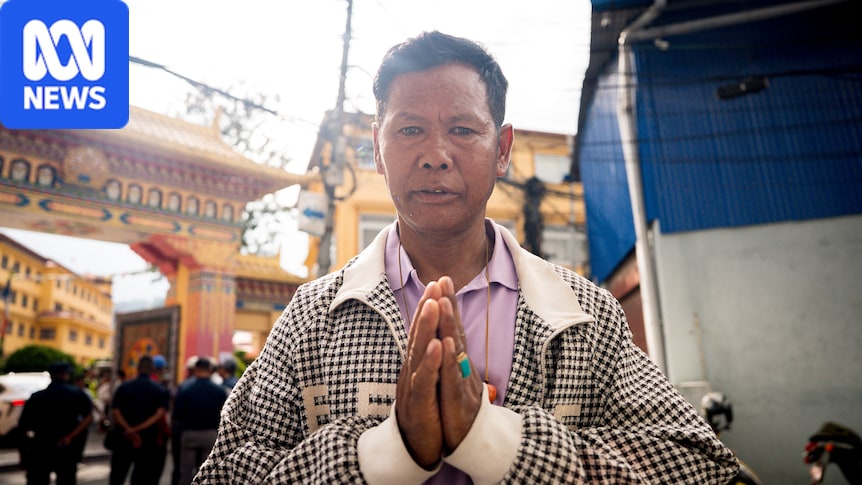
Bhujung Tamang was airlifted with his wife and two daughters two days ago from what is left of his village near the Nepal-Tibet border.
“We ran. That’s why we are alive,” Mr Tamang told the ABC.
Nepal flash floods updates: Follow this story as it unfolds with our live blog.
“We didn’t even get any clothes. We ran to the jungle.”
He remembers being in the kitchen before the disaster struck and hearing a huge boom.
“My home was swept away,” he said.
“If we had waited 10 minutes longer before running, then we would have been swept away.”
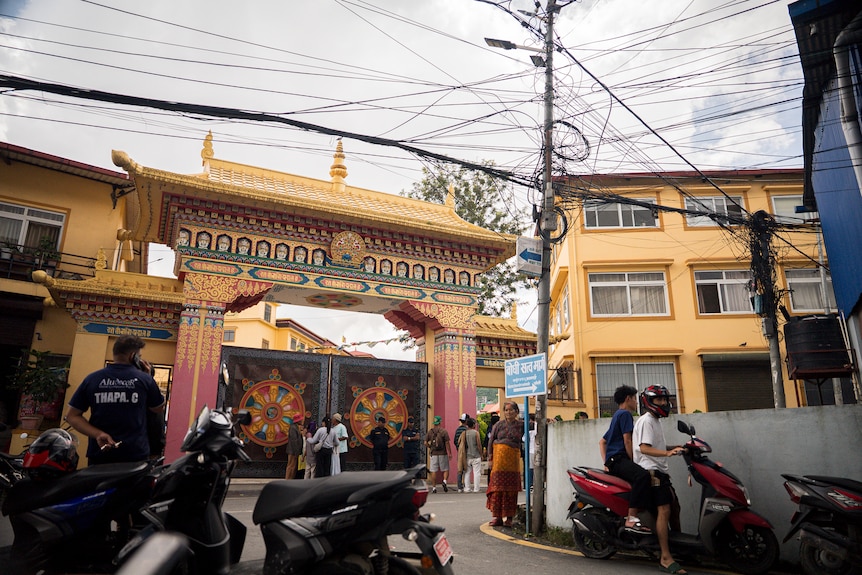
Gosok Phuntsok Choeling monastery has opened its doors to help those who have fled the disaster. (ABC: Hamish Harty)
He thinks three quarters of the population of his village, Timure, were killed; saying his neighbours were “buried” in mud and landslides.
“We stayed there one night without food, then the next day a helicopter came and rescued everyone who was alive.”
While grateful to be alive, Mr Tamang didn’t even have shoes when he ran, and he found himself in the capital Kathmandu without money or a room to stay in.
And so, his family made its way to the Gosok Phuntsok Choeling monastery. Usually a home to monks, it has opened its doors to those who have fled the disaster.
“Now I’ve come to the monastery, if they give some food, I can eat, otherwise I don’t have any other option.”
More on the Nepal-Tibet floods
Almost 3,000 people are still missing after the flash floods the tore through Nepal and part of Tibet, triggered when part of a Himalayan glacier broke off and crashed into the river below.
When the ABC visited the monastery, there were almost 200 people being cared for in the makeshift evacuation centre, run by volunteers who were largely young people from the disaster-affected area.
Everyone in the centre has lost someone
Armed with a clipboard, Alina Lama guides new arrivals to a small table where the names are recorded, while directing donations and speaking with other volunteers. She usually works as a trekking guide in the Himalayas.
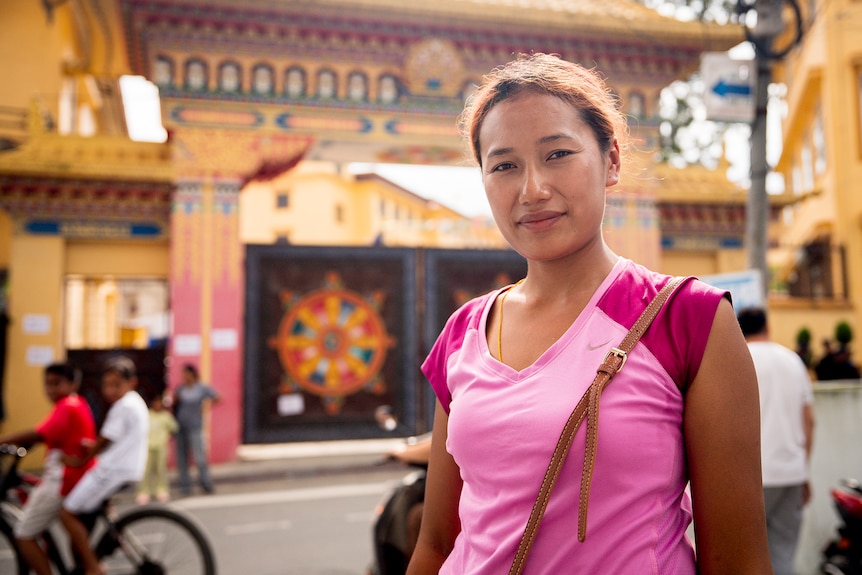
Alina Lama usually works as a trekking guide. (ABC: Hamish Harty)
Behind the ornate gates of the monastery, mattresses have been spread out in a large open room. A group of children are drawing on donated paper and pencils, while a group of older women sit on chairs nearby consoling one another.
Ms Lama is from the Rasuwa district, the hardest hit area, and she has family members missing, including her father’s whole extended family.
Her parents live higher up the mountainside and survived.
“They saw it,” she said. “Within four minutes the whole valley was swept away, and it was all gone.”
Everyone in the centre has lost someone. One woman’s arms are still covered in scratches and marks from where she was partially buried. Only some of her children survived.
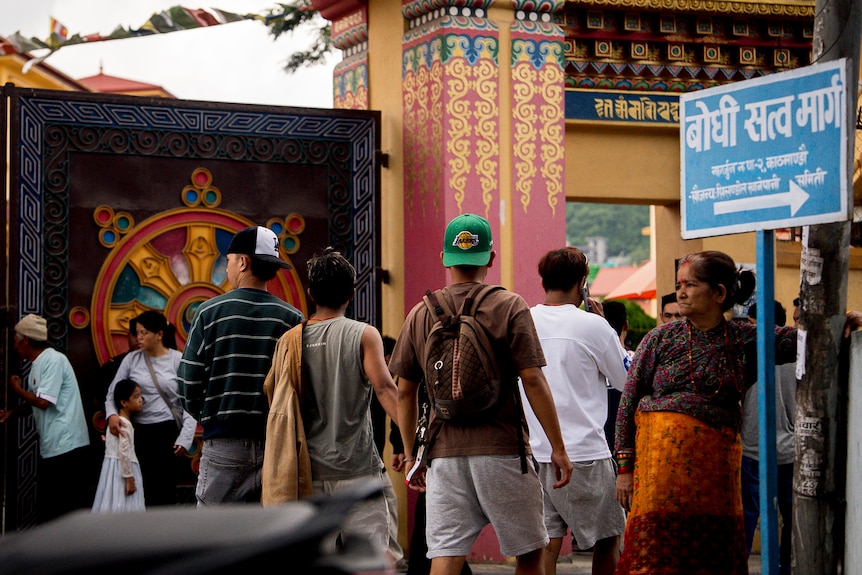
The monastery turned makeshift evacuation centre is run by volunteers. (ABC: Hamish Harty)
Ms Lama said some of the people airlifted from the disaster zone were left to make their own way to the capital to try to find support, something she describes as “carelessness” from the Nepali government.
“They were left at that point when [they’re], you know, mentally disturbed and going through a lot of things,” she said.
“They’ve arrived here with nothing — a lot of these people [have] nothing.”
While she said the focus must remain on rescues in these early stages, she wants to see planning for what happens in the months and years ahead, particularly for the many children who have been orphaned.
“So [we need planning] long term for the kids, their educations and where they’re going to live,” she said.
Nepal’s Finance Minister has said initial estimates are that rebuilding will cost between $US4 billion ($5.6 billion) and $US5 billion.
‘We can give hope to each other’
On 19-year-old Aananda Thapa Magar’s phone he has a collage picture of everyone he lost in the disaster.
The faces of his father, grandfather, uncle, brother, sister-in-law, and his niece — who was only three years old – smile in the pictures.
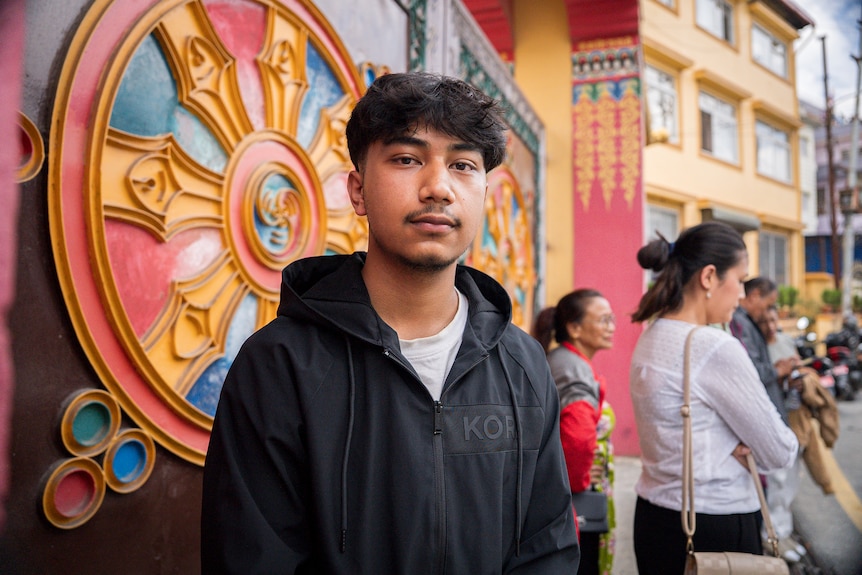
Aananda Thapa Magar says he is focused on the future and what happens next. (ABC: Hamish Harty)
He is also from the hard-hit village of Timure.
“The devastating flood ruined all our homes, our family, our village, our hope, our dreams,” he said.
“Everything that we love was in that village.”
He has been living in Kathmandu while studying and is now at the monastery supporting his community.
“We are here together, so we can give hope to each other.”
He spoke to his father on the phone just an hour before the wall of water swept through the region. He no longer expects him to be found alive, but he hopes his body can be recovered.
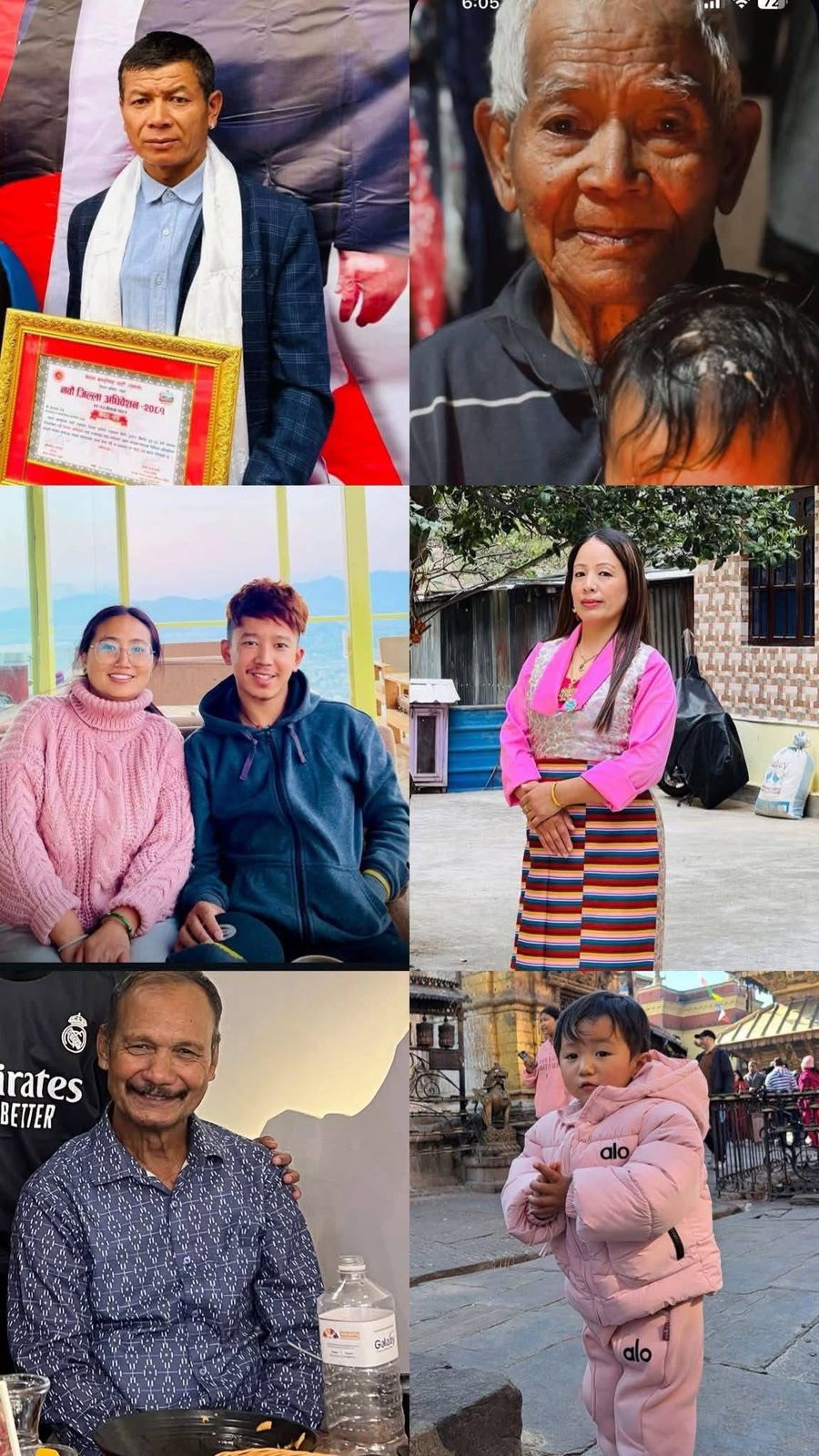
Aananda Thapa Magar has a collage picture of everyone he lost in the disaster. (Supplied)
“We need to bury the body and have a ritual, so that … in their afterlife they can have a peaceful way of living,” he explained.
Mr Magar is pragmatic in the face of unimaginable lost, saying, “what is done can’t be changed” and so he is focused on the future and what happens next.
And like Ms Lama, his mind turns to the children in the monastery and what support can be given to them.
“We want our kids to have a good education and a very successful future so that they don’t have to end up like our parents.”
If you want to help support the thousands affected by the crisis, the ABC is supporting the Emergency Action Alliance member charities and their local partners. You can find more information here.