
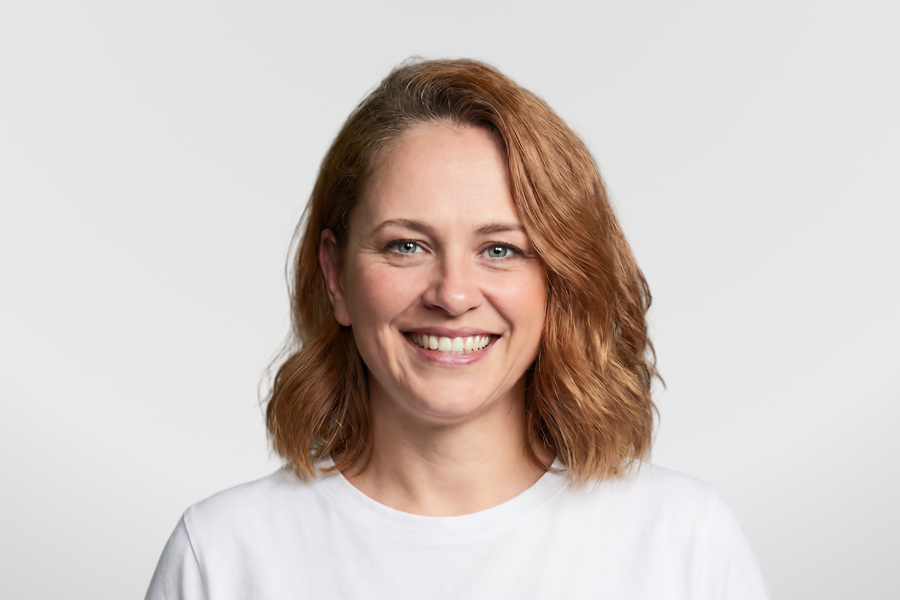
I recently asked ChatGPT to write me a reusable personalisation file. ChatGPT is the model I use most and my assumption was that it had learnt the most about me.
I wanted a set of global instructions I could use across ChatGPT, Claude, Gemini, Grok, Perplexity and any other large language model that enters my life.
The result was what I have affectionately started calling my “Alison file”.
It includes the predictable things: how I like to write, how I make decisions and how I want information structured. It also includes a few things it has apparently learnt about me along the way. One instruction is: “Don’t agree with me simply because I proposed an idea.” Another “Do not compliment me”.
Fair.
Another is to complete the task I have asked for, then suggest four additional things it could do to improve the response or create something new from it.
When I asked what else I should do with my Alison file, ChatGPT made an unexpected recommendation.
It suggested I shouldn’t create one Alison file. I should create four. Split personality, much?
The four versions were:
● Alison ‘thought leadership mode’: optimised for LinkedIn posts, articles, keynote speeches and media interviews
● Alison ‘strategy consultant mode’: optimised for proposals, workshops, board papers and client engagements
● Alison ‘CEO adviser mode’: optimised for executive decision support, business modelling and strategic planning
● Alison ‘writing editor mode’: optimised to preserve my voice while editing my terrible spelling and grammar
It hadn’t created an assistant. It had created a team.
From asking questions to building teams
Microsoft’s 2026 Work Trend Index offers a useful way to understand what is happening here.
Its research identifies four modes of working with AI: asking, delegation, collaboration and exploration.
The modes are shaped by two factors: how actively the human engages with the work, and how much of the work the AI agent performs.
In asking mode, the human directs and the AI provides information. In delegation mode, the human sets an outcome and hands over more of the execution. In collaboration mode, both the human and AI remain deeply involved, refining the work together. In exploration mode, the human uses AI to consider possibilities, develop ideas and uncover directions they may not have reached alone.
Most of us probably move between these modes every day without consciously naming them. We ask AI to explain something, delegate a first draft, collaborate with it to improve an idea. We explore possibilities we hadn’t considered.
Microsoft found that the most advanced AI users aren’t defined by using one mode more than another. They are better at deciding which mode a task requires.
Using AI well is no longer simply about writing a clever prompt. It is about designing the relationship between the person, the agent and the work.
Welcome to your new executive marketing team
In 2024 I attended a travel conference session presented by Con Franzeskos, who had bought anset.com.au and was using it to build an AI travel platform.
As a start-up founder, he had built himself an executive team using large language models. ChatGPT was his co-founder. Claude was his CTO. Claude Code was his lead engineer. At the time, the idea felt novel. Now, it feels like a logical next step.
People are no longer using a single AI tool for every task. They are giving different models specific roles, responsibilities and personalities.
A close friend who works in a large Australian business has named her Copilot Olivia. When she is happy with its work, she calls it Liv. When she is frustrated with its responses, it becomes Olivia. Another friend calls hers “Mind”. Apparently, Mind hates her husband and has been known to ask: “What’s he done this time?”
We laugh because we are anthropomorphising software. But the names also show us that these tools have moved beyond the search box. They are becoming participants in how we think, decide and work.
For marketers, this shift has significant implications
Marketing has always relied on teams of specialists across strategy, creative, media, data, customer experience and technology. AI introduces a new layer to that operating model: digital specialists that can perform different roles at different stages of the work.
A marketer might use one agent to interrogate customer data, another to challenge a brief, another to generate creative territories and another to evaluate performance. The opportunity isn’t simply to automate more marketing tasks.
It is to deliberately design how human marketers and AI agents work together. This includes which work should be delegated, where collaboration produces a better outcome, where specialist agents add capability and, critically, where human judgement, accountability and creativity must remain in control. In that sense, building an AI team is becoming a marketing operating model decision, not a technology decision.
The shift from assistant to teammate
Microsoft describes this as a spectrum from agent assistant to agent teammate. An assistant waits for an instruction while a teammate understands the goal, contributes to the thinking, performs part of the work and helps improve the outcome. That doesn’t mean handing over responsibility.
In fact, Microsoft’s research suggests the opposite. Eighty-six per cent of the AI users it surveyed said they treat AI output as a starting point rather than a final answer. They remain responsible for evaluating, refining and owning the work.
The more capable the agent becomes, the more important human judgement becomes. The human sets the intent, defines the quality bar, decides what good looks like. The agent extends what that human can do.
The question is no longer simply: “What task can AI complete for me?” It is: “How should we work together to achieve the best outcome?”
So, is your agent an assistant or a teammate?
Perhaps the answer is neither, it is becoming a team.
One agent helps you write, another challenges your strategy, yet another conducts research, while another models decisions. The opportunity is to build a group of specialist agents that extend your capability, challenge your assumptions and help you do work that would otherwise remain out of reach.
We started by asking AI questions. Then we began delegating tasks. Now we are collaborating with it, exploring it and building teams around it.
It’s no longer about the best tool, it’s now about how to assemble, direct and work with the right team. So perhaps the question isn’t whether your AI is an assistant or a teammate, but rather what is the team you are building.