
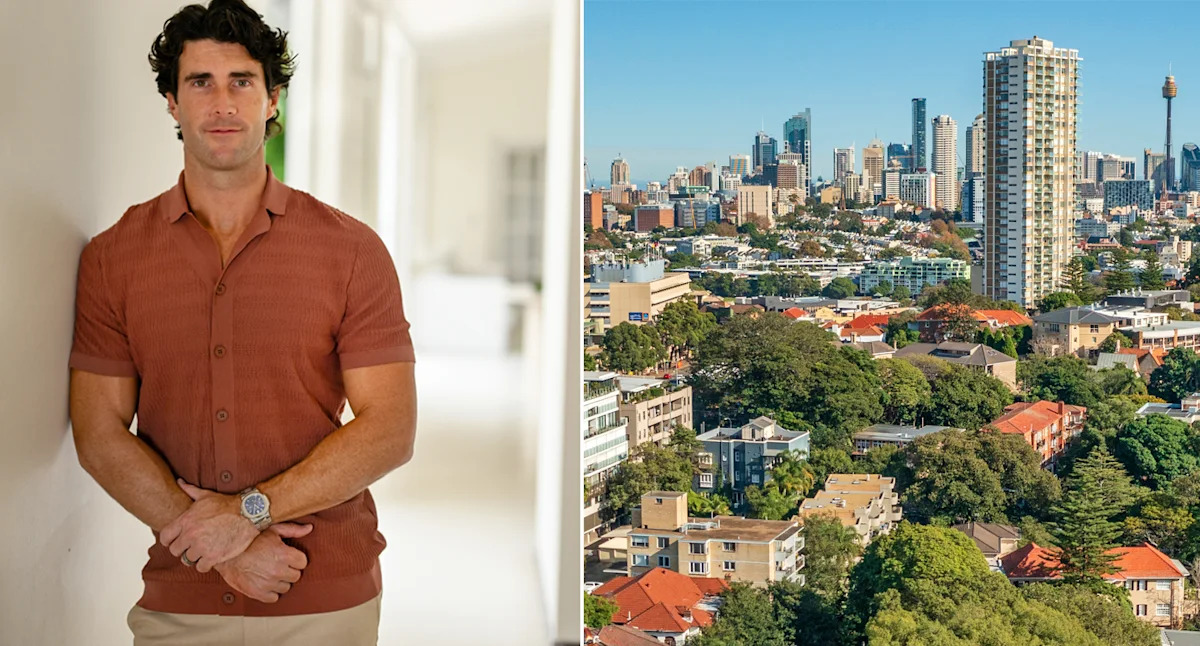
Australia’s housing market has now recorded four straight months of falling values. National dwelling values dropped 0.7% in July, the steepest monthly decline since late 2022, with weakness that started in Sydney and Melbourne now spreading into markets that had, until recently, looked immune. Capital city home sales over the June quarter were running more than 16% below the same period last year, and auction clearance rates fell into the low 40% range, territory that has historically preceded sustained price falls rather than a quick bounce-back.
Yet on the other side of the property market, a very different story is playing out. Commercial property transactions hit $19 billion in the first half of 2026, up 16% on the same period last year, according to CBRE. Retail assets alone accounted for $6.1 billion of that, and a separate JLL report found more than $4.6 billion in large retail deals (above $200 million) changed hands in the 2026 financial year, a new record, with regional shopping centre yields compressing from 7.46% to 5.84% over three years as institutional money returned to the sector.
Two property markets, moving in opposite directions, at the same time.
Why?
RELATED
Different fundamentals, different outcomes
The simplest explanation is that residential and commercial property aren’t actually priced the same way, even though they get lumped together in headlines. Residential values are largely a function of sentiment, what a buyer is willing to pay based on comparable sales, borrowing capacity and how confident they feel about the future. When rates rise and confidence drops, as it has through 2026, prices follow.
Commercial property runs on a different engine: income. Values are underpinned by rental income locked into leases running three, five or ten years, typically with fixed annual increases built in. When that income is secure and growing, the asset holds its value, or appreciates, largely independent of what’s happening in the housing market down the road.
It’s a completely different investment conversation. Residential owners are exposed to sentiment and serviceability in a way commercial investors just aren’t. A tenant on a ten-year lease with fixed annual increases isn’t renegotiating because the RBA moved rates, that income keeps flowing regardless.
The cash flow problem residential doesn’t escape
Story continues
Higher interest rates have made negatively geared residential property materially harder to hold, with holding costs climbing faster than rental income in many cases. Commercial property has largely sidestepped that pressure. Many well-located commercial assets remain positively geared even at current rates, the rental income covers the debt and outgoings, with a surplus left over.
Through my work at Rethink Group, that gap has become one of the clearest dividing lines between the two markets this cycle. We’re seeing investors who’ve held negatively geared residential property for years finally do the maths and realise commercial can offer a similar or better return with cash in their pocket every month, not out of it.
 Sentiment has shifted away from residential property. · Bloomberg A market too thin to crash
Supply also plays a role. Commercial property transacts far less often than residential, a comparatively small pool of quality, income-producing commercial assets exists relative to the huge number of houses and units that change hands each year nationally. When investor demand for defensive, income-producing assets rises, as it has through 2026, that thin supply tends to respond with firmer pricing rather than the kind of broad-based falls playing out in housing.
Offshore capital adds another layer. CBRE recorded $9.3 billion of foreign investment into Australian commercial real estate in 2025, up 12% on the prior year, led by North American and Asian buyers targeting prime assets. More recent CBRE data for the first half of 2026 shows offshore’s share of total volume easing somewhat as domestic institutions stepped up buying but the broader trend of global capital treating Australian commercial property as a stable, income-backed destination has held.
Policy is accelerating the shift
The May 2026 Budget’s negative gearing reforms have added a further push. With the traditional buy-and-hold residential investment model becoming less attractive under the new rules, we’ve seen a noticeable pickup at Rethink Group in investors actively researching commercial property for the first time. That demand has to go somewhere, and a lot of it is finding its way into commercial, you can see that showing up in the transaction volumes.
None of this means commercial property is risk-free; vacancy, tenant quality and sector-specific headwinds (office space, in particular, has had a tougher run than industrial or retail) still matter enormously. But the divergence between falling house prices and resilient, in places rising, commercial values isn’t a fluke of the data. It reflects two asset classes that are simply built differently; one priced on what people feel a home is worth, the other on what a tenant is contractually obligated to pay.
In a market where interest rates are squeezing sentiment-driven assets, that difference is showing up clearly in the numbers.
Scott O’Neill is a prominent Australian property investor featured in AFR’s Young Rich List four years in a row. He is an entrepreneur and Founder & CEO of Rethink Group a premium property investment group, host of the top commercial property podcast “Rethink Investing’s Inside Commercial Property”, co-author of “Rethink Property Investing” Australia’s number one commercial property investing book.