
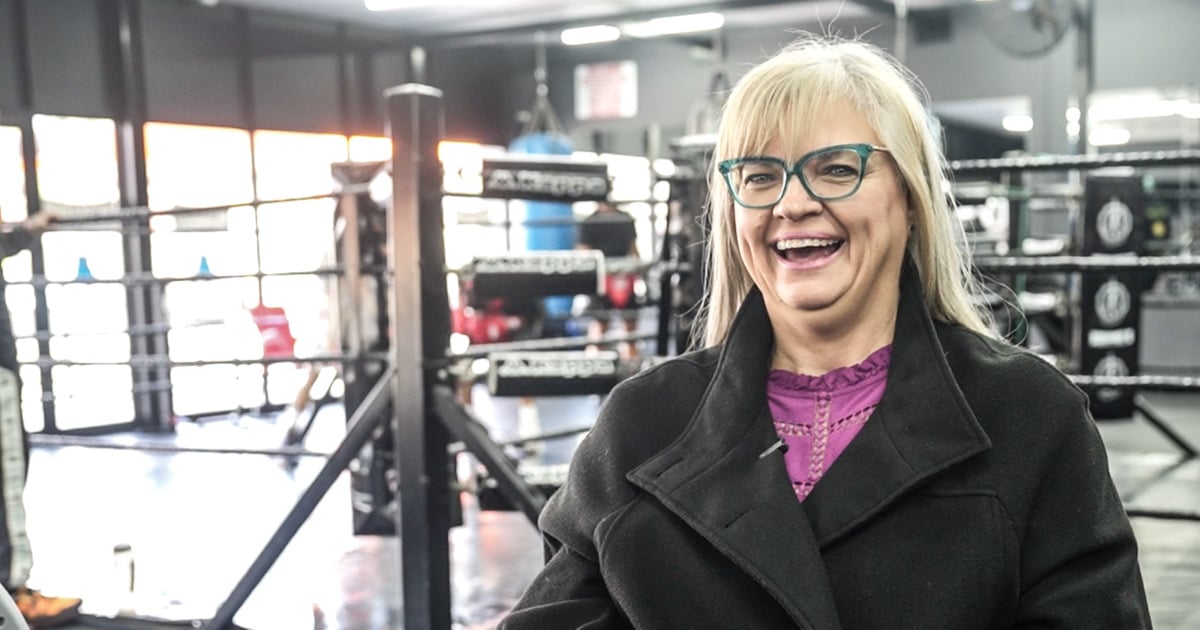
In the high-stakes, male-dominated world of South African combat sports, boxing manager Colleen McAusland is rewriting the rules of what it means to lead.
Beyond securing fights and negotiating contracts, McAusland has built something far more fundamental for her athletes: a place to call home.
Recognising that many talented young boxers arrive in Gauteng from impoverished rural backgrounds, McAusland established a dedicated fighter house in Johannesburg.
For many young athletes, the house offers proper nutrition, safety and a quiet environment away from severe financial hardship.
“Most of the boxers come from underprivileged backgrounds and homes, single moms that can’t afford to let their children come to Gauteng to train,” McAusland told Eyewitness News.
“I saw that there was a huge gap for up-and-coming boxers who were good amateurs but not given opportunities when they turn pro. So I thought, let me open a house and let them come and stay, give them good nutrition, counselling, and just a good environment so that they could develop their talents.”
For athletes competing under immense pressure, a stable living situation fundamentally alters their performance inside the ring.
READ MORE:
Demand for skilled South Africans is up abroad: How to get one of these jobs
More than a fighter: How Simangele ‘Smash’ Hadebe uses boxing to heal and empower
‘No time for sleeping’: Mini Flyweight Elizabeth Ndlovu sets sights on world titles
“When they come from a stable background, it takes the pressure off,” McAusland explained. “It takes the pressure off: ‘I have to fight every month because if I don’t, my family don’t eat.’ It’s a huge disadvantage for a boxer who is boxing just to be able to earn money. Sometimes it’s not even their passion, but it’s the only opportunity they’ve got.”
McAusland approaches management with the protective dedication of a parent, guiding her fighters toward long-term independence.
She insists on life goals outside the ring, helping fighters gain driver’s licenses, save earnings, complete computer courses, and find flexible jobs.
For star athletes like South African champion Simangele “Smash” Hadebe, McAusland made homeownership and career planning mandatory milestones.
“I manage them in the ring and out of the ring, and I manage them like my own child,” McAusland said. “Boxing is a short career… help them do a computer course, give them some sort of skills that they are able to do something else outside of boxing.”
Beyond managing individual careers, McAusland is a vocal advocate for gender equality in South African sports.
She actively campaigns for equal pay, more female promoters and mandatory female bouts on every fight card, rather than limiting women’s matches to Women’s Month in August.
South African boxing manager Colleen McAusland. Picture: Sphamandla Dlamini/EWN
“I think Boxing South Africa needs to say that every tournament has at least one female bout on it,” she noted, adding that corporate sponsors are missing a massive opportunity by overlooking female fighters.
“Our girls work harder than the boys because they’ve got to constantly prove themselves. They show up, and they don’t get the opportunity. It’s a lost opportunity for companies.”
Developing top-tier talent like Hadebe or Bernice Ferreira takes time, especially when female fighters struggle to get frequent fights locally.
Building a female contender to an international ranking takes two years of steady development- a journey made harder when regional opportunities remain scarce.
McAusland’s dedication to empowering athletes earned her the Telkom Woman of the Year award at the GSport Awards.
For McAusland, the recognition validated a lifetime spent breaking barriers and fighting for structural reform.
“That award for me wasn’t only just for me; it was for every woman in sport to say that we can do it,” McAusland shared.
“For every woman that breaks barriers, for every woman that stands up and speaks out for the inequalities that we face as women in sport.”