
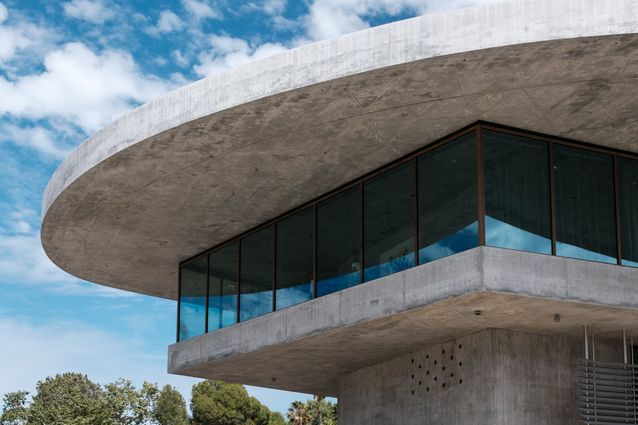
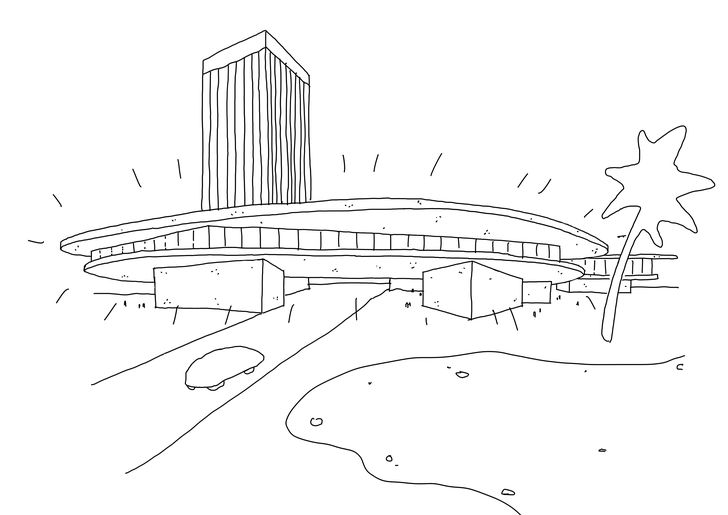
I recently visited the new David Geffen Galleries by Peter Zumthor at the Los Angeles County Museum of Art (LACMA). From a distance, the building is beautiful. A floating, flat mass, its sharp sleek windows perfectly contrast with its Googie slabs, which explore their way around LACMA, interacting with its various landmarks and buildings, including crossing over Wilshire Boulevard to create a real-life autoscape that would make Denise Scott Brown swoon. The new building perfectly captures the sprawling, eclectic density that makes up Los Angeles. But like many of the large new buildings going up in our cities, it falls into a familiar trap – working well at an urban scale, but not at a human one. And it’s not because of its size.
View gallery
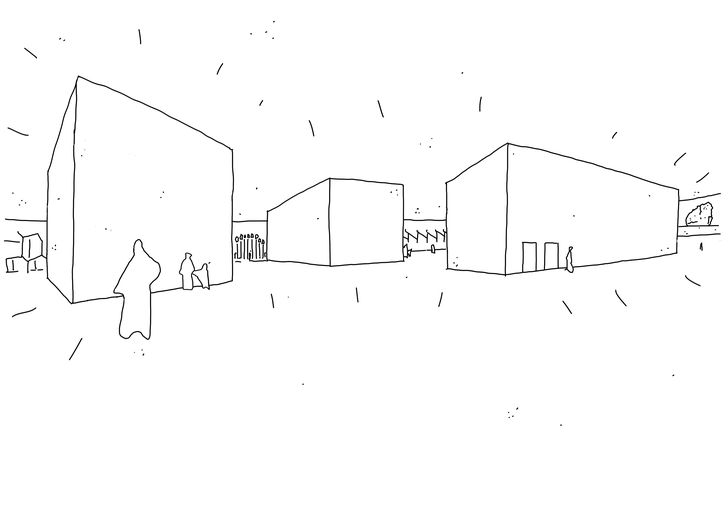
LACMA shares its large city block with the La Brea Tar Pits and Museum, so wherever you park your car, you get a long approach on foot. As you get closer to the building, your focus shifts from the large puddle of galleries, now floating above you, to the podiums they sit on. Nine metres tall and well proportioned, the podiums are scattered throughout the site like giant blocks, cleverly framing views towards various parts of the arts precinct and surrounding neighbourhood.
View gallery
However, once inside the plaza, the magic starts to wane. The playful collection of blocks are spread so far apart that by the time you’re within yelling distance, you generally just have one in view, and the richness and texture that the building offered in the urban context fades away in a human one.
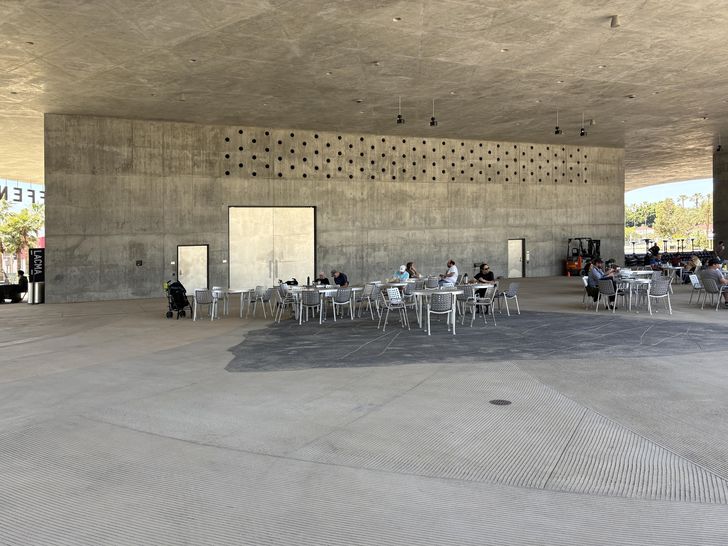
Its form does not come down in scale, which is fair (it is, after all, a Zumthor monolith, built to showcase the museum’s 155,000‑piece collection), but what surprised me was that, unlike his other works, the materials of this one don’t come down in scale.1 Standing in the plaza, you’re greeted by giant walls of flat concrete – and not the Ando kind. They’re cold, a little soulless, and dare I say it … mundane. If the nearby mammoths could just free themselves from the tar pits, they may be able to relate to them, but I, in my feeble human body, could not.

View gallery
Zumthor’s initial models and renderings show the blocks as rammed earth in one iteration, and irregular board-form concrete in another, so we can assume that the switch to flat concrete was a financial decision, brought up in conversation somewhere between “we’re a hundred million dollars over budget” and “we’re building on a tar pit in a major earthquake zone.”2 Whatever the reason, the lack of material texture up close, coupled with the large form of the building, results in a built environment that is beautiful at an urban scale, iconic at a streetscape one, but unrelatable (and a little boring) at a human one.
View gallery
I bring this up not as an unqualified critique of a master’s work, but as a reflection – as we continue to build larger and larger buildings, in our larger and larger cities, we need to design things to be relatable, by bridging the experiential transition of a building from an urban scale to a human one. And in the absence of formal moves, materials are a great way of achieving this.
The LACMA building reminded me in parts of many of the new towers going up in our cities. Large masses, with large cladding systems that successfully engage the skyline, sit on large podiums that engage the streetscape. But once you’re standing next to these buildings, nothing new is revealed spatially or materially. We can’t relate to them because, at a human scale, there’s not much to engage with.
In 2020, a study by Alexander Coburn and colleagues at the Penn Centre for Neuroaesthetics looked at features of physical space and what elicited positive emotional responses in people.3 They found three key factors: Coherence (how clearly structured, or understandable a scene is), Hominess (how home-like or ‘personal’ a space seems to be) and Fascination (the rich detail of a scheme or how interesting it is).
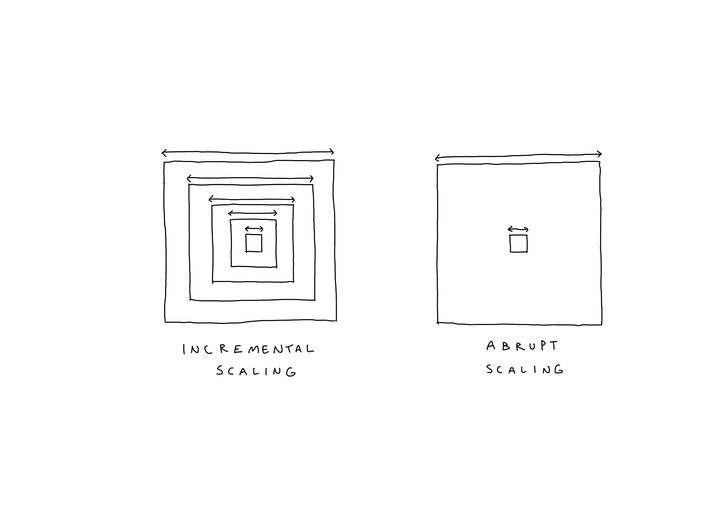
Further studies by Coburn looked at how the aesthetic properties of nature could be mimicked in our built environments to evoke the same emotional benefits. Testing theories by Christopher Alexander, a key concept stood out in Coburn’s findings: Incremental Scaling, which refers to the presence of multiple levels of scale with incremental changes. The study found that buildings with more scale shifts are aesthetically preferred because they are innately perceived as natural-looking.4
View gallery
The concept explored in the latter study (Incremental Scaling) can be used to achieve the theories of the former one (Coherence, Hominess, Fascination).
View gallery
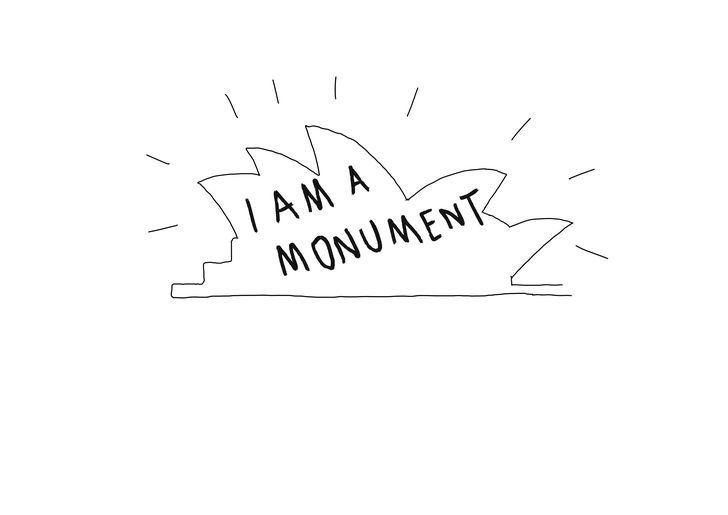
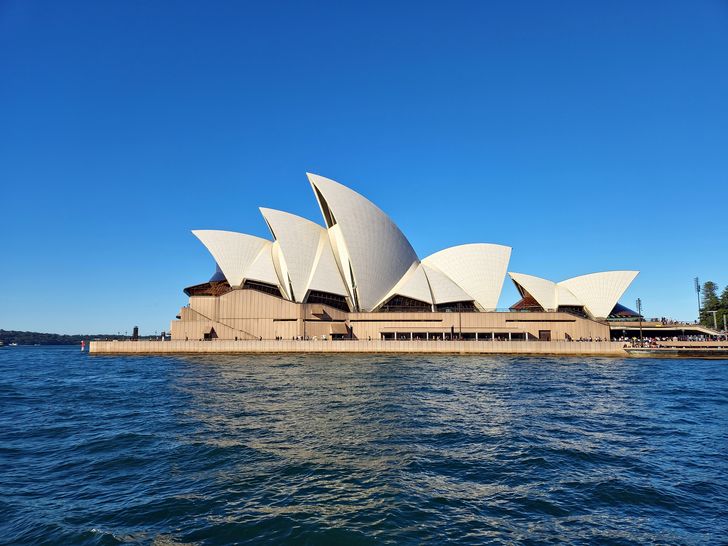
A great example of this is the Sydney Opera House. From a distance, the building is a monument.5 Its white sails glow in the sun, making great content for selfies and postcards while working fantastically at an urban scale to bookend Circular Quay and place a sculpture in the middle of the harbour.
View gallery
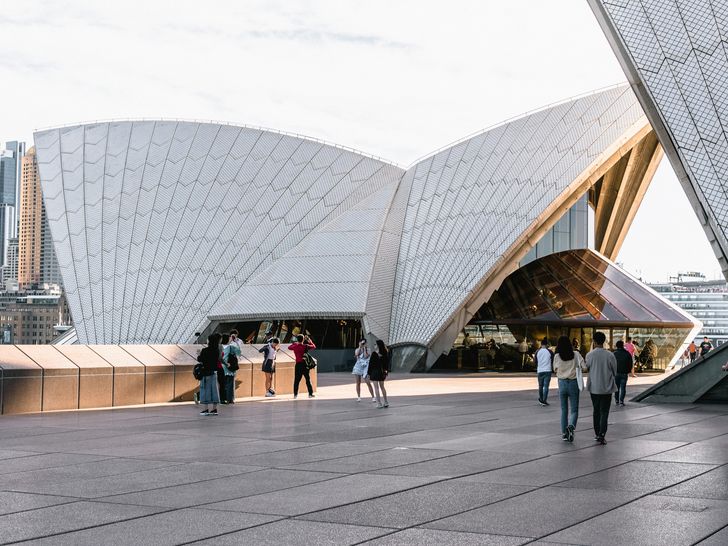
Closer to the building, the experience only grows. The large mass of sails breaks apart into pavilions. What could easily have been glaring white walls reveal themselves as fanned out triangulated strips, stitched together by expansion joints that give texture to the rounded arcs, remove glare and scale the monoliths down to a streetscape level of articulation. Additionally, the previously white surface reveals itself as a pearl beige; easy on the eyes and connected to the earth red of the ground it sits on.
View gallery
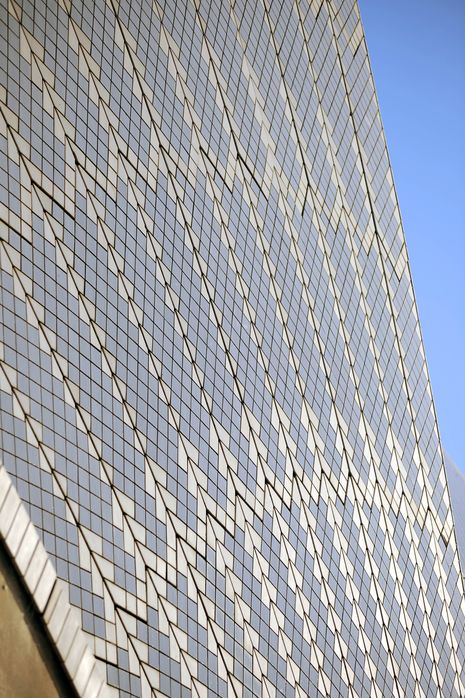
Another few steps closer, the transformation happens all over again. It turns out that the strips are made up of tiles! You can touch them, grip them, and if you could rip them off, you could hold them. Even closer, the tiles aren’t even the same colour! Some are white, some are cream, and they’re laid out in a mosaic that becomes more complex as it falls down the side of the building, closer to the human body.
View gallery
Through incremental scaling, Utzon achieves both fascination and coherence from an urban scale through to a human one. His application of materials reveals new experiences as you move closer, achieving a relatability (perhaps even a sense of hominess) that is easily lost in such large buildings. This enriches the space around the building and it’s an example we should endeavour to emulate in the streets of our cities.
While the look of a building at an urban scale is important, it’s largely an aesthetic affair. If we truly want our cities to be sustainable, they need to be socially sustainable. That is to say, they need to ‘feel’ good. And while putting a podium at the base of a tower or gallery is a nice gesture, it’s the distillation of materials down to a human scale that will keep people enjoying the buildings around them.
Ps. Zumthor, I love you. I only used your building as an example because of how amazing you are!