
One of the most aggressive types of breast cancer may have a weakness that researchers have managed to exploit.
Triple-negative breast cancer (TNBC) is a type of breast cancer where the cancer cells do not have estrogen receptors, progesterone receptors, or too much HER2 protein, according to the American Cancer Society.
This means that it has fewer treatment options, and can grow and spread faster than other types of invasive breast cancers, as hormone therapy or HER2-targeted drugs won’t work.
Chemotherapy is often used to treat the cancer after surgery to reduce the chances of the cancer coming back, however there is a risk of the cells surviving, returning, and becoming resistant to treatment.
Now, researchers at MUSC Hollings Cancer Center have discovered a way to potentially reverse that resistance.
Ozgur Sahin, co-leader of the Hollings Cancer Biology and Immunology Research Program, told Newsweek their new approach “offers a safe way to target chemo resistant tumors by first creating a weakness and then exploiting it to close the escape route the tumor cells use to survive.”
Using an experimental drug they developed, they blocked a protein known as LOX inside TNBC cells, which disrupted the processes the cancer depends on to survive and grow, and made it vulnerable to toxic damage inside the cell.
Researchers then disrupted the cancer’s backup defense, DHODH, using leflunomide, an already FDA-approved immunosuppressive medicine used to treat arthritis.
With defenses down, researchers were able to trigger ferroptosis, killing cells using toxic damage. Cancer cells have defenses against ferroptosis, but blocking LOX and DHODH left the cells vulnerable.

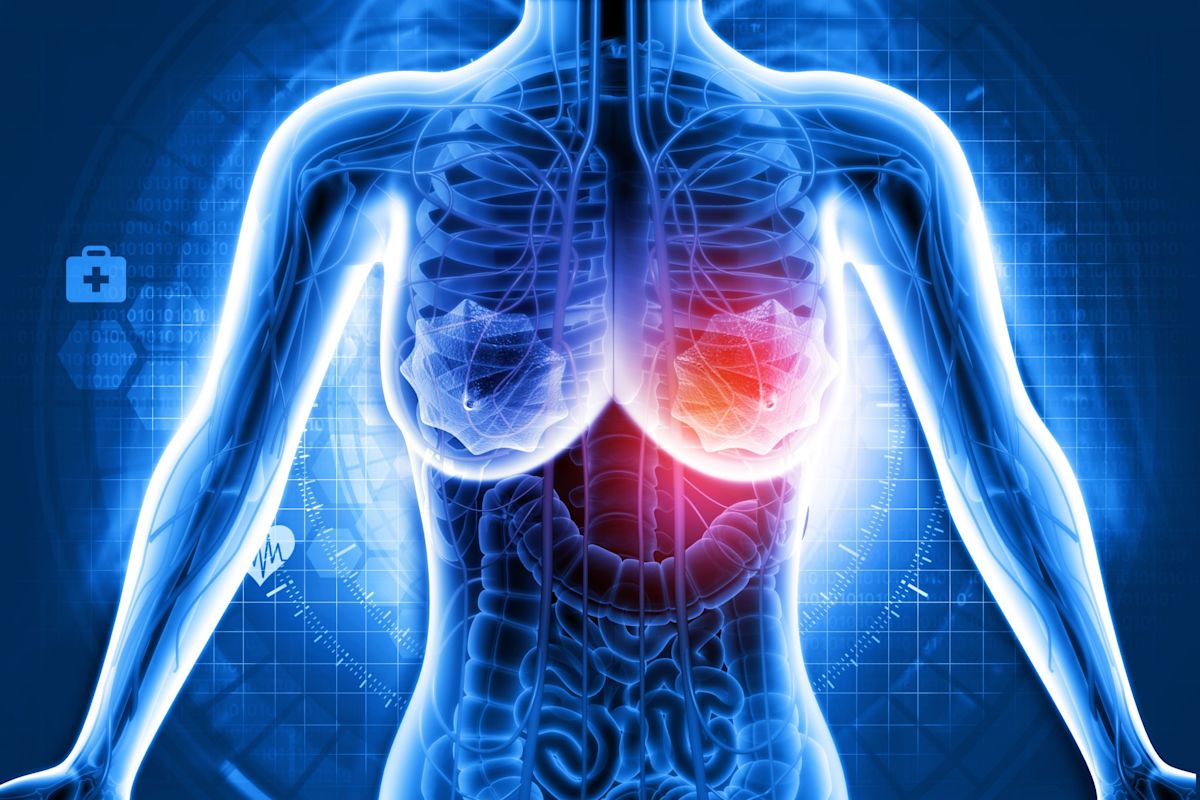
Stock image of an illustration concept of breast cancer.
Sahin described triple-negative breast cancer as “one of the deadliest subtypes of breast cancer,” as the cells in TNBC tumors “have a lot of variation and can easily slip from one form to another.”
These characteristics contribute to the “aggressive behavior” of TNBC and its resistance to therapy.
However, Sahin said their study showed that “the combination of LOX inhibitor with a clinically used DHODH inhibitor leflunomide significantly blocked tumor growth in multiple preclinical models of TNBC—and did so without chemotherapy.”
“This is important as chemotherapy treatment is often associated with adverse effects and persistent tumor growth despite the therapy in the clinic,” Sahin said.
Researchers used laboratory experiments to block both pathways until the cells underwent ferroptosis, followed by preclinical models including models developed from patients whose tumors had become resistant to chemotherapy.
Tumor samples from these patients showed that tumors with high levels of both LOX and DHODH had poorer survival rates. It is possible that these proteins could serve as biomarkers in the future, to identify patients who would be most likely to benefit from the new approach to treatment.
Their approach was found to significantly block tumor growth without causing major weight loss or signs of kidney or liver toxicity, and performed better than a combination of the LOX inhibitor paired with a standard chemotherapy drug.
Sahin warned that the findings are, currently, “still preclinical,” and their strategy is not yet ready for patients.
However, he added that as one drug is already FDA-approved, it could “potentially make that path toward clinical testing far easier.”
Reference
Saatci O, Ulukan B, Cetin M …Lysyl oxidase inhibition disrupts mitochondrial homeostasis to create vulnerability to ferroptosis in TNBC Cell Reports Medicine, 2026; 0 https://dx.doi.org/10.1016/j.xcrm.2026.103015
Contact Newsweek editors on this story: Kara Dolman and Emma Lee-Sang
Related Articles