
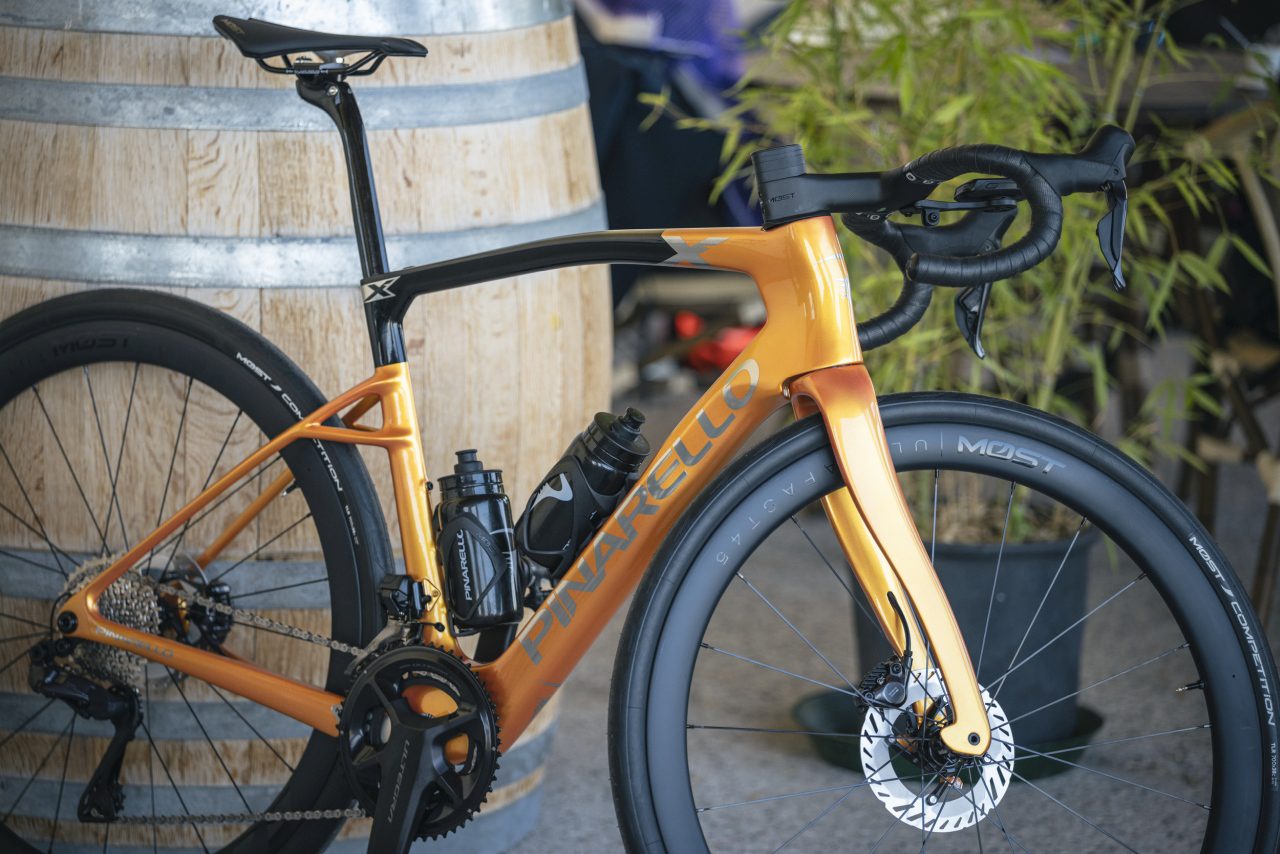
The new Pinarello X Series line of bikes are out now. It’s the latest refresh of the Italian bike company’s endurance road line. X Series is aimed at new riders or those who simply want a more upright and comfortable position for their big rides. As with all things Pinarello, it’s revealing when you compare how the company positions the bike with how it performs on the road, and to whom it’s best suited. Before the start of summer, I attended a press event not far from the company’s headquarters in Treviso, Italy. Below, after a breakdown of the X Series, I’ll dive into my impressions of the Pinarello X7 I rode on gravel lanes and by the vineyards of the Prosecco hills.
Wait. Didn’t Pinarello just release an endurance bike?
In early July, Pinarello launched the Dogma X. Since it has “Dogma” in the name, it’s a top-level bike. In this case, it’s the flagship endurance rig. It sports the same carbon-fibre formula as the race-oriented Dogma F, Torayca M40X, as well as some of the F’s aero features.
One of the main differences between the Dogma X and the X Series is that the Dogma X is a single frame that comes in various colours and component specs, while the X Series is a number of frames. At the top of the X Series is the X9 and X7 frames that use Torayca T900UD carbon fibre. The X5 and X3 are built with T700UD carbon. Finally, the X1 relies on the T600 formula. As you move down the line, from X9 to X1, the frame weights increase. The mid-range models have better vibration damping than the top one.
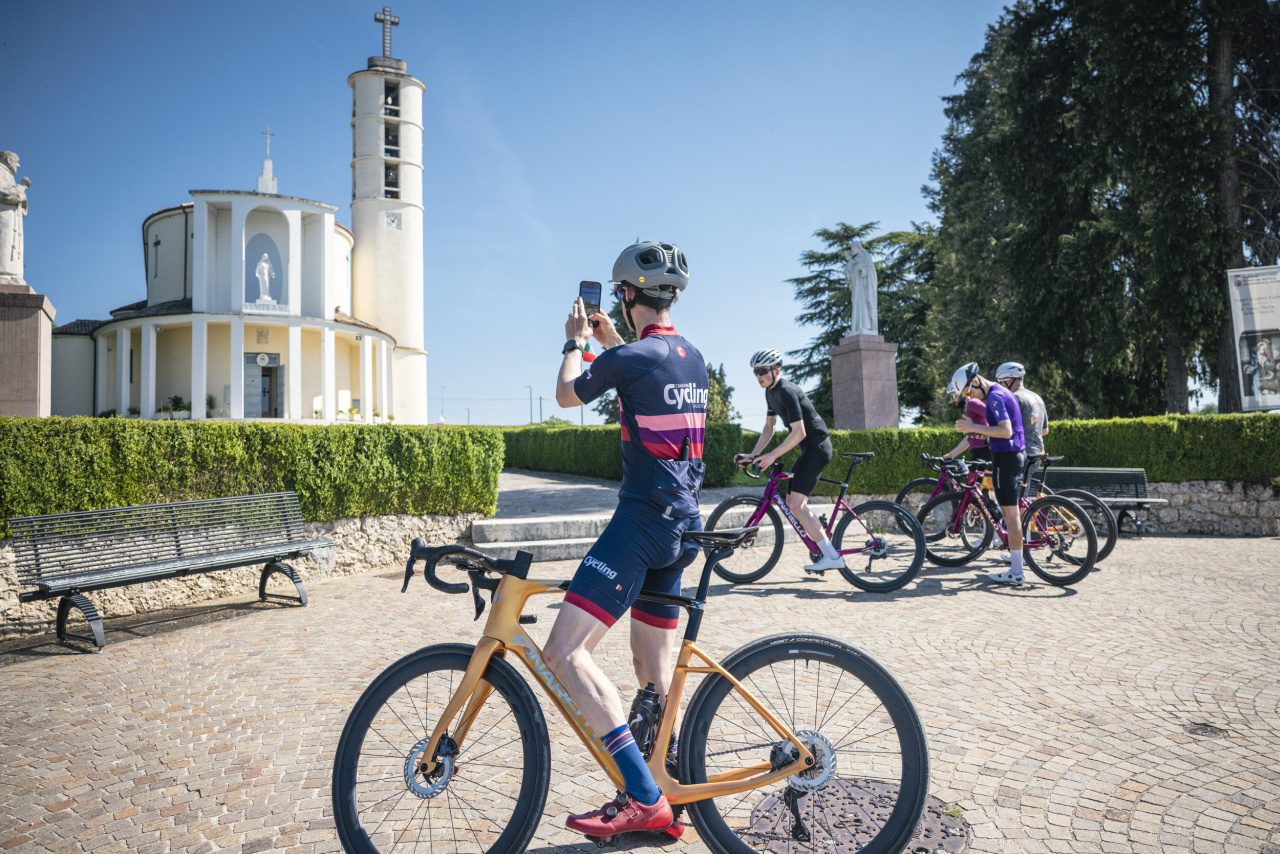 You can go some pretty cool places on a Pinarello X Series X7
New X-Stays 2.0 and some familiar designs within the X Series
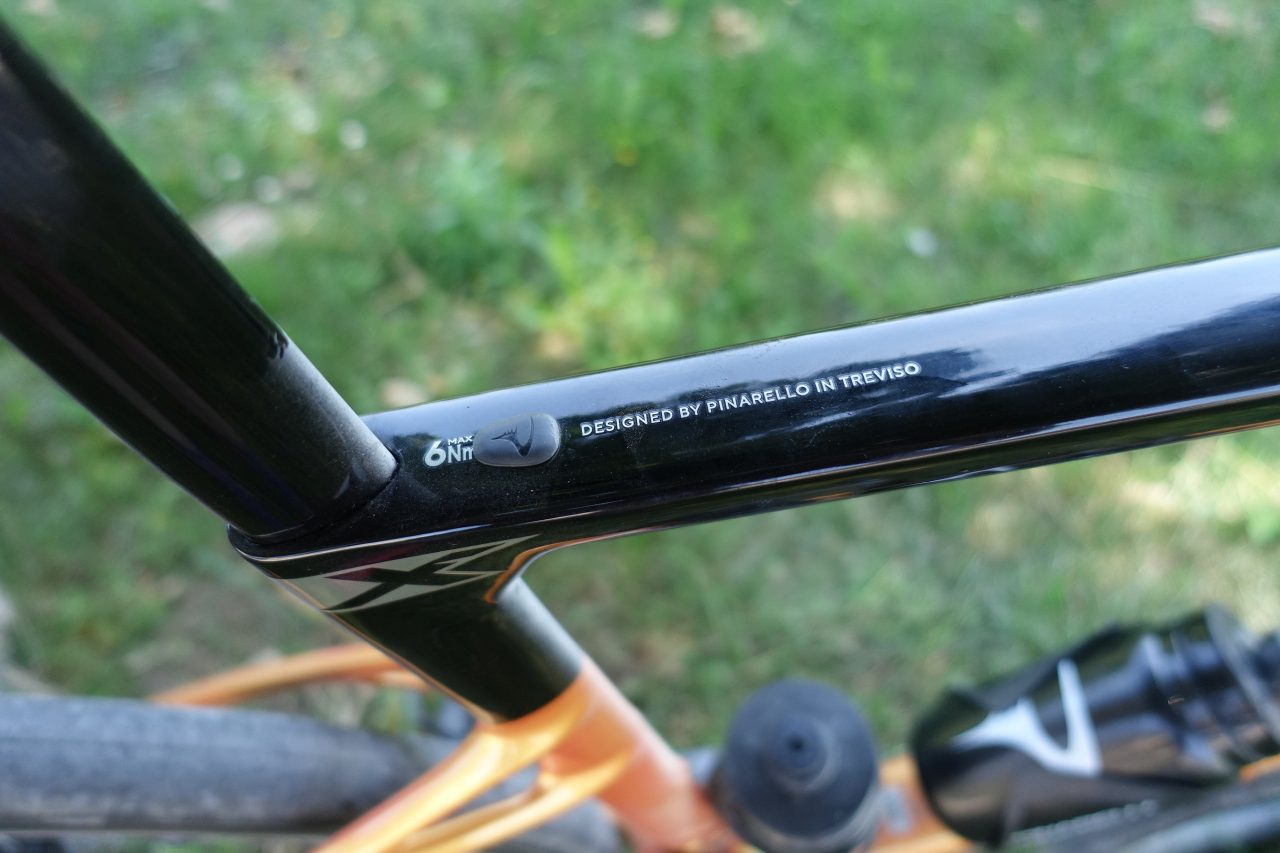
You might have noticed that the X Series frames share a feature with the Dogma X: the X-Stays 2.0.
“On the previous generation of endurance bikes, we had different designs of the X-Stays,” said Pinarello chief marketing officer Federico Sbrissa at a presentation in June. “Here, we think we found the sweet spot in terms of lateral stiffness, support and a better ability to disperse vibrations. We’ve kept the concept of the double linkage point with the lower attachment. We really believe this design is the perfect mix of real compliance and lateral stability to make the bike solid and enjoyable to ride.”
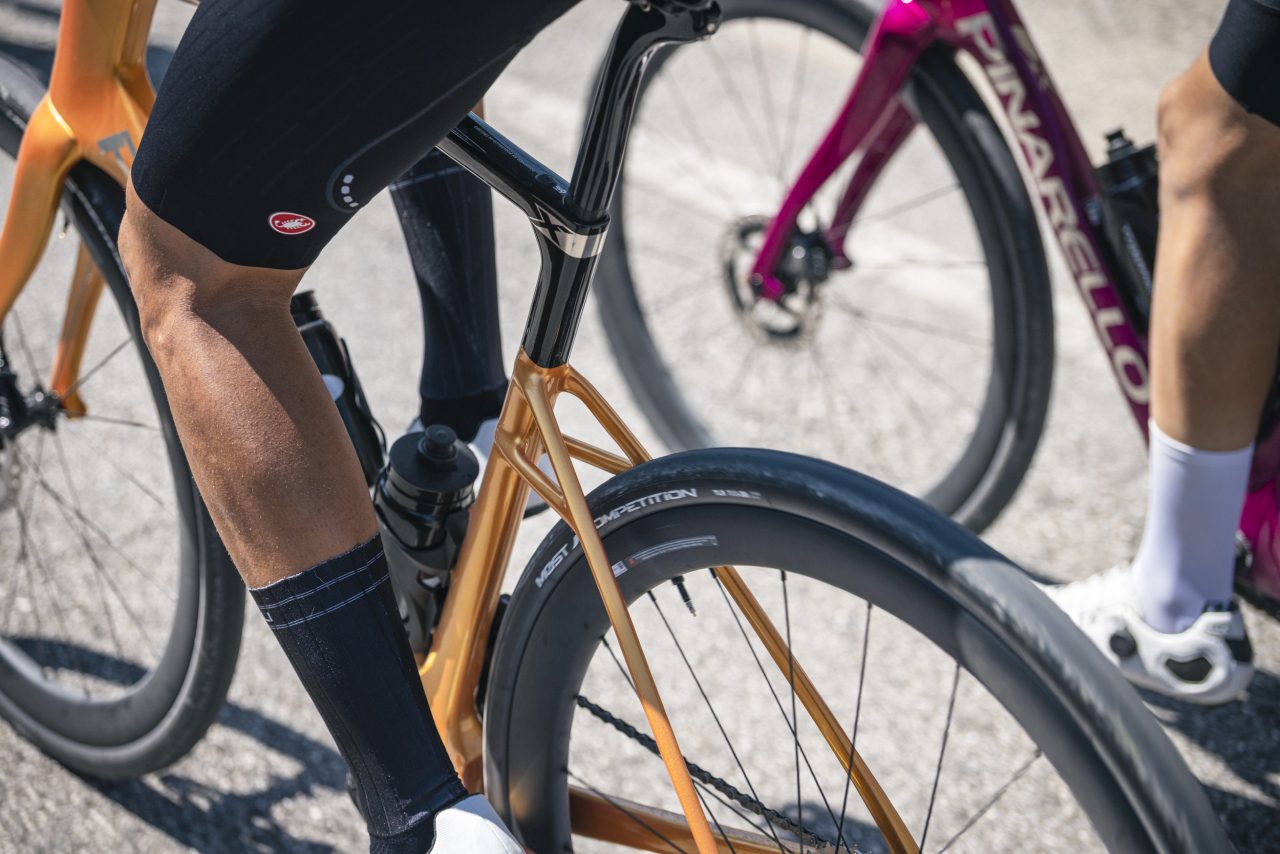 The X-Stays 2.0 on the X7.
One frame, however, strays when it comes to stays. If you look closely at the attachment points of the X1 seatstays, you’ll see that they connect higher up on the seat tube and at wider angles. The X1 actually uses the previous generation’s design so that it can work with a Shimano 105 mechanical groupset. The rest of the frames are for electronic drivetrains only.
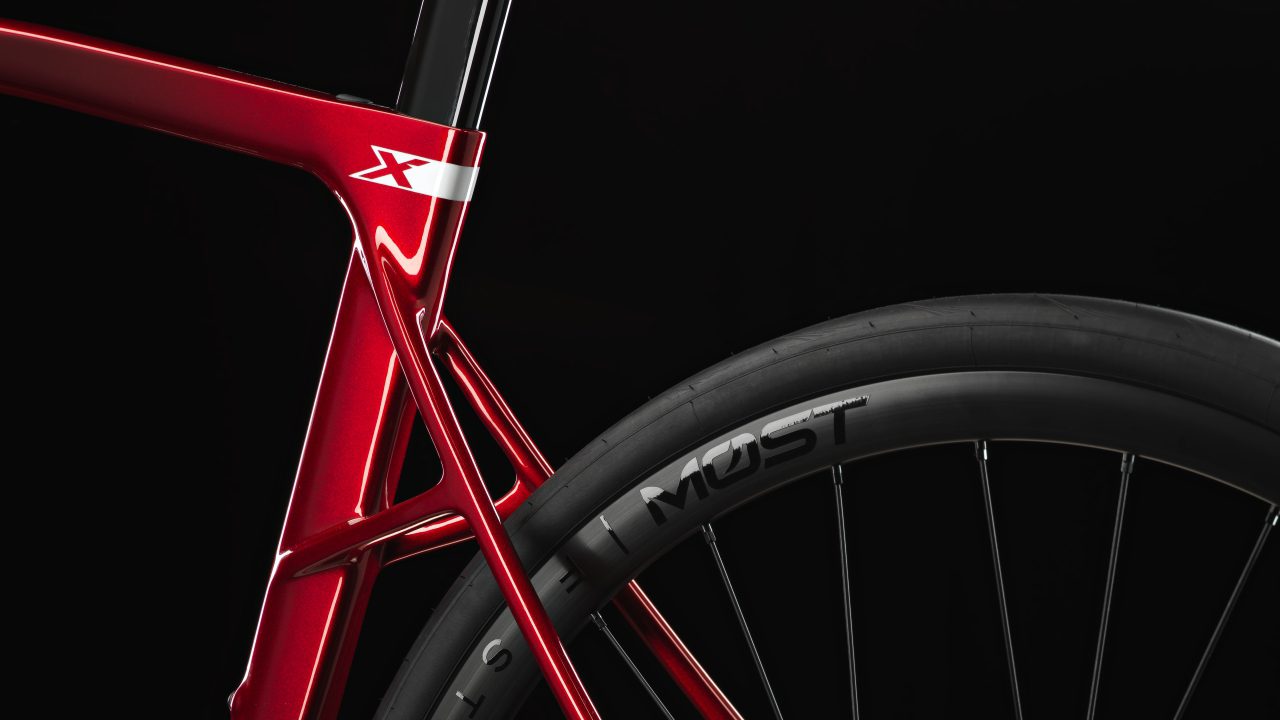 The Pinarello X Series X1 frame sports the previous generation’s style of X-Stays so that it can run a mechanical groupset.
A feature the X Series frames share with both the Dogma bikes is the all elliptical steering tube. That design allows the head tube to get narrower and more aero. It also lets the brake hoses run down the front of the head tube. This setup requires you to use one of Pinarello’s bar/stem combos. The two X Series bikes that will be coming to Canada, the X7 and X3, will run the Talon Ultra Fast bar/stem. It’s the same component on the Dogma F and Dogma X.
The right seatpost for the ride
While the X Series frames borrow from their other road siblings, they also take a component from Pinarello’s gravel bike, the Grevil X. That item is the adaptive seatpost. Actually, it’s a new design that Pinarello says has shed grams and is more efficient than the previous model. It’s engineered to flex fore and aft by about 10 mm.
Pinarello X Series tire clearance and small-bump management
The X Series frames have space for 40-mm-wide tires, which is right into gravel territory.
So, with wide tires, X-Stays and adaptive seatpost, you have the X Series system for managing road vibrations. As Sbrissa pointed out, it follows the contemporary trend, away from elastomers and widgets. “Those sorts of technologies of the past were used because the system of wheels was very narrow with super high pressure tubulars. The bike was extremely uncomfortable and extremely unstable when you were hitting bumps or bad asphalt. So designers did try to create this sort of suspension. Systems had incredible disadvantages, like weight and losing a lot of the rigidity of the frame.”
As endurance bikes go, the X Series frames are modern, svelte and smooth along the roads.
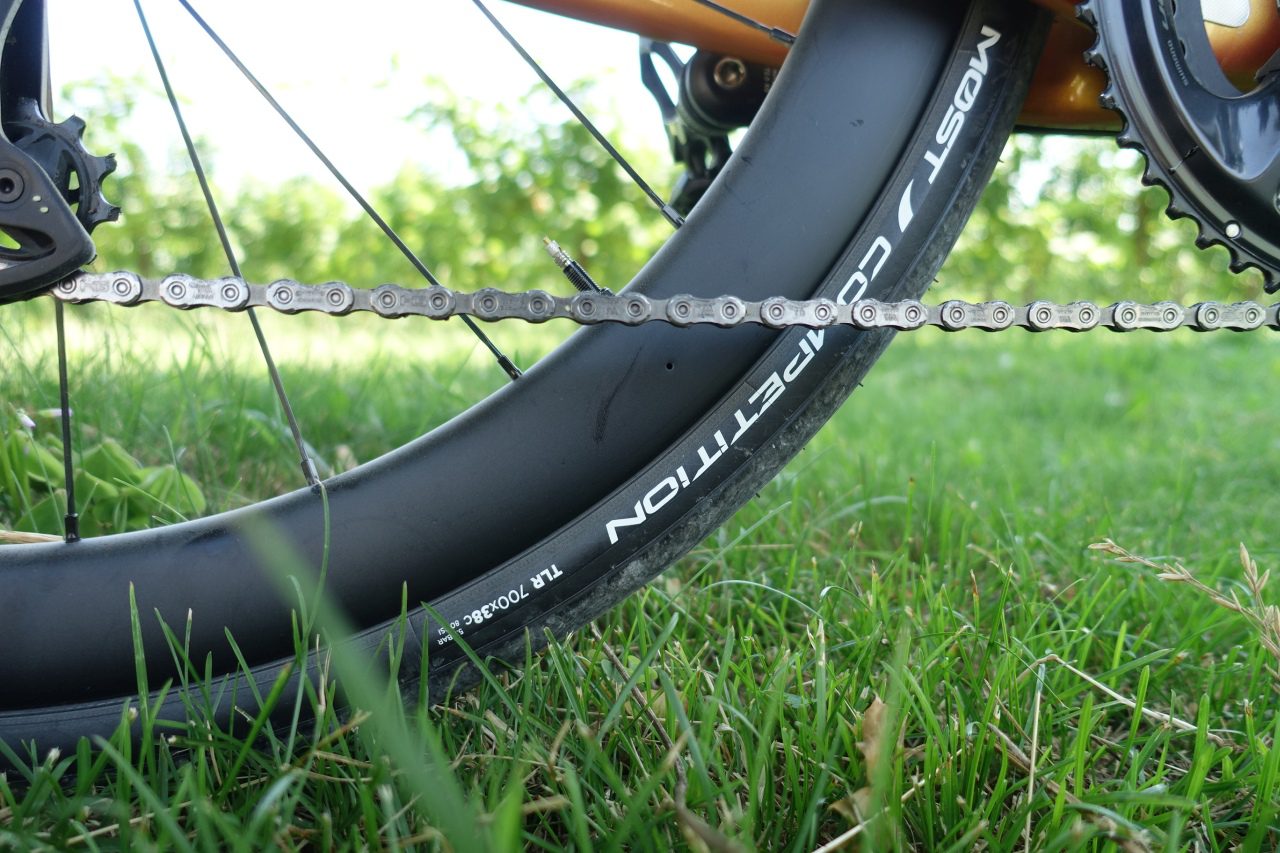 This Pinarello X7 has 38c treads. It has clearance for 40-mm-wide tires.
The fit continuum at Pinarello
Start with the bike raced by the pros, the Dogma F. It requires an elite-level of flexibility: the ability to get low and aero. If you can’t do so, you’ll need spacers under the stem, maybe a bunch. With the launch of the Dogma X in July, the team at Pinarello wanted to provide a bike that fits more riders. It has a stack ranging from 10 to 15 mm more than the F.
The X Series frames may vary in the carbon-fibre construction, but they have the same geometry. Generally, they have 3 cm more stack than a Dogma F and 1 cm longer reach.
When the designers at Pinarello settle on a geometry, they tend to stick with it. Take the Dogma X, for example. Its numbers are essentially the same as the old K8-S and Paris. With the X Series, the geometry is largely unchanged from the previous generation to the latest one.
Another gradation to consider is handling. The Dogma X is “less nervous” (to employ a phrase used frequently by the folks at Pinarello) than the Dogma F. The X Series frames are more planted and stable than the Dogma X. For how an X Series bike actually feels on the road, see my first impressions below.
 Light gravel
 Slightly tougher gravel
Pinarello X Series storage
As with many endurance bikes, the X Series frames come with down-tube storage. This is absent on the Dogma X, which indicates the X Series bikes are geared more toward exploration, while the Dogma X, though not made for racing specifically, is for speedier outings. An employee at Pinarello, however, did say to me that the X9 with its Shimano Dura-Ace components, is pretty much race-ready.
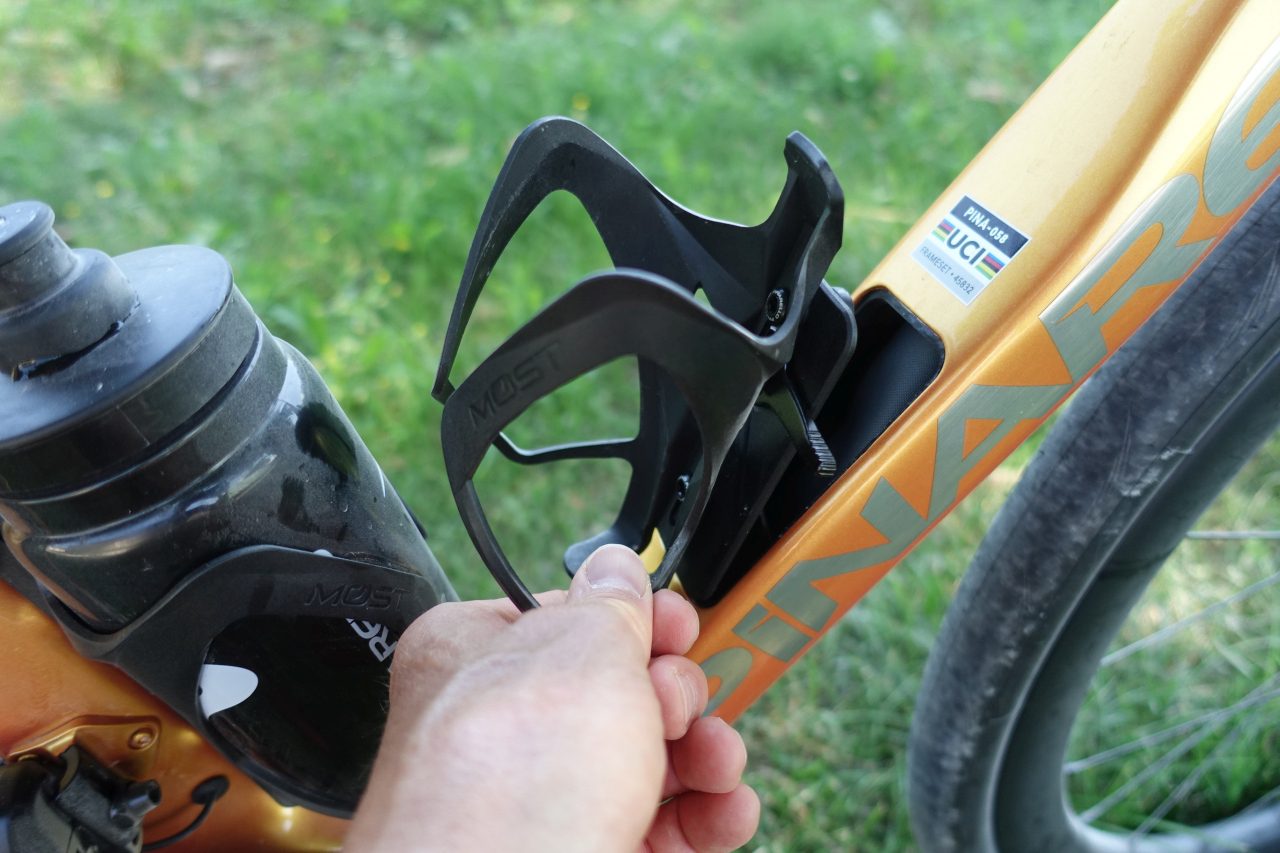 Pinarello X Series down-tube storage
First impressions of the Pinarello X7
At the Pinarello press event in June, I got an X7 to ride with its Atlas Glow colourway (or, as most of us would say, “orange”). It was size 560, the same size as the Dogma X I had ridden the day before. Since I’m a leggy 175-cm tall rider who sets his saddle height to 75 or 76 cm, the folks at Pinarello figured the 560 would work. It did, technically. It put me in quite an upright position that also felt efficient on the pedals. However, I think a better fit would have been the 545. Still, the larger bike didn’t hinder my enjoyment of the rolling roads of the province of Treviso. The Pinarello X7 was outfitted with a Shimano Ultegra Di2 groupset and Most Ultrafast 45 DB wheels running 38c Most Competition tires.
The day before the X Series ride, my group had a spin on the new Dogma X. While its steering isn’t as reactive as the Dogma F, it’s still sporty. The X Series bikes have even mellower handling but I’d say it felt nothing like some endurance bikes of old with their slightly ponderous turns. The X7 seemed to hit the right balance of stability and reactivity.
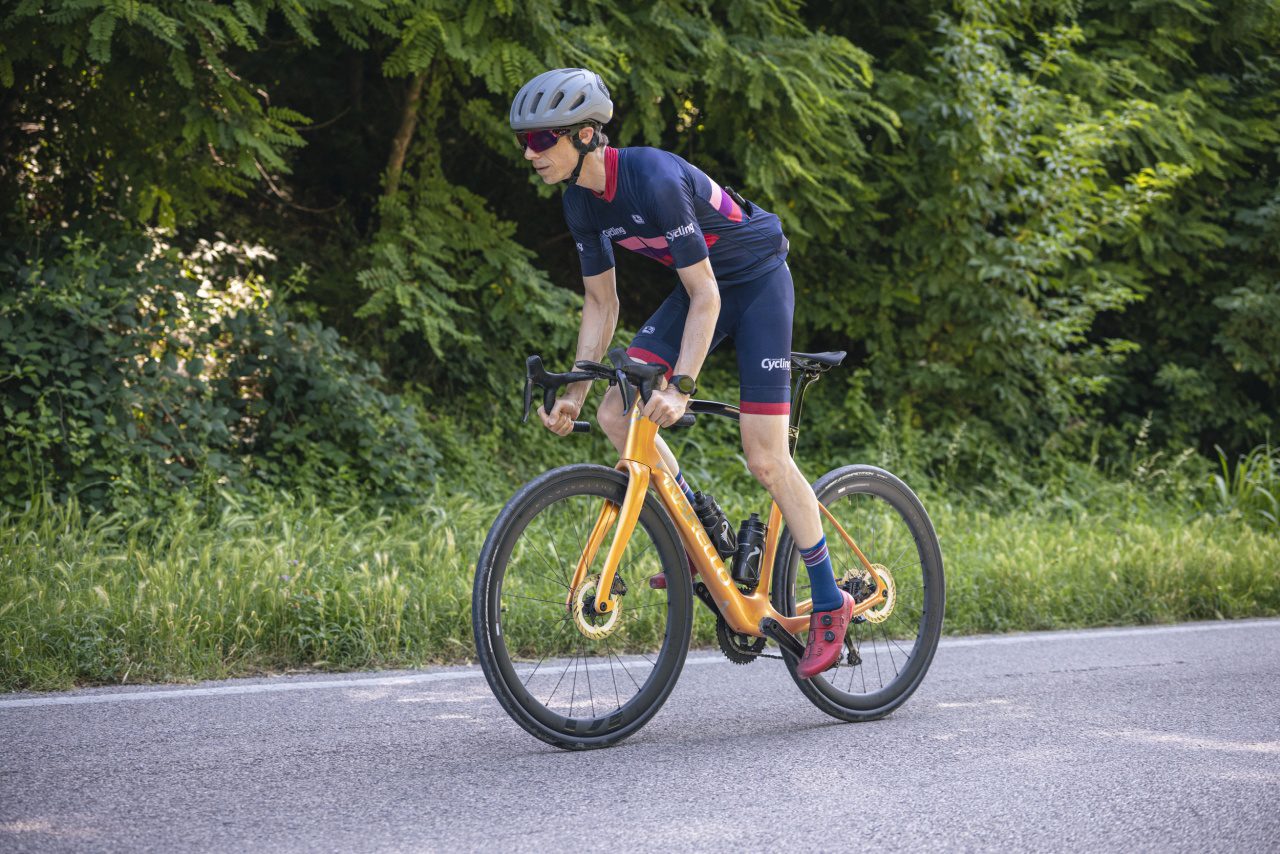 Pinarello X Series X7. This rider should probably take some of stuff out of his jersey pockets and put it in the bike’s storage compartment
Early in the X Series ride, we hit a gravel path, much like a rail-trail route. Then it was on to a proper gravel climb. Although the tires were slick, their width was enough to give us the traction we needed up the climb. Here I noticed the increased stability compared with Dogma X, which I had taken on some gravel sections the day before (albeit with narrower treads). The rest of the 73-km ride was a joy, but maybe it’s redundant to say that when you have sunny skies in Treviso.
The curious thing about the X Series, for me, is that Pinarello positions it as a bike for new riders. Price-wise (see below), that’s a serious investment for someone getting into cycling. It would be a good “buy once, cry once” bike as you really wouldn’t have to upgrade for a long time: each bike is packed with top-notch features. (Well, the first upgrade might be the wheels with the journeyman V-200 hubs.) Also, as one of my colleagues pointed out, the bike is not really designed for the generalist rider, storage compartment aside. Sure, it’s more versatile than the Dogma X, but there’s no integrated way to attach fenders, for example. To me, the X Series is in a specialized space: premium entry-level. There are some noticeable performance distinctions between X Series and Dogma X, but as I’ve been indicating, it’s on a continuum with subtle gradations, not big steps.
Canadian pricing and availability of the Pinarello X Series
Uno Imports brings Pinarello bikes to Canada. You can expect two Pinarello X Series models to arrive here in late October to early November. You’ll have your choice of the following builds:
Pinarello X Series model
Notable spec
Price
X7
Torayca T900UD carbon fibre, Shimano Ultegra Di2, Talon Ultra Fast bar/stem, Most Ultrafast 45 DB wheels
$11,499
X3
Torayca T700UD carbon fibre, Shimano 105 Di2, Talon Ultra Fast bar/stem, Most Ultrafast 45 DB wheels
$6,999
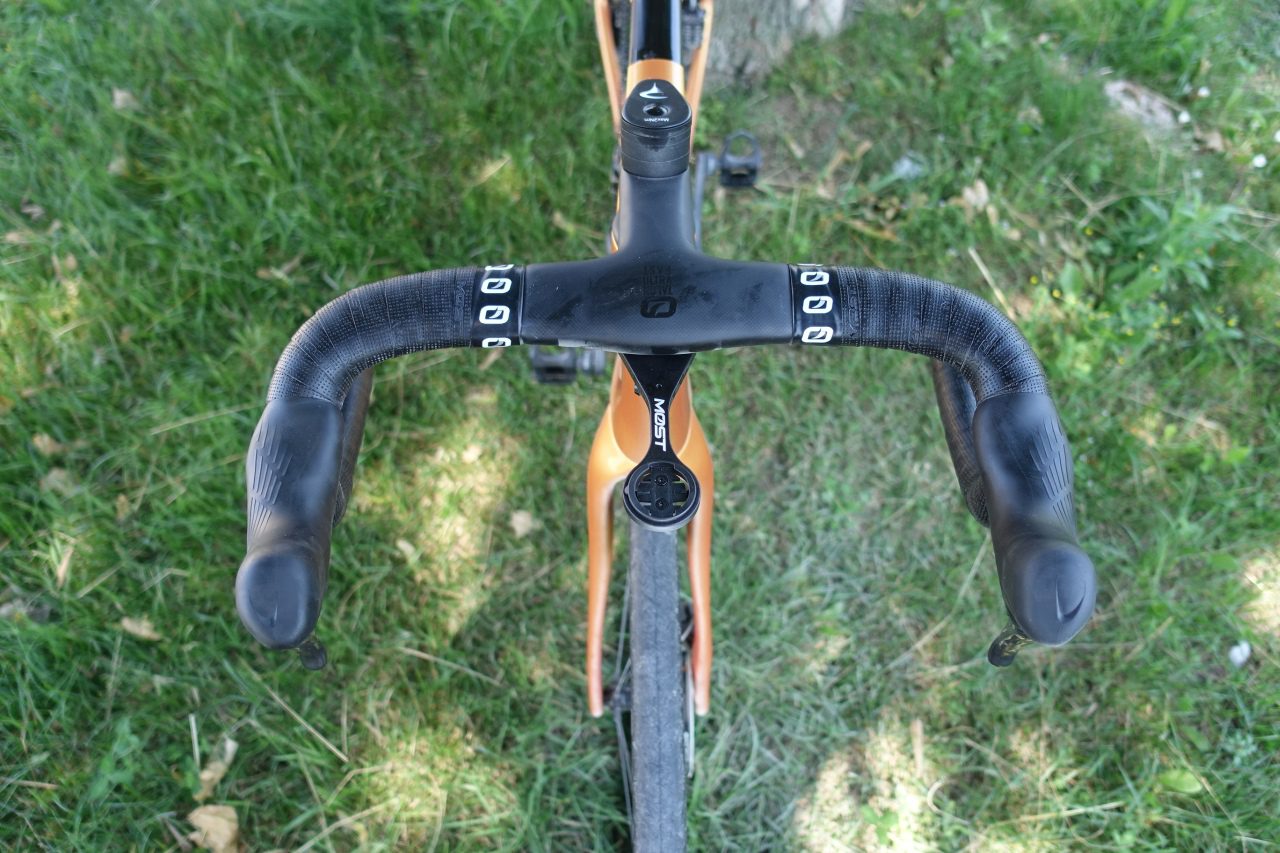 The Pinarello Talon Ultra Fast bar/stem got a bit dusty
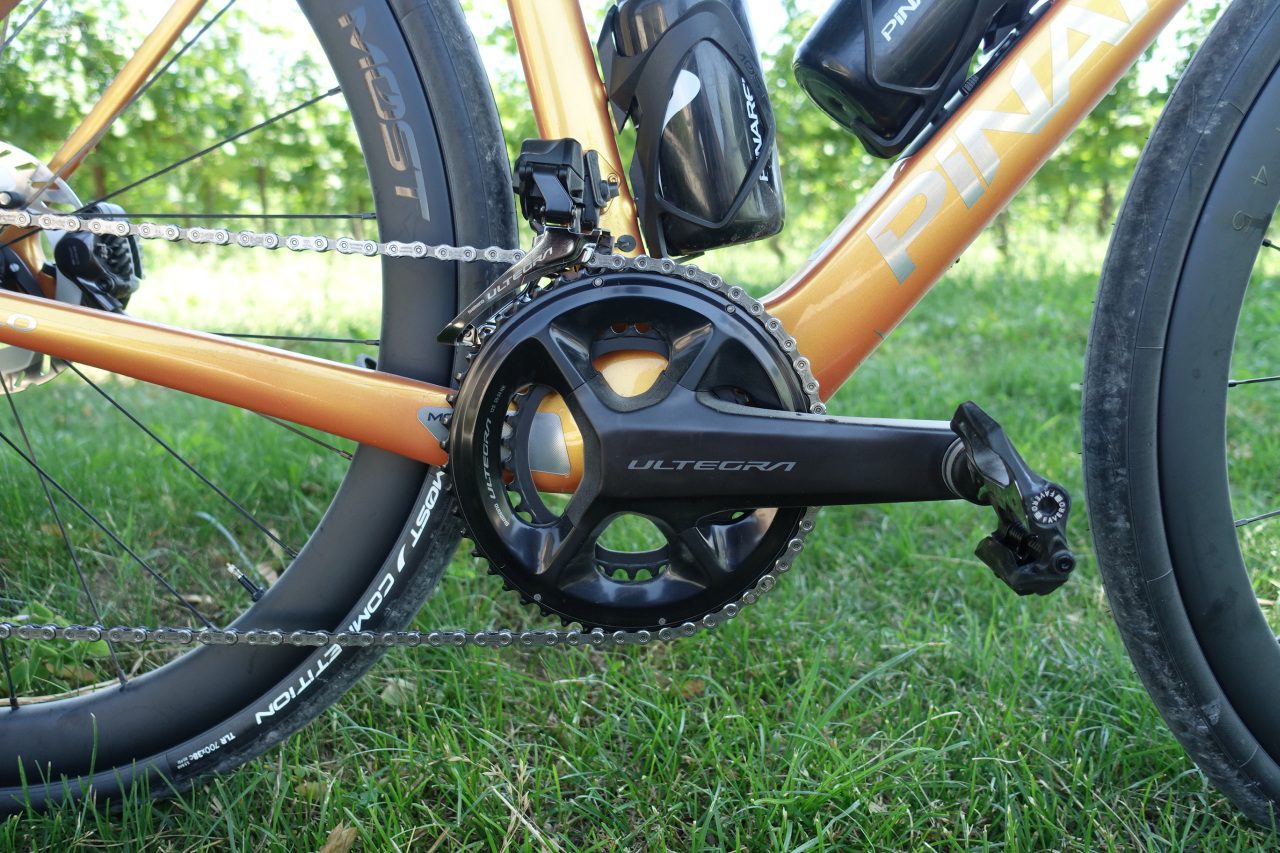 The X Series X7 runs the Shimano Ultegra drivetrain
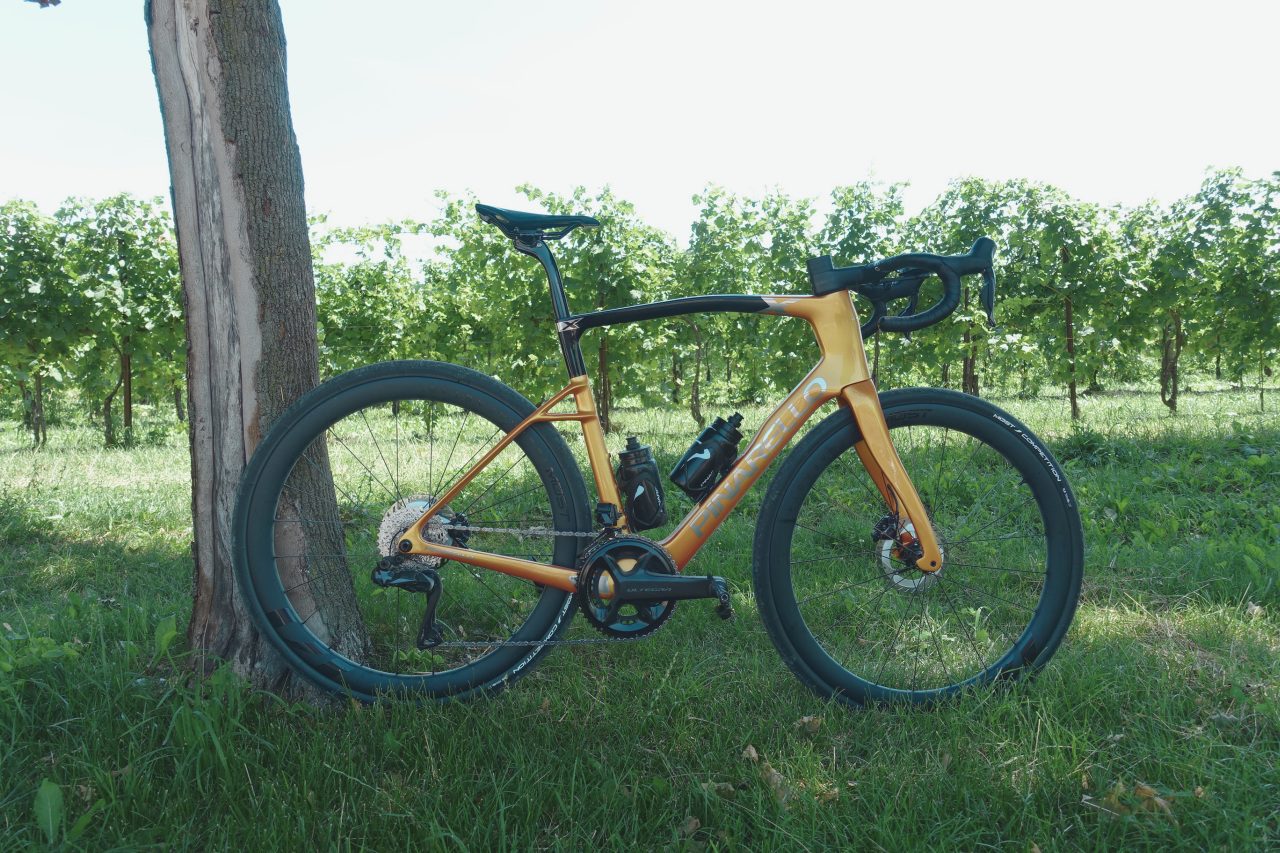 Pinarello X Series X7