
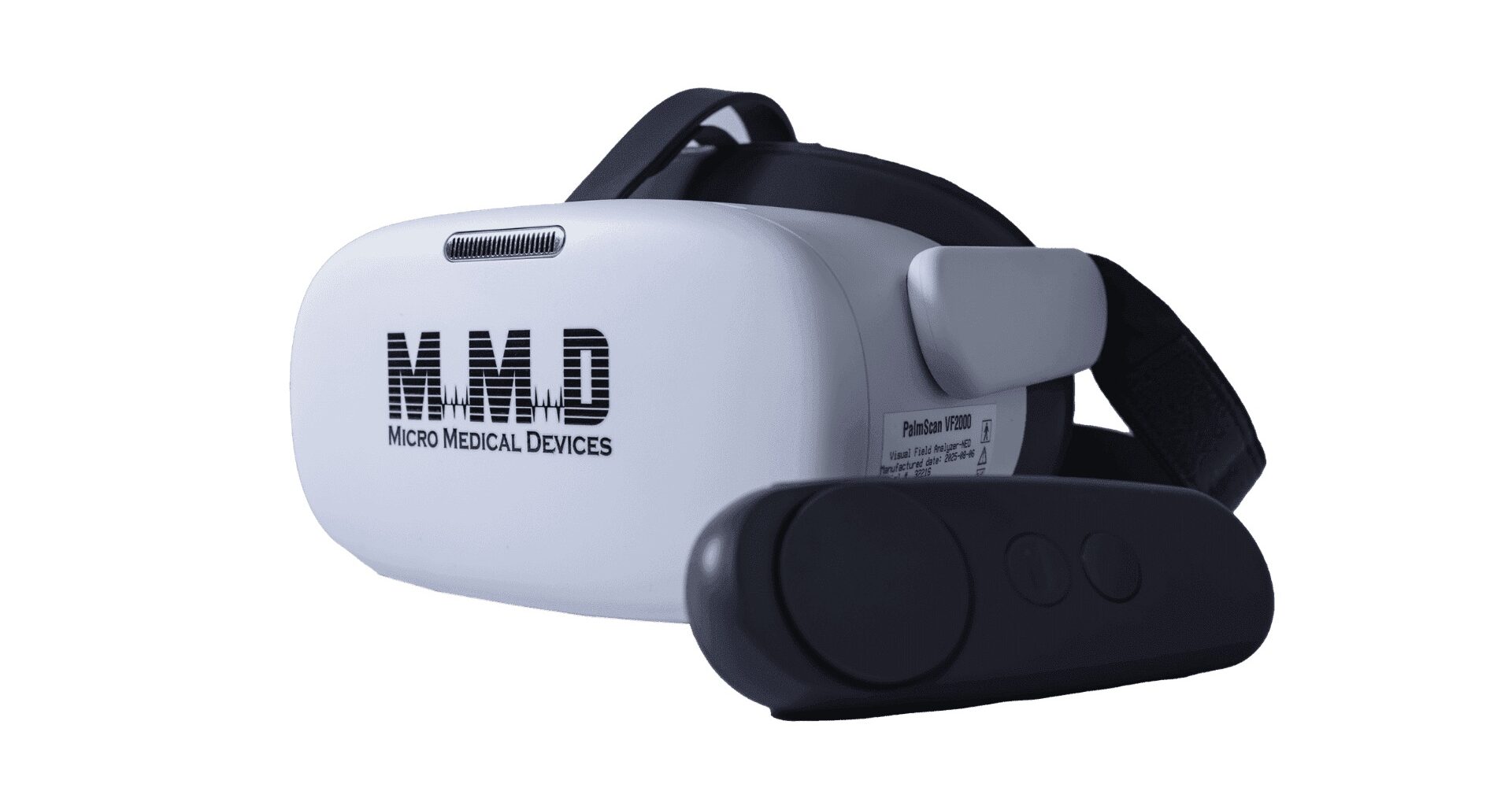
The PalmScan VF2000 virtual reality (VR) visual field analyser is growing in popularity in Australia, with four case reports highlighting the technology’s use across a range of patient ages and clinical presentations.
Manufactured by Micro Medical Devices and distributed in Australia by BOC Instruments, the PalmScan VF2000 has been available in the Australian market since 2023 with more than 60 units in use across the country. BOC Instruments is the exclusive Australian distributor.
Worldwide, the technology has been used across more than 1,500 practices, with Micro Medical Devices reporting more than three million exams performed.
According to BOC, the VF2000 is a self-contained, portable VR headset that performs automated visual field testing using immersive head-mounted display technology. Stimulus presentation occurs within a fully enclosed VR environment, eliminating ambient light interference, and eliminating the need for a dark room.
The device has binocular testing capability, allowing both eyes to be tested independently in a single session without repositioning or the need to occlude the fellow eye. Integrated fixation monitoring and gaze tracking are designed to support reliable, repeatable results.
Its wireless, battery-powered design enables testing in a range of clinical settings, according to a product brochure, including chair-side, bedside and remote locations.
The platform also supports more than 18 diagnostic tests beyond visual field testing, including pupillometry, colour vision, contrast sensitivity, stereopsis, strabismus and eye motility.
Four clinical presentations
The case reports demonstrate the VF2000’s use across a range of ages and presentations. Click here to read them in full.
Suspected normal-tension glaucoma: A 62-year-old male with an intraocular pressure of 14 mmHg OU and suspicious disc cupping underwent visual field assessment. He had mild cervical spine limitation affecting positioning at a conventional tabletop instrument.
Bitemporal visual field defect: A 48-year-old female presenting with headaches and peripheral vision loss was assessed in a case involving a pituitary lesion. She also could not reliably complete tabletop perimetry due to poor comprehension of the monocular test format.
Pediatric strabismus and visual field screening: A nine-year-old child who had failed a school vision screen underwent testing, demonstrating the application of the technology in a paediatric presentation. In this case, the VF2000’s immersive VR environment dramatically improved cooperation in pediatric patients. Plus, the ability to run strabismus and stereopsis testing alongside visual field screening in one device streamlined the workflow.
Central scotoma and macular degeneration: A 74-year-old female with wet age-related macular degeneration receiving anti-VEGF therapy was monitored for a central scotoma. Previous testing on a conventional device was inconclusive because the patient could not maintain fixation at tabletop, while the VF2000’s integrated eyetracking compensated for fixation instability.
For more information, contact BOC Instruments at sales@bocinstruments.com.au, or call (02) 9643-7888, 1800 804 331