
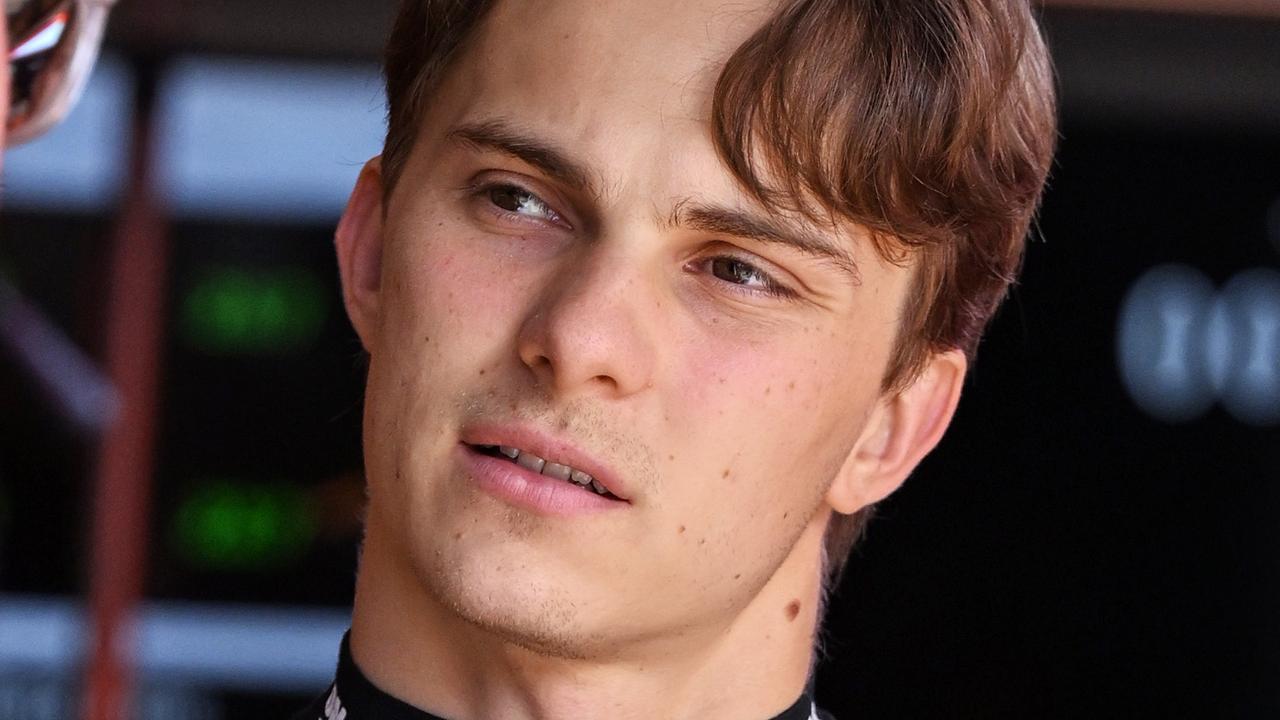
Oscar Piastri has “found different ways of having difficulty” with McLaren’s 2026 car but has ideas to improve his race pace ahead of this weekend’s Italian Grand Prix.
Piastri endured another difficult race in the Netherlands last time out, finishing a distant sixth and more than half a minute behind race-winning teammate Lando Norris.
It was the second consecutive race in which Piastri was clearly second-best on race pace to Norris, even if he came close to pinching victory from the Englishman in Hungary thanks to a perfect start and precise defending.

Fox Sports, available on Kayo Sports, is the only place to watch every practice, qualifying session and race in the 2026 FIA Formula One World Championship™ LIVE in 4K. New to Kayo? Join now and get your first month for just $1.
Though Piastri’s poor Dutch Grand Prix showing came down mostly to one bad stint, race pace management has been difficult for the Australian all year, leaving him seventh in the drivers championship and 55 points behind his teammate.
McLaren principal Andrea Stella has theorised that Piastri’s driving style has been a bad match for the 2026 car, which wants to be hustled in a way that doesn’t come naturally to the fourth-year driver, but Piastri said there was no single problem that stood out in his mission to close the gap.
“It’s never been the same issue, the same thing we’re chasing every weekend,” he said. “It’s always been slightly different, which I think raises a bigger question.
“If it was just one thing we kept struggling with, it’d be in some ways a bit of an easy fix, but the fact that we’ve found different ways of having difficulty — we’ve been trying to answer that question.”
But there are positive signs for Piastri even among the disappointing results.
“In Zandvoort, qualifying was definitely a much bigger step; it was much more how it should be,” he said. “Lando and I were very close through qualifying, but clearly in the race there was still a deficit, and that’s really the area we’re trying to work on.
“I think we are getting closer. We’re finding more ideas.
“Ultimately the only way you can really solve it is by trying stuff on track. I’m not saying that we’ve gone away and found this problem; we’ve definitely got ideas on how we can make things better both from how I drive the car and how we set up the car. Hopefully we can find something that works a bit better.”
MORE ITALIAN GRAND PRIX
TALKING POINTS: Ferrari goes all-in on home win; big test looms for title hopeful
TIFOSI TUSSLE: The Merc star dividing the loyalties of F1’s most famous fan base
PIT TALK: Icons unite for Schumacher tribute
However, while he’s hopeful of adding to his nine career victories before the end of the season, he admitted some of the issues gelling with his car wouldn’t be overcome in the short term.
“There are definitely things that have not been as easy or as comfortable this year compared to last year, clearly, which we’re working on,” he said. “Some of these things we can fix quickly, some of them we can’t.
“I think these cars in general, the concept is very different. The tyres are quite different. There are a lot of things as well that are not necessarily within our control.
“Also this season has not been easy for other reasons. We’ve had a lot of struggles with reliability or bad luck here and there. We’ve not had a great time of things across the board.
“I think we’ve had some good moments as well, but definitely we’re working on how we can make things a bit easier both from my driving and the car. Hopefully we can find some better results soon.”
Drivers relive epic 2025 Bathurst 1000 | 01:29
F1 TEAMS AGREE TO SHORTER RACES TO SAVE FUEL
Formula 1 races will be shorter in 2027 after teams agreed to reduce the standard grand prix distance from 305km to 290km in a bid to boost engine performance.
Every grand prix since the 1989 season has had a minimum distance of 305 kilometres, with the first lap after that distance is reached being the final lap. The only exception is the super-slow Monaco Grand Prix, which has a lower 260km distance.
The fixed distance has ensured F1 races are completed in roughly 100 minutes, but it has also helped teams to define the size of their fuel tanks in the non-refuelling era based on the economy of the engine.
But in agreeing to improve the controversial 2026 engine rules, teams agreed earlier this season to increase the fuel flow of the engine to increase combustion power and thereby make electrical power relatively less important to overall performance.
Increasing fuel flow will make the engines thirstier, thereby requiring a bigger fuel tank.
However, several teams had already been planning to carry over their 2026 chassis into 2027 on cost-saving grounds under the cost cap, and the size of the fuel tank is linked directly to the design of the chassis.
Though the FIA has granted a spending concession to teams over the next two seasons to change chassis over the next two seasons, teams have agreed in parallel to shrink race distance next year to ensure no race turns into an economy run.
According to Italian publication Autoracer, teams agreed unanimously that every race except Monaco would be reduced by around 15 km, or around 5 per cent.
In practice that would reduce the average 100-minute race by around five minutes, although a more powerful engine able to output maximum power for longer would likely see races completed in even quicker time next season.
The fastest ever Formula 1 race was the 2025 Italian Grand Prix, completed by Max Verstappen in just 73m 24s, an average speed of 250.71km/h.
The rule must now be approved by the FIA. The Race has reported the rule will likely apply only for 2027 but could be extended in 2028 and beyond if concerns about engine performance still linger into next year.
Brilliant Marquez wins Aragon MotoGP | 01:02
ALONSO SAY RULES, NOT RESULTS, MORE IMPORTANT TO CAREER CALL
Fernando Alonso remains undecided about his Formula 1 future as he weighs up whether he wants to compete for another season with F1’s controversial hybrid engines.
Alonso, 45 years old, is out of contract at Aston Martin, and despite having suggested he would make a decision about his future during the midseason break, the 440-race veteran says he has yet to make up his mind.
While some other seats on the grid are still in doubt at the end of a fizzer of a silly season, Alonso is the only driver contemplating quitting the sport.
Aston Martin has been woeful for much of this season but has begun a rapid improvement, with big upgrades in Hungary delivering Alonso to his first Q2 of the year, which the Spaniard backed up with a season-high ninth last time out in Zandvoort, tripling his and his team’s score for the year.
Team boss Adrian Newey had earlier suggested the pace of the team’s recovery would be influential in Alonso’s decision-making.
But the Spaniard says his first pace-based top-10 finish hasn’t altered his thinking, which revolves around the contentious hybrid engines and their effect on racing.
“I will be professional and working at my 100 per cent fighting for P15 or fighting for a podium,” he said, per ESPN. “But for me it is more about the regulations.
“Unfortunately this is what it is. This is not the Formula 1 we grew up with. This is not the Formula 1 that we all want, drivers, spectators.
“We must change a few things. It will not happen immediately. It will happen for the future. But I hope I can contribute somehow for the next set of regulations and we can go back to the real Formula 1.“
This weekend’s race at high-speed Monza is unlikely to improve Alonso’s feeling about the engine, however.
Asked where it would rank alongside the similarly energy-starved Silverstone and Suzuka tracks, he replied: “Worse … [but] maybe [not as bad as] Vegas.”