
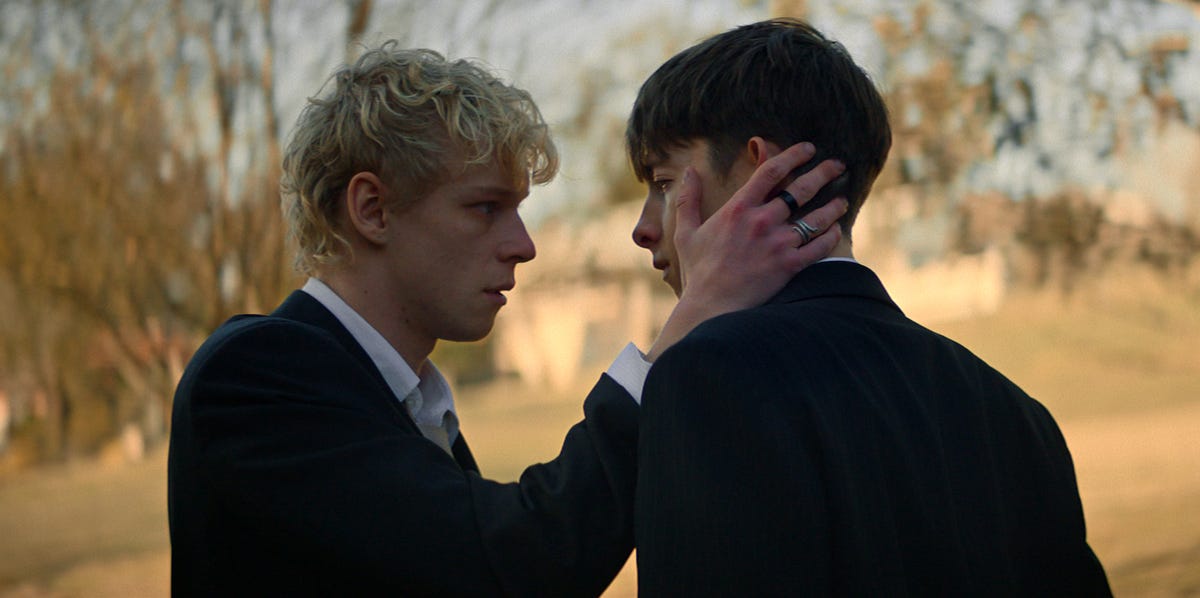
Following the success of Obsession and Backrooms, it’s tempting to suggest that Leviticus works as an amalgamation of the year’s two biggest horror movies. After all, the boys at its centre can’t get enough of each other, yet still they must contend with a demonic force that hides in plain sight, one who reflects a funhouse mirror version of the world they once knew.
Such a comparison isn’t entirely unfounded, but there’s so much more to Adrian Chiarella’s debut than that.
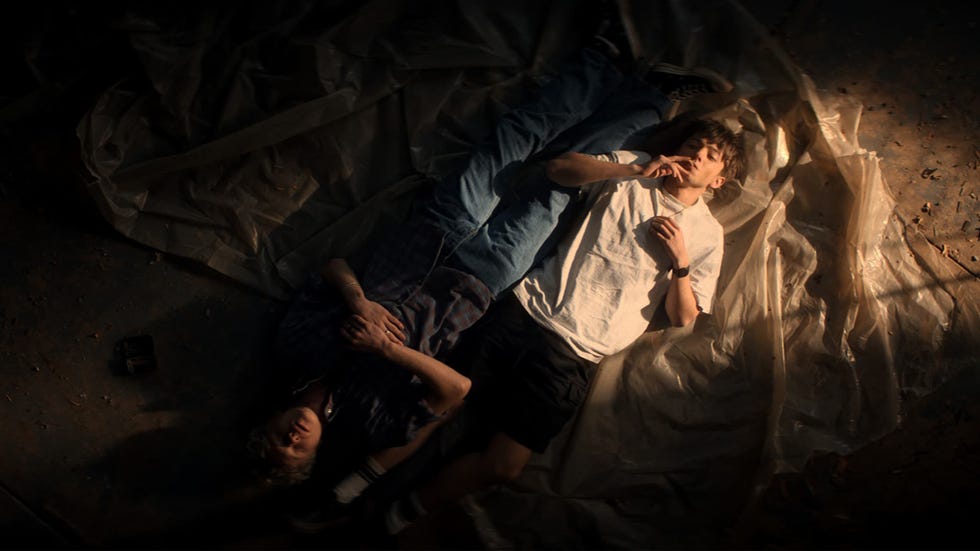
Leviticus follows two teenage boys in the Australian bible belt who get the urge to take off each other’s belts in a room where there are no others. “Good for them,” you’re probably thinking. But their religious parents don’t agree.
NEON
First Ryan (Stacy Clausen) and then Naim (Joe Bird) are both subjected to an exorcism of sorts, one that doesn’t banish a demon so much as invite one in. Instead of praying the gay away, the shapeshifting bogeyman in question has both boys praying for their life. But rather than appear to them as a monster or their worst fears come to life, this entity takes on the form of what they both desire most. Namely, each other.
Every time the boys see each other, the desire and affection they once felt is replaced by fear and mistrust, knowing that the other could actually be a demon in disguise.
The paranoia this instils sets up a number of unnerving scenes between the pair, some which erupt into full-blown violence at a moment’s notice. One photo-booth sequence and another set near the school toilets are particularly harrowing. To say more would negate the constant unease you feel watching, this feeling of never being safe, even around the people who are supposed to love you.
Sound familiar? For queer people watching, the impact of Leviticus goes beyond the central metaphor and how it unpacks the horror of conversion therapy. This is important, of course, and Chiarella handles this expertly. However, it’s in the implications of this demonic set-up where his debut feature truly sets itself apart.
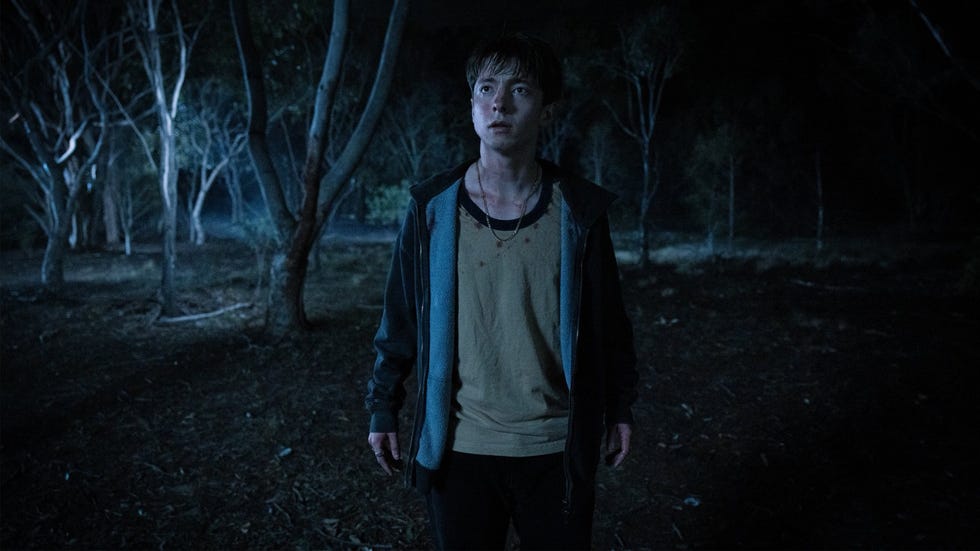
Being gay anywhere can be a lonely experience. But to be a teenager living in the middle of nowhere, forced to hide the very essence of who you are? It’s isolating to the point of harmful, and we see the effects of that, both physical and psychological, from the nightmare Naim’s now living through.
NEON
No one can see the demon except for those who have been cursed. But even if his mother wasn’t devoutly religious, it’s safe to assume she wouldn’t believe Naim anyway. And that feels all-too real.
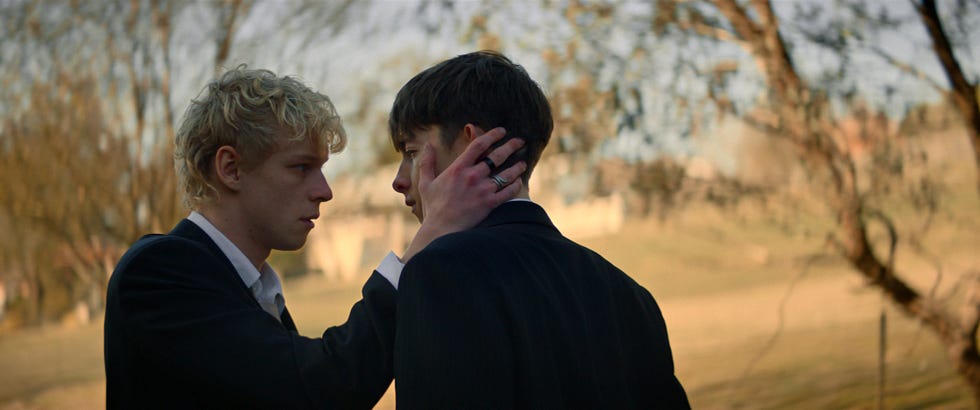
Queer people are used to being challenged on their identity and perception of the world, especially younger kids still living at home with people who don’t, or simply refuse, to understand. What’s worse is Naim can’t trust Ryan either. At any moment, the boy he loves could try and smash his head against a wall.
Leviticus excels in its portrayal of queer loneliness, specifically. It’s the reason why Naim outed Ryan in the first place, lashing out against his initial feelings of rejection. And that’s before the boys fully encounter the demon.
“You shouldn’t be near me,” says Naim at one point, to which Ryan replies, “I shouldn’t be near you either.”
NEON
There’s no safety in being alone though. A smart addition to the mythos Chiarella has created here is that the monster only attacks when no one else is around. For queer people still grappling with who they are, such isolation can sometimes be a safe space. No one is judging you in the safety of your own bedroom, for example. But this space that was once sacred is now where you’re at the biggest risk of being harmed in Leviticus.
As such, Naim and Ryan are always on guard which, again, feels pretty relatable to anyone who might not assimilate in the usual ways that society deems fit. Leviticus reminds us that the people who love us can hurt us the most, which speaks not just to queer audiences but anyone watching, really. And that might actually be the scariest thing about this movie.
Crucially, it’s not just the concept behind the monster that leans into this idea. The parents, each of whom embody the religious violence of conversion therapy, believe it’s better to be straight and abused than gay and blasphemous. Never mind the very real danger they put their children through.
As a result, Naim and Ryan can no longer trust their own desires, endlessly questioning anything. But what we never question as an audience is the connection that develops between them, despite all this.
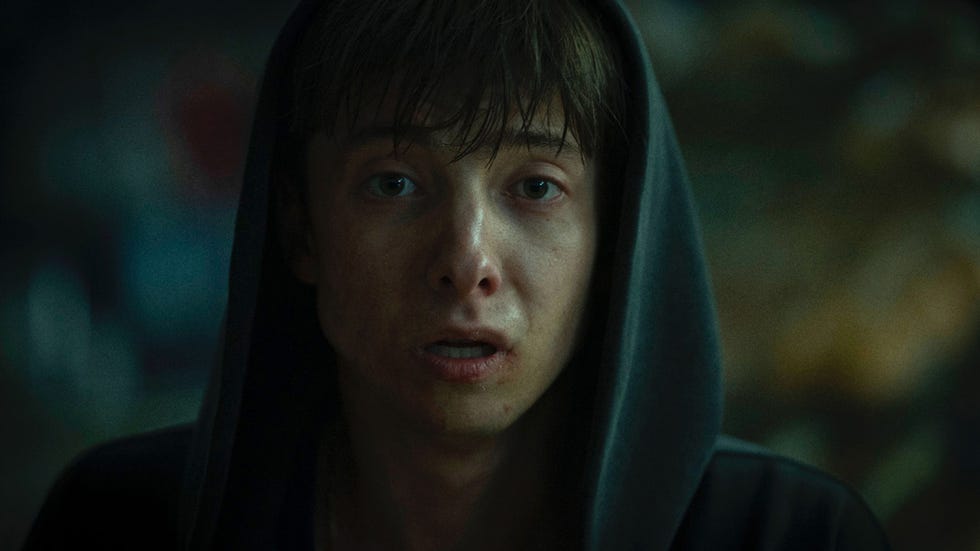
Joe Bird aches with a sadness punctuated by bouts of quivering fear. His performance as Naim is the kind that rising star awards are made for. Stacy Clausen is just as strong playing Ryan, equally convincing as a tough kid opening his heart as he is a cruel, sadistic demon who wears the same charming surfer boy face.
Even lines like the following work effortlessly, which might not have been the case in someone else’s hands: “If I’m going to live with this, I don’t want it to look like some other dickhead. I want it to look like you.”
NEON
As that dialogue attests, Leviticus is actually a love story more than anything else. That love can be scary, downright terrifying in fact, and it can be twisted too, hurting us under the guise of care. But there’s still love there.
Chiarella is careful to balance all this with the demands that come with working in horror as a genre. The scares, as effective as they are, simply wouldn’t work without Bird and Clausen’s chemistry, not to mention the care that this script takes in fostering the bond between their characters too.
We have to believe that they’re willing to risk it all, even their own lives, just to spend more time with each other. And we do.
It’s in this connection where Leviticus sets itself apart from other horror movies this year. Not because it’s gay. It’s not like we’re labelling Obsession and Backrooms as straight, after all. No, it’s in the way Leviticus feels intrinsically queer, paving new ground for horror, with a story that resonates beyond queerness too, tapping into wider, more primal concerns designed to unsettle us all.

Leviticus is out now in UK cinemas.
Visit our Streaming Guide now to see at a glance where you can view ALL your favourite shows and movies.
The new edition of Legends, a 100-page all-colour celebration of Ariana Grande, is here! Buy Ariana Grande in newsagents or online.

After teaching in England and South Korea, David turned to writing in Germany, where he covered everything from superhero movies to the Berlin Film Festival.
In 2019, David moved to London to join Digital Spy, where he could indulge his love of comics, horror and LGBTQ+ storytelling as Deputy TV Editor, and later, as Acting TV Editor.
David has spoken on numerous LGBTQ+ panels to discuss queer representation and in 2020, he created the Rainbow Crew interview series, which celebrates LGBTQ+ talent on both sides of the camera via video content and longform reads.
Beyond that, David has interviewed all your faves, including Henry Cavill, Pedro Pascal, Olivia Colman, Patrick Stewart, Ncuti Gatwa, Jamie Dornan, Regina King, and more — not to mention countless Drag Race legends.
As a freelance entertainment journalist, David has bylines across a range of publications including Empire Online, Radio Times, INTO, Highsnobiety, Den of Geek, The Digital Fix and Sight & Sound.