
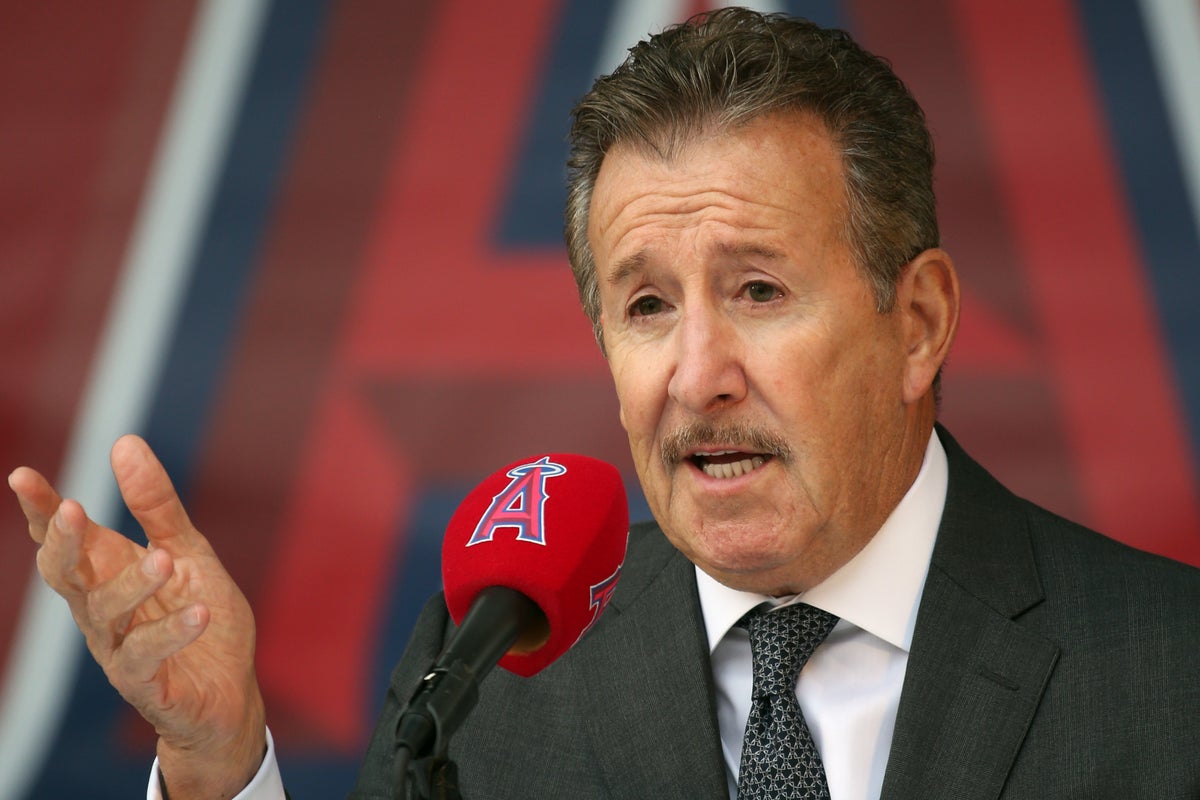
In the spring of 2023, three years before his decision to sell the Los Angeles Angels prompted rejoicing among fans, players and local officials, Arte Moreno fielded a question in the bowels of an aging Tempe Diablo Stadium about the future of his franchise. Shohei Ohtani stood one year away from free agency. The Angels had yet to capitalize on his two-way brilliance, and Moreno sounded uncertain of how to value the generational talent.
“He’s arguably the most unique player,” Moreno said. “And probably one of the top five or 10 players. It’s a business.”
Over the past decade, as the Angels descended from a perennial contender into a laughingstock, the man at the center of the decline was Moreno, according to interviews with current and former Angels officials, rival executives and others around the game, many of whom spoke on the condition of anonymity in order to freely discuss their former team or another team.
Moreno meddled in baseball decisions. His occasional free-agent splurges obscured an organizational myopia that left his team with scant investments in staffing, analytical advancements and technological necessities. A toxic culture spilled into public view during the trials after Tyler Skaggs’ death. His ballpark and facilities fell into disrepair, a situation that may be remedied under the stewardship of new owner Stan Kroenke, who entered an agreement to purchase the team this week at a $4 billion valuation.
But perhaps no situation crystallized Moreno’s blind spots more than his handling of Ohtani. Eight months after Moreno suggested Ohtani might belong among baseball’s 10 best players, Ohtani collected a second American League MVP award and hit the open market. Teams across the sport lined up to recruit him. Despite a belief among some within the organization that Ohtani wanted to stay in Anaheim, the Angels were not one of them. When Ohtani sought a $700 million package that deferred 98 percent of the salary, Moreno declined to engage. He did not believe the contract made business sense.
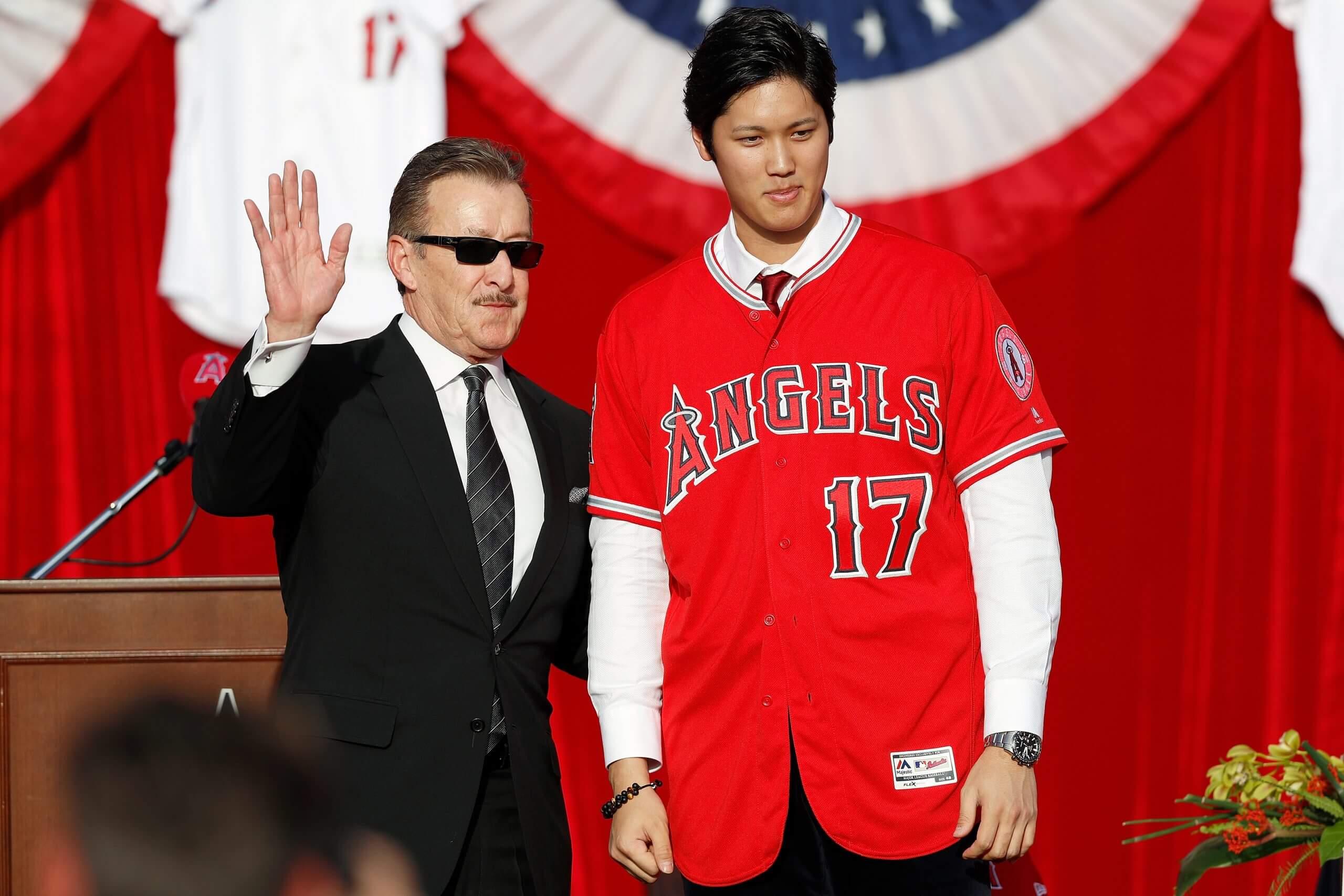
The relationship between Moreno and Shohei Ohtani began with great promise. Ohtani’s successes, however, came elsewhere in Southern California. (Josh Lefkowitz / Getty Images)
The Los Angeles Dodgers felt differently. In Ohtani’s first two seasons as a Dodger, he captured two more MVP trophies and the team became the first back-to-back World Series champions since 2000. With Ohtani on the marquee, the franchise transformed Dodger Stadium into a money machine covered in Japanese advertisements and mobbed each afternoon by tour groups.
Thirty miles to the south, the Angels languished. The team has not made the postseason since 2014. They might finish 2026 with the worst record in baseball, and their first-ever 100-loss campaign. Under Moreno, the Angels squandered the prime of Mike Trout and failed to exploit the Black Swan event that was Ohtani.
The agitation of the team’s fanbase boiled to the surface this summer. For months, boisterous fellows at Angels Stadium peeled off their shirts and begged Moreno to sell. Their prayers have been answered. The promise of Kroenke, a multi-sport magnate who has won championships in the NBA, NHL and NFL, provided some of the optimism expressed this week. But any new owner was likely to be championed, so great was the dissatisfaction. No longer will the franchise be gripped by the vise of Arte Moreno.
In recent years, rival team executives viewed negotiations with Angels officials as akin to hunting a moving target. Some saw calls with general manager Perry Minasian as a waste of time. A proposed trade could vanish at any moment — if Moreno changed his mind. The executive class views meddling from the owner’s suite as part of the job. But many saw the Angels as an outlier.
And so the target was far from stationary when Minasian considered trading Ohtani during the summer of 2023, as his free agency approached. The Tampa Bay Rays emerged as the most assertive bidder and proposed moving top infield prospects Junior Caminero and Carson Williams in exchange for two months with Ohtani. But the discussion fizzled out when Moreno intervened, as The Athletic reported earlier this year.
It was not the first time Moreno scuttled an Ohtani proposal. The year before, the San Diego Padres expressed interest in Ohtani. The discussions involved outfielder Jackson Merrill, among other prospects, but never progressed. Moreno would not permit a trade. The Padres pivoted to acquire Juan Soto from the Washington Nationals for a package that included future All-Stars C.J. Abrams, James Wood and MacKenzie Gore.
The 80-year-old Moreno had not always been viewed as an impediment. Moreno, the son of Mexican immigrants and a veteran of the Vietnam War, made his fortune in the billboard business. In 2003, a year after the Angels won their only World Series, he purchased the club from the Walt Disney Company for $182.5 million. The team remained stable for more than a decade and won six American League West titles. The past 12 seasons have been far less enjoyable. After a 98-win campaign in 2014, general manager Jerry Dipoto resigned amid a power struggle with manager Mike Scioscia. The tenures of the two subsequent chief baseball executives, Billy Eppler and Minasian, were marred by Moreno’s intrusions, sources said.
Former employees and current players alike vouched for Moreno’s affinity for baseball. He loved the game, they said. But his affection for the sport did not make him an expert in its machinations. “He is probably a little too much of a fan than not,” interim general manager John Mozeliak said earlier this summer.
Both Eppler and Minisian told colleagues that they felt stifled working under Moreno, unable to engage in creative maneuvering without triggering interference. In February of 2020, Eppler capitalized on a roster logjam created by the Dodgers’ acquisition of Boston Red Sox star Mookie Betts. The Dodgers agreed to send outfielder Joc Pederson, pitcher Ross Stripling and outfield prospect Andy Pages to the Angels for a package led by infielder Luis Rengifo. But a holdup in the Betts trade delayed things. As Dodgers officials reworked the details with Boston, Moreno spiked the deal for Pederson, Stripling and Pages. “I just would rather not talk about it,” Moreno said that spring after confirming he nixed the trade.
Under Moreno, a culture of frustration and desperation took hold. Some teams win through big-money acquisitions. Others win on the margins, spinning gold out of small-profile transactions. The Angels did neither. They spent more than some clubs — but far from wisely. Last year, The Athletic charted the connection between spending and winning. The Angels served as an outlier on the plot — the only team with an average annual payroll from 2022-2025 above $200 million but a winning percentage below .450.
In the eyes of rival executives, Moreno opted for the flashy purchase over steady, incremental expenditures. His splashes became bellyflops. The contracts for Albert Pujols (10 years, $254 million), Josh Hamilton (five years, $125 million) and Anthony Rendon (seven years, $245 million) all proved onerous. A historic $426.5 million extension for Trout has become an albatross. Those contracts were also aberrations; Moreno never permitted the Angels to exceed baseball’s luxury-tax threshold. During the collective bargaining negotiations in 2022, he was one of four owners who voted against raising the tax threshold.
Moreno let the rest of the organization rot. For several years in the 2010s, the team lacked an indoor weight room at Tempe Diablo Stadium, so players pumped iron in the parking lot. As baseball operations departments around the sport sprawled, with teams pouring dollars into research and experimentation, Moreno skimped on analysts, scouts and performance scientists. The Angels lagged in installing equipment like Edgertronic cameras and Rapsodo machines. Moreno furloughed scouts days before the 2020 draft. Costs, under Moreno, could always be cut.
This past offseason, the Angels searched for a manager, the franchise’s sixth since Scioscia stepped down in 2018. Negotiations with Pujols collapsed when the two sides could not agree on salary terms and contract length. The type of deal Moreno sought became apparent when former Angels catcher Kurt Suzuki took the job — on a one-year contract. “He’s tied in with me,” Minasian said at Suzuki’s introduction, which Moreno did not attend. In June, Minasian was fired. Moreno hired Mozeliak, the former St. Louis Cardinals executive, on an interim basis. His contract expires in December, when the sport is expected to be in a labor stoppage.
Moreno’s frugality extended well beyond the diamond. Since the pandemic in 2020, the Angels have not paid to send their radio broadcasters to road games. (The Toronto Blue Jays are the only other big-league team to maintain this practice.) When the team hosted a 20th anniversary reunion for the 2002 champs, the players were forced to pay their own travel expenses.
Under Minasian, who replaced Eppler after the 2020 season, even the high-profile moves ceased. Minasian never inked a contract larger than a three-year, $63 million deal with pitcher Yusei Kikuchi. A robust farm system can offset a lack of spending, as teams like the Milwaukee Brewers and Tampa Bay Rays have shown. Yet the Angels ran the minor leagues out of a desperation wrought by their big-league malaise. Their decisions on the farm only compounded their problems.
In recent years, the Angels’ decisions in drafting and development have mystified outside observers. In 2021, the team used all 20 picks on pitchers, 19 of them from college, in hopes of re-stocking the pitching corps. More than five years later, that class has produced one player currently on the big-league roster, reliever Luke Murphy.
The Angels often disrupted the minor-league progression of prospects so they could act as bullpen Band-Aids for overworked major league pitching staffs, while position players were also hurried. Two months after the Angels chose Nolan Schanuel out of Florida Atlantic University with the No. 11 pick in the 2023 draft, the team promoted him to the majors. His friends and family did not believe him when he called, he said. “They were like, ‘Come on, dude. You just got drafted six weeks ago. What are you talking about?’”
Schanuel arrived as part of a frenzied, fruitless postseason push. August of 2023 represented the culmination of years of shortcuts. Rather than trade Ohtani for Caminero, who has blossomed into a two-time All-Star at 23, the team added at the deadline in hopes of sneaking into the wild-card race. The deals pushed Moreno past the $233 million luxury-tax line for the first time. Yet the group collapsed soon after. Ohtani injured his elbow and stopped pitching. At the end of the month, with the writing on the wall, the team placed several players on outright waivers, in hopes of shedding salary. Five were claimed.
For once, Moreno accomplished his goal. He avoided paying the luxury tax.
Sitting on a mattress he shared with a teammate, inside an apartment housing six Angels farmhands, a minor-league catcher named Michael Cruz made a plea to the organization in the fall of 2021.
“Help us, just help us,” Cruz said. “We need help. Plain and simple.”
Cruz spoke at a time when the Angels were viewed as among the worst at minor-league accommodations, largely related to the team not providing housing or healthy and affordable food options. A series of public condemnations, many from Angels farmhands, aided the drive for the unionization of minor-league players in 2022. But they made little impression on Moreno. Asked to respond to the pleas from his minor leaguers, he compared them to recent graduates trying to break into the brokerage business “stacked up in one-bedroom apartments and working 18-hour days.”
Moreno operated with an imperiousness toward both low-level employees and influential stakeholders. He spurned an open letter from the Anaheim mayor in 2025, who pleaded for a more amicable relationship. When a minor-league player suffered a debilitating car accident, Moreno initially declined to offer insurance coverage. After a story in The Athletic, the prospect’s mother eventually received assurance that the team would cover her son for an additional year.
The disarray of the organization reached the public eye in 2025 as numerous Angels employees were called to testify on behalf of the team in a civil trial against the family of Skaggs, the former pitcher who died after ingesting a fentanyl-laced pill in 2019, provided by team employee Eric Kay, who is serving 22 years in federal prison.
Moreno attended the trial’s opening statements but did not return to the proceedings. His employees — asked to defend the team’s actions, and in some cases, prompted by Angels lawyers — described Skaggs as a drug addict and a poor pitcher. The team eventually settled after three months of testimony, and jurors said that they would have found the team partially responsible for Skaggs’ death, and would have awarded punitive damages.
“It’s hard for me to believe that somebody who is in their organization, who was so loved by the community, was so loved by the Angels family, that they would take Tyler and throw him under the bus,” said Debbie Skaggs, Tyler’s mother, in a January interview.
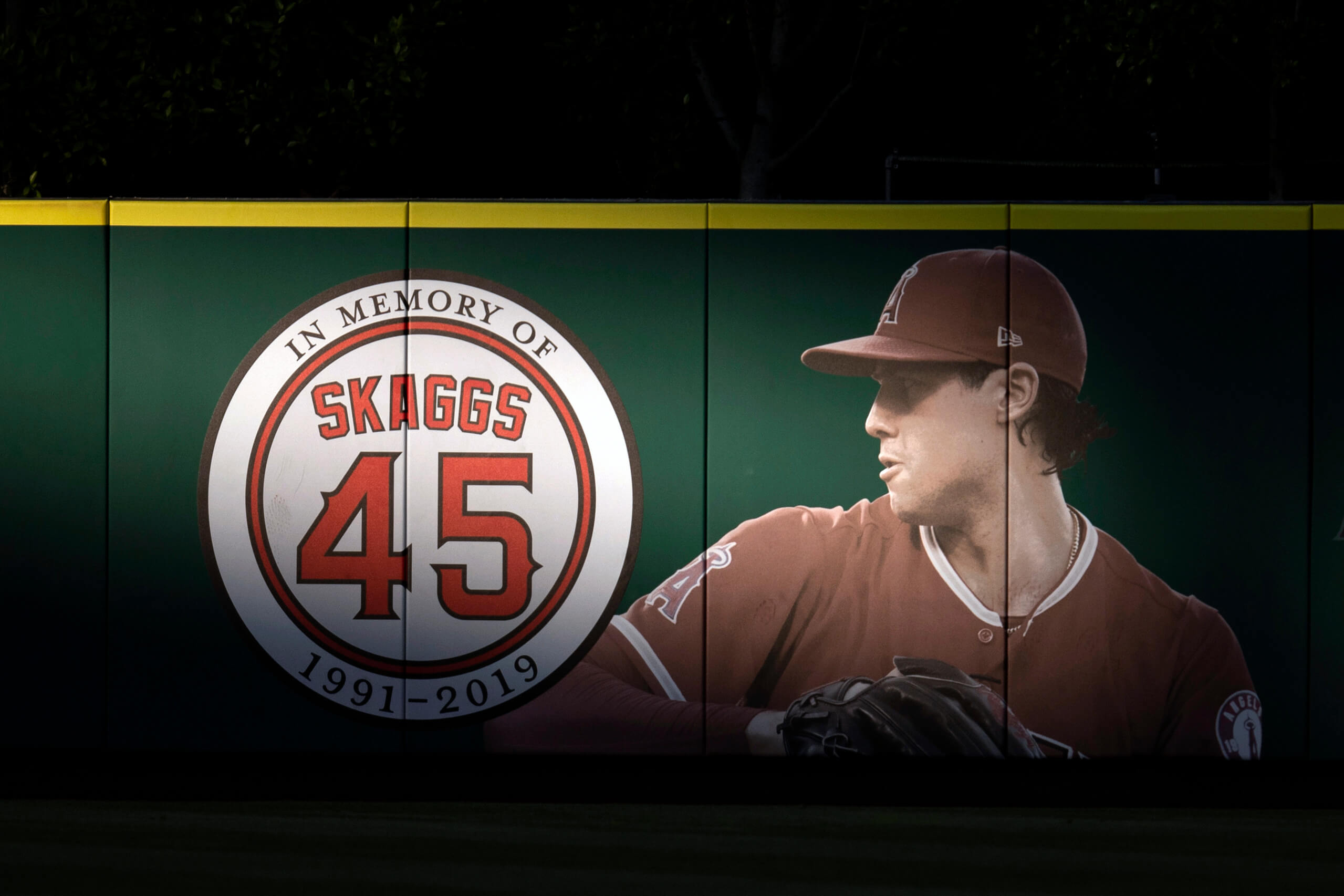
The Tyler Skaggs trial laid bare many of the issues in the Angels organization. (Kyusung Gong / Associated Press)
After the trial, a lawyer representing Kay’s criminal appeal said he would be forced to resign. The Angels had promised to pay his legal fees, but once the trial ended, the money never came.
How much Moreno cared about criticism was unclear — though there were cracks in the facade. When fans booed Moreno’s image in a pregame video package in 2024, the video was subsequently altered to remove him. As the unrest mounted, Moreno referred to detractors as a “vocal minority.” That characterization beggared belief this past March when he suggested fans cared less about winning than they did about safety and affordability. A movement sparked in protest: Fans flocked to the upper deck of Angel Stadium, removed their shirts and chanted, “Sell the team.” Moreno never addressed the rancor.
Moreno remained publicly unperturbed by the anger of people whose opinions should matter. In 2005, he changed the name from the Anaheim Angels to the Los Angeles Angels of Anaheim. The city responded with a lawsuit. Though Moreno won a subsequent civil trial, the decision damaged his relationship with local officials and residents alike. “I think the community felt something personal was taken from them,” said one Angels employee.
Moreno took a hardline on issues both big and small. It could be a refusal, for years, to pay for an adequate Spanish-language broadcast in a community full of Spanish speakers. It could be the decision to start getaway games at night, for increased ticket sales, even at the expense of players trying to win. It could even be a lack of air conditioning.
All of these mistakes, so many self-inflicted, left the Angels rudderless heading into 2026. Kroenke’s resume offers beleaguered supporters across Orange County an infusion of hope. And it opened the eyes of others around the game, who have long seen the Angels as a sleeping giant.
As the franchise moldered this past decade, other executives wondered if it could be resurrected. They joked about what sort of salary they would accept to work for Moreno. Those wisecracks can now cease. Under Kroenke, the Angels could become a far more attractive destination. The team plays in a major market with dedicated fans. The lure of Southern California could aid in free agency. Without Moreno, the gig could be a dream.
“That’s one of the best jobs out there, if you fix the ownership situation,” one executive said. “And now they actually have one who has a track record of spending and winning in other sports. That’s pretty good.”