
They are visitations from another world – feathered, gossamer, reptilian, celluloid – staring out with implacable expressions and perhaps a sheen of human sweat on the upper lip. The most fantastical creatures you might ever see, held momentarily in framed photographs and posed like Renaissance dukes and duchesses: wonderfully strange, fabulously wild.
They go beyond drag into carnival, occult, fable and dream. They are walking out of a Tube station to Soho, they are buying a drink in a nightclub or raising one superb brow in acknowledgment of a heckle or a wolf-whistle in a perfectly ordinary London street. Night Flowers, photographer Damien Frost calls them, after one of his subjects used the term. Those who bloom best in the humid and forgiving dark.
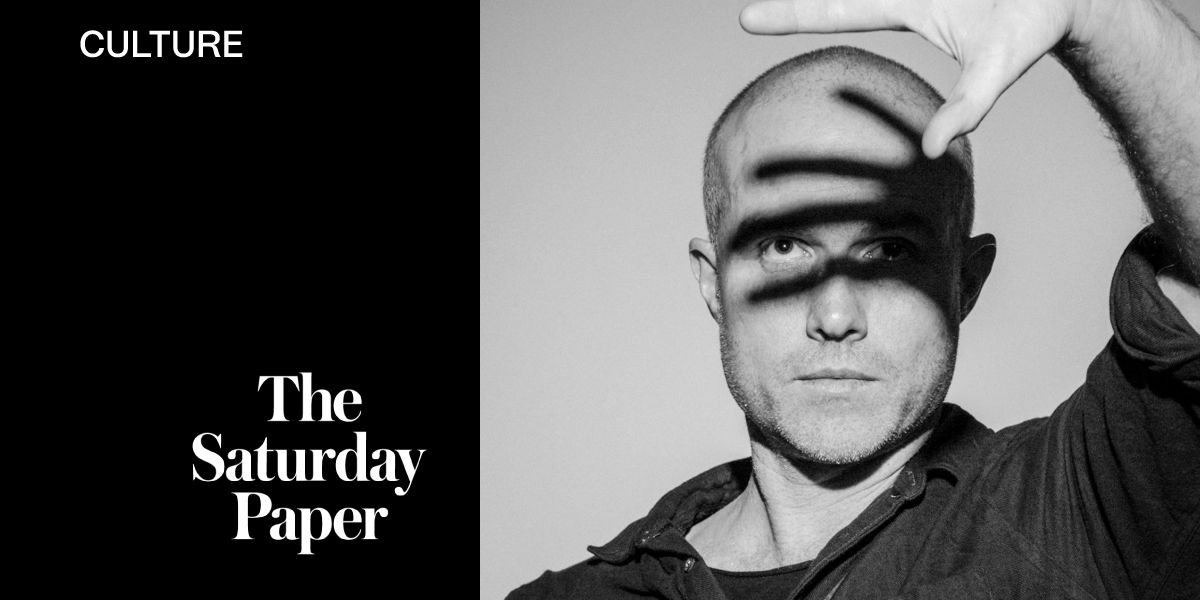
Frost was raised and trained in fine arts in Australia. He studied in Sydney and Newcastle but has long lived in London. For more than a decade he has made portraits of these stunning entities in the largely queer club communities of the night. Immaculately lit, classically framed and posed, it seems improbable that they’re caught on the fly as documentary images, but they are the result of quick instincts, ad-hoc set-up and a cheeky routine of inviting strangers to sit for improvised shots.
Frost’s work is exhibited by London Museum, collected by the Victoria and Albert Museum, published in a prestigious art book, Night Flowers: From Avant-Drag to Extreme Haute Couture, and is now to debut in exhibition at the New Annual festival in Newcastle, where during a late September residency at The Lock-Up he will take new portraits for Night Flowers. His work there as a younger man involved community artwork in the form of collective Octopod, which put on the city’s famous This Is Not Art festival. Now he is returning with pleasure, looking forward to portraying local creatives and community figures.
Originally he took the Night Flowers shots for discipline: inspired by a colleague, he set himself to make a portrait a day. From about 2012 he lingered in Soho, where he was working in graphic design and studio photography, until the dinner crowds cleared and the club world emerged. There he found the most wonderful vision.
“As much as it can look kind of quite comic or grotesque, that’s an expression of how they have felt inside … it’s kind of exorcising those demons.”
“It was like falling down a sort of rabbit hole,” he says. “It was accidental.” Naturally rather shy, Frost made himself approach strangers in the street. Wandering around, sometimes he’d find someone; the next day, perhaps no one caught his eye. “I’d get a super-interesting person one day, and then if the next person’s a little bit more normal-looking, not as extravagant, then I would feel disappointed. So I’d keep looking for someone that was even more extreme than the day or the night before. I would stay out later and later, wandering around, and they slowly started creeping in, club kids and drag queens. They only generally come out at a certain time of night, and I started building up a little bit of a collection.”
These people – astonishing in their colours, forms, implausibility – were dressed up and on their way to particular clubs, so Frost began to attend the clubs. It was before the advent of Instagram, and clubbers were glad of a snapshot. There weren’t many photographers around, phone cameras were still basic, and the looks had taken a lot of work. It was great to get a record of an amazing night.
The nights must have been extraordinary. Think Venetian carnival, think Matthew Barney, Fellini’s Satyricon or Miss Havisham. Or maybe Shaun Tan’s creatures, Tim Burton’s Mars Attacks!, Angela Carter’s unnerving fairytales, The Amazing Digital Circus, Doctor Who – any extravagant hallucinatory fever dream of goth or punk or furries or rococo opera. You will find them in Frost’s photographs.
Ballooned with red latex, peacock-eyed or erotically masked, made up like a demented 1960s mannequin, hectic in necklaces and bones and claws like a shaman or simply like nothing on this Earth, the clubbers of Soho parade in their splendid ephemerality for us in these images. They may seem caged by the photographic frame, but these are no ethnological specimens. Many of them, Frost explains, were young people who had recently moved to London from the regions and were keen to finally express, in the anonymous safety of the big city, their hidden selves or most arcane alter egos. Emerging at the hour when others go to sleep, they come like dreams, walking Frith Street like a runway, commanding the moment, or sweatily dancing inside the club, dissolving before dawn.
That’s where Frost approaches them and invites them – sometimes against understandable hesitation – down a dark lane or into a club corner in search of a black background. Carrying portable kit he hastily sets up the shot, urging his subject to ignore the curious drug dealers clustering around, and snaps what may be a single night’s staging of a costume weeks in the making. A smear of eyeliner, a little white powder around the nostrils – he deftly edits some of the human signs away, but mostly not. The subjects might be surprised by the artistic attention, but they are fashioned for display, and image is everything. An inner nature stupendously manifest in costume and cosmetics is, perhaps especially in the club and queer communities, a form of defiance, definition and determination.
“Sometimes that’s when a lot of these people feel most themselves, when they’re dressed like that,” Frost observes. “As much as it can look kind of quite comic or grotesque, that’s an expression of how they have felt inside and by expressing themselves like that, it’s kind of exorcising those demons.”
Sometimes fresh from disputes with bigots or heckling passers-by, they now stare with regal composure from the photos. After naively assuming that London’s immensity permitted all kinds, Frost is glad to offer a means to reaffirm their dignity. There can be an addiction, too, Frost believes, to the attention, the adoration and admiration. He’s felt it himself, when dressed by friends. “People come up to you and they’re like, ‘Oh, you look fabulous. You look fabulous.’ And I don’t get that walking down the street every day.”
Many of the clubbers work in theatre, accessing props, cosmetics and flamboyance from opera sets and photo shoots, which also form Frost’s daytime work as a studio photographer often employed for theatre marketing. They and he share a continuity between the pragmatics of artifice and the diaphanous possibilities of fantasy, the brisk world of day jobs and the feral spontaneity of the night. There is, he says, “definitely a correlation between the fantasy world and the extravagant costumes that would be made for the stage in opera, and also just the fantasy of opera, these big stories, big dramas, writ large. But then at night-time, you’d have this big drama in reality on the streets, where just the act of walking down the street can be performative. There is a disruption that happens still.”
He barely mentions his theatre and commissioned portrait work, but it is similarly gorgeous and fabulistic. A soprano beauty gazes like a baroque queen through a gauzy peephole. Emma Corrin gambols like a Pulcinella in yellow satin, while Sir Ian McKellen is mischievous in sepia shadows. A chalk-white, paper-ruffed naked woman holds a scarlet cherry exactly over her hidden nipple in work for a German opera company; a luscious array of vegetables is listened to by a sound microphone in modern still-life; a marble-pale woman, immersed in hot-pink liquid, seems untroubled by a lascivious trickle of plastic pink fluid from her ear. The influence of baroque old masters is evident in Frost’s love of colour and contrast, rich draped backgrounds, chalky flesh and luxurious textiles. Props appear, such as theorbos and pomegranates, and Frost loves a decadent chiaroscuro. Yet there is always a glint somewhere, a hint of camp – not derisive, only amused.
In his Night Flowers he is pleased by the juxtaposition of a clammy and crowded club setting and the capsule of quiet he creates in a portrait often taken off the side of a dance floor. Think of the ocean, he tells his subjects as they struggle to ignore their friends’ catcalls or wriggle in powder-induced agitation. But allowing people their humanity and their dignity is important.
“I do like documentary photography that is more fly-on-the-wall type stuff, but I feel, personally, in some of these clubs, that that can be a bit invasive because you should have spaces where you’re not sticking cameras in people’s faces; there’s [the question of] permission to take people’s photos if they allow it, but they should also be able to say no. And I do really respect it when I ask someone for their photo and they’re like, ‘No, not tonight’ or, ‘I’m not in the mood at the moment.’ ” His subjects, too, especially since the rise of social media, are increasingly preoccupied with controlling their image, their brand. They sometimes baulk at his pose directions, decide to disown a look that Frost has documented, request photos be taken down. He assents, but he does see a change, and how this expresses shifts in the traditional subjectivity of photographic subjects.
Are his works documentary, portraiture, marketing, creative artworks? He doesn’t believe they are marketing pieces for individual self-branding. “The Night Flowers stuff I definitely see as documentary photography, even though it doesn’t necessarily look like it. I mean, it’s somewhere between fine art, portraiture and documentary.
“[The works] are a documentation of what people are doing at this time and place. And sometimes I’ll take photos of people that are wildly inappropriate in their cultural appropriation as well. I don’t agree with what they’re doing, but as a documentary photographer, I want to capture this for future posterity. I try and avoid taking photos of people that are doing it as fancy dress: to me, there’s a real distinction, and you can often tell when someone is just dressing up as a laugh. I’m generally after the people that are doing it to express themselves rather than as an expression of fun.”
What was not so much fun, he recalls, was trying to make a living during the Covid lockdowns in London, when theatre work stalled. He decided to persist with the club portraits in a moment when there was no clubbing or even any socialising. He asked clubbers to pose on their own cameras through video links and took photos of the subsequent live images on his iPad. The Social Distancing series, like Night Flowers, shows incredible confections of human ingenuity – especially with limited access to materials – and display, the iPad frame set among baroque arrangements of lush flowers, the imprisonment of the subjects’ hallucinatory beauty reflecting the stasis that had overtaken the creative world.
It was quite a painful process, Frost remembers with a laugh, as tech connection fiascos joined with poor-quality images. He spent much of each shoot stifling hay fever. “I was constantly sneezing because I kept bringing in more and more flowers and then letting them die, and the photo series would evolve over the days as the flowers were wilting into dead flowers, and bringing new flowers and building it up more and more.”
If he gets an image that he feels is of sublime beauty, he says, then he’s happy. “If it’s just one image, then I feel, ‘Okay, that one’s a beautiful image’. Then I feel like the night’s been a success. And I guess it’s trying to find those moments of sublime beauty amongst this chaotic environment that I find interesting and a challenge to do. That’s also why it’s not so much ‘reportage’ and ‘style’. I’m looking for those but also to create a moment with someone that can feel a little bit timeless as well. When you know you’ve got it, you feel like you’ve got it.”