
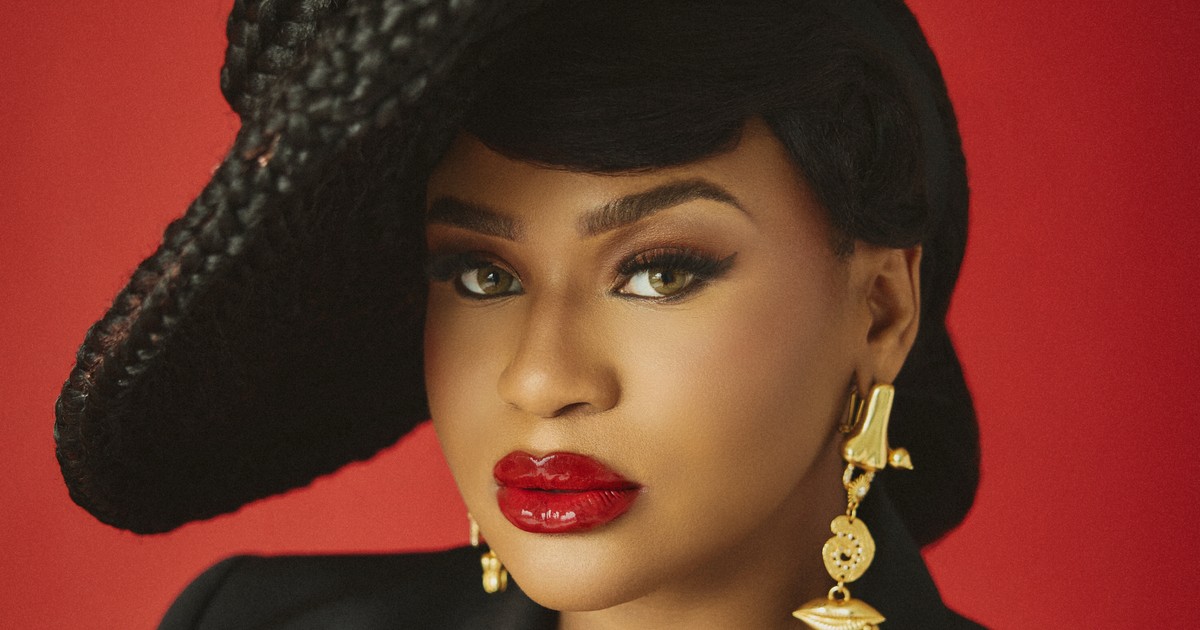
In 2015, Divine says she was struggling with chronic inflammation, fatigue, allergies and diabetes, while conventional treatment offered little relief.
Her search for alternatives led her to herbal formulations, plant-based nutrition and other approaches to holistic wellness. Within months, she says her health had improved dramatically.
That turnaround became the inspiration for Herbal Renaissance, a US-based wellness company that sells herbal products across different markets.
Speaking to Business Insider Africa, Divine said the business was born from a promise she made during that period.
“Herbal Renaissance grew directly out of my own health transformation and the realisation of a prayer I made to God: ‘Bless me so I can bless others,’” she said.
“Experiencing that turnaround firsthand made me realise how many people feel trapped in their own bodies without practical solutions. I built this company to give people the education and tools to take control of their health naturally.”
Divine says Herbal Renaissance has since accumulated more than 10,000 customer reviews, an indication, in her view, of the growing demand for plant-based wellness products.
But her ambitions stretch beyond the American market.
Looking to Africa for ingredients
One of Herbal Renaissance’s products, a tea called Good Memory, uses herbs sourced from Africa.
The relationship began in 2024 when Divine travelled to Nairobi, Kenya, and met Anne Mwaniki, founder of Sweetwaters Eco-Farm.
Divine said the encounter reinforced her belief that Africa could play a much bigger role in the global wellness economy.
“I was immediately struck by the exceptional potency of her herbs and the profound care she poured into sustainable cultivation,” she told Business Insider Africa.
“I’ve always known a plant’s therapeutic power is deeply tied to its origin and the devotion of its caretakers. Africa possesses some of the richest biodiversity and natural resources on the planet, and the vitality of the botanicals reflects that fertile soil.”
Working across borders has not been without difficulties.
“International logistics and customs certainly come with supply chain challenges, but the unmatched quality makes it entirely worth it,” Divine said.
Herbal Renaissance subsequently incorporated the Kenyan-sourced botanicals into Good Memory, which the company markets as a product designed to support cognitive function and mental clarity.
For Divine, however, sourcing from Africa also raises a bigger question: how the continent can move from supplying raw materials to building globally recognised wellness businesses of its own.
Keeping more value in Africa
Africa has long exported agricultural commodities and natural resources while much of the higher-value processing, branding and distribution takes place elsewhere.
Divine believes entrepreneurs in the herbal sector have an opportunity to challenge that model.
“The blueprint comes down to one core principle: local value retention paired with global distribution,” she said.
She points to Herbal Renaissance’s own operating model. Although the company sells internationally, Divine says its workforce and most of its supply chain remain anchored in the United States.
“We are an American company. One hundred per cent of our team members are US citizens paid living wages, and 96% of our vendors and suppliers are domestic, yet our market is truly global thanks to targeted digital marketing and e-commerce.”
She believes African businesses can follow a similar formula by retaining production and employment locally while using digital platforms to reach customers abroad.
“Employ local communities, protect indigenous knowledge, and pay fair, sustainable wages across processing and packaging,” Divine said.
“Use social platforms and global e-commerce infrastructure to sell directly to international consumers at full margin. When you keep production ethical at home and market fearlessly abroad, the entire community thrives.”
That shift could be particularly important as global demand for natural, botanical and plant-based wellness products continues to expand.
Divine argues that Africa should aspire to become more than a source of ingredients.
“Africa should not just be a raw supplier to the wellness industry — it has the potential to lead it,” she said.
“The continent is an extraordinary repository of nutrient-dense botanicals, ancient healing methodologies and agricultural biodiversity that the broader market has barely tapped into.”
She believes technology is lowering some of the barriers that once prevented smaller producers from reaching international consumers.
“With the rise of digital infrastructure, global logistics and direct-to-consumer commerce, traditional gatekeepers and exploitative middlemen are no longer barriers to entry,” she said.
“African founders and nations now have the tools to control the entire narrative — formulating, branding and exporting finished, high-value products directly to a worldwide customer base.”
Building a profitable wellness brand
The growing popularity of herbal and plant-based products has also turned wellness into an increasingly competitive business.
Divine says profitability is possible, but simply entering the market because it is fashionable is unlikely to produce a durable company.
She identifies customer understanding, trust and distribution as the pillars of a successful brand.
“It starts with deep customer understanding — spotting unmet needs, asking what’s missing from standard solutions, and figuring out how to make existing products significantly better,” she said.
Trust, she added, becomes particularly important because customers are buying products connected to their health.
“High customer lifetime value in wellness relies entirely on trust. You must genuinely care about empowering people. Good intentions and consistent benevolence aren’t just values — they’re the foundation of customer loyalty.”
The third ingredient is visibility.
“Marketing is the engine of any scalable enterprise. Without distribution, you have an expensive hobby, not a business,” Divine said.
“But marketing only converts consistently when you believe wholeheartedly in your product. Consumers have sharp radars; they can instantly discern genuine conviction from opportunistic marketing.”
For entrepreneurs considering the sector, Divine advises against treating wellness as simply another emerging business opportunity.
“Wellness is not an industry you enter just to chase a trend. It requires a genuine calling. It’s a heart posture,” she said.
“When you build a brand in health and wellness, you are directly impacting someone’s mind, body and quality of life. That comes with immense ethical responsibility.”
Her advice is to begin with education and build products around genuine consumer needs.
“If you are truly called to empower others and ready to shoulder the responsibility that comes with their health, start with education, build products you would give your own family, and let your purpose lead your strategy.”
Where herbs and modern medicine meet
The growth of herbal products has also raised questions about their use by people facing serious illnesses.
Divine believes herbal wellness should complement, rather than replace, conventional medicine, particularly when dealing with complex medical conditions.
“To me, the most effective path forward is integrative. Ancient botanicals and modern medicine should work hand-in-hand,” she said.
She sees modern medicine as essential for diagnosis, testing, check-ups and emergency care, while nutrition, lifestyle changes and some botanical products may have a complementary role in general wellness.
“People shouldn’t feel forced to choose between the two,” Divine said.
“Combining modern diagnostic clarity with nature-backed holistic support gives individuals the strongest possible foundation to reclaim their vitality.”
For Divine, the larger commercial opportunity lies in connecting traditional knowledge with modern branding, technology and global distribution.
And for Africa, she argues, the opportunity is not merely to grow the plants feeding the global wellness boom, but to own more of the businesses, brands and intellectual property built around them.
“Reclaiming that supply chain isn’t just a massive commercial opportunity,” she said. “It is an engine for long-term economic sovereignty.”