
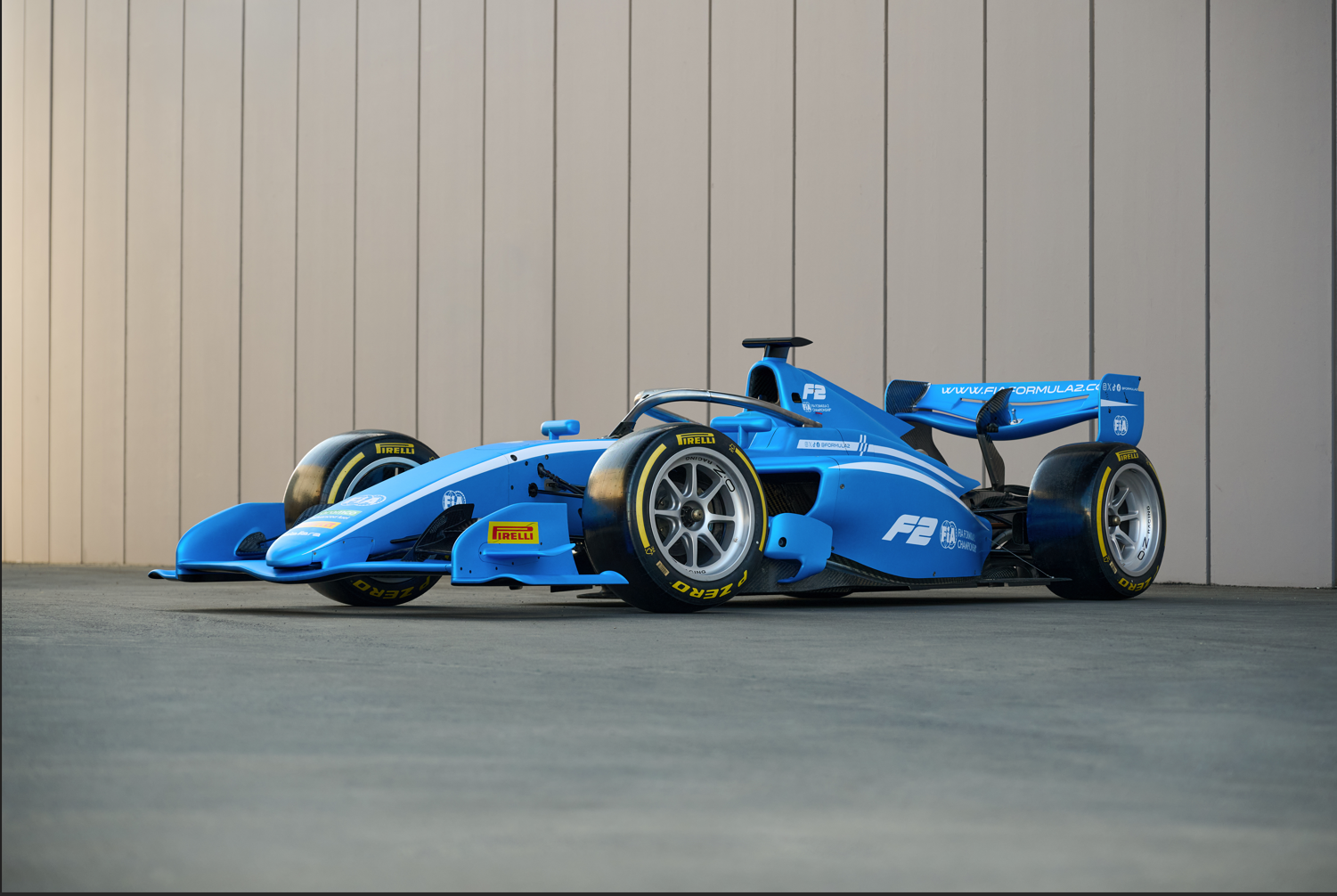
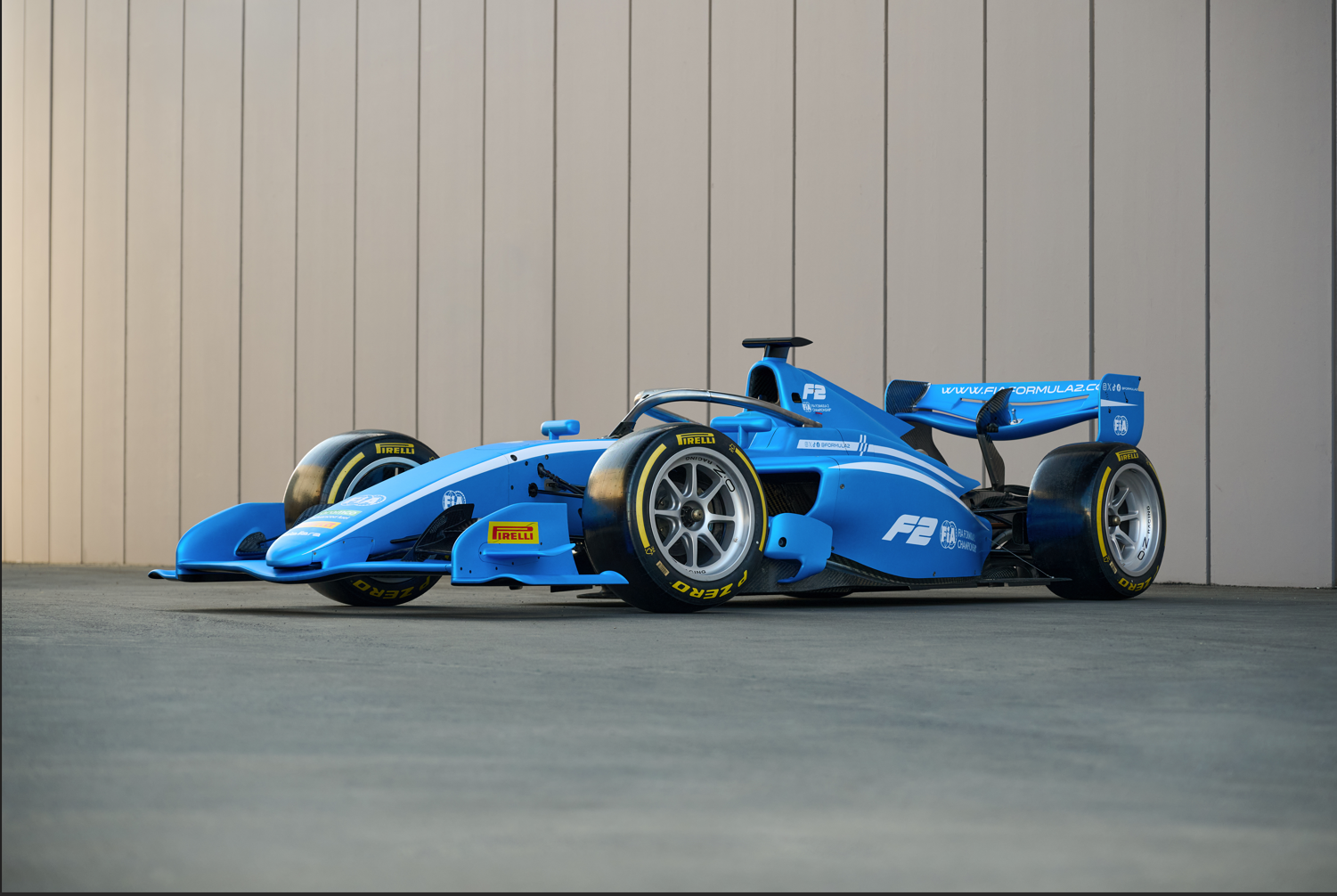
 The new design of F2 car to begin racing from 2027. Image: Formula 2
Revealed in the Formula 1 paddock at Monza ahead of the Italian Grand Prix, the new-generation machine builds on the car introduced for the 2024 season, with much of the existing package remaining in place.
The category will continue with the current Dallara chassis to help limit costs, while changes to the front and rear wings are intended to make it easier for drivers to remain close to the car ahead.
The changes also bring the appearance of the car more closely in line with the design philosophy introduced to Formula 1 in 2026.
The current F2 car was first unveiled in 2023 before being raced across the 2024-26 seasons, having itself been designed to mirror the previous generation of F1 machinery.
F2 CEO Bruno Michel said keeping the existing chassis while focusing development on the aerodynamic package had allowed the category to balance cost control with its goal of remaining the final preparation step before Formula 1.
“When working on this new car, our first goal was to ensure it remains the perfect tool to prepare drivers for F1,” Michel said.
“Together with the FIA, we have opted for the current chassis and focused on redesigning the front and the rear wings.
“This enables us to keep the costs managed, while bringing the design closer to the look of an F1 car while enhancing the F2 car’s ability to deliver close racing.”
Say hello to the new #F2 car! 🤩👋#RoadToF1 | @fia pic.twitter.com/6MLFvvDEzf
— Formula 2 (@Formula2) September 5, 2026
The new machine will continue to use the existing 3.4-litre turbocharged V6 Mecachrome engine, producing 620 horsepower, while retaining the 18-inch Pirelli tyres currently used by the championship.
Aramco will continue to supply the advanced sustainable fuel introduced to F2 in 2025.
One of the most significant changes will be the introduction of an on-board starter, allowing drivers to restart the car themselves after spinning or stalling rather than potentially being left stranded.
Hewland has updated the existing six-speed sequential gearbox to integrate the new starter system.
“We have added an on-board starter that will simplify the operational side for the teams and will allow the drivers to restart their car after spinning or stalling on track, and we’ve been continuing our work with our partners Aramco and Pirelli on driver preparation, sustainability, and providing the fans with a great show,” Michel said.
“Our fans expect the F2 races to be highly entertaining and safe, and this new kit will deliver exactly that.”
Braking performance, steering effort and cockpit ergonomics will remain to the FIA standards introduced in 2024, while the existing Marelli electronics and hydraulics package will stay in use.
It will meet the latest FIA safety standards and continue to feature the F1-specification titanium Halo, with the survival cell incorporating Dallara’s carbon and aluminium honeycomb structure and Zylon anti-intrusion panels.
FIA President Mohammed Ben Sulayem said the revised package would further develop F2’s role in preparing young drivers for the highest level of single-seater competition.
“Formula 2 is where the next generation of top drivers are made,” Ben Sulayem said.
“The new 2027 car raises the bar on safety, delivers closer racing, improves accessibility, and reinforces our commitment to sustainability.
“Developed with Formula 2 and our technical partners, this car is designed to push young drivers and prepare them for the highest level of competition, while providing fans with even better racing.
“It is a key step in strengthening the FIA’s single-seater pathway and developing the champions of tomorrow.”
Formula 1 President and CEO Stefano Domenicali described F2 as the “ultimate proving ground” for aspiring F1 drivers and welcomed the latest evolution of its machinery.
“This new car is another important step forward, combining innovation, safety and closer racing while maintaining the level playing field that allows drivers to showcase their ability,” Domenicali said.
The 2027 car made its track debut at the Circuit de Barcelona-Catalunya in June, with Dallara carrying out further aerodynamic and wind tunnel work since then.
Teams are scheduled to receive their first upgrade kits in December, with a second kit to follow in January ahead of the start of the 2027 season.

Image: Formula 2

Image: Formula 2

Image: Formula 2

Image: Formula 2