
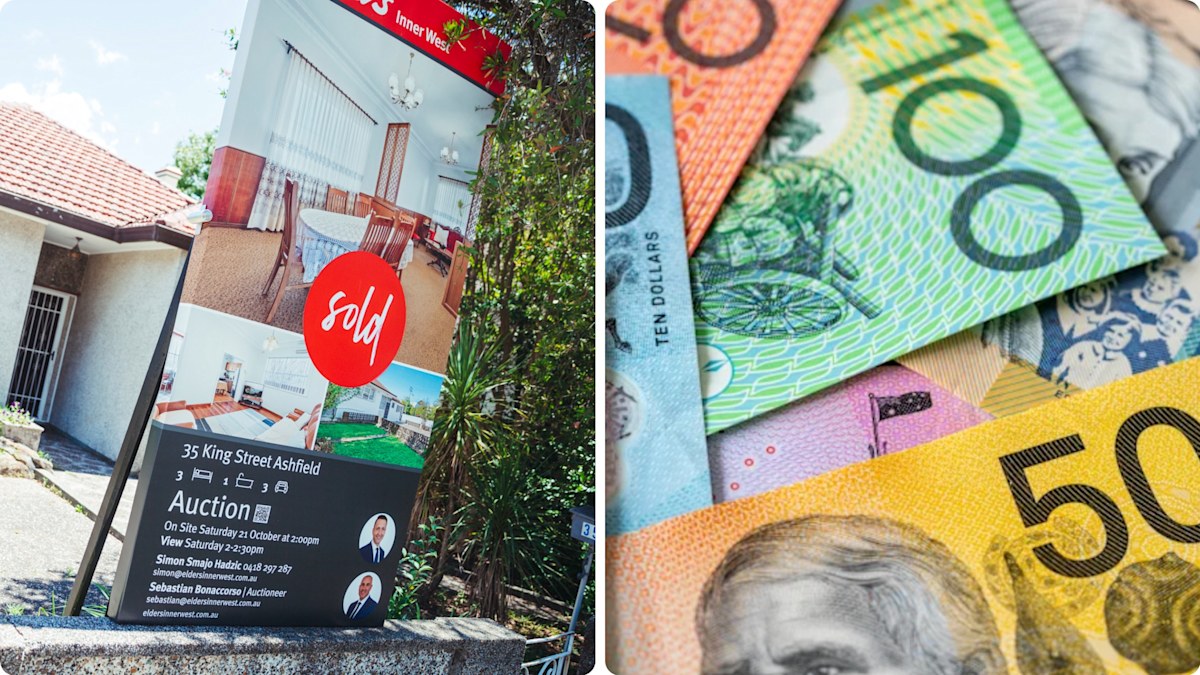
More than 300,000 Australians have now purchased their first property using the federal government’s five per cent deposit scheme – but the affordable path to home ownership comes with a quiet catch.
A surge of young people who used the scheme to break into the competitive property market did not need to save for a 20 per cent deposit, with banks also waiving the pricey Lenders Mortgage Insurance (LMI).
Many first home buyers have entered the property market with the five per cent deposit scheme. But did it come at a secret price? Nine
However, mortgage brokers warn this scheme may have backfired for some buyers after watching the property market’s radical price correction.
According to FinSavvy director and co-founder Sina Enayati, borrowers who were approved for a mortgage using a deposit less than the traditional 20 per cent could be trapped with their lender for years.
Many banks and lenders approving or refinancing a mortgage where the loan versus equity (LVR) is below 80 per cent will ask for Lenders Mortgage Insurance (LMI).
Only participating lenders allow refinancing under the scheme, which would again waive LMI.
If a borrower wants to switch to a non-participating lender with a competitive rate, they will lose the benefit of the scheme.
“If a buyer is only going in with a five per cent deposit, if market goes down, they’ve lost money, but it’s also kind of trapping them into that mortgage,” Enayati said.
“And there is [the problem of] lenders’ mortgage insurance, so that’s a trap.
“You can still refinance out, yes. However, it [may] come with an insurance expense, which means it wouldn’t be worthwhile.”

FinSavvy director and co-founder Sina Enayati said the scheme is trapping buyers into a mortgage with their lender. Supplied
LMI is typically about one and five per cent of a loan’s total amount.
Research from Canstar found that, for an average property valued at $600,000 and a loan term of up to 30 years, a borrower would pay about $31,008 in LMI.
Enayati said thousands of buyers who purchased a home using the scheme are now essentially mortgage prisoners, with conditions attached to refinancing if rate increases strike.
Economists from Commonwealth Bank, ANZ and NAB forecast a rate hike in November, which would raise the cash rate by 0.25 percentage points to 4.60 per cent.
Many of these same home owners are also at risk of slipping into negative equity.
In Sydney, house prices plummeted 4.6 per cent in the first full quarter since the federal budget.
Melbourne house values have also dropped by an average of 6.3 per cent since October 2025.
“If buyer goes in with a five per cent deposit, their loan amount is quite close to the property that they purchased,” Enayati added.
QuickPath Lending founder and broker Jacob Nutt said first homebuyers need to exercise patience.
The downturn may have left them financially exposed and selling or refinancing in the near future would come at a big price.
“They’re kind of stuck… they don’t have the ability to move because they’re going to lose money and have to pay back more than they actually owe,” Nutt told nine.com.au.
“Obviously, they’re not going to be building any equity in the property for a while because the property prices have been stable.
“So they’re kind of very much stuck where they are.”

Mortgage holders may be unable to refinance without paying LMI unless their loan versus equity is below 80 per cent. Getty
Both Nutt and Enayati say the tide will eventually turn for young buyers feeling burned by the price downturn.
Most analysts expect the downturn to correct and begin a modest recovery during early 2027.
“Holistically, [first homebuyers] are probably not any better or worse off,” Nutt added.
“If someone can buy a property, they’re going to be better off. But they’re going to have a lower home value.”
The information provided on this website is general in nature only and does not constitute personal financial advice. The information has been prepared without taking into account your personal objectives, financial situation or needs. Before acting on any information on this website you should consider the appropriateness of the information having regard to your objectives, financial situation and needs.