
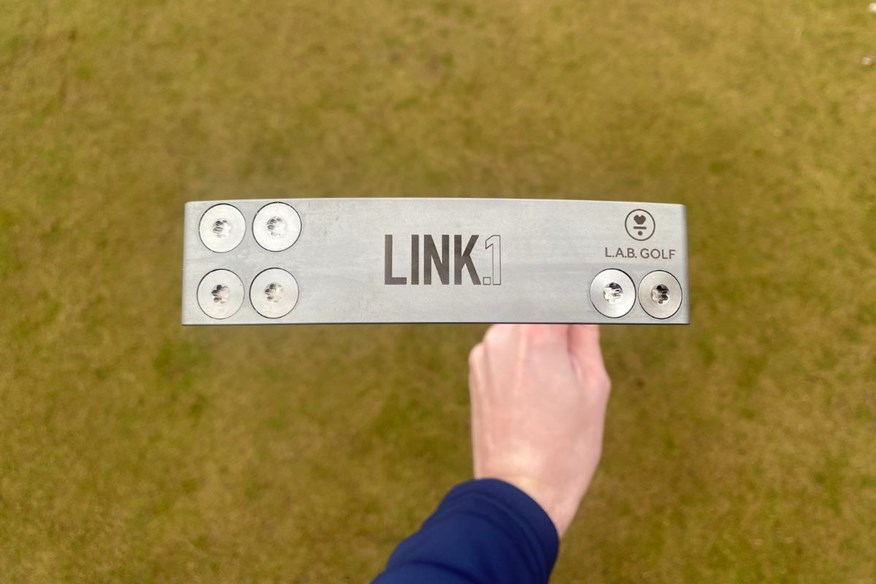
The L.A.B. Golf Link.1 is one of the original blade zero-torque putters, but our expert still sees it as one of the best options in 2026…
L.A.B. Golf are known mainly for their somewhat unconventional, oversized zero-torque putters, but they have had a blade zero-torque putter in their lineup since 2023 – after a successful pre-launch in 2022 – the Link.1.
While models such as the DF2.1 and Mezz.1 established L.A.B. Golf’s reputation for doing things differently, the Link.1 was designed to appeal to golfers who loved the benefits of zero-torque but couldn’t get comfortable with the brand’s more choice profiles.
The idea was simple: take a familiar blade profile and make it behave like a zero-torque putter.
The result was the Link.1, a traditional-looking blade made from 303 stainless steel but engineered using the company’s Lie Angle Balance technology. Rather than behaving like a conventional blade with toe hang and a naturally rotating face, it is designed to keep the face square throughout the stroke.
L.A.B. Golf have developed the concept further with the Link.2.1 and Link.2.2. The newer models are heel-shafted and have a more modern appearance, but the Link.1 remains an important model in the range because, in many ways, it offers the cleanest interpretation of what a traditional blade and zero-torque technology can look like together.
So, with two newer versions now available, is the Link.1 still worth considering?
The results from our 2026 putters test don’t make for the most compelling argument in favor of the Link.1, but my on-course experience with this putter is much more positive.
Quick verdict
The L.A.B. Golf Link.1 remains a compelling option for golfers who want zero-torque technology in a genuinely traditional-looking package. Compared to the newer Link.2.1 and Link.2.2, its appearance makes it immediately clear what it is: a classic blade with some very clever technology hidden inside.
That traditional look can make it easier to set up behind the ball, while its Lie Angle Balance technology provides a level of stability and face control that you simply wouldn’t expect from such a compact blade. It may not have the newer models’ heel-shafted configuration or deep fly mill face, but the Link.1 still offers one of the cleanest routes into L.A.B. Golf’s zero-torque technology.
Pros & Cons Ratings Specs Features
Pros Extremely stable for its sizeAmazing roll and feedbackComfortable step into a zero-torque model Cons Not as much of a traditional blade look as the Link.2.1 and Link.2.2
Looks, Sound, and Feedback
Technology and Components
Distance Control and Roll
Forgiveness and Stability
Overall
Loft 2° Lie angle 65° – 75° Length 29″ – 38″ 303 Stainless steel100% CNC Milled
Looks, Sound, and Feedback: 4/5
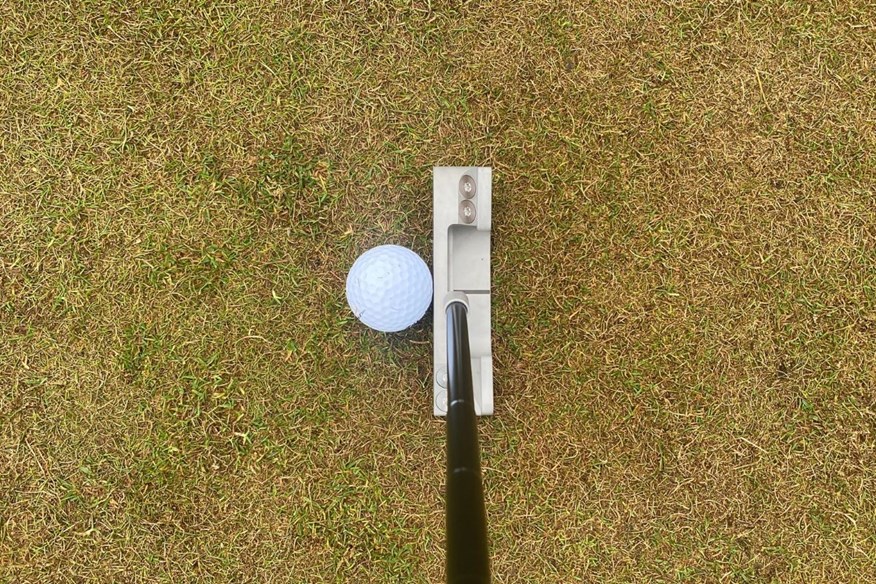
Of the three Link models, the L.A.B. Golf Link.1 is arguably the easiest to understand visually.
The Link.2.1 is designed to look like a traditional heel-shafted blade, but the pronounced bend required in the shaft means it doesn’t quite look like a conventional blade once you put it behind the ball. The Link.2.2 has a wider, square-back profile, which makes it feel more like a crossover between a blade and a compact mallet.
The Link.1 doesn’t have the same identity crisis.
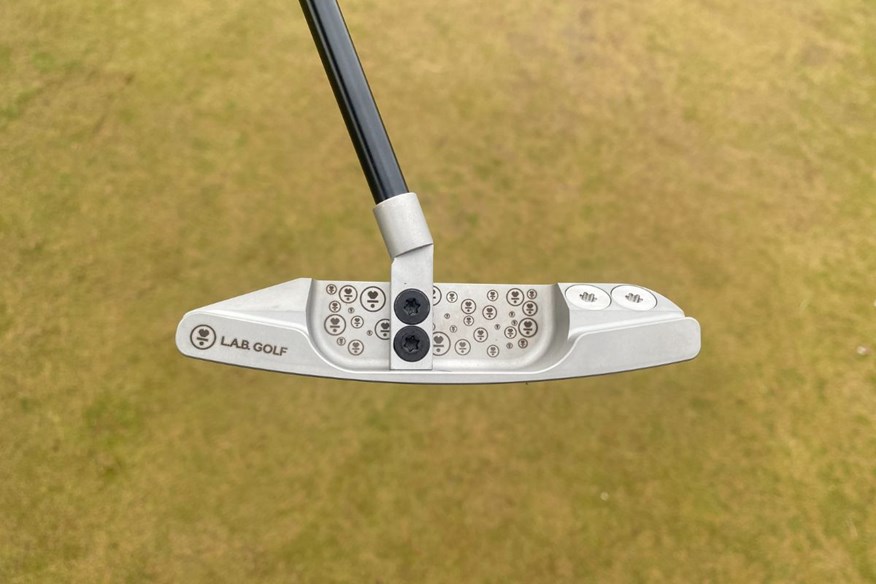
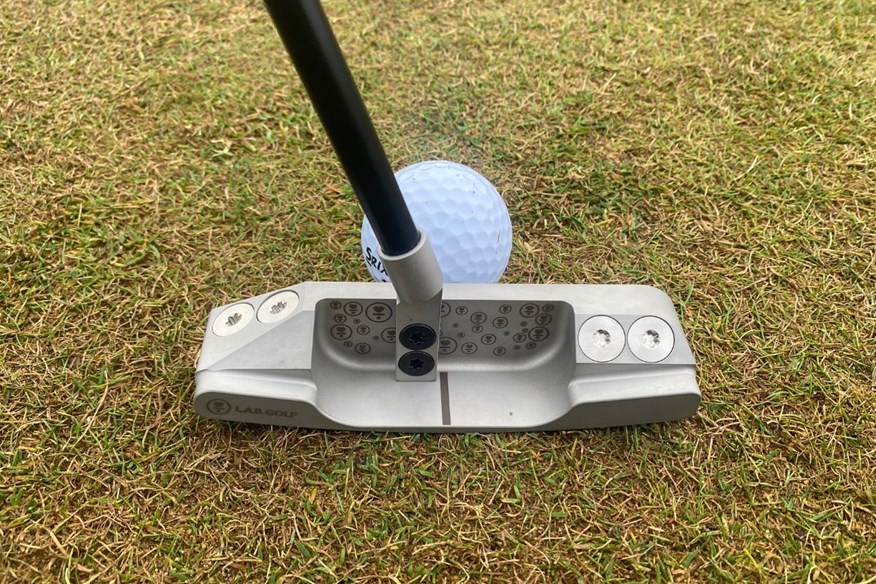
It looks like a traditional blade and, importantly, it looks like a L.A.B. Golf putter at the same time. There is no attempt to disguise the technology by forcing a heel-shafted appearance, and for me that makes it easier to accept what the putter is designed to do.
That was one of my biggest issues with the Link.2.1. Its traditional blade-inspired shape occasionally encouraged me to make a traditional blade stroke, releasing the head through impact. With the Link.1, I didn’t ever find myself treating it as anything other than a zero-torque putter.
The shape is familiar, but it doesn’t convince you that you’re using a conventional blade.
For that reason, I actually found it easier to trust.
The Link.1 is compact and relatively narrow from heel to toe, giving it a classic appearance that will appeal to golfers who don’t enjoy the oversized look of many modern mallets. It doesn’t have the wider body of the Link.2.2, so there is less visual reassurance behind the ball, but that is the compromise you make for its cleaner blade profile.
The feel is also different from the newer models.
The Link.2.1 and Link.2.2 both use a deep fly mill face, producing a firmer impact sensation and a low, clicky sound. The Link.1 doesn’t have that same face technology, and as a result, the feel is softer, without being soft.
Being softer than the new Link models, it is slightly less responsive. However, with the center-shafted configuration, I feel more in-tune with the putter face at impact, and I have a better understanding of whether the face is neutral, open, or closed compared to the Link.2.1 and Link.2.2.
For me, the Link.1’s biggest strength from a visual perspective is its honesty. It doesn’t try to convince you that it is a conventional blade. It looks traditional enough to appeal to blade players, but different enough that I found it natural to approach it as a zero-torque putter.
Technology and Components: 4.5/5
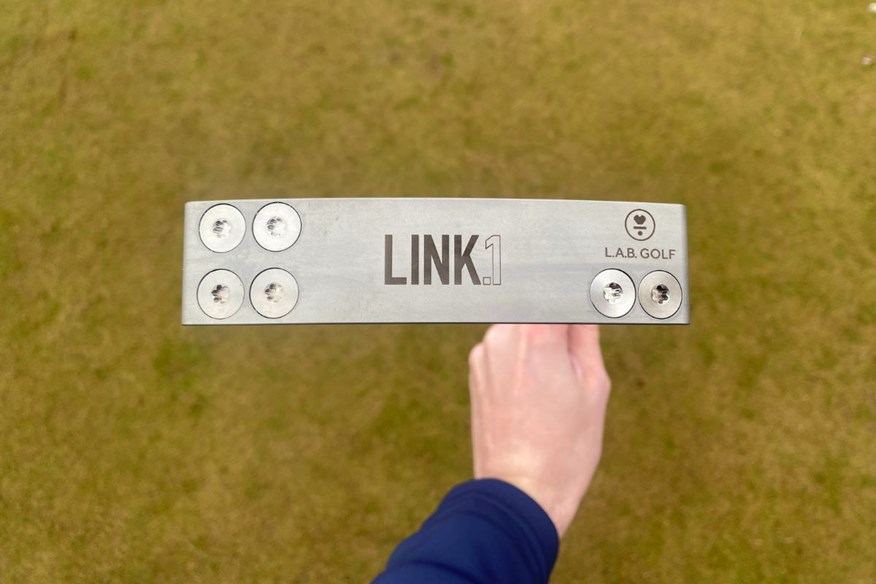
The head is made from 303 stainless steel and is 100% CNC-milled in the USA. The key to making the design work is the weighting system, with four screws positioned on the heel side and six on the toe side. These are carefully configured during the build process to achieve Lie Angle Balance across different lengths and lie angles.
Traditional blades typically feature toe hang and are designed to rotate to some degree during the putting stroke. The Link.1 is engineered to resist torque and allow the face to remain naturally square rather than asking the golfer to release the putter on the through stroke.
Like the Link.2.1 and Link.2.2, the idea is to take the responsibility of squaring the face away from the golfer and allow the technology to do all of the work.
The Link.1 was designed to work with a conventional-style grip rather than L.A.B. Golf’s forward-press PressGrip designs. The stock version comes with the company’s Simple Rubber grip and a matte black steel shaft, while the standard build is available at a 69° lie angle in 33, 34 and 35-inch lengths.
That conventional setup makes the transition into the Link.1 from a blade putter relatively straightforward.
You aren’t being asked to adopt an exaggerated forward press or radically change how your hands sit on the grip. Instead, the technology is built into the putter’s balance.
Ultimately, that is what makes the Link.1 so clever.
It doesn’t need an unusual-looking mallet head or an oversized profile to deliver zero-torque performance. Instead, L.A.B. Golf have taken a recognizable putter shape and engineered it to behave in a novel way.
Distance Control and Roll: 5/5
Distance control is one of the strongest aspects of the L.A.B. Golf Link.1. Like the newer Link.2.1 and Link.2.2, the ball comes off the face with a very consistent roll, but the Link.1 has a slightly softer and less aggressive response than its successors.
The newer models’ deep fly-milled faces produce a firmer, clickier impact and a slightly more positive feel off the face. The Link.1, by comparison, feels smoother and more controlled, which I found particularly useful when judging pace.
The Link.1 feels incredibly predictable through impact. That helped me focus almost entirely on speed, and I rarely left myself with too much work coming back.
The roll itself is extremely true. The ball gets moving quickly without feeling as though it jumps off the face, and there is a nice balance between the softer feel and the positive roll.
The slightly softer response makes the Link.1 feel less lively than the Link.2.1 and Link.2.2, and that gave me more confidence when trying to control both long lag putts and shorter putts where pace is equally important.
Forgiveness and Stability: 4.5/5
The L.A.B. Golf Link.1 is a great example of why you shouldn’t judge a putter purely by its profile. On paper, its compact blade profile doesn’t suggest a huge amount of forgiveness, especially when compared to the larger MEZZ.1 Max or DF2.1 models in the L.A.B. Golf range. But once you put it in play, it feels considerably more stable than a traditional blade.
The Lie Angle Balance is more effective than I imagined. I don’t know why I expected the Link.1 to feel less resistant than a DF3 or OZ.1 given it’s the same technology, but I did. It could be because with a conventional blade, the head is designed to open and close because of its toe-hang profile. But the Link.1 is zero-torque, and it feels very stable through the stroke and impact, just like the larger L.A.B. Golf models.
Off-center strikes are also handled better than you would expect from such a compact head. The Link.1 isn’t going to offer the same outright forgiveness as one of L.A.B. Golf’s larger mallets, but misses from the middle didn’t result in dramatic losses of speed or distance.
Despite being very similar in profile, the Link.1 felt easier to trust than the Link.2.1 because it doesn’t try to mimic a conventional heel-shafted blade.
The Link.1 proves that you don’t necessarily need an oversized mallet to benefit from excellent stability. It may look like a compact blade, but through the stroke it feels much more stable and forgiving than its size suggests.
L.A.B. Golf Link.1 putter test results
Overall – 87 (out of 110)Zero-torque category – 32 (out of 37)Roll52/70T35/110Feedback45/70T54/110Stability49/70T48/110Alignment30/70108/110Looks27/70T103/110
Final Verdict: 4.5/5
The Link.1 may no longer be the newest blade in the L.A.B. Golf range, but I don’t think the arrival of the Link.2.1 and Link.2.2 makes it irrelevant.
In fact, for some golfers, it could still be the best option of the three.
The Link.2.1 will appeal to golfers who want the closest possible visual connection to a traditional heel-shafted blade, while the Link.2.2 offers more confidence through its wider profile.
The Link.1 sits somewhere else entirely.
It looks traditional, but it doesn’t try too hard to convince you that it behaves like a conventional blade. For me, that makes it easier to trust the zero-torque technology and avoid falling into the habit of releasing the putter head through impact.
If I had the choice of all three, I would opt for the Link.1. I didn’t think that would be the case, and I actually thought I would game the Link.2.1.
If testing all three Link putters has taught me anything, it’s that it’s important to at least try before you buy, or have a fitting.