
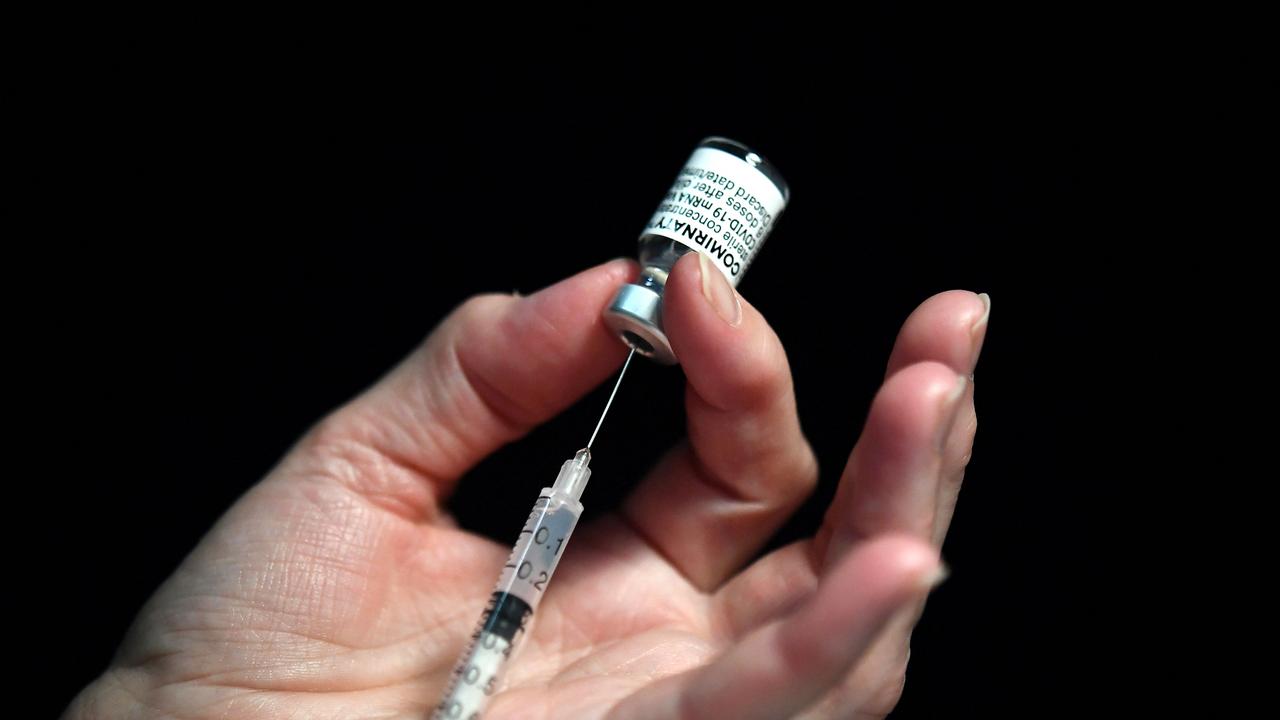
The Covid vaccine will soon no longer be free for all, but doctors are warning Australians not to let the move lessen their concern about the potentially deadly virus.
From 1 October, Covid-19 vaccines will be funded under the National Immunisation Program (NIP), – which is Australia’s established program for nationally funded vaccines – replacing the stand-alone National Covid-19 Vaccine Program (NCVP) established during Australia’s Covid-19 pandemic response.
Under the NIP, funded Covid-19 vaccines will no longer be available as a universal program. Instead, states and territories will manage ordering, distribution, reporting and program support for Covid-19 vaccines under the NIP, in line with routine processes used for other NIP vaccines.
See how the changes impact you below.
WHO WILL STILL GET THE VACCINE FOR FREE?
Free Covid-19 vaccines will be available for certain groups
All adults aged 75 years and over (one dose every 6 months)
All adults aged 65–74 years (one dose every 12 months)
Aboriginal and Torres Strait Islander people aged 50–74 years (one dose every 12 months)
All adults aged 18 years and over with severe immunocompromise (one dose every 12 months).
Australians not eligible for the free vaccine that want it will have to pay.
WHY IS THE CHANGE HAPPENING?
The Department of Health, Disability and Ageing said Australia’s Covid-19 “context has changed”.
“The NCVP was established under emergency arrangements to support broad access to Covid-19 vaccines during the pandemic response when most people had little or no immunity against the disease. Covid-19 is now endemic in Australia and continues to disproportionately affect certain populations.
“Based on current evidence and the changed epidemiology, the vaccination program will focus on maintaining protection against severe Covid-19 in those most at risk.”
HOW SERIOUS IS COVID IN AUSTRALIA?
About 62,000 cases of Covid-19 have been reported across Australia so far this year.
That’s compared to 185,000 in 2025, and more than 10 million in the pandemic’s peak in 2022.
WHAT DO DOCTORS THINK?
Doctors say the change was “inevitable” but it should not lessen serious concerns about the virus.
“We need to handle the commentary really carefully and make sure that people don’t see this as a sign that Covid is less important, or less of a concern, because it’s definitely not the case and not the intention,” Professor Paul Griffin, Director of Infectious Diseases at Mater Health Services, told newsGP.
“I’ve seen people from my practice in hospital due to Covid and unfortunately not survive, not that long ago.”
IS THERE REASON TO BE CONCERNED?
The GP and Immunisation Coalition has expressed concern that the lack of consistency between state and territories around vaccine distribution may make it challenging to ensure vaccines are available to the right people when needed.
“That’s one of the ironies about Covid; the Commonwealth showed it could put vaccines directly into our fridges,” Chair Dr Rodney Pearce said.
“If the states do the same thing all around the country that would be good, but the states do different things, so you’ve just added a level of complexity and you’re adding some resistance or hesitancy because it’s not the same advice everywhere.”