
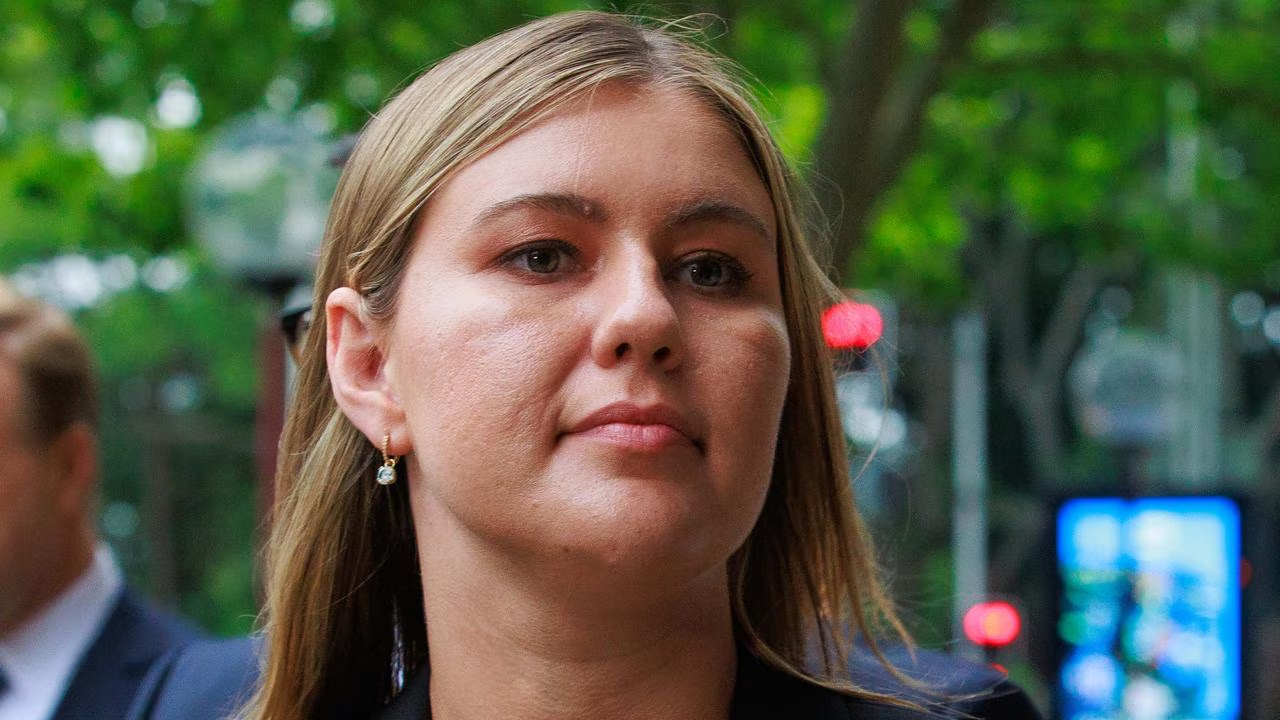
Brittany Higgins has helped launch a landmark survey to examine how sexual assault victim-survivors feel about their confidential counselling notes being accessed by others during legal proceedings, after her own Canberra Rape Crisis therapy notes were subpoenaed, with elements of the notes ultimately making their way to the media.
The survey, which is led by Dr Rachael Burgin at Swinburne University, is the first in Australia to examine how aware survivors are that their counselling notes can be accessed via subpoena, and how they feel about that practice.
The survey, which is open to any survivor aged 16 or over, also examines whether the risk of subpoenas impacts survivor willingness to access counselling, report to police, or engage with legal systems, and their experiences when doing so.
In 2019, Ms Higgins sought treatment and therapeutic support from the Canberra Rape Crisis Centre after reporting being raped at Parliament House.
Bruce Lehrmann was later charged with rape, but the trial was aborted in 2022 due to jury misconduct.
Later, during a civil defamation suit, Justice Lee found that Lehrmann had raped Ms Higgins on the balance of probability. Lehrmann has never apologised or expressed remorse and continues to deny any crime occurred.
While the Canberra Rape Crisis Centre has a notable track record for fighting subpoenas – including a former manager once going to jail on principle to resist handing over a woman’s private file – Ms Higgins’ legally protected counselling notes were accessed by the Australian Federal Police, who erroneously handed them over to both the prosecution and Lehrmann’s defence lawyer.
This major procedural error sparked an official apology, heavy criticism in an independent inquiry, and ongoing calls for legal reform. Later, aspects of Ms Higgins’ notes also became open-source to the media.
Ms Higgins says she was devastated by the breach.
“It’s a violation of self all over again … It’s such an intimate, sacred sort of relationship – the one between you and a therapist,” she said.
“It feels like there is no safe space … knowing the person who perpetrated this violence, that’s caused such great harm to your life, then has access to your innermost thoughts – it’s devastating, it’s hurtful … it just completely retraumatises the person at the centre of it.”
Ms Higgins, who was repeatedly hospitalised throughout proceedings, says that “in part, I attribute this to not being able to safely engage in support services throughout the (legal) process”.
“(Having my notes accessed) made me feel so scared that I disengaged from counselling all together during that period – which looking back was incredibly damaging to my long-term recovery,” she said.
“Counselling is essential to victim-survivors navigating the legal system. It is arguably the time in your life when you need professional support the most. It’s incredibly traumatising and emotionally taxing preparing to recount your deepest traumas in the face of your perpetrator.
“Sadly, those who have experienced gendered violence are informed, to their horror, that your records can be subpoenaed by the person who harmed you.
“Many survivors take years to open up about their lived experience. Immediately they are confronted with another hurdle to healing.
“This experience isn’t unique – a significant portion of survivors who proceed to trial are subjected to this.”
Research released earlier this year by the Australian Institute of Criminology revealed that approximately 28 per cent of victim-survivors have their counselling notes sought during legal proceedings.
But until now, no research has sought to look at the extent to which victim-survivors in the community are aware of subpoenas, or whether this impacts their overall willingness to access counselling or justice.
“That’s why this research by Dr Rachael Burgin of Swinburne University is so important,” Ms Higgins said.
“Anecdotally, we know this is a problem but we don’t have data from this century outlining the scope of the problem in Australia.”
Dr Burgin says the survey will fill in those holes.
“While defence access to counselling records has long been the subject of academic debate, there is little information about the views of survivors,” she said.
“This project is a national first to explore how survivors experience the potential for their records to be accessed within legal processes, and how that risk shapes their decision-making.
“We want to know what victim-survivors with a range of experiences think.
“Victim-survivors move between multiple legal systems, but research rarely does. This study is breaking new ground by examining counselling note access across criminal, family and civil proceedings, putting survivor experiences at the centre of the conversation.
“We hope that the findings of this study can centre victim-survivor voices and experiences in law reform debates as they are happening.”
The survey is open to any person aged 16 or over who has experienced sexual violence and who lives in Australia, regardless of whether they have accessed counselling or legal avenues.
In March, news.com.au launched the Keep Counselling Confidential campaign after an investigation revealed that pedophiles and alleged sex offenders were routinely able to subpoena the confidential therapy records of their victims.
More than 14000 Australians have signed the associated petition for reform. Both the NSW and Victorian governments have agreed to review legislation in response.
Dr Burgin’s survey, which is run in partnership with Swinburne University, the University of Southern Queensland and RASARA, will be open for four weeks, with results due out later this year.
Nina Funnell is a Walkley Award-winning journalist. To sign the Keep Counselling Confidential petition click here: