
Sign up for the Slatest to get the most insightful analysis, criticism, and advice out there, delivered to your inbox daily.
These days, it’s not uncommon for a patient to ask me whether they should get a whole-body MRI scan to look for problems that traditional tests might miss. Or perhaps they’re interested in a blood test that claims to screen for many different cancers. I’m an oncologist, so when I get these questions, I immediately think about the science. For most people, these tests are still investigational. At best, they may find a cancer that would not have been found otherwise. That’s promising. But because they screen so thoroughly, they can also lead to needless biopsies, expenses, and anxiety.
Based on the evidence, my answer should be straightforward: Don’t bother with the whole-body MRI scan.
But then I think about my mother. She is in her late 70s and complains of nagging aches and pains, neuropathy, fatigue, anxiety, and occasional changes in her weight. Her routine blood work and examinations have been unremarkable. Most of these complaints are likely related to normal aging. Still, I cannot help but wonder whether a whole-body MRI or one of the newer multi-cancer blood tests might reveal a hidden culprit. I know all the reasons to not go looking. But the idea that knowledge is power is compelling, especially when it’s your own mother.
What if the scans that are, by the official guidance, considered superfluous, could catch something? What if there were a way to give her more healthy years of life?
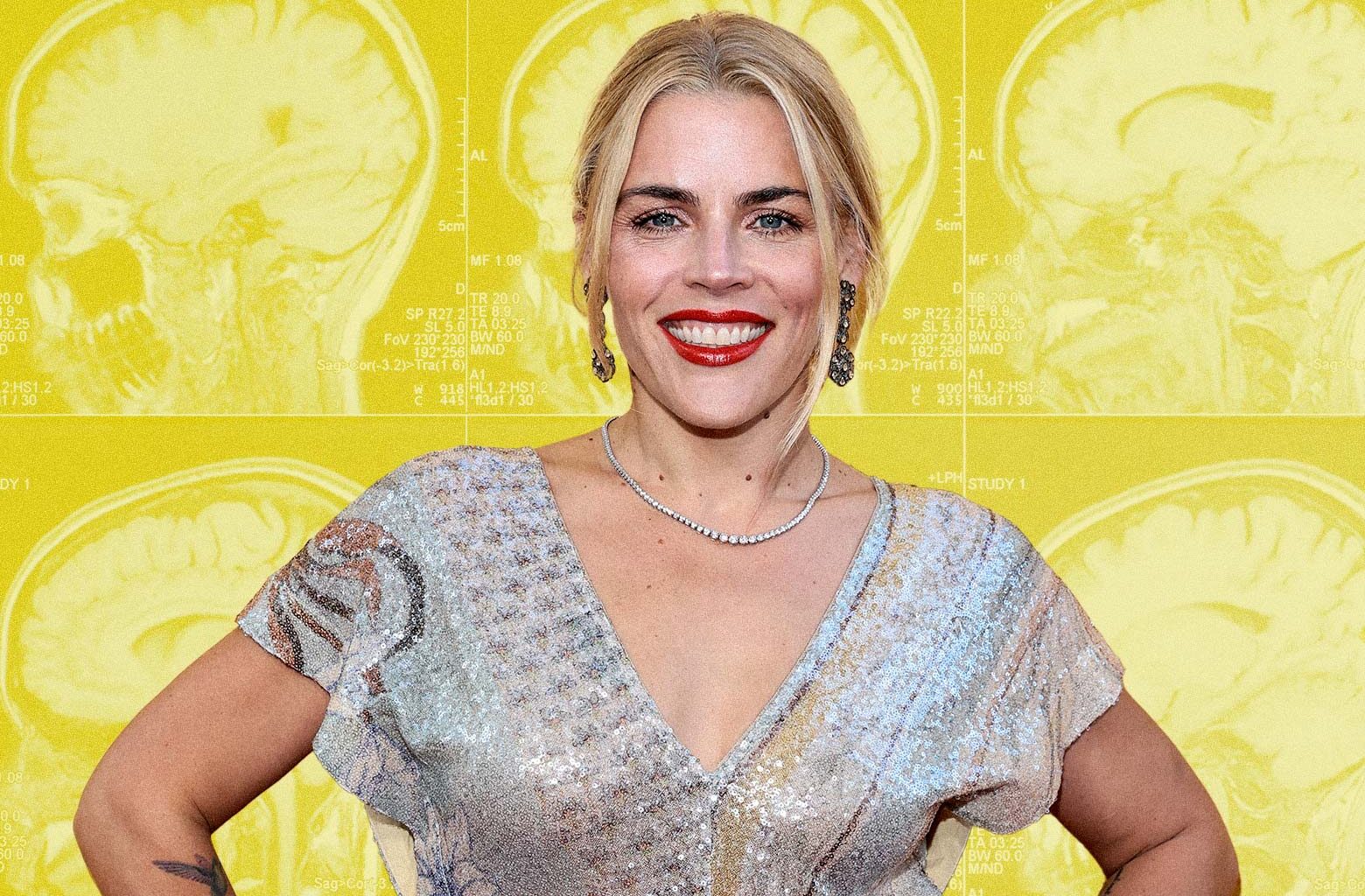
The actress Busy Philipps has now given that dilemma a famous face. She obtained a whole-body Prenuvo MRI even though her primary care physician told her she did not need one. The scan found a mass in her brain, and surgery revealed that to be a malignant brain tumor. Philipps has acknowledged her “inherent privilege” in being able to afford the scan, People magazine reports. (The sticker price for a “comprehensive” scan from Prenuvo is $3,099.) She described having that knowledge as empowering. And in her case, it clearly was. Her story captures exactly why a typical physician’s answer based on population-level evidence and statistics can feel so unsatisfying to an individual patient or worried family member. Typically, these scans might not be helpful, and they even might be harmful. But some patients, like Philipps, are the exception.
Here is how oncologists understand cancer screenings: The purpose isn’t to uncover every last lump and bump, it is to find the right cancers early enough to change treatment and help people live longer, while causing as little harm as possible to everyone who is screened. Whole-body MRI is an excellent medical tool when used for the right reason, and it has a role for some people with unusually high inherited cancer risk. But, for people without symptoms or high-risk conditions, the American College of Radiology says there is not enough evidence to recommend it and no documented proof that it prolongs life or is cost-effective. A systematic review of more than 5,000 asymptomatic people found that roughly one-third of whole-body MRI scans produced critical and indeterminate incidental findings—that is, many scans found something that the patient needed to follow up on. But false positives were common, and whether getting a full-body scan stands to, on balance, increase your lifespan is unknown. (That uncertainty is what makes these scans “investigational”; we just don’t have a ton of data on them.) A suspicious spot can lead to repeat imaging, biopsies, significant expense, and most importantly, months of worry—only to turn out to be benign. While we hear the stories of those whose scans found a dangerous tumor, we don’t hear from the many more who went through an unnecessary workup for something that was never going to harm them. Unless you go through it, it can be difficult to understand how destabilizing a false positive can be.
The newer multi-cancer blood tests are even more complicated in terms of what they can and cannot offer patients. GRAIL’s Galleri test looks for methylation patterns in DNA that may indicate a cancer signal and predict where it originated. The science is exciting, but the test is not a diagnosis. A positive result requires more testing, while a negative result does not rule out cancer or replace mammograms, colonoscopies, or other recommended screening. Galleri is commercially available but has not been approved by the FDA, and its list price is $949. A large British trial recently found some encouraging signals, including fewer Stage 4 diagnoses for certain deadly cancers, but it did not meet its primary endpoint of reducing the number of cancers found at a late stage.
Yet, it is hard to argue with an experience like Philipps’, especially when cancer rates among younger adults are rising. Colorectal cancer incidence among Americans under age 49 is increasing by about 3 percent per year, and about 83,000 Americans between ages 20 and 39 are diagnosed with cancer annually. These numbers make people worry that the routine screening we offer is not enough. So, when a patient asks, “If this could find my cancer early, why wouldn’t I do it?” the truthful answer is that, yes, it might find cancer early—and maybe you should do it. Maybe you can afford it. Maybe you won’t be one of the patients for whom it causes unnecessary stress. Whether an expensive screening test is worth the (potentially considerable) trouble is only truly knowable in hindsight.
Whole-body scans and cancer blood tests are only part of the broader market that includes detoxes, longevity protocols, specialty laboratory panels, and supplements, all sold with some version of the same message: Be proactive and take control. I understand why that message works because it works on me. When it comes to your loved ones, paying for more information can feel less like an indulgence than a responsibility. But if you are considering getting one of these tests, you must remind yourself that more information is not always better. An ambiguous result does not eliminate uncertainty. It increases burdens on the patient, physician, and the entire healthcare system.
The expensive price tags of these tests raise a larger problem. Are we creating a parallel system of cancer prevention for people who can afford to buy more information? Those patients are more likely to be able to pay not only for the initial test, but also for the specialists, repeat imaging, and biopsies that may follow. Meanwhile, other patients struggle to obtain a primary care visit, an HPV vaccine, a mammogram, or a colonoscopy—all already proven to save lives. The market for earlier detection does not just reflect the inequities in American healthcare. It may deepen them. After a patient gets a screening test, even in the instance of a false positive they are likely to require yet more care, taking up the time of doctors and adding to the bills sent to insurance and factored into premiums.
As these tests become popular, we are failing to deliver the prevention that already works. The American Cancer Society estimates that at least 40 percent of newly diagnosed cancers in American adults this year, about 850,000 cases, were potentially avoidable. The HPV vaccine can prevent more than 90 percent of cancers caused by HPV, yet less than two-thirds of young adults in America were up to date on their vaccination in 2024. Similarly, only approximately one-third of adults between ages 45 and 49 were receiving their recommended colorectal cancer screenings. People facing financial hardship were even less likely to be screened. If you are curious about getting a whole-body MRI, it is worth first making sure that you are doing all of the more run-of-the-mill stuff your doctor recommends.

Sara Jin Li
It’s Been Downloaded by Millions. It’s Supposed to Make You Happier. It Made Me Want to Strangle a Cartoon Bird.
Read More
None of this means that consumers should be denied access to emerging tests, or that physicians should dismiss people who ask about them. We need a more honest way to make decisions. Every consumer cancer-screening product should come with a clear, plain-language explanation of its Food and Drug Administration status, who was studied, how often it produces false positives, what follow-up may be required, which costs are not included, and whether it has actually been shown to reduce cancer deaths. Companies that sell a possible cancer signal should also explain who will interpret the results, coordinate the next tests, and help patients manage the costs.
This Content is Available for Slate Plus members only
A Famous Actress Just Put Her Face on an Expensive, Controversial Medical Test. You Know What: I Can’t Blame Her.
Physicians have a responsibility here too. Simply telling someone “You don’t need that” is unlikely to address the fear behind the question. A request for a whole-body MRI or multi-cancer blood test should lead to a careful review of family history, inherited risk, exposures, vaccinations, and whether established screening is up to date. After that discussion, some patients may still choose to pay for an investigational test. They should be able to do so with a realistic understanding of both its potential value and its potential harms.
The next time my mother tells me that something does not feel right, I will make sure her work-up is thorough and her screenings—the ones that the current evidence recommends—are current. Still, I cannot promise I will never order one of these tests for her or my patients. Knowing the evidence does not make us immune to fear or regret. That is the uncomfortable truth. The companies selling these tests understand how powerful our desire to know can be. They should be just as clear about how much we still do not know, what that uncertainty can cost, and who may be left behind.